
Can You Weld Stainless Steel? The Complete Guide to Welding Stainless Steel Successfully
Stainless steel is one of the most widely used engineering materials in manufacturing, food processing, medical equipment, architecture, marine applications, and industrial machinery. However, many fabricators, engineers, and purchasing managers often ask the same question:
Can you weld stainless steel?
The short answer is yes. Stainless steel can be welded very successfully using TIG, MIG, and Stick welding processes. However, unlike mild steel, stainless steel requires better heat control, proper filler selection, suitable shielding gases, and post-weld treatment to maintain its corrosion resistance.
This guide explains everything you need to know about welding stainless steel, including methods, materials, common mistakes, and professional fabrication practices.
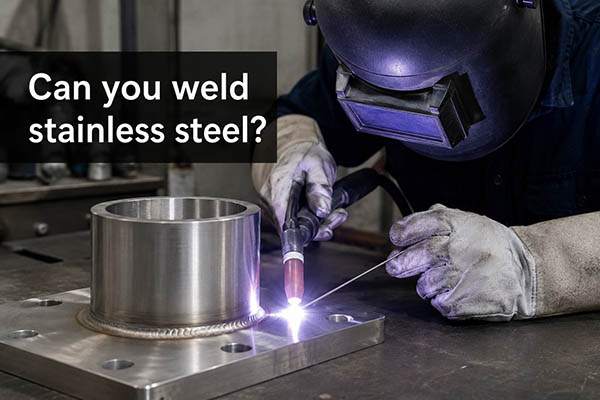
Can Stainless Steel Be Welded Successfully?
Yes, stainless steel is highly weldable.
The challenge is not whether it can be welded, but whether it can be welded without damaging its corrosion resistance and mechanical properties.
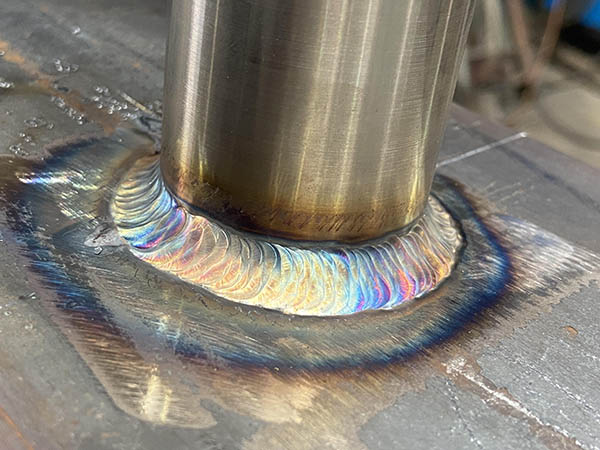
Stainless steel contains at least 10.5% chromium, which forms a passive oxide layer that protects the material from corrosion. During welding, excessive heat can damage this protective layer and create areas vulnerable to rust and pitting corrosion.
The key to successful stainless steel welding is:
| Requirement | Importance |
|---|---|
| Correct filler metal | Maintains weld strength |
| Proper shielding gas | Prevents oxidation |
| Controlled heat input | Preserves corrosion resistance |
| Surface preparation | Avoids contamination |
| Passivation | Restores protective oxide layer |
Why Stainless Steel Is Different from Carbon Steel
Many welders treat stainless steel like mild steel and quickly encounter problems.
Stainless steel behaves differently because it:
- Conducts heat more slowly
- Retains heat longer
- Expands more during welding
- Is more sensitive to contamination
- Can lose corrosion resistance if overheated
According to welding references, stainless steel conducts heat approximately 40% slower than carbon steel and retains heat significantly longer, making distortion a major concern.
This means welders must use:
- Lower amperage
- Faster travel speeds
- Smaller weld beads
- Better cooling strategies
Which Stainless Steel Grades Are Easiest to Weld?
Not all stainless steels weld equally well.
| Grade | Weldability | Typical Uses |
|---|---|---|
| 304 | Excellent | Food equipment |
| 304L | Excellent | Tanks and piping |
| 316 | Excellent | Marine equipment |
| 316L | Excellent | Chemical processing |
| 430 | Fair | Automotive trim |
| 2205 Duplex | Moderate | Offshore structures |
| 2507 Super Duplex | Difficult | Extreme corrosion environments |
The most commonly welded grades worldwide are 304/304L and 316/316L. These grades offer excellent weldability and corrosion resistance.
TIG Welding Stainless Steel
TIG (GTAW) is widely considered the best method for welding stainless steel.
Advantages include:
- Precise heat control
- Clean appearance
- Minimal spatter
- Excellent corrosion resistance
- Superior weld aesthetics
Industries such as food processing, pharmaceutical manufacturing, and medical equipment often specify TIG welding because weld quality directly impacts cleanliness and corrosion resistance.
Typical TIG parameters:
| Thickness | Amperage |
|---|---|
| 0.8 mm | 15–30 A |
| 1.0 mm | 25–45 A |
| 1.5 mm | 50–80 A |
| 3.0 mm | 95–135 A |
Typical setup:
- DCEN polarity
- 100% Argon
- ER308L or ER316L filler rod
- Low heat input
MIG Welding Stainless Steel
MIG (GMAW) is faster than TIG and often used in production environments.
Advantages:
- Higher deposition rates
- Faster production
- Lower labor costs
- Suitable for thicker materials
Studies from fabrication shops indicate MIG welding can reduce welding time by 30%–60% compared with TIG welding.
Typical applications:
- Industrial machinery
- Structural frames
- Equipment enclosures
- Commercial fabrication
Recommended filler wire:
| Base Material | Filler Wire |
|---|---|
| 304 | ER308L |
| 316 | ER316L |
| Stainless to carbon steel | ER309L |
Stick Welding Stainless Steel
Stick welding (SMAW) remains popular for field repairs and outdoor projects.
Benefits include:
- Portable equipment
- Wind-resistant operation
- Low equipment cost
Typical applications:
- Construction sites
- Structural repairs
- Maintenance welding
- Offshore facilities
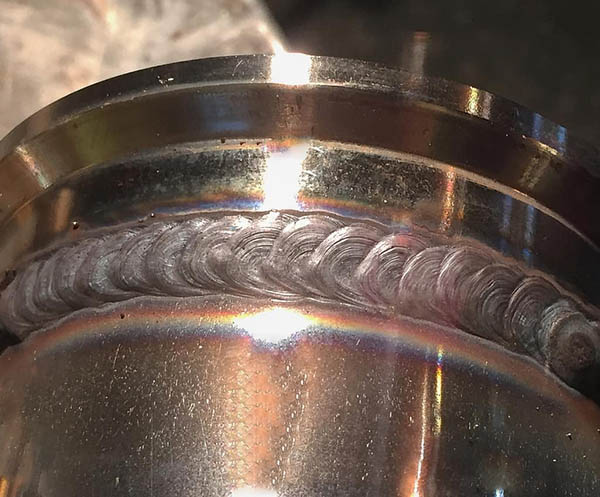
Although weld appearance is generally inferior to TIG and MIG, stick welding can still produce strong and reliable stainless steel joints.
Choosing the Correct Filler Metal
Using the wrong filler rod is one of the fastest ways to create weld failures.
Recommended filler selection:
| Base Metal | Recommended Filler |
|---|---|
| 304 | ER308L |
| 304L | ER308L |
| 316 | ER316L |
| 316L | ER316L |
| 304 to Carbon Steel | ER309L |
| Duplex 2205 | ER2209 |
| Super Duplex 2507 | ER2594 |
The “L” designation indicates low carbon content, helping reduce carbide precipitation and intergranular corrosion.
Shielding Gas Selection
Shielding gas directly affects weld quality.
For TIG welding:
| Process | Shielding Gas |
|---|---|
| TIG | 100% Argon |
For MIG welding:
| Process | Typical Gas |
|---|---|
| MIG Stainless | 98% Ar / 2% CO₂ |
| Production MIG | Tri-Mix Gas |
A common mistake is using standard 75/25 gas intended for carbon steel.
This can increase oxidation and reduce corrosion resistance.
Heat Input and Corrosion Resistance
Heat input is the most critical factor when welding stainless steel.
Excessive heat can cause:
- Sensitization
- Chromium carbide precipitation
- Loss of corrosion resistance
- Heat tint
- Distortion
The critical temperature range is approximately:
| Temperature |
|---|
| 425°C – 870°C |
| 800°F – 1600°F |
Extended exposure within this range can cause chromium depletion near grain boundaries.
Best practices:
- Use stringer beads
- Reduce weaving
- Keep interpass temperatures low
- Allow cooling between passes
Preventing Distortion and Warping
Because stainless steel expands more than carbon steel, distortion can become a significant issue.
Methods to reduce distortion:
- Skip welding
- Use clamps and fixtures
- Weld from center outward
- Use copper backing bars
- Minimize heat input
Experienced fabricators often use copper chill bars because copper dissipates heat much faster than stainless steel.
Back Purging and Root Protection
Back purging is essential when welding:
- Pipes
- Tubes
- Pressure vessels
- Sanitary equipment
Without back purging, oxygen reaches the backside of the weld and causes “sugaring.”
Sugaring results in:
- Rough surfaces
- Reduced corrosion resistance
- Contamination traps
- Premature failure
For critical stainless applications, back purging with argon is considered mandatory.
Welding Stainless Steel to Mild Steel
Can stainless steel be welded to carbon steel?
Yes.
The most common solution is using ER309L filler metal.
Example applications:
- Exhaust systems
- Structural transitions
- Machinery frames
- Industrial equipment
ER309L accommodates the metallurgical differences between the two materials and reduces cracking risks.
Common Stainless Steel Welding Defects
| Defect | Cause |
|---|---|
| Porosity | Poor shielding gas |
| Cracking | Incorrect filler |
| Sugaring | No back purge |
| Warping | Excess heat |
| Heat Tint | Overheating |
| Corrosion Near Weld | Contamination |
Most defects can be prevented through proper preparation, filler selection, and heat management.
Post-Weld Cleaning and Passivation
After welding, stainless steel should not simply be left as-welded.
Professional finishing may include:
- Mechanical polishing
- Pickling
- Passivation
- Electropolishing
Passivation removes free iron contamination and helps rebuild the chromium oxide layer responsible for corrosion resistance.
Industrial Applications of Welded Stainless Steel
Welded stainless steel components are found in:
| Industry | Applications |
|---|---|
| Food Processing | Tanks, conveyors |
| Medical | Surgical equipment |
| Marine | Railings, fittings |
| Chemical | Pressure vessels |
| Automotive | Exhaust systems |
| Aerospace | Structural components |
The ability to combine strength, hygiene, and corrosion resistance makes welded stainless steel indispensable across modern manufacturing.
Why Professional Fabricators Choose CNC-Machined and Welded Stainless Components
Many high-performance stainless steel assemblies require both precision machining and welding.
Examples include:
- Medical housings
- Robotic structures
- Aerospace brackets
- Food-grade equipment
- Industrial automation parts
Precision CNC machining ensures tight tolerances before welding, while controlled TIG or MIG welding delivers structural integrity and corrosion resistance.
At Xavier, we specialize in custom CNC machining and metal fabrication services for stainless steel, aluminum, titanium, and engineering alloys. Whether your project requires precision-machined stainless components, welded assemblies, prototype development, or high-volume production, our engineering team helps ensure optimal manufacturability, welding performance, and long-term durability. By combining advanced CNC technology with professional fabrication expertise, Xavier provides reliable solutions for demanding industrial applications worldwide.
As an integrated manufacturing and trading company specializing in CNC machining services, we focus on custom CNC production and precision machining of a wide range of metal and engineering plastic components. Our capabilities include
CNC PEEK Machining,
CNC Titanium Machining, and
CNC Brass Machining.
We serve industries such as robotics, aerospace, marine engineering, automotive manufacturing, medical equipment, and high-precision industrial applications.
As a leading
CNC PEEK Machining Manufacturer,
we provide high-volume
CNC Titanium Machining Services.
For competitive
CNC Brass Machining Prices,
please feel free to contact us for a customized quotation.
Some of the images and text in this article are collected and compiled from the internet. If there is anything inappropriate, please contact us for processing.