
Finding the Right CNC Machining Companies Near Me: A Complete Guide to Choosing the Best Manufacturing Partner
Whether you’re developing a new product, replacing an existing supplier, or searching for rapid prototype machining, typing “CNC machining companies near me” into Google can return hundreds of results. However, proximity alone doesn’t guarantee quality, fast turnaround, or competitive pricing.
A reliable CNC machining partner should provide more than machining capacity. They should offer engineering support, consistent quality control, flexible production capabilities, transparent pricing, and dependable delivery.
This guide explains what distinguishes an excellent CNC machining company from an average one and how buyers can confidently evaluate potential suppliers.
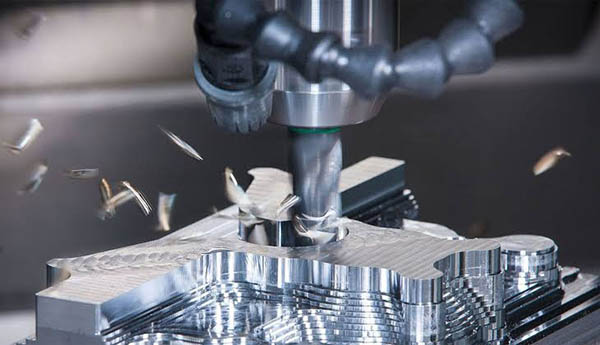
How to Choose a Reliable Local CNC Machining Company
Selecting a CNC machining company should never be based solely on distance or price. Many manufacturers produce visually similar parts, yet significant differences exist in machining accuracy, production consistency, engineering expertise, and after-sales service.
A systematic evaluation helps reduce project risks while improving product quality and supply chain reliability.
Evaluate Manufacturing Experience
The first factor to examine is industry experience.
Experienced manufacturers understand material behavior, machining strategies, fixture design, tool selection, and production optimization. Their knowledge often prevents costly mistakes before production begins.
Consider these questions:
| Evaluation Item | Why It Matters |
|---|---|
| Years in business | Indicates manufacturing stability |
| Industries served | Demonstrates technical diversity |
| Number of CNC machines | Reflects production capacity |
| Engineering team | Helps optimize manufacturability |
| Material expertise | Ensures correct machining parameters |
For example:
A company specializing in aerospace components generally possesses stronger process controls than a machine shop producing only simple mechanical brackets.
Likewise, a manufacturer with extensive experience machining titanium, Inconel, or hardened tool steel is more capable of handling demanding projects.
Examine Previous Manufacturing Projects
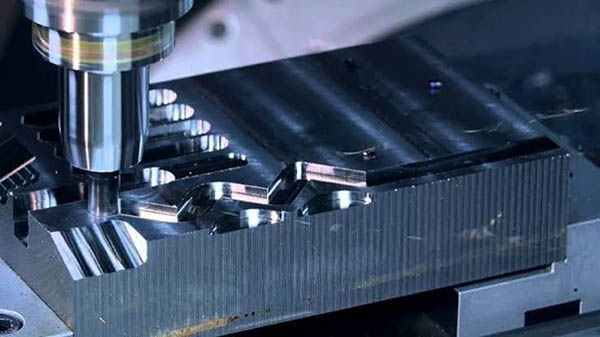
Professional CNC machining companies usually showcase previous work on their websites.
These examples allow buyers to assess:
- Surface finish quality
- Complex geometry capability
- Thin-wall machining
- Deep cavity milling
- Multi-axis machining
- Precision threading
- Tight tolerance features
Instead of displaying only finished products, excellent suppliers often explain:
- Material selection
- Manufacturing challenges
- Machining solutions
- Inspection methods
- Customer application
Such information demonstrates genuine manufacturing expertise rather than simply advertising equipment.
Assess Communication Speed
Communication efficiency directly affects project timelines.
A reliable CNC machining company typically responds within 24 hours and provides:
- Design feedback
- DFM suggestions
- Material recommendations
- Cost-saving ideas
- Estimated production schedule
For instance, if an uploaded STEP file contains an excessively deep pocket that requires an expensive long-reach cutter, an experienced engineer may recommend a small design modification that reduces machining time by 30% without affecting functionality.
This proactive communication saves both time and cost.
Review Customer Feedback
Customer reviews often reveal operational strengths that specifications cannot.
Positive feedback commonly highlights:
- Consistent dimensional accuracy
- Reliable delivery
- Responsive engineering support
- Stable quality across repeat orders
- Problem-solving capabilities
Repeated complaints about delayed shipments or inconsistent machining quality should be considered warning signs.
Questions to Ask Before Selecting a Supplier
Before placing an order, consider asking:
| Question | Purpose |
|---|---|
| What machining tolerances can you consistently maintain? | Evaluate precision capability |
| Which materials do you machine most frequently? | Assess expertise |
| Do you offer DFM analysis? | Improve manufacturability |
| Can you produce prototypes and mass production? | Ensure scalability |
| What inspection equipment do you use? | Verify quality control |
| Can inspection reports be provided? | Ensure traceability |
| What is your average lead time? | Evaluate responsiveness |
A supplier capable of answering these questions clearly is generally better prepared to support long-term projects.
CNC Machining Capabilities and Equipment You Should Expect
Modern CNC machining companies offer far more than basic milling and turning.
The range of available equipment directly influences machining complexity, accuracy, production efficiency, and part consistency.
Understanding these capabilities helps buyers determine whether a supplier can meet current and future manufacturing requirements.
CNC Milling Services
CNC milling is one of the most common manufacturing processes.
It is suitable for producing:
- Engine housings
- Medical device components
- Robot parts
- Aerospace brackets
- Heat sinks
- Mold inserts
- Electronic enclosures
Typical milling capabilities include:
| Capability | Typical Range |
|---|---|
| Axis configuration | 3-axis, 4-axis, 5-axis |
| Maximum workpiece size | Up to 3000 mm (machine dependent) |
| Surface finish | Ra 0.8–3.2 μm |
| Position accuracy | ±0.005–0.02 mm |
Five-axis machining is particularly valuable because it enables multiple surfaces to be machined in a single setup, reducing accumulated positioning errors and improving geometric accuracy.
For example, an impeller with curved blades may require several setups on a 3-axis machine but can often be completed in one operation on a 5-axis machining center, improving both precision and efficiency.
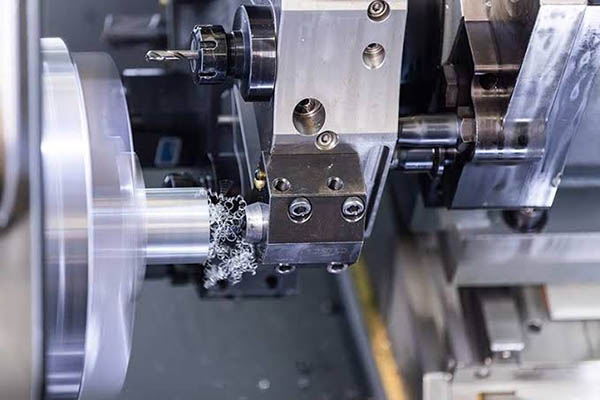
CNC Turning Services
Turning is ideal for cylindrical or rotationally symmetric components.
Typical products include:
- Shafts
- Bushings
- Pins
- Sleeves
- Connectors
- Hydraulic fittings
- Medical implants
Advanced turning centers frequently integrate:
- Live tooling
- Y-axis machining
- Sub-spindles
- Automatic bar feeders
These features reduce secondary operations and improve productivity.
Multi-Axis Machining Advantages
Many buyers mistakenly assume that all CNC machines perform similarly.
In reality, multi-axis machining provides substantial benefits.
| Feature | 3-Axis | 5-Axis |
|---|---|---|
| Complex geometry | Limited | Excellent |
| Single setup machining | No | Yes |
| Better surface finish | Moderate | Excellent |
| Shorter machining time | Moderate | High |
| Reduced fixture cost | No | Yes |
| Improved dimensional accuracy | Good | Excellent |
Although 5-axis machining may have a higher hourly machine rate, it often lowers the overall manufacturing cost by reducing setups, minimizing manual repositioning, and shortening cycle times.
Materials a Professional CNC Shop Should Support
A capable CNC machining company should process a wide variety of engineering materials.
| Material Category | Common Materials |
|---|---|
| Aluminum | 6061, 5052, 7075, 2024 |
| Stainless Steel | 303, 304, 316, 17-4PH |
| Carbon Steel | 1018, 1045, 4140 |
| Brass | C360, C260 |
| Copper | C110 |
| Titanium | Grade 2, Grade 5 |
| Tool Steel | D2, H13, A2 |
| Engineering Plastics | POM, Nylon, PTFE, PEEK, ABS, PC, PMMA |
Material expertise is particularly important because each alloy requires different cutting speeds, feeds, coolant strategies, and tooling.
For example, titanium alloys generate significant heat during machining and require lower cutting speeds along with rigid setups to prevent tool wear. In contrast, aluminum alloys allow much higher spindle speeds but demand careful chip evacuation to maintain surface quality.
Additional Manufacturing Services
Leading CNC machining companies often provide complementary services that streamline production and reduce supplier management.
These services may include:
| Service | Benefit |
|---|---|
| Surface finishing | Enhanced appearance and corrosion resistance |
| Anodizing | Ideal for aluminum components |
| Powder coating | Durable protective finish |
| Bead blasting | Uniform matte texture |
| Electropolishing | Improved cleanliness for medical parts |
| Laser engraving | Permanent identification and traceability |
| Assembly | Reduced customer workload |
| Packaging | Better protection during transport |
By sourcing machining, finishing, inspection, and assembly from a single supplier, buyers can shorten lead times, reduce logistics complexity, and improve overall project coordination.
Quality Certifications, Inspection, and Tolerances
Quality is one of the most important factors when comparing CNC machining companies. A low price has little value if parts fail inspection, require rework, or cause assembly issues. Professional machine shops build quality into every stage of production—from reviewing the CAD model to final packaging.
Rather than relying on end-of-line inspections alone, experienced manufacturers implement standardized quality control procedures throughout the machining process.
Why Quality Management Systems Matter
A formal quality management system helps ensure that every order is produced according to documented procedures rather than operator experience alone.
Many reputable CNC machining companies operate under internationally recognized standards such as:
| Certification | Application | Benefit to Customers |
|---|---|---|
| ISO 9001 | General manufacturing | Standardized quality management |
| ISO 13485 | Medical devices | Enhanced process control and traceability |
| AS9100 | Aerospace manufacturing | Strict documentation and risk management |
| IATF 16949 | Automotive industry | High-volume production consistency |
These certifications do not automatically guarantee perfect parts, but they indicate that the company follows structured procedures for document control, calibration, corrective actions, and continuous improvement.
For example, an ISO 9001-certified manufacturer is expected to maintain inspection records, calibrate measuring equipment regularly, and investigate the root causes of quality issues instead of simply replacing defective parts.
Inspection Equipment Used by Professional CNC Shops
Precision machining depends on accurate measurement. Modern CNC machining companies invest in advanced inspection equipment to verify that every critical dimension meets specification.
Common inspection tools include:
| Equipment | Primary Function | Typical Accuracy |
|---|---|---|
| Coordinate Measuring Machine (CMM) | Three-dimensional dimensional inspection | ±0.001–0.003 mm |
| Height Gauge | Vertical dimension measurement | ±0.01 mm |
| Digital Caliper | General dimensional inspection | ±0.02 mm |
| Micrometer | Outside diameter and thickness measurement | ±0.001 mm |
| Bore Gauge | Internal diameter measurement | ±0.002 mm |
| Optical Comparator | Profile and contour inspection | High precision |
| Surface Roughness Tester | Surface finish measurement | Ra analysis |
| Hardness Tester | Material hardness verification | Rockwell, Brinell, Vickers |
For high-precision aerospace or medical components, CMM inspection is often mandatory because it can measure complex geometries that conventional gauges cannot accurately verify.
Understanding Machining Tolerances
Tolerance defines the acceptable variation from the nominal dimension. Choosing the appropriate tolerance is essential because tighter tolerances generally increase machining time, tooling requirements, and inspection costs.
The table below illustrates common tolerance ranges used in CNC machining:
| Feature Type | Standard Tolerance | Precision Tolerance |
|---|---|---|
| Linear Dimensions | ±0.10 mm | ±0.005 mm |
| Hole Diameter | ±0.05 mm | ±0.003 mm |
| Flatness | 0.05 mm | 0.01 mm |
| Parallelism | 0.05 mm | 0.01 mm |
| Concentricity | 0.03 mm | 0.005 mm |
| Position Tolerance | 0.05 mm | 0.01 mm |
Not every feature requires ultra-tight tolerances. Over-specifying dimensions can significantly increase manufacturing costs without improving product performance.
Example
Consider an aluminum electronics enclosure:
- Outer dimensions: ±0.10 mm
- Mounting hole positions: ±0.03 mm
- Bearing seat: ±0.005 mm
Applying tight tolerances only to functional features reduces machining time while maintaining assembly accuracy.
In-Process Inspection Improves Consistency
Leading CNC machining companies perform inspections throughout production rather than waiting until machining is complete.
A typical workflow includes:
- Incoming material verification
- First Article Inspection (FAI)
- In-process dimensional checks
- Tool wear monitoring
- Final inspection
- Packaging verification
This approach minimizes scrap and detects potential issues before they affect the entire production batch.
For example, if a cutting tool begins to wear during the machining of stainless steel components, periodic in-process measurements allow the operator to replace the tool before dimensions drift out of tolerance. This proactive approach maintains consistency across hundreds or even thousands of identical parts.
Inspection Reports Customers Can Request
Many industries require documented inspection results for quality assurance and regulatory compliance.
Professional CNC machining companies can typically provide:
| Report Type | Purpose |
|---|---|
| First Article Inspection (FAI) Report | Verifies the first manufactured part |
| Material Certificate | Confirms material grade and composition |
| Dimensional Inspection Report | Lists measured dimensions and tolerances |
| Surface Finish Report | Documents Ra values |
| Hardness Report | Confirms heat treatment results |
| Certificate of Conformity (COC) | Declares compliance with specifications |
These reports provide traceability and can simplify incoming inspection for customers.
Lead Time, Pricing, and Quotation Process
When buyers search for “CNC machining companies near me,” they often prioritize fast delivery. However, the fastest quoted lead time is not always the most reliable. Understanding how manufacturers estimate production schedules and pricing helps customers make informed decisions.
Factors That Influence CNC Machining Costs
The price of a machined component depends on much more than raw material costs.
Several variables contribute to the final quotation:
| Cost Factor | Impact on Price |
|---|---|
| Material type | High |
| Part complexity | High |
| Machining time | Very High |
| Tolerance requirements | High |
| Surface finish | Medium |
| Quantity | High |
| Inspection requirements | Medium |
| Packaging | Low |
| Shipping method | Medium |
For example, a titanium component requiring 5-axis machining and a ±0.005 mm tolerance will typically cost significantly more than a simple aluminum bracket with standard tolerances due to longer machining times, increased tool wear, and more extensive inspection.
Prototype vs. Production Orders
The manufacturing approach differs significantly between prototype and production orders.
| Comparison | Prototype | Mass Production |
|---|---|---|
| Quantity | 1–20 pcs | Hundreds or thousands |
| Primary Goal | Design validation | Cost efficiency |
| Programming Time | High per part | Spread across large quantities |
| Unit Cost | Higher | Lower |
| Lead Time | Often shorter | Depends on scheduling |
Although prototype parts have a higher unit price, they allow engineers to identify design improvements before investing in production tooling or larger manufacturing runs.
What Information Should Be Included in an RFQ?
Providing complete information with a Request for Quotation (RFQ) helps suppliers prepare accurate pricing and realistic lead times.
A comprehensive RFQ should include:
- 3D CAD file (STEP, IGES, or Parasolid)
- 2D engineering drawing (if available)
- Material specification
- Required quantity
- Tolerance requirements
- Surface finish requirements
- Heat treatment (if needed)
- Surface coating or finishing
- Assembly requirements
- Desired delivery date
The more detailed the RFQ, the fewer assumptions the manufacturer needs to make, resulting in a more accurate quotation.
Typical Lead Times for CNC Machining Projects
Lead times vary depending on project complexity, material availability, and production capacity.
The following table provides general estimates:
| Project Type | Typical Lead Time |
|---|---|
| Simple prototype | 3–5 business days |
| Complex prototype | 5–10 business days |
| Small production run | 1–3 weeks |
| Medium production run | 2–4 weeks |
| Large production run | 4–8 weeks |
Rush services may shorten these timelines, but expedited production often incurs additional costs due to priority scheduling and overtime.
How Design Decisions Affect Manufacturing Costs
Design optimization can significantly reduce machining expenses without compromising functionality.
Some practical recommendations include:
- Avoid unnecessarily tight tolerances on non-critical features.
- Use standard drill sizes whenever possible.
- Maintain consistent wall thickness.
- Design internal corners with appropriate radii to accommodate cutting tools.
- Minimize deep cavities that require long-reach tooling.
- Select readily available material grades.
Cost-Saving Example
A customer originally designed an aluminum housing with twelve unique threaded hole sizes. After a Design for Manufacturability (DFM) review, the design was revised to use only four standard thread sizes. This change reduced tool changes, shortened machining time, and lowered the total manufacturing cost by approximately 18% while maintaining the product’s intended functionality.
Balancing Cost, Quality, and Delivery
Choosing a CNC machining company should involve evaluating the balance between price, quality, and lead time rather than focusing on a single factor.
A supplier offering the lowest price may not provide the required precision or consistency, while the highest-priced option may include capabilities that exceed the project’s actual needs.
By carefully reviewing manufacturing experience, equipment, quality systems, inspection capabilities, communication, and quotation transparency, buyers can identify a partner that delivers reliable components, predictable lead times, and long-term value.
When to Choose a Local Supplier vs. an Overseas CNC Manufacturer
Many buyers begin their search with “CNC machining companies near me” because they believe a local supplier will always provide the fastest service and easiest communication. While local machine shops offer several advantages, overseas manufacturers have become increasingly competitive due to advanced equipment, mature supply chains, and lower production costs.
The best choice depends on your project’s priorities, including lead time, budget, quality requirements, order quantity, and engineering support.
Advantages of Working with a Local CNC Machining Company
Local manufacturers offer several practical benefits, especially for prototype development and projects requiring frequent communication.
Faster Face-to-Face Collaboration
When engineers can visit the factory, review production, or discuss design changes in person, misunderstandings are minimized.
Typical situations include:
- Prototype validation
- Design revisions
- Fixture discussions
- Material substitutions
- Urgent production meetings
This level of interaction is particularly valuable for complex or highly customized parts.
Faster Domestic Shipping
Shipping time is often one of the biggest advantages of choosing a nearby supplier.
| Shipping Method | Typical Delivery Time |
|---|---|
| Local courier | Same day–2 days |
| Domestic freight | 2–5 days |
| International air freight | 3–10 days |
| International sea freight | 20–45 days |
For emergency replacement parts, domestic suppliers can often deliver significantly faster than overseas manufacturers.
Easier Factory Audits
Many industries require supplier audits before approving production.
Local manufacturers make it easier to:
- Verify machining equipment
- Review quality systems
- Observe inspection procedures
- Evaluate production capacity
- Meet engineering teams
Factory visits can increase confidence before committing to long-term partnerships.
Advantages of Overseas CNC Machining Companies
Global CNC manufacturers have invested heavily in automation, high-end equipment, and quality management systems. Many now serve customers across aerospace, automotive, medical, robotics, and industrial sectors.
For many buyers, overseas sourcing offers substantial value.
Lower Manufacturing Costs
One of the primary reasons companies choose overseas suppliers is cost efficiency.
Factors contributing to lower costs include:
- Lower labor costs
- Larger production capacity
- Optimized material procurement
- Higher machine utilization
- Mature manufacturing ecosystems
The savings become more significant for medium- and high-volume production.
Broader Manufacturing Capabilities
Large overseas CNC manufacturers often operate dozens or even hundreds of CNC machines, enabling them to handle a wide variety of projects simultaneously.
Capabilities may include:
- 3-axis, 4-axis, and 5-axis machining
- CNC turning with live tooling
- Swiss machining
- Wire EDM
- Surface grinding
- Injection molding
- Sheet metal fabrication
- Die casting
- Assembly services
- Complete surface finishing
Instead of coordinating multiple vendors, customers can source complete manufacturing solutions from a single supplier.
Strong Material Supply Chains
Well-established manufacturers typically maintain access to a wide range of engineering materials, including:
- Aluminum alloys
- Stainless steels
- Titanium alloys
- Brass and copper
- Tool steels
- Engineering plastics
- High-temperature alloys such as Inconel and Hastelloy
This broad material availability reduces procurement delays and supports faster production scheduling.
Local vs. Overseas CNC Machining Comparison
The following table summarizes the key differences:
| Comparison Item | Local Supplier | Overseas Manufacturer |
|---|---|---|
| Prototype Speed | Excellent | Good |
| Communication | Excellent | Very Good |
| Factory Visits | Easy | Limited |
| Unit Cost | Higher | Lower |
| Large-Volume Production | Moderate | Excellent |
| Manufacturing Capacity | Moderate | High |
| Material Availability | Good | Excellent |
| Engineering Resources | Good | Excellent |
| Shipping Time | Faster | Longer |
| Total Project Cost | Higher | Lower |
The ideal choice depends on your specific priorities. If speed and in-person collaboration are critical, a local supplier may be the best fit. If cost efficiency, scalability, and broader manufacturing capabilities are more important, an experienced overseas partner can deliver significant advantages.
Example: Choosing the Right Supplier
Consider the following scenario:
A robotics startup needs:
- 15 aluminum prototypes for design validation
- Delivery within one week
- Frequent engineering revisions
In this case, a local CNC machining company is likely the better choice due to rapid communication and short delivery times.
Now consider a different scenario:
The same company has finalized the design and needs:
- 8,000 machined aluminum housings
- Black anodized finish
- Tight dimensional consistency
- Competitive pricing
An experienced overseas manufacturer with automated production lines, integrated anodizing, and comprehensive quality control may offer a more cost-effective solution while maintaining consistent quality.
This illustrates why many companies use a hybrid sourcing strategy: local suppliers for rapid prototyping and overseas manufacturers for production.
Why Xavier Is a Trusted CNC Machining Partner
Finding the right CNC machining company is about more than location—it is about selecting a manufacturing partner that consistently delivers precision, reliability, and value.
At Xavier, we combine advanced CNC machining technology with extensive manufacturing experience to support customers from prototype development through full-scale production. Our team focuses on delivering precision-machined components that meet demanding performance and quality requirements across a wide range of industries.
What Xavier Offers
Our capabilities include:
- CNC milling (3-axis, 4-axis, and 5-axis)
- CNC turning and mill-turn machining
- Prototype machining and low-volume production
- High-volume manufacturing
- Machining of aluminum, stainless steel, titanium, brass, copper, engineering plastics, and specialty alloys
- Surface treatments including anodizing, electroless nickel plating, zinc plating, powder coating, bead blasting, polishing, passivation, and laser marking
- Coordinate Measuring Machine (CMM) inspection and complete quality documentation
- Design for Manufacturability (DFM) support to optimize cost and production efficiency
Whether you require a single prototype or thousands of production parts, Xavier works closely with customers to ensure every component is manufactured to specification, delivered on schedule, and backed by responsive engineering support.
If you’re comparing CNC machining companies near me, remember that the best manufacturing partner is the one that offers the right balance of technical expertise, quality assurance, production capacity, communication, and long-term reliability. Xavier is committed to being that trusted partner for customers worldwide.
As a fully integrated CNC machining manufacturer and trading company, we specialize in custom CNC machining and precision manufacturing of a wide range of metal components. Our capabilities include CNC electrogalvanizing surface finishing, CNC chemical conversion coating surface finishing, and CNC anodizing surface finishing to satisfy diverse application requirements.
As a trusted CNC electrogalvanizing surface finishing manufacturer, we provide reliable high-volume CNC chemical conversion coating surface finishing services and offer competitive CNC anodizing surface finishing prices. Feel free to contact us for a fast quotation and professional support.
If you are searching for CNC machining companies near me, Xavier provides comprehensive die casting and precision CNC machining solutions for customers worldwide.
Some of the images and text in this article are collected and compiled from the internet. If there is anything inappropriate, please contact us for processing.