
The Ultimate Guide to CNC Robot Parts: Engineering, Materials, and Precision Manufacturing
The integration of robotics into CNC machining environments has revolutionized modern manufacturing, enabling lights-out production and unprecedented efficiency. At the heart of this automation are the CNC robot parts that make precise movement, gripping, and manipulation possible. Whether you are designing a new robotic arm, sourcing spare parts for a legacy system, or developing custom end effectors, understanding the engineering behind these components is critical. This guide covers 15 essential knowledge areas regarding CNC robot parts, detailing materials, machining processes, and design considerations.
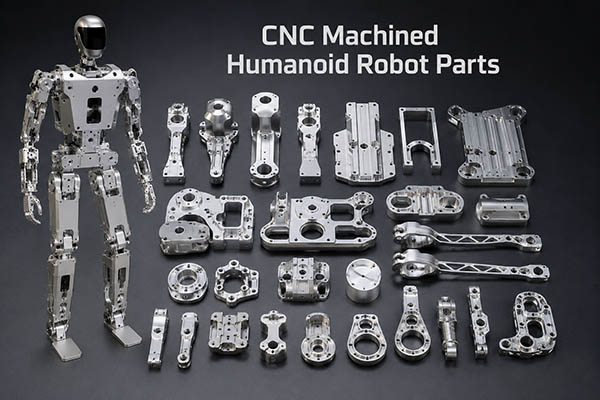
1. Core Structural Components of CNC Robots
The physical backbone of any industrial robot relies on heavily loaded structural components that must withstand continuous dynamic stresses.
Robotic Arm Joints and Housings
The shoulder, elbow, and wrist joints are the most critical structural components of a robotic arm
These joints house complex gear assemblies and require housings machined from high-strength alloys to prevent deflection under payload. A typical joint housing must maintain perfect coaxiality to ensure the harmonic drives inside operate without premature wear.
Structural Frames and Bases
The base and structural frames provide the necessary strength and stability for the entire robotic system
karkhana.io. These parts are often large, complex castings or weldments that require secondary CNC machining to create precision mounting surfaces for the servo motors and main arm assemblies.
2. Material Selection for CNC Robot Parts
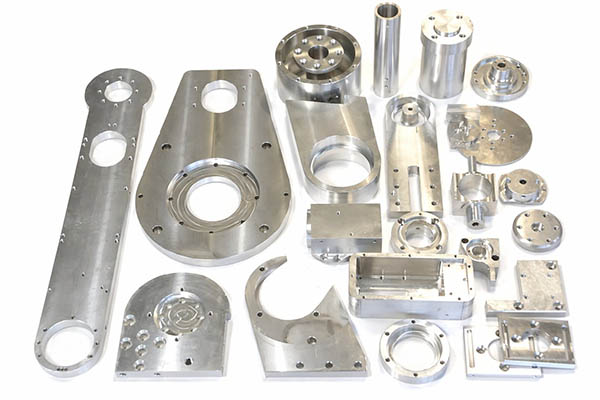
Choosing the right material is a balancing act between weight, strength, and machinability. The materials commonly used in CNC machining factories for robotics include metals and advanced engineering plastics
| Material Grade | Tensile Strength | Key Characteristics | Best Application in Robotics |
|---|---|---|---|
| Aluminum 6061-T6 | 310 MPa | Excellent machinability, good corrosion resistance, moderate strength. | Structural frames, brackets, non-critical housings. |
| Aluminum 7075-T6 | 572 MPa | High strength-to-weight ratio, aerospace-grade, harder to machine. | High-stress robotic arm joints, gear housings, main links. |
| Stainless Steel 303 | 620 MPa | Free-machining, excellent corrosion resistance, magnetic. | Shafts, fasteners, pivot pins, machine tending grippers. |
| Titanium Ti-6Al-4V | 950 MPa | Extreme strength, lightweight, biocompatible, difficult to machine. | High-speed robot arms, aerospace robotic components. |
| PEEK (Plastic) | 100 MPa | Lightweight, chemical resistance, high-temperature stability. | Insulators, coolant-facing sensor mounts, lightweight grippers. |
Weight Reduction vs. Rigidity
In high-speed pick-and-place applications, reducing the mass of the robotic arm directly decreases cycle times. However, materials like Al 7075 must be utilized to ensure that thin-walled designs do not compromise rigidity
3. Precision Machining Tolerances and Quality Control
Robotics is an industry where “close enough” results in catastrophic failure or rapid wear.
Tight Tolerance Requirements
For critical robotic joints and actuator interfaces, standard machining tolerances are insufficient. Precision CNC robot parts often require tight tolerances of ±0.005mm (0.0002″) or even tighter for bearing seats
CMM Inspection and Metrology
To verify these tolerances, manufacturers must utilize Coordinate Measuring Machines (CMM). Every batch of custom robot parts should undergo 100% inspection on critical geometric dimensioning and tolerancing (GD&T) features, such as true position, concentricity, and flatness.
4. The Role of End Effectors and Grippers
End effectors are the physical devices attached to the end of a robotic arm that enable it to interact with its environment
milvus.io. In CNC automation, they are the bridge between the robot and the workpiece.
Custom Gripper Jaws and Vacuum Mounts
Custom gripper jaws are often CNC machined from aluminum or Delrin (POM) to match the exact geometry of the part being loaded into the CNC machine
Vacuum mounts are precision-machined to ensure an airtight seal, which is critical when handling porous materials or rough forgings.
Tool Changers and Force Sensor Flanges
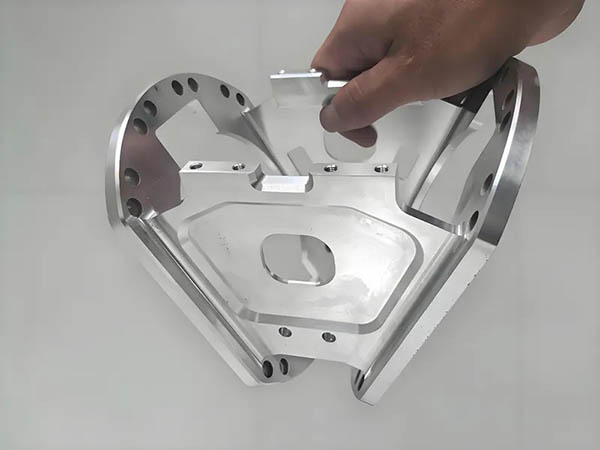
Automatic Tool Changers (ATC) for robots require master plates and mating halves machined to extreme flatness (often within 0.01mm) to ensure repeatability. Force sensor flanges must be machined without inducing residual stress, which could skew sensitive torque readings.
5. Drive Train Components: Actuators and Gears
The drive train translates the rotational force of servo motors into precise robotic movement.
High-Precision Gears and Harmonic Drives
CNC machined robot parts for the drive train include custom gears, sprockets, and housings for harmonic drives
The teeth profile of these gears must be machined with flawless surface finishes to minimize backlash and noise.
Actuator Housings and Motor Mounts
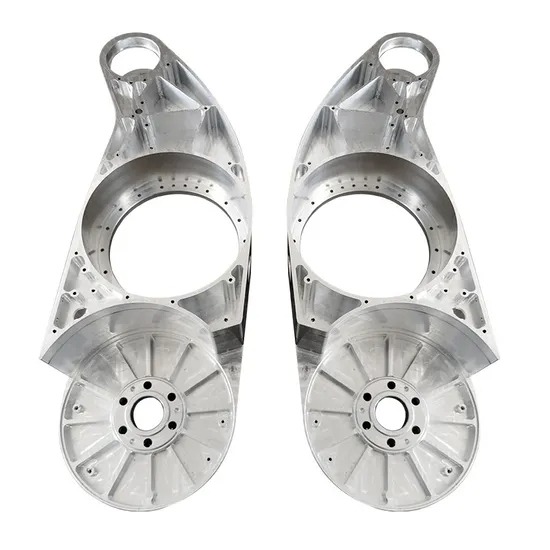
Actuator housings must dissipate heat generated by the motors. CNC machined channels within these aluminum housings are often designed to maximize surface area for passive cooling, requiring complex 5-axis milling strategies.
6. 5-Axis CNC Machining for Complex Robot Joints
The complexity of modern robot joints, especially in humanoid robots, demands advanced manufacturing capabilities.
Multi-Axis Strategies for Dexterous Hands
Robot dexterous hands typically have over 10 degrees of freedom, requiring joints that are small, highly precise, and incredibly rigid
5-axis CNC machining allows these complex, organic shapes to be machined in a single setup.
Reducing Setups and Improving Accuracy
By utilizing 5-axis simultaneous machining, manufacturers can reduce setup times by up to 70% while maintaining the concentricity of multiple bearing bores that would be impossible to hold on a 3-axis machine.
7. Surface Treatments for Enhanced Durability
Raw CNC-machined parts are rarely used in robotics without post-processing. Surface treatments enhance wear resistance, protect against corrosion, and provide a smoother finish
| Surface Treatment | Material Compatibility | Benefits for Robot Parts |
|---|---|---|
| Type II Anodizing | Aluminum | Decorative, mild corrosion resistance, non-conductive. |
| Type III Hard Anodizing | Aluminum | Extreme wear resistance, thick coating (up to 0.05mm), ideal for joint interfaces. |
| Passivation | Stainless Steel | Removes free iron, enhances natural oxide layer for maximum rust prevention. |
| Black Oxide | Steel | Mild corrosion resistance, reduces light reflection in vision-system areas. |
| Electroless Nickel | Aluminum/Steel | Uniform thickness, excellent hardness, improves solderability if needed. |
Hard Anodizing for Aluminum Parts
For robotic joints that experience constant friction, Type III hard anodizing is mandatory. It creates a ceramic-like surface on aluminum that prevents galling and extends the lifespan of the joint significantly
8. CNC Machine Tending: Loading and Unloading Solutions
Robotic machine tending automates the process of loading raw materials and unloading finished parts from CNC machines
Gripper Design for Raw Material Handling
The parts used in machine tending must navigate tight spaces inside the CNC enclosure. Gripper fingers are often machined with slim profiles and feature custom knurling or urethane inserts to prevent dropping oily, coolant-covered parts.
Coolant and Chip Resistance in Tending Parts
Unlike robots in cleanrooms, CNC tending robots are bathed in mist and metal chips. The CNC robot parts used here require specialized labyrinth seals and wipers, machined directly into the aluminum housings to protect internal bearings.
9. Custom vs. Off-the-Shelf Robot Parts
Manufacturers constantly weigh the decision between buying OEM parts and commissioning custom CNC machined replacements.
Cost-Benefit Analysis of Custom Machining
While off-the-shelf parts are cheaper initially, custom CNC robot parts allow for design optimizations, such as integrating mounting features or reducing weight, which can improve overall cell efficiency
Prototyping and Iteration Speed
CNC machining is ideal for custom robotics parts without needing expensive molds or tooling, making it perfect for rapid prototyping and iterative design of new automation cells
10. Essential Spare Parts for Robot Maintenance
Maintaining a track of records and keeping spare parts in stock is vital for minimizing downtime
Wear-and-Tear Components
The parts most prone to wear and tear include gears, belts, and brake discs
Keeping a strategic inventory of these CNC-machined consumables prevents catastrophic line stoppages.
Managing Obsolescence with Custom Replacements
When OEMs discontinue support for legacy robots (like older KUKA or FANUC models), custom machining allows facilities to reverse-engineer and manufacture obsolete spare parts, bypassing obsolescence issues
11. Weight Reduction Strategies in High-Speed Robotics
In delta robots and high-speed gantry systems, every gram matters.
Topology Optimization and Thin-Wall Machining
Engineers use topology optimization software to design organic, bone-like structures. 5-axis CNC mills then machine these complex thin-wall features from solid aluminum billets, removing up to 40% of the original weight without sacrificing structural integrity.
Impact on Cycle Times and Energy Efficiency
A lighter robotic arm requires less torque from the servo motors, directly reducing energy consumption and allowing for faster acceleration and deceleration, thereby shrinking cycle times.
12. Sensor Mounts and 3D Vision System Components
Modern robots rely on 3D vision and force-torque sensors to navigate unstructured environments.
Vibration-Dampening Sensor Housings
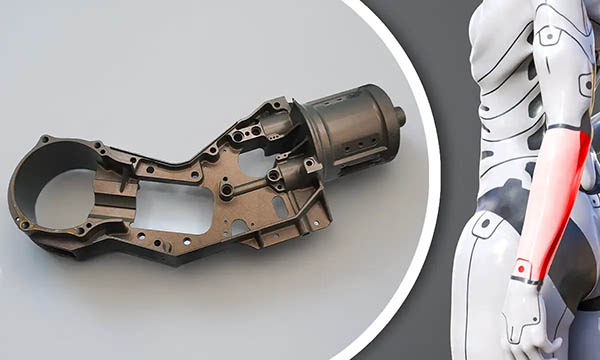
Sensor mounts must be machined with extreme precision to ensure the optical axis of a camera or laser scanner remains perfectly aligned. Custom robotic sensor mounts often include integrated dampening features to isolate the sensor from high-frequency robot vibrations
Precision Alignment Features
Kinematic mounts, machined with precise cone-groove-s flat interfaces, allow vision sensors to be removed for cleaning and reinstalled with sub-millimeter repeatability.
13. Environmental Considerations for Harsh Machining Environments
Robots operating near CNC lathes and mills face extreme environmental hazards.
Sealing Techniques for Coolant Protection
CNC robot parts exposed to coolant require O-ring grooves machined to AS568 standards. The surface finish of these grooves must be smooth (Ra < 0.8μm) to prevent the O-ring from tearing during assembly.
Material Choices for Chip Resistance
Sharp, stringy metal chips can act like cutting tools against soft materials. Using hardened steel or hard-anodized aluminum for external robot skins prevents chips from embedding into the robot’s housing.
14. Machining Humanoid Robot Components
The boom in AI has accelerated the development of humanoid robots, pushing CNC machining to its absolute limits.
Miniaturization of Joint Components
Humanoid robot parts require the miniaturization of actuators and joints
CNC Swiss-type lathes are frequently used to machine these tiny, complex, high-precision components with diameters under 5mm.
High-Rigidity Requirements for Micro-Joints
Despite their small size, these micro-joints must support significant dynamic loads. This requires machining from high-grade titanium or maraging steel, demanding specialized tooling and rigid CNC machines.
15. Choosing the Right CNC Machining Partner
Selecting a manufacturing partner is as critical as the design itself.
Evaluating Equipment and Capabilities
A reliable partner must possess a mix of 3-axis, 4-axis, and 5-axis CNC milling machines, as well as multi-axis CNC lathes to handle everything from simple brackets to complex humanoid robot parts
Certifications and Industry Experience
Look for manufacturers with ISO 9001 certifications and specific experience in the robotics or automation industry. They should understand GD&T, robotic kinematics, and the importance of traceability for critical safety components.
Conclusion: Elevate Your Automation with Xavier
When it comes to sourcing high-performance CNC robot parts, precision, material integrity, and reliability are non-negotiable. At Xavier, we specialize in the custom CNC machining of robotic components, from complex 5-axis arm joints and lightweight structural frames to custom end effectors and machine tending grippers.
Our state-of-the-art facility is equipped with advanced multi-axis CNC machines and strict CMM inspection protocols, ensuring that every part we deliver meets the tightest tolerances (down to ±0.005mm). Whether you are prototyping a new collaborative robot, replacing obsolete spare parts, or scaling up production for humanoid robotics, Xavier is your trusted manufacturing partner. We don’t just machine metal; we engineer the physical foundation of your automation success. Contact Xavier today to request a DFM (Design for Manufacturability) review and experience the pinnacle of precision robotics manufacturing.
We are an integrated manufacturing and trading company specializing in CNC machining services, focusing on custom CNC machining and precision manufacturing of various metal and plastic components. We support
CNC Titanium Machining,
CNC PEEK Machining, and
CNC Brass Machining.
Our capabilities cover robotics parts, aerospace components, marine parts, automotive parts, medical components, and other high-precision custom machined parts.
As a professional CNC Titanium Machining Manufacturer, we provide high-volume
CNC PEEK Machining Services. For competitive
CNC Brass Machining Cost, feel free to contact us for a quotation and technical support.
Some of the images and text in this article are collected and compiled from the internet. If there is anything inappropriate, please contact us for processing.