The Complete Guide to Choosing a Reliable Metal Part Manufacturer
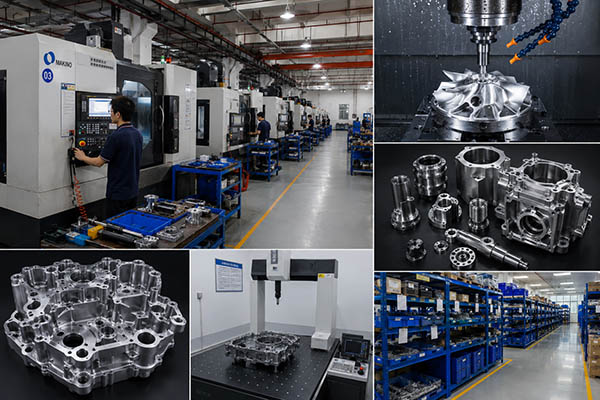
Modern industries depend on precision metal components to ensure product performance, durability, and safety. Whether producing aerospace brackets, robotic housings, automotive shafts, medical implants, or industrial machinery components, selecting the right metal part manufacturer directly influences manufacturing costs, lead time, product quality, and long-term supply chain stability.
A professional manufacturer is far more than a machining workshop. It combines engineering expertise, material knowledge, advanced CNC equipment, quality inspection systems, and scalable production capabilities into a complete manufacturing solution. Companies that invest in advanced manufacturing technologies can reduce production risks while improving consistency across thousands of identical components.
This guide explains the essential capabilities every metal part manufacturer should possess and provides practical insights into materials, manufacturing processes, quality control, and supplier evaluation.
Material Selection: Choosing the Right Metal for Performance and Cost
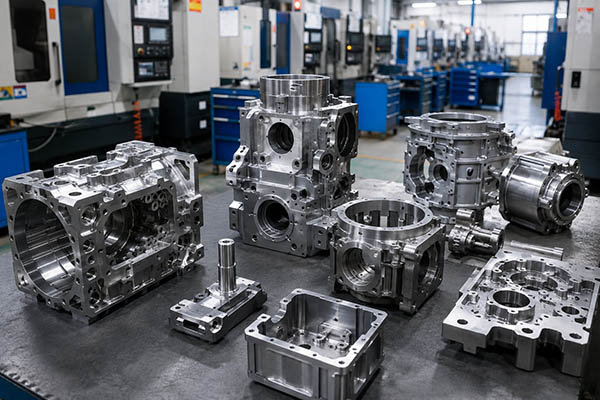
Material selection is one of the earliest—and most influential—decisions in any manufacturing project. Different metals exhibit unique combinations of strength, machinability, corrosion resistance, thermal conductivity, electrical conductivity, and weight. Choosing the wrong material may lead to unnecessary machining costs, shorter product life, or functional failures.
Instead of selecting materials solely based on price, engineers typically evaluate several performance criteria simultaneously.
Mechanical Properties
Mechanical performance determines whether a component can withstand operational loads.
Important characteristics include:
- Tensile strength
- Yield strength
- Hardness
- Fatigue resistance
- Impact toughness
- Wear resistance
For example, an aerospace mounting bracket requires a high strength-to-weight ratio, whereas a hydraulic valve body may prioritize corrosion resistance over weight reduction.
Machinability Comparison
Different metals require different machining strategies.
| Material | Machinability | Corrosion Resistance | Typical Applications |
|---|---|---|---|
| Aluminum 6061 | Excellent | Good | Electronics, Robotics, Aerospace |
| Stainless Steel 304 | Moderate | Excellent | Medical Equipment, Food Industry |
| Stainless Steel 316 | Moderate | Outstanding | Marine Equipment |
| Brass C360 | Excellent | Good | Valves, Plumbing Components |
| Copper C110 | Fair | Excellent | Electrical Components |
| Titanium Grade 5 | Difficult | Excellent | Aerospace, Medical Implants |
| Carbon Steel 1045 | Good | Moderate | Machinery Parts |
| Tool Steel D2 | Difficult | Moderate | Dies, Molds |
Although titanium provides exceptional performance, machining it often requires lower cutting speeds, specialized tooling, and higher coolant consumption, significantly increasing manufacturing costs.
Balancing Cost and Performance
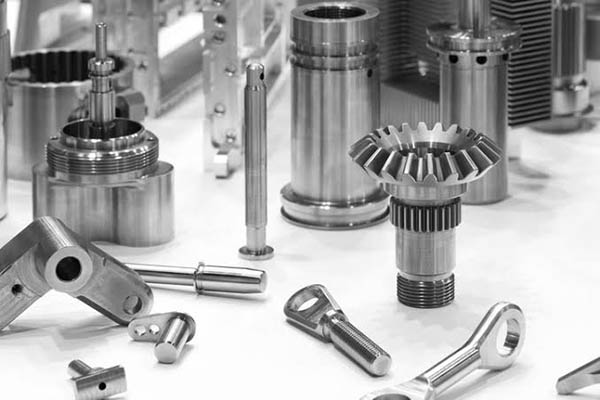
Experienced manufacturers rarely recommend the most expensive material unless it delivers measurable value.
Consider the following comparison.
| Requirement | Recommended Material |
|---|---|
| Lightweight + Strength | Aluminum 7075 |
| High Corrosion Resistance | Stainless Steel 316 |
| High Wear Resistance | Tool Steel |
| Excellent Electrical Conductivity | Copper |
| Decorative Appearance | Brass |
| Low Cost Structural Parts | Carbon Steel |
Replacing stainless steel with aluminum in a non-corrosive indoor application can reduce machining costs by approximately 30–50%, while also decreasing part weight.
Example: Material Selection for a Robotic Arm Component
Suppose a robotic joint housing requires:
- Lightweight construction
- Tight dimensional tolerances
- Moderate strength
- Excellent machinability
- Attractive anodized finish
Instead of stainless steel, Aluminum 6061-T6 would generally be the preferred option because it offers:
- Lower machining time
- Reduced tool wear
- Lower shipping weight
- Better surface finishing options
- Lower overall manufacturing cost
This example illustrates why material selection should consider the complete manufacturing process rather than raw material cost alone.
Manufacturing Processes Used by Professional Metal Part Manufacturers
A capable manufacturer should offer multiple manufacturing technologies rather than relying on a single process. Different production methods are suitable for different geometries, tolerances, order quantities, and material types.
Selecting the appropriate process at the beginning of a project can significantly reduce machining time, improve quality, and lower production costs.
CNC Milling
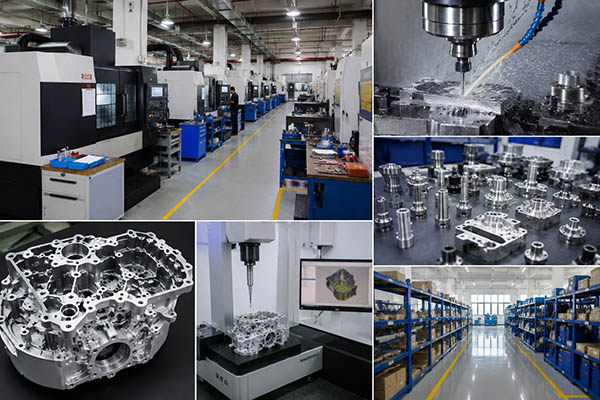
CNC milling is one of the most versatile manufacturing processes available. Multi-axis milling machines remove material from a solid metal block using rotating cutting tools, allowing the production of highly complex geometries with excellent dimensional accuracy.
Common applications include:
- Aerospace structural components
- Medical device housings
- Robotics frames
- Electronic enclosures
- Industrial equipment parts
Modern 3-axis, 4-axis, and 5-axis CNC milling machines can machine intricate features such as deep pockets, angled surfaces, curved profiles, and complex cavities while maintaining tight tolerances.
Advantages:
- High dimensional accuracy
- Excellent repeatability
- Complex geometry capability
- Wide material compatibility
- Superior surface finish
CNC Turning
Turning is ideal for cylindrical components.
During machining, the workpiece rotates while stationary cutting tools remove material to create external and internal profiles.
Typical parts include:
- Shafts
- Bushings
- Pins
- Rollers
- Threaded connectors
- Hydraulic fittings
Compared with milling, turning often provides faster cycle times for rotationally symmetrical parts.
Sheet Metal Fabrication
Not every metal component should be machined from a solid billet.
Sheet metal fabrication offers a cost-effective alternative for thin-walled products.
Common operations include:
- Laser cutting
- Punching
- Bending
- Riveting
- Welding
Typical applications include:
- Control cabinets
- Electronic enclosures
- Brackets
- Chassis
- Machine covers
Because material waste is significantly lower than CNC machining, sheet metal fabrication becomes increasingly economical for large flat components.
Metal Casting
Casting allows manufacturers to produce complex shapes that would be expensive or impossible to machine from solid stock.
Common casting methods include:
- Investment casting
- Die casting
- Sand casting
- Permanent mold casting
Casting is especially suitable for:
- Pump housings
- Engine blocks
- Valve bodies
- Large industrial components
However, cast parts usually require secondary CNC machining to achieve tight tolerances on functional surfaces.
Metal Fabrication Process Comparison
| Process | Best For | Precision | Production Volume |
|---|---|---|---|
| CNC Milling | Complex Parts | Very High | Low–High |
| CNC Turning | Cylindrical Parts | Very High | Medium–High |
| Laser Cutting | Flat Parts | High | Medium–High |
| Sheet Metal Forming | Enclosures | High | High |
| Investment Casting | Complex Shapes | Medium | High |
| Die Casting | Aluminum Parts | Medium | Very High |
| Welding Fabrication | Large Structures | Moderate | Low–Medium |
Example: Manufacturing an Industrial Gearbox Housing
A gearbox housing illustrates how multiple manufacturing methods can be combined efficiently:
- Casting forms the near-net-shape housing, minimizing raw material waste.
- CNC Milling machines mounting faces, bearing seats, and sealing surfaces to precise tolerances.
- CNC Drilling and Tapping create threaded holes for fasteners and lubrication ports.
- Surface Treatment such as powder coating or anodizing improves corrosion resistance and appearance.
- Final Inspection verifies dimensions, flatness, concentricity, and surface quality before shipment.
By integrating several manufacturing processes, manufacturers can achieve an optimal balance between cost, precision, and production efficiency.
Quality Control and Inspection: How Professional Metal Part Manufacturers Ensure Consistency
Precision machining is only valuable if every produced part consistently meets design specifications. A reputable metal part manufacturer establishes a comprehensive quality management system that controls every stage of production—from incoming raw materials to final packaging. Rather than relying solely on end-of-line inspection, modern manufacturers adopt preventive quality control methods that detect issues before they become costly defects.
Incoming Material Inspection
The manufacturing process begins with verifying that raw materials conform to the customer’s specifications. Even small variations in chemical composition or mechanical properties can affect machining performance and the finished part’s functionality.
Incoming inspection generally includes:
- Material certificate verification
- Chemical composition analysis
- Hardness testing
- Surface condition inspection
- Dimension verification
- Heat treatment status confirmation
For industries such as aerospace and medical devices, manufacturers often require complete material traceability, ensuring every component can be linked back to its original material batch.
Example: Aluminum 7075 Verification
Before machining aerospace components from Aluminum 7075-T6, inspectors typically verify:
| Inspection Item | Typical Requirement |
|---|---|
| Material Grade | Aluminum 7075-T6 |
| Certification | EN10204 3.1 Certificate |
| Hardness | Approximately 150 HB |
| Surface | No scratches or oxidation |
| Thickness | Within supplier tolerance |
Proper verification reduces the risk of machining incorrect materials, which could lead to expensive production losses.
In-Process Quality Control
Inspection during machining helps identify dimensional deviations before large batches are completed.
Operators usually perform inspections after critical machining operations rather than waiting until the final stage.
Typical in-process inspections include:
- Hole diameter measurement
- Slot width verification
- Thread inspection
- Flatness measurement
- Concentricity checks
- Tool wear monitoring
By combining automated probing systems with manual inspections, manufacturers can detect machining drift early and make tool offsets immediately.
Statistical Process Control (SPC)
Many high-volume manufacturers implement SPC to monitor production stability.
Instead of inspecting every single dimension manually, engineers continuously collect measurement data and analyze trends.
Benefits include:
- Early detection of process variation
- Reduced scrap rates
- Improved production consistency
- Lower inspection costs
- Better machine capability evaluation
For example, if a shaft diameter gradually increases because of tool wear, SPC charts can identify the trend before the diameter exceeds tolerance limits.
Final Inspection Before Shipment
Before parts are packaged, a comprehensive final inspection confirms that all customer requirements have been satisfied.
Typical inspection items include:
- Critical dimensions
- Cosmetic appearance
- Surface finish
- Thread quality
- Burr removal
- Coating thickness
- Packaging verification
Many customers also request a First Article Inspection (FAI) report for new projects to validate that the initial production part fully complies with engineering drawings.
Common Inspection Equipment
Professional manufacturers invest in precision metrology equipment capable of measuring complex geometries with micron-level accuracy.
| Inspection Equipment | Primary Function |
|---|---|
| Coordinate Measuring Machine (CMM) | 3D dimensional measurement |
| Height Gauge | Vertical dimensions |
| Vernier Caliper | General measurements |
| Micrometer | High-precision diameter measurement |
| Bore Gauge | Internal diameter inspection |
| Surface Roughness Tester | Surface finish evaluation |
| Optical Comparator | Profile inspection |
| Thread Gauge | Thread verification |
| Hardness Tester | Material hardness |
Among these tools, the CMM is considered the industry standard for inspecting complex machined components, as it can measure multiple features automatically with exceptional repeatability.
Understanding Manufacturing Tolerances
Tolerance defines the allowable variation between the nominal design dimension and the manufactured part.
Tighter tolerances generally require:
- More machining operations
- Higher machine accuracy
- Increased inspection time
- Additional tooling
- Higher manufacturing costs
For this reason, engineers should specify tight tolerances only where functionally necessary.
Typical CNC Machining Tolerances
| Feature | Standard Tolerance |
|---|---|
| General Linear Dimension | ±0.10 mm |
| Precision Machining | ±0.05 mm |
| High-Precision Components | ±0.01 mm |
| Ultra Precision Grinding | ±0.002 mm |
For example, a decorative cover plate may function perfectly with a tolerance of ±0.10 mm, while a bearing seat may require ±0.005 mm to ensure proper assembly and performance.
Geometric Dimensioning and Tolerancing (GD&T)
Beyond linear dimensions, many engineering drawings specify geometric tolerances to control the shape, orientation, and position of features.
Common GD&T characteristics include:
- Flatness
- Parallelism
- Perpendicularity
- Circularity
- Cylindricity
- Position
- Concentricity
- Runout
Proper interpretation of GD&T symbols ensures that components assemble correctly even when multiple parts interact within a larger mechanical system.
Example
Consider a precision gearbox housing:
- Hole diameter: ±0.01 mm
- Position tolerance: 0.02 mm
- Flatness: 0.015 mm
- Parallelism: 0.01 mm
Meeting these requirements ensures accurate bearing alignment, reducing vibration, extending bearing life, and improving overall gearbox efficiency.
Surface Finishing: Improving Performance and Appearance
Machining is often only one step in the production process. Surface finishing enhances corrosion resistance, wear resistance, aesthetics, and functional performance.
The choice of surface treatment depends on the material, application environment, and customer requirements.
Common Surface Treatments
| Surface Finish | Suitable Materials | Main Benefits |
|---|---|---|
| Anodizing | Aluminum | Corrosion resistance, decorative colors |
| Electropolishing | Stainless Steel | Smooth surface, improved cleanliness |
| Passivation | Stainless Steel | Enhanced corrosion resistance |
| Zinc Plating | Carbon Steel | Rust protection |
| Nickel Plating | Steel, Brass | Wear and corrosion resistance |
| Black Oxide | Carbon Steel | Mild corrosion protection, reduced glare |
| Powder Coating | Various Metals | Durable decorative finish |
| Sandblasting | Aluminum, Steel | Uniform matte texture |
Surface Roughness Selection
Surface roughness directly affects sealing performance, friction, wear, and appearance.
Typical roughness values include:
| Surface Requirement | Typical Ra Value |
|---|---|
| Rough Machining | 6.3 μm |
| Standard CNC Machining | 3.2 μm |
| Fine Machining | 1.6 μm |
| Precision Machining | 0.8 μm |
| Mirror Polishing | 0.2 μm or below |
For example:
- Hydraulic sealing surfaces often require Ra ≤ 0.8 μm to prevent leakage.
- Consumer electronic housings may use sandblasting followed by anodizing to achieve a premium matte finish.
- Medical components frequently undergo electropolishing to improve cleanliness and resistance to bacterial adhesion.
Case Study: Manufacturing a Precision Robotic Joint Housing
A robotics company required a lightweight housing for an articulated robotic arm with the following specifications:
- Material: Aluminum 6061-T6
- Tolerance: ±0.02 mm on bearing bores
- Surface Finish: Black anodized, Ra 1.6 μm
- Annual Volume: 15,000 units
The manufacturing workflow included:
- Material certification and incoming inspection.
- CNC milling and drilling using 5-axis machining centers.
- In-process probing to monitor critical bore dimensions.
- CMM inspection of all precision features.
- Deburring and ultrasonic cleaning.
- Type II black anodizing.
- Final dimensional verification and protective packaging.
By integrating rigorous quality control with optimized machining and finishing processes, the manufacturer achieved a defect rate below 0.5%, improved production efficiency, and ensured reliable long-term performance in demanding industrial applications.
How to Choose the Right Metal Part Manufacturer
Choosing a metal part manufacturer is not simply about finding the lowest quotation. A reliable supplier should be viewed as a long-term manufacturing partner capable of supporting product development, prototype validation, mass production, and continuous improvement. Evaluating a manufacturer from multiple perspectives helps reduce project risks, improve product quality, and build a resilient supply chain.
Manufacturing Capabilities
The first step is to determine whether the manufacturer has the technical capabilities required for your project.
Consider the following questions:
- Does the company offer CNC milling, CNC turning, grinding, EDM, sheet metal fabrication, and assembly?
- Can it machine both simple and highly complex geometries?
- Does it have 3-axis, 4-axis, and 5-axis machining centers?
- Can it process a wide range of metals, including aluminum, stainless steel, titanium, brass, copper, tool steel, and specialty alloys?
- Does it provide value-added services such as surface finishing, heat treatment, laser marking, and assembly?
A supplier with diversified manufacturing capabilities can consolidate multiple production steps under one roof, reducing logistics costs and shortening lead times.
Engineering and Design Support
Excellent manufacturers contribute far more than machining services. Their engineering teams work alongside customers to improve manufacturability, reduce costs, and optimize product performance.
Typical engineering support includes:
- Design for Manufacturability (DFM) analysis
- Material selection recommendations
- Tolerance optimization
- Cost reduction proposals
- Prototype validation
- Fixture design
- Reverse engineering
- Assembly optimization
Example of DFM Improvement
A customer initially designed an aluminum bracket with six deep internal pockets requiring long-reach cutting tools. After reviewing the model, the manufacturer’s engineers suggested increasing internal corner radii and reducing pocket depth where functionally acceptable.
The result:
| Improvement | Benefit |
|---|---|
| Larger internal radii | Reduced tool wear |
| Shallower pockets | Shorter machining time |
| Optimized tool paths | Better surface finish |
| Simplified setup | Lower production cost |
Overall, machining time decreased by approximately 28%, while tool life increased significantly.
Production Capacity and Scalability
A capable manufacturer should support every stage of a product’s lifecycle.
Typical production stages include:
| Production Stage | Typical Quantity |
|---|---|
| Prototype | 1–20 pieces |
| Engineering Validation | 20–100 pieces |
| Pilot Production | 100–1,000 pieces |
| Mass Production | 1,000–100,000+ pieces |
Working with a supplier that can scale production eliminates the need to qualify new vendors as demand grows.
Communication and Project Management
Technical expertise alone is not enough. Effective communication ensures projects stay on schedule and meet customer expectations.
A professional manufacturer should provide:
- Fast quotation response
- Clear technical communication
- Engineering feedback before production
- Production progress updates
- Inspection reports
- On-time delivery notifications
- After-sales technical support
Transparent communication minimizes misunderstandings and accelerates decision-making throughout the project.
Industry Certifications
Certifications demonstrate that a manufacturer follows standardized quality management processes.
Common certifications include:
| Certification | Industry |
|---|---|
| ISO 9001 | General Manufacturing |
| ISO 13485 | Medical Devices |
| AS9100 | Aerospace |
| IATF 16949 | Automotive |
| ISO 14001 | Environmental Management |
While certifications alone do not guarantee quality, they indicate a structured approach to process control, documentation, and continuous improvement.
Future Trends in Metal Parts Manufacturing
The metal manufacturing industry is evolving rapidly as digital technologies improve productivity, precision, and supply chain visibility.
Industry 4.0 and Smart Manufacturing
Modern CNC workshops increasingly integrate:
- IoT-enabled machine monitoring
- Real-time production data collection
- Predictive maintenance
- Automated tool management
- Digital production scheduling
- Cloud-based manufacturing systems
These technologies reduce machine downtime, improve equipment utilization, and provide greater transparency across the production process.
Automation and Robotics
Automation is transforming repetitive manufacturing tasks.
Examples include:
- Robotic loading and unloading
- Automated pallet systems
- Robotic deburring
- Vision-guided inspection
- Automated packaging
Automation improves consistency, shortens cycle times, and enables manufacturers to operate efficiently even during labor shortages.
Artificial Intelligence in Manufacturing
Artificial intelligence is becoming an important tool in modern machining operations.
AI-driven applications include:
- Predictive tool wear analysis
- Intelligent machining parameter optimization
- Automated defect detection
- Production scheduling optimization
- Energy consumption analysis
As AI technologies mature, manufacturers can further reduce scrap rates, improve machining efficiency, and optimize overall equipment effectiveness (OEE).
Sustainable Manufacturing
Sustainability has become a priority for manufacturers worldwide.
Common initiatives include:
- Recycling metal chips
- Using energy-efficient CNC equipment
- Optimizing cutting paths to reduce waste
- Employing environmentally friendly coolants
- Reducing packaging materials
- Improving energy management systems
These practices not only reduce environmental impact but also lower long-term production costs.
Conclusion
Selecting the right metal part manufacturer requires a careful evaluation of technical expertise, manufacturing capabilities, quality management, engineering support, production capacity, and long-term reliability. A supplier that combines advanced CNC machining, rigorous inspection procedures, efficient project management, and continuous process improvement can significantly enhance product quality while reducing overall manufacturing costs.
From prototype development to high-volume production, successful projects depend on close collaboration between customers and manufacturers. Early involvement in material selection, Design for Manufacturability (DFM), tolerance optimization, and process planning helps minimize production risks and accelerate product launches.
At Xavier, we specialize in delivering precision CNC machining and custom metal manufacturing solutions for customers across industries including aerospace, robotics, medical devices, automotive, industrial equipment, and consumer electronics. Our experienced engineering team supports projects from concept to mass production, offering comprehensive services such as CNC milling, CNC turning, surface finishing, quality inspection, and assembly. With advanced manufacturing equipment, strict quality control, and a commitment to on-time delivery, Xavier is dedicated to helping customers produce high-quality metal components efficiently, reliably, and cost-effectively. Whether you need rapid prototypes or large-scale production, Xavier is your trusted manufacturing partner for precision metal parts.
We are a professional CNC machining service provider integrating manufacturing and trading capabilities, specializing in custom CNC machining and precision machining of various metal components. We offer advanced surface treatment solutions, including CNC electrogalvanizing surface finishing, CNC passivation surface finishing, and CNC anodizing surface finishing, helping improve the corrosion resistance, durability, and appearance of machined parts.
As a trusted CNC electrogalvanizing surface finishing manufacturer, we provide reliable CNC passivation surface finishing services in bulk and offer competitive CNC anodizing surface finishing prices for global customers. Contact us today for customized machining solutions. We are also an experienced metal part manufacturer capable of producing complex precision components for aerospace, automotive, robotics, and industrial applications.
Some of the images and text in this article are collected and compiled from the internet. If there is anything inappropriate, please contact us for processing.