TPE Material: Properties, Types, Manufacturing Processes, and Industrial Applications
Thermoplastic Elastomer (TPE) has become one of the fastest-growing engineering materials in modern manufacturing because it combines the elasticity of rubber with the processing advantages of thermoplastics. Unlike conventional vulcanized rubber, TPE can be melted, molded, recycled, and reprocessed multiple times while maintaining excellent flexibility and durability. This unique balance makes it an ideal material for automotive parts, medical devices, consumer electronics, industrial equipment, and overmolded products.
For manufacturers involved in CNC machining, injection molding, or custom product development, understanding TPE material properties and processing methods is essential when selecting the right material for demanding applications.
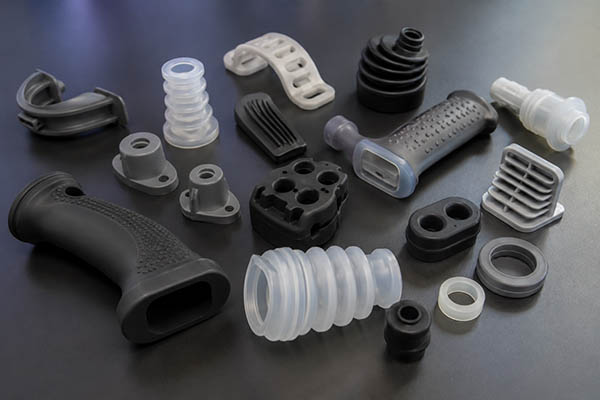
Five Important Topics Covered in This Guide
- What Is TPE Material? Composition and Material Structure
- Mechanical Properties and Performance Characteristics of TPE
- Common Types of TPE and Material Selection
- Manufacturing Processes: Injection Molding, Overmolding, and CNC Machining
- Industrial Applications and Material Selection Guide
What Is TPE Material?
Thermoplastic Elastomer (TPE) is a family of polymers that exhibit both elastic behavior similar to rubber and processing characteristics similar to thermoplastics. Instead of relying on permanent chemical cross-linking like traditional rubber, TPE forms physical cross-links that soften when heated and solidify upon cooling.
This reversible behavior enables manufacturers to produce complex components using conventional plastic manufacturing technologies while maintaining rubber-like flexibility.
Compared with thermoset rubber, TPE provides:
| Property | Traditional Rubber | TPE Material |
|---|---|---|
| Elasticity | Excellent | Excellent |
| Injection Moldable | No | Yes |
| Recyclable | No | Yes |
| Weldable | Difficult | Yes |
| Overmolding Capability | Limited | Excellent |
| Production Efficiency | Moderate | High |
| Scrap Reuse | Impossible | Possible |
One of the biggest reasons manufacturers prefer TPE is its ability to significantly shorten production cycles. Instead of vulcanization, which may require several minutes or even hours depending on the rubber compound, TPE components can often be produced within seconds using injection molding.
Molecular Structure
The performance of TPE comes from its unique molecular architecture.
A typical TPE consists of two phases:
- Hard segments
- Soft elastomeric segments
The hard segments provide mechanical strength and dimensional stability.
The soft segments provide elasticity and flexibility.
When heated, the hard domains soften enough for processing.
After cooling, they reform physical cross-links, allowing the material to recover its rubber-like behavior.
This structure explains why TPE can repeatedly stretch and recover without permanent deformation under normal operating conditions.
Advantages Over Conventional Rubber
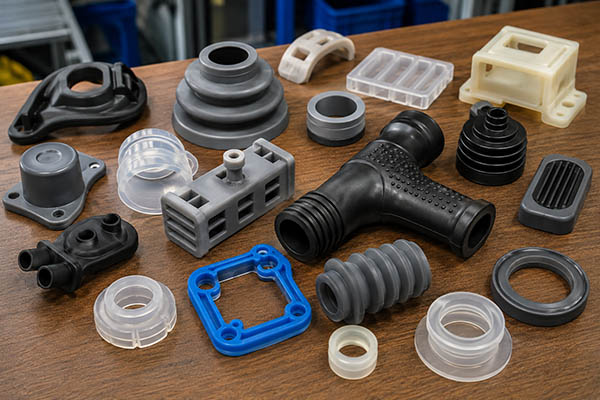
Manufacturers increasingly replace rubber with TPE because it offers numerous production advantages.
Major benefits include:
- Faster production cycles
- Lower manufacturing costs
- Excellent colorability
- Better dimensional consistency
- Reduced material waste
- Recyclability
- Easy automation
- Compatibility with multi-shot molding
For large-scale manufacturing, these advantages often translate into lower production costs while maintaining comparable mechanical performance.
Mechanical Properties and Performance Characteristics of TPE
Material selection begins with understanding mechanical performance.
TPE materials are available in a wide range of hardness, flexibility, and durability levels, allowing engineers to optimize products for different environments.
Typical Mechanical Properties
| Property | Typical Range |
|---|---|
| Density | 0.89–1.30 g/cm³ |
| Shore Hardness | 20A–80D |
| Tensile Strength | 5–35 MPa |
| Elongation at Break | 200–1000% |
| Service Temperature | -40°C to 120°C (grade dependent) |
| Water Resistance | Excellent |
| UV Resistance | Good (special grades excellent) |
| Chemical Resistance | Good |
| Abrasion Resistance | Excellent |
Actual values vary depending on the TPE family and formulation.
Flexibility
Flexibility is one of the defining characteristics of TPE.
Unlike rigid plastics such as ABS or polycarbonate, TPE can bend repeatedly without cracking.
Examples include:
- Flexible seals
- Medical tubing
- Cable insulation
- Protective covers
- Wearable devices
Products that undergo repeated bending generally benefit from TPE’s excellent fatigue resistance.
Abrasion Resistance
Many industrial products experience constant friction during operation.
Examples include:
- Conveyor rollers
- Hand tools
- Sports equipment
- Automotive pedals
- Industrial wheels
High-performance TPE grades maintain surface integrity even after thousands of wear cycles, making them ideal for components exposed to repeated mechanical contact.
Chemical Resistance
Many grades resist exposure to:
- Water
- Diluted acids
- Diluted alkalis
- Oils
- Cleaning agents
- Automotive fluids
However, chemical resistance depends heavily on the specific TPE family.
For example:
| Chemical | Resistance |
|---|---|
| Water | Excellent |
| Alcohol | Good |
| Mineral Oil | Good |
| Brake Fluid | Moderate |
| Aromatic Solvents | Poor |
| Strong Oxidizers | Poor |
Engineers should always verify compatibility using supplier chemical resistance charts before finalizing material selection.
Temperature Performance
Most general-purpose TPE grades operate between:
- -40°C
- +100°C
Premium formulations can extend service temperatures to approximately 125–150°C depending on polymer chemistry.
Compared with silicone rubber, TPE generally has lower maximum heat resistance but offers much easier processing and lower manufacturing costs.
Surface Finish
Another reason designers favor TPE is its premium tactile feel.
Surface textures may include:
- Soft-touch matte
- Leather grain
- Fine texture
- High gloss
- Anti-slip finish
These finishes are especially valuable for consumer electronics and ergonomic products.
Examples include:
- Toothbrush handles
- Electric tools
- Fitness equipment
- Steering wheel grips
- Medical instruments
Common Types of TPE and Material Selection
The term “TPE” actually describes a family of materials rather than a single polymer.
Different TPE families offer different balances of flexibility, durability, heat resistance, and cost.
SBC (Styrenic Block Copolymers)
SBC materials are among the most widely used TPE grades.
Advantages include:
- Low cost
- Excellent flexibility
- Easy processing
- Good transparency
- Soft-touch feel
Typical applications:
- Consumer products
- Toys
- Packaging
- Medical grips
TPU (Thermoplastic Polyurethane)
TPU provides significantly higher mechanical performance.
Key features include:
- Outstanding abrasion resistance
- High tensile strength
- Excellent tear resistance
- Oil resistance
- Weather resistance
Common applications include:
- Industrial rollers
- Wheels
- Protective cases
- Automotive components
- Wear-resistant parts
TPO (Thermoplastic Polyolefin)
TPO combines lightweight properties with excellent weather resistance.
Industries using TPO include:
- Automotive
- Construction
- Outdoor equipment
Typical products:
- Automotive bumpers
- Dashboard components
- Exterior trim
- Roofing membranes
TPV (Thermoplastic Vulcanizates)
TPV provides performance very close to vulcanized rubber while maintaining thermoplastic processing advantages.
Typical uses include:
- Automotive seals
- Window gaskets
- Air duct systems
- Under-hood components
TPV is particularly suitable where long-term heat resistance and compression set performance are critical.
Manufacturing Processes: Injection Molding, Overmolding, and CNC Machining
Selecting the right manufacturing process is just as important as choosing the right TPE grade. Although TPE is primarily designed for injection molding, it can also be processed through extrusion, blow molding, insert molding, overmolding, and even CNC machining for prototype development or low-volume production.
Each manufacturing method offers different advantages depending on production volume, dimensional tolerance, material grade, and product geometry.
Injection Molding: The Most Common Manufacturing Method
Injection molding is by far the most widely used process for manufacturing TPE components because it provides excellent repeatability, fast cycle times, and low unit costs in mass production.
The process generally consists of the following steps:
- Drying the material (if required by the resin supplier)
- Melting the TPE pellets inside the injection barrel
- Injecting the molten material into the mold cavity
- Cooling and solidifying
- Automatic ejection
- Quality inspection
Compared with thermoset rubber, TPE does not require vulcanization, dramatically reducing production time.
| Process | Typical Cycle Time | Recyclable | Production Efficiency |
|---|---|---|---|
| Rubber Compression Molding | 5–20 min | No | Medium |
| Rubber Transfer Molding | 3–10 min | No | Medium |
| TPE Injection Molding | 20–60 sec | Yes | Very High |
For manufacturers producing hundreds of thousands of parts annually, this difference can significantly reduce manufacturing costs.
Typical Injection Molding Parameters
Actual molding conditions vary depending on the TPE family and supplier recommendations, but the following ranges are commonly used:
| Parameter | Typical Value |
|---|---|
| Melt Temperature | 170–240°C |
| Mold Temperature | 20–60°C |
| Injection Pressure | 50–120 MPa |
| Holding Pressure | 30–80 MPa |
| Cooling Time | 10–40 sec |
Excessively high melt temperatures may degrade certain TPE formulations, causing discoloration, odor, or reduced mechanical properties. Conversely, temperatures that are too low can lead to short shots, weld lines, and poor surface quality.
Proper process optimization helps minimize internal stresses and improves dimensional consistency.
Overmolding: Combining Soft and Rigid Materials
One of TPE’s greatest strengths is its excellent adhesion to many engineering plastics.
This allows manufacturers to produce two-material components through overmolding.
Typical substrate materials include:
- Polypropylene (PP)
- ABS
- Polycarbonate (PC)
- Nylon (PA)
- PC/ABS blends
Examples of overmolded products include:
| Product | Hard Material | Soft Material |
|---|---|---|
| Screwdriver Handle | PP | TPE |
| Electric Toothbrush | ABS | TPE |
| Medical Device Grip | PC | TPE |
| Automotive Interior Switch | PA | TPE |
| Power Tool Handle | Glass-filled Nylon | TPE |
The rigid substrate provides structural strength, while the TPE layer improves grip, comfort, vibration damping, and aesthetics.
Design Considerations for Overmolding
Successful overmolding requires more than selecting compatible materials.
Engineers should also consider:
Mechanical Locking Features
Adding undercuts, grooves, holes, or ribs increases bonding strength even when chemical adhesion is limited.
Example:
Instead of relying solely on molecular bonding, a screwdriver handle may include internal locking ribs that physically anchor the TPE during molding.
Uniform Wall Thickness
Large thickness variations often cause:
- Sink marks
- Warpage
- Uneven cooling
- Internal stress
A relatively uniform wall thickness helps achieve consistent shrinkage and surface appearance.
Draft Angles
Draft angles facilitate mold release.
Typical recommendations are:
| Surface Type | Draft Angle |
|---|---|
| Smooth Surface | 1°–2° |
| Textured Surface | 3°–5° |
Can TPE Be CNC Machined?
Although TPE is primarily molded, CNC machining is still valuable for:
- Functional prototypes
- Product validation
- Fixture pads
- Custom seals
- Low-volume production
However, machining soft elastomeric materials presents unique challenges compared with metals or rigid plastics.
Challenges of CNC Machining TPE
Because TPE is flexible, it tends to deform under cutting forces.
Common machining issues include:
- Material deflection
- Burr formation
- Poor dimensional accuracy
- Surface tearing
- Tool chatter
Unlike aluminum or POM, TPE absorbs cutting forces rather than resisting them.
Recommended CNC Strategies
To improve machining quality, manufacturers typically use:
| Strategy | Benefit |
|---|---|
| Razor-sharp tools | Reduce tearing |
| High spindle speed | Cleaner cutting |
| Low feed rate | Better dimensional control |
| Vacuum fixtures | Prevent movement |
| Multiple shallow passes | Reduce deformation |
For example, machining a TPE gasket with a thickness of 3 mm usually produces better results using several light finishing passes instead of one deep cut.
Suitable CNC Operations
Common machining operations include:
- Profile cutting
- Pocket milling
- Edge trimming
- Slot machining
- Hole drilling
- Prototype finishing
Complex freeform surfaces can also be produced using 5-axis CNC machining when required for prototype verification.
Surface Finishing Options
Unlike metals, TPE rarely requires extensive post-processing.
Typical finishing operations include:
| Process | Purpose |
|---|---|
| Flash Trimming | Remove excess material |
| Deburring | Improve appearance |
| Laser Marking | Product identification |
| Pad Printing | Logos and graphics |
| Texture Replication | Decorative surfaces |
Because TPE naturally produces smooth molded surfaces, additional polishing is usually unnecessary.
Industrial Applications and Material Selection Guide
TPE has become one of the most versatile engineering materials across numerous industries.
Its combination of flexibility, durability, chemical resistance, and processability allows engineers to replace both traditional rubber and certain soft plastics.
Automotive Industry
Modern vehicles contain dozens of TPE components.
Examples include:
- Door seals
- Air duct connectors
- Cup holder inserts
- Dashboard soft-touch surfaces
- Gear shift boots
- Cable grommets
- HVAC seals
- Anti-vibration mounts
Automotive manufacturers value TPE because it reduces vehicle weight while simplifying assembly through overmolding.
Medical Industry
Medical-grade TPE has become increasingly popular because many formulations are free from latex and phthalates.
Typical medical applications include:
- Syringe grips
- Catheter components
- Medical tubing
- Respiratory masks
- Surgical instrument handles
- Wearable medical devices
Many medical-grade TPE materials can also withstand sterilization processes depending on the formulation.
Consumer Electronics
Consumers increasingly expect products that feel comfortable and premium.
TPE improves both ergonomics and appearance.
Examples include:
| Product | Function of TPE |
|---|---|
| Smartphone Case | Shock absorption |
| Earbuds | Comfort |
| Smartwatch Strap | Flexibility |
| Remote Control | Grip |
| Camera Handle | Anti-slip |
Soft-touch finishes also enhance perceived product quality without significantly increasing manufacturing costs.
Industrial Equipment
Industrial machinery often requires durable elastomeric components capable of withstanding repeated mechanical loading.
Common examples include:
- Protective covers
- Conveyor components
- Machine feet
- Flexible couplings
- Dust seals
- Cable protection systems
Selecting the correct hardness is particularly important.
Soft grades provide better flexibility, while harder grades offer improved wear resistance and dimensional stability.
Consumer Products
Many everyday products rely on TPE because it combines comfort, safety, and durability.
Examples include:
- Kitchen utensils
- Sports equipment
- Fitness accessories
- Children’s products
- Gardening tools
- Household appliances
Its excellent colorability allows manufacturers to produce vibrant designs without sacrificing mechanical performance.
How to Select the Right TPE Grade
Choosing a TPE material involves balancing several engineering factors rather than focusing on a single property.
The following table provides a practical selection guide:
| Design Requirement | Recommended Consideration |
|---|---|
| High Flexibility | Lower Shore hardness |
| Wear Resistance | TPU-based TPE |
| Outdoor Use | UV-resistant grade |
| Chemical Exposure | Oil- and solvent-resistant formulation |
| Food Contact | FDA-compliant material |
| Medical Application | Medical-grade TPE |
| Overmolding | Compatible bonding grade |
| High-Volume Production | Injection molding grade |
| Prototype Development | CNC-machinable grade |
For critical applications, engineers should review supplier datasheets and conduct prototype testing to validate long-term performance under real operating conditions.
Conclusion
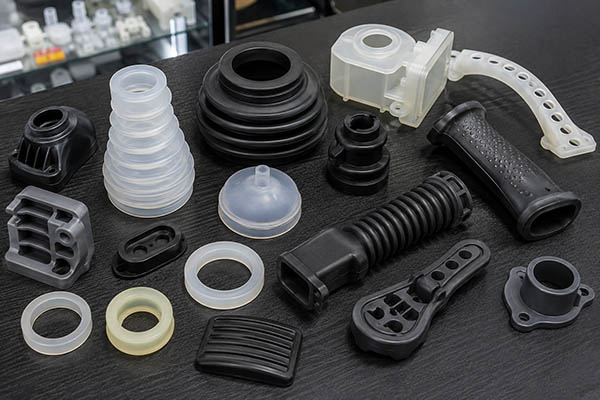
Thermoplastic elastomers have transformed modern product design by combining the flexibility of rubber with the manufacturing efficiency of thermoplastics. Whether used in automotive seals, medical devices, consumer electronics, or industrial equipment, TPE offers an excellent balance of elasticity, durability, processability, and recyclability.
Choosing the appropriate TPE family, hardness, and manufacturing method is essential for achieving reliable product performance and cost-effective production. Factors such as mechanical properties, chemical resistance, operating temperature, and processing compatibility should all be evaluated during the design stage.
At Xavier, we support customers throughout the entire manufacturing process—from material selection and design optimization to precision CNC machining, prototype development, injection molding support, and low- to high-volume production. With extensive experience in machining engineering plastics and manufacturing complex custom components, Xavier helps transform product concepts into reliable, production-ready parts while maintaining strict quality standards and fast turnaround times.
We are an integrated manufacturer and supplier specializing in CNC machining services, providing custom CNC machining solutions for a wide range of precision metal and engineering plastic components. Our experienced team delivers high-quality machining for industries such as robotics, aerospace, marine, automotive, medical, and other precision engineering applications. We support
CNC Nylon Machining,
CNC Titanium Machining, and
Electroless Nickel
along with many other custom manufacturing solutions.
As a professional
CNC Nylon Machining Manufacturer,
we provide high-volume
CNC Titanium Machining Services.
Contact us today to request competitive
CNC Brass Machining Prices.
Some of the images and text in this article are collected and compiled from the internet. If there is anything inappropriate, please contact us for processing.