
This article covers the following 10 topics:
- Screw vs Bolt: Basic Definitions and Fundamental Differences
- Structural Differences: Head, Shank, Thread, and Tip Design
- Thread Design: Machine Threads, Self-Tapping Threads, and Thread Engagement
- Installation Methods: How Screws and Bolts Are Tightened
- Common Types of Screws and Bolts and Their Applications
- Materials and Surface Finishes: Steel, Stainless Steel, Aluminum, and Titanium
- Strength and Load Capacity: Tensile, Shear, and Clamping Force
- Industrial Applications: Automotive, Aerospace, Machinery, and Electronics
- CNC Machining Considerations: Thread Cutting, Tolerances, and Manufacturing Accuracy
- How to Choose Between a Screw and a Bolt for Your Project
What Is the Difference Between a Screw and a Bolt?
Screws and bolts are two of the most common mechanical fasteners used in manufacturing, construction, automotive engineering, aerospace, and industrial equipment. At first glance, they may appear almost identical. Both have external threads, both are available in different head styles, and both are designed to hold components together.
However, their differences become important when engineers design mechanical assemblies or select fasteners for production.
The main difference is generally related to how the fastener is installed and how it creates a joint. A bolt is normally inserted through clearance holes and secured with a nut, while a screw typically engages directly with a tapped hole, a threaded component, or the material being fastened.
This distinction is not absolute. Some fasteners have overlapping characteristics, and their classification can depend on the applicable engineering standard and intended application.
Understanding these differences helps prevent thread damage, insufficient clamping force, assembly problems, and premature mechanical failure.
1. Screw vs Bolt: Basic Definitions and Fundamental Differences
A bolt is an externally threaded fastener designed primarily to pass through aligned holes in assembled components. A matching nut is normally installed on the opposite side and tightened to generate the clamping force required to hold the components together.
A screw is an externally threaded fastener that is generally tightened by rotating its head. It can engage with an existing internal thread, create its own thread in a material, or form threads during installation.
The important point is that the difference is primarily functional rather than simply visual.
| Comparison | Bolt | Screw |
|---|---|---|
| Primary function | Clamps components using a nut | Fastens components through direct thread engagement |
| Typical mating part | Separate nut | Tapped hole or material |
| Hole requirement | Usually clearance holes | Usually tapped or pilot hole |
| Tightening method | Commonly a wrench or socket | Commonly a screwdriver, Allen key, or Torx bit |
| Thread configuration | Partial or full thread | Partial or full thread |
| Typical applications | Machinery frames, structural joints | Housings, brackets, covers |
Example: Consider two CNC-machined aluminum plates that need to be connected.
If an M8 fastener passes through clearance holes in both plates and an M8 hex nut secures the opposite end, it functions as a bolt.
If the first plate has a clearance hole and the second plate contains an M8 tapped hole, an M8 screw can connect them without requiring a separate nut.
This difference directly affects machining operations, assembly time, material requirements, and maintenance procedures.
2. Structural Differences: Head, Shank, Thread, and Tip Design
Although screws and bolts share several structural features, their geometries are often optimized for different installation conditions.
Head Design
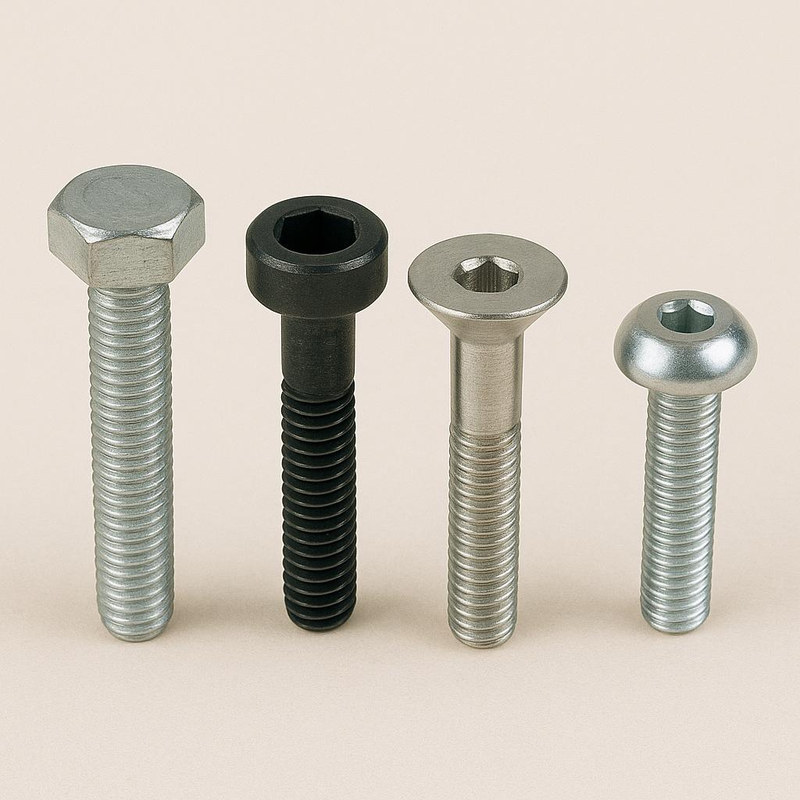
Bolts commonly feature hexagonal heads because they are designed to be tightened using external tools such as combination wrenches and socket wrenches. Hex-head bolts are widely used in machinery, automotive assemblies, and structural connections.
Screws are available in a wider range of head configurations, including:
- Socket head: Designed for hex keys and applications with limited external clearance.
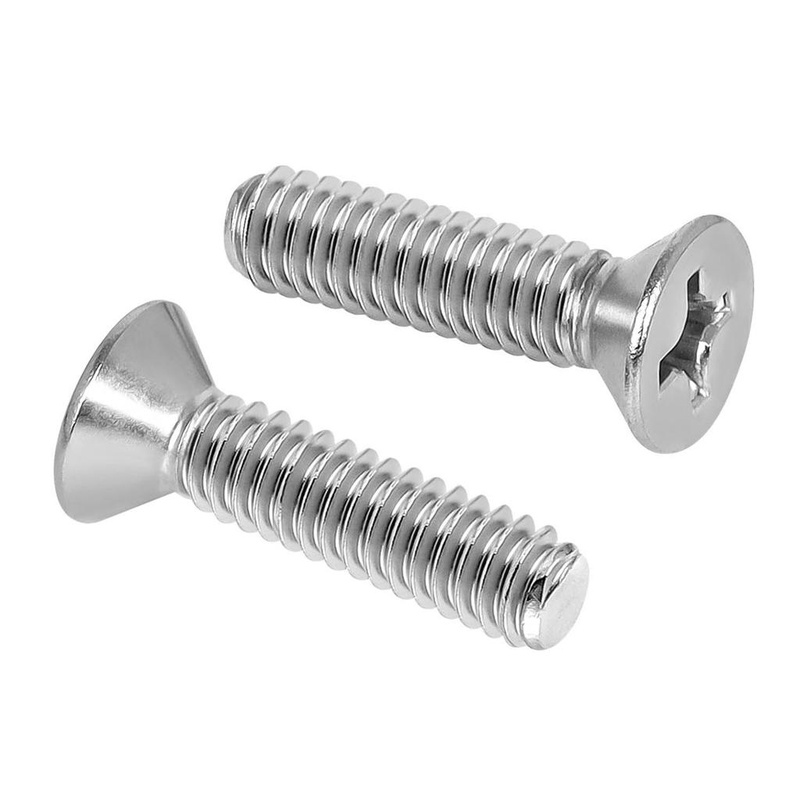
- Flat head: Countersunk into the component to create a flush surface.
- Pan head: Provides a relatively wide bearing surface.
- Button head: Offers a low-profile, rounded appearance.
- Torx head: Provides a star-shaped drive interface that helps reduce driver cam-out.
However, head shape alone cannot reliably determine whether a fastener is a screw or bolt. Hex-head cap screws, for example, are commonly classified as screws.
Shank and Thread Configuration
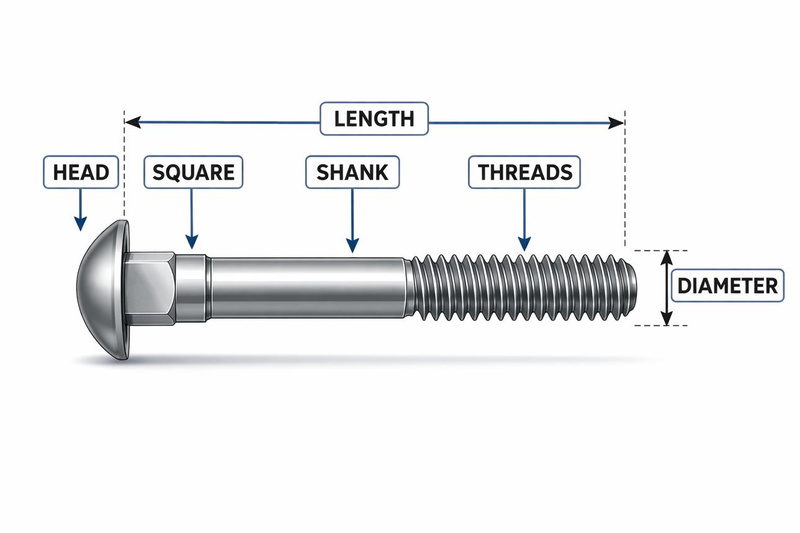
The shank is the cylindrical section between the head and threaded portion. Some bolts have a partially threaded shank, leaving a smooth section that can carry shear loads across a joint.
Other bolts and screws are fully threaded.
A partially threaded M10 bolt, for example, may have a nominal diameter of 10 mm and an unthreaded shank designed to fit closely within the joint’s grip length. This can be beneficial when the joint is engineered to transfer transverse loads through the bolt shank.
The actual dimensions must follow the relevant fastener standard and drawing requirements rather than assumptions based on the fastener name.
3. Thread Design: Machine Threads, Self-Tapping Threads, and Thread Engagement
Threads are essential to the operation of both screws and bolts. They convert rotational movement into axial force, allowing two or more components to be held together.
However, different thread designs serve different purposes.
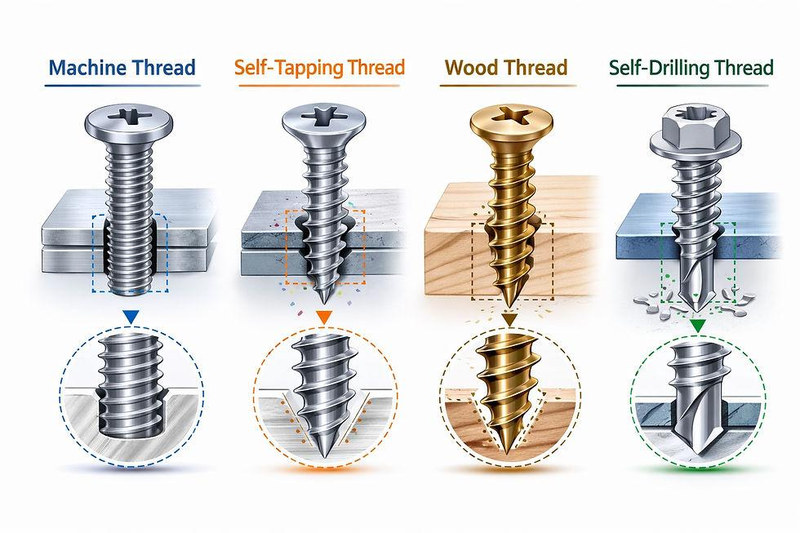
Machine Threads
Machine screws and bolts commonly use standardized metric or Unified threads. Typical examples include M4, M6, M8, and M10 metric fasteners.
For example, an M6 × 1 thread has:
- Nominal diameter: 6 mm
- Thread pitch: 1 mm
- Thread type: Metric ISO
- Major diameter: Nominally 6 mm
Machine threads require a compatible female thread, either inside a nut or machined directly into a component.
Self-Tapping and Thread-Forming Screws
Self-tapping screws create or cut mating threads during installation. They are commonly used in sheet metal, plastic housings, and thin-wall components.
Thread-forming screws displace material to create internal threads, while thread-cutting screws remove material through cutting edges or flutes.
These designs are particularly useful when conventional tapping is expensive or impractical.
Thread Engagement and Hole Design
For CNC-machined components, thread engagement is especially important.
A common preliminary design guideline for steel components is approximately one nominal diameter of thread engagement. For softer materials such as aluminum, designers may consider approximately 1.5 to 2 times the nominal diameter, depending on alloy strength, thread geometry, loading, and stripping resistance.
For example, an M6 screw in an aluminum housing might require 9–12 mm of engagement as an initial design consideration.
This is not a universal rule. Actual engagement length should be verified through thread-stripping calculations and the material’s mechanical properties.
4. Installation Methods: How Screws and Bolts Are Tightened
The installation method is one of the easiest ways to understand how screws and bolts differ in practical applications.
A bolt assembly normally requires access to both sides of the joint. The bolt is inserted through clearance holes, and a nut is installed on the opposite side. Tightening the nut stretches the bolt slightly, generating preload that clamps the components together.
A screw assembly usually requires access to only the head side because the fastener engages with an internal thread in the workpiece.
| Installation factor | Bolt assembly | Screw assembly |
|---|---|---|
| Access requirements | Usually both sides | Often one side |
| Additional hardware | Usually a nut | Often no separate nut |
| Tightening location | Frequently at the nut | At the screw head |
| Maintenance | Nut and bolt can be replaced separately | Internal threads must be inspected |
| Typical assembly | Through-hole joint | Tapped-hole joint |
For example, an industrial machine frame may use M12 bolts and locking nuts because the connection needs substantial clamping force and convenient disassembly.
An electronic enclosure may use M3 screws threaded directly into machined aluminum bosses because there is limited space for separate nuts.
One important engineering consideration is tightening torque. Torque does not translate directly into a fixed clamping force because friction at the threads and under the head or nut affects the result. Surface coatings, lubrication, and material combinations can therefore change the preload achieved at the same torque.
5. Common Types of Screws and Bolts and Their Applications
Different fastener designs are developed to meet specific mechanical requirements. Selecting the wrong type can result in poor load distribution, damaged threads, or difficult maintenance.
Common Types of Bolts
| Bolt type | Main characteristics | Typical applications |
|---|---|---|
| Hex bolt | Six-sided head, wrench installation | Machinery and steel structures |
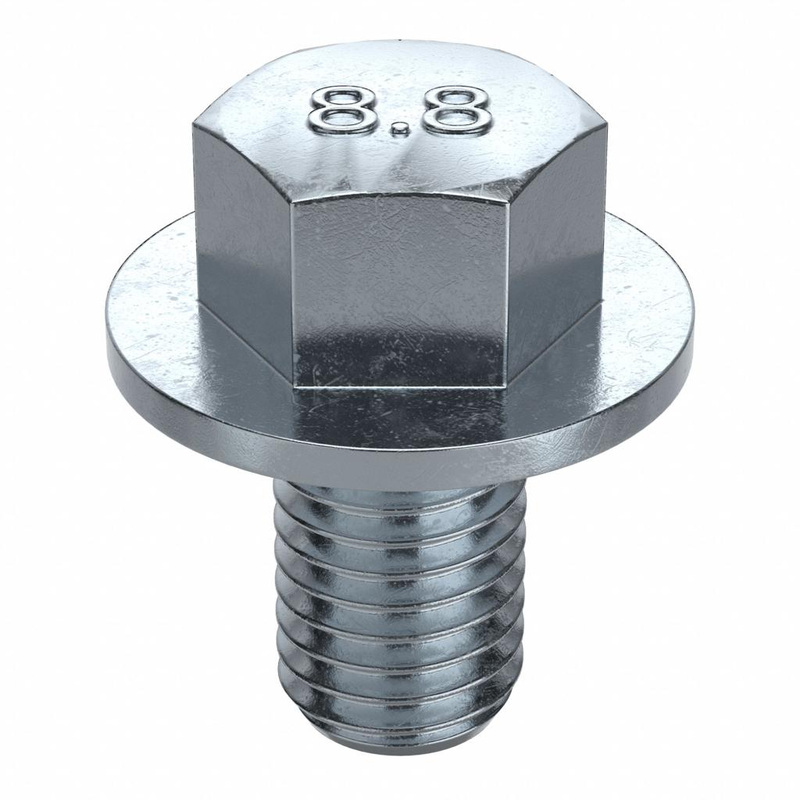
| Flange bolt | Integrated flange distributes bearing pressure | Automotive assemblies |
| Carriage bolt | Rounded head with square neck | Frames and brackets |
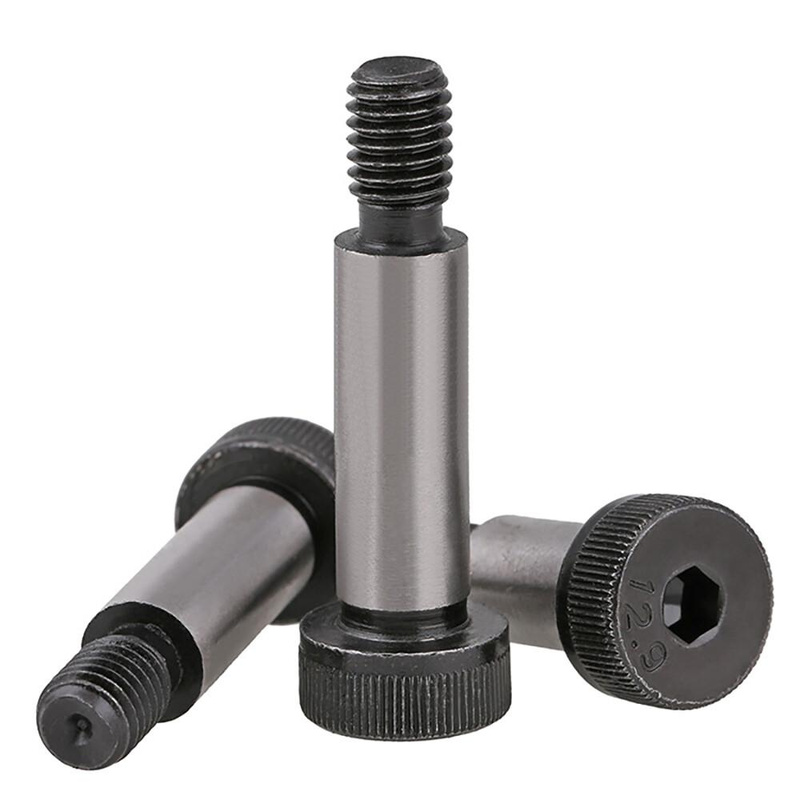
| Shoulder bolt | Precision unthreaded shoulder | Hinges, pivots, moving mechanisms |
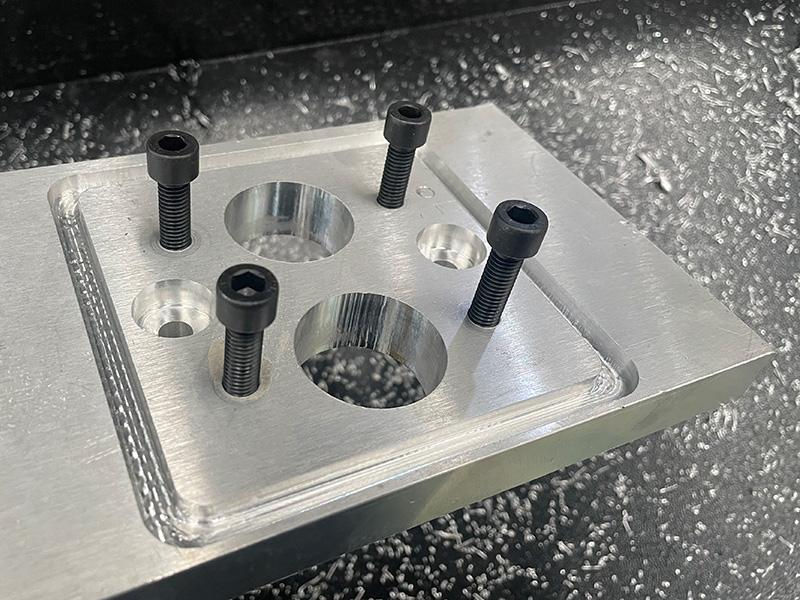
| Socket head bolt | Cylindrical head with internal hex drive | Compact machinery |
Shoulder bolts are particularly interesting in precision engineering. Their smooth shoulder can serve as a locating or pivoting surface, while the threaded section provides fastening. The shoulder diameter and length must be accurately controlled to maintain alignment and prevent excessive clearance.
Common Types of Screws
| Screw type | Main characteristics | Typical applications |
|---|---|---|
| Machine screw | Uniform machine threads | CNC housings and equipment |
| Self-tapping screw | Creates mating threads during installation | Sheet metal and plastic |
| Set screw | Usually headless, secures components through contact pressure | Shafts and collars |
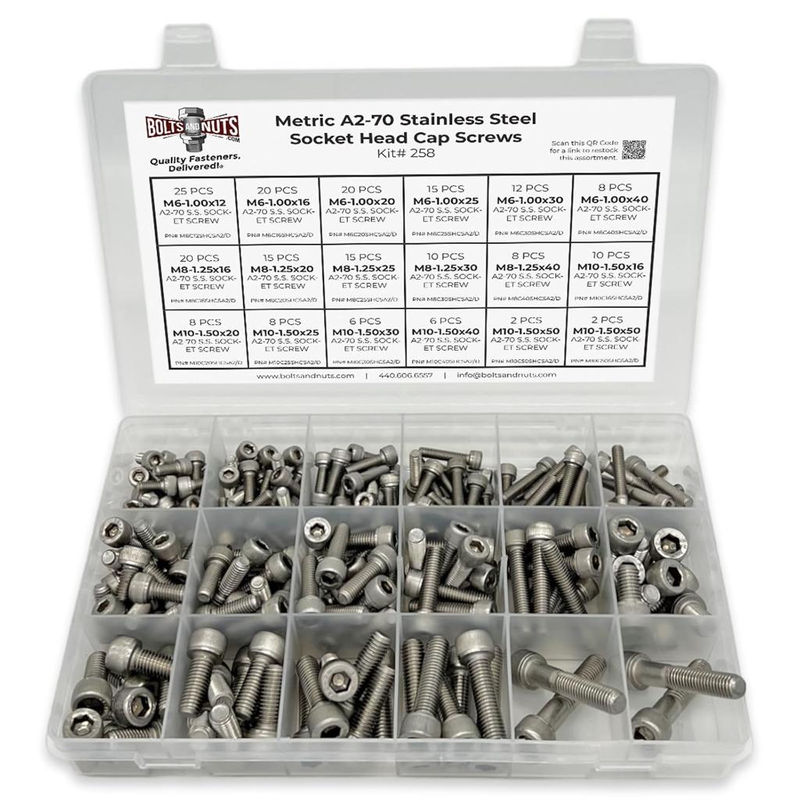
| Socket head cap screw | Internal hex drive and cylindrical head | Precision machinery |
| Countersunk screw | Conical head sits flush with the surface | Panels and brackets |
For CNC-machined parts, socket head cap screws and machine screws are particularly common because they provide reliable fastening in tapped holes and are relatively easy to integrate into compact assemblies.
6. Materials and Surface Finishes: Steel, Stainless Steel, Aluminum, and Titanium
Material selection directly influences a fastener’s tensile strength, corrosion resistance, weight, fatigue performance, and manufacturing cost.
Bolts and screws can be manufactured from many of the same materials. Their material requirements are determined by operating conditions rather than whether the fastener is called a bolt or screw.
| Material | Main advantages | Common applications |
|---|---|---|
| Carbon steel | High strength and economical cost | Machinery and industrial equipment |
| Alloy steel | High tensile strength and hardness | Heavy-duty mechanical assemblies |
| Stainless steel 304 | General corrosion resistance | Food equipment and enclosures |
| Stainless steel 316 | Improved resistance to chloride corrosion | Marine equipment |
| Aluminum | Lightweight and corrosion resistant | Lightweight assemblies |
| Titanium | High strength-to-weight ratio and corrosion resistance | Aerospace and specialized equipment |
For example, stainless steel 316 fasteners are often considered for marine applications because of their improved resistance to chloride environments compared with 304 stainless steel. However, they are not immune to corrosion under all seawater conditions.
Surface Finishing Options
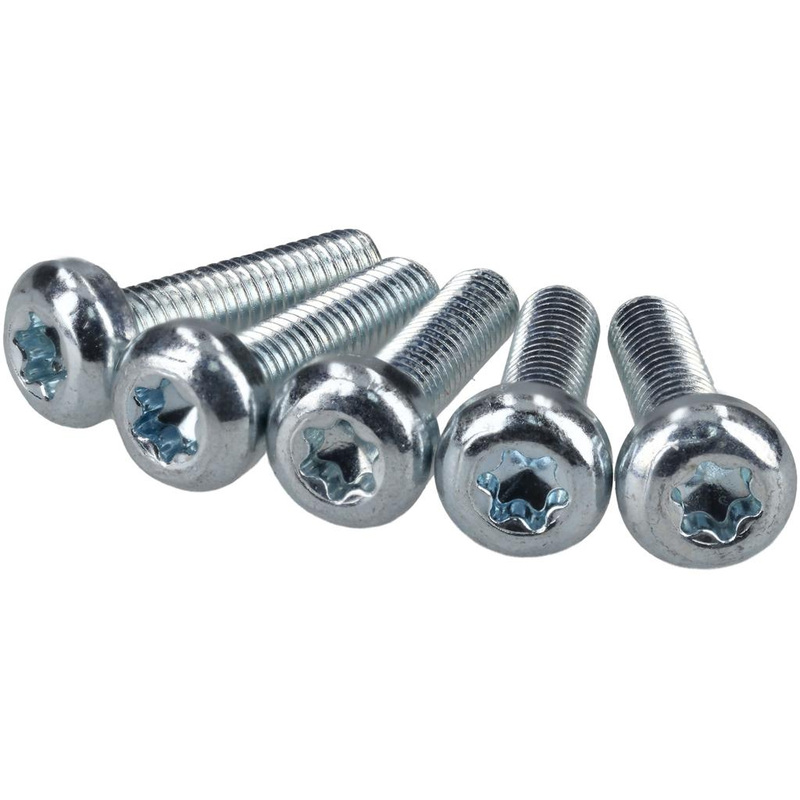
Surface treatments can improve corrosion resistance, wear performance, and appearance.
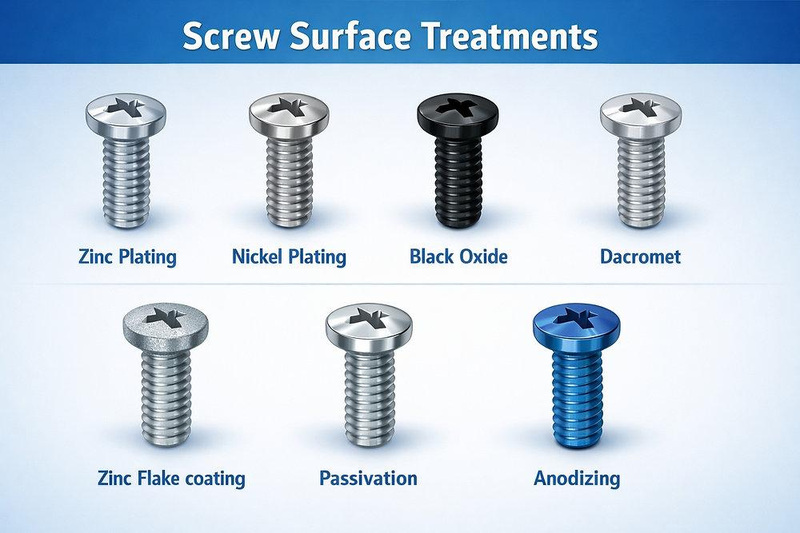
- Zinc plating: Provides sacrificial corrosion protection for many carbon-steel fasteners.
- Black oxide: Creates a dark conversion coating with relatively limited corrosion protection unless supplemented with oil or another protective treatment.
- Passivation: Improves the corrosion resistance of stainless steel by removing free iron contamination and promoting its protective passive surface.
- Electroless nickel plating: Deposits a uniform nickel-phosphorus coating that can improve corrosion and wear performance.
- Anodizing: Commonly used on aluminum components, although it is not a typical finishing process for steel screws or bolts.
Engineers must also consider coating thickness. Excessive coating buildup can interfere with thread fit, nut engagement, and assembly torque.
7. Strength and Load Capacity: Tensile, Shear, and Clamping Force
Strength is another important factor when choosing between screws and bolts. However, neither type is automatically stronger than the other.
The load capacity depends on several factors, including material grade, nominal diameter, thread pitch, effective tensile area, engagement length, and joint configuration.
Tensile Strength
Tensile strength describes the maximum tensile stress a fastener can withstand before failure.
For carbon-steel and alloy-steel fasteners, ISO 898-1 defines mechanical property classes such as 4.8, 8.8, 10.9, and 12.9.
For example:
| Property class | Nominal tensile strength | Typical use |
|---|---|---|
| 4.8 | 400 MPa | General fastening |
| 8.8 | 800 MPa | Industrial machinery |
| 10.9 | 1,000 MPa | Higher-strength assemblies |
| 12.9 | 1,200 MPa | High-strength mechanical applications |
These are nominal tensile-strength values, not allowable working stresses. Actual design calculations must account for proof strength, tensile stress area, fatigue, safety factors, and operating conditions.
Shear Strength and Joint Design
Shear loading occurs when forces attempt to slide two connected components relative to each other.
For example, an M10 bolt connecting two steel plates may experience transverse loading when the plates are subjected to lateral forces.
A properly designed bolted joint often relies on friction between clamped surfaces to resist initial sliding. If the joint slips, the fastener may experience direct bearing and shear loads.
Screws installed into tapped aluminum holes have an additional design consideration: the internal aluminum threads may strip before the steel screw reaches its tensile capacity.
Therefore, a high-strength screw does not automatically produce a high-strength joint.
8. Industrial Applications: Automotive, Aerospace, Machinery, and Electronics
Bolts and screws are used throughout industrial manufacturing, but the choice depends on the structure, operating environment, and assembly requirements.
Automotive industry: Engine mounts, suspension components, chassis connections, and transmission assemblies commonly use bolts because these joints often require controlled clamping force and regular maintenance access. Screws are frequently used in interior panels, electronic housings, and smaller brackets.
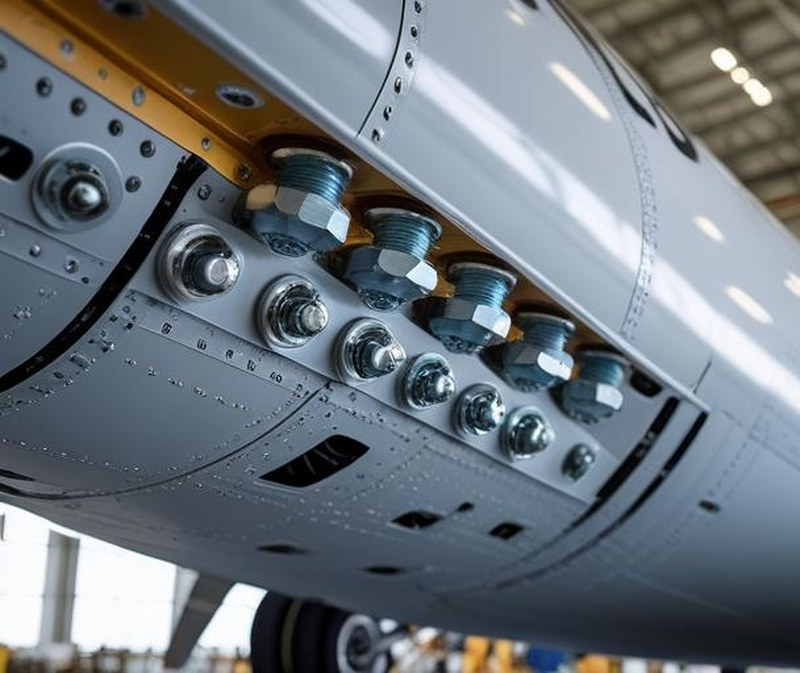
Aerospace industry: Weight reduction, fatigue resistance, vibration performance, and traceability are essential. Specialized titanium and high-strength alloy fasteners may be used in aircraft structures and precision assemblies. Fastener selection must follow the applicable aerospace specifications.
Industrial machinery: Bolts connect machine frames, motor mounts, and heavy structural components. Screws secure covers, sensor brackets, fixtures, and machined housings.
Electronics: Small machine screws are commonly used to attach circuit boards, aluminum enclosures, and protective covers. Their compact dimensions make them suitable for assemblies where installation space is limited.
Consider a CNC-machined aluminum robotic arm housing. M6 socket head screws can secure removable covers, while larger bolts may connect the arm structure to a mounting bracket. Using different fastening methods allows engineers to balance accessibility, strength, and serviceability.
9. CNC Machining Considerations: Thread Cutting, Tolerances, and Manufacturing Accuracy
For CNC machining manufacturers, the difference between a screw and a bolt is not only a fastener-selection issue. It also determines how the mating holes and threaded features must be manufactured.
Thread Machining Processes
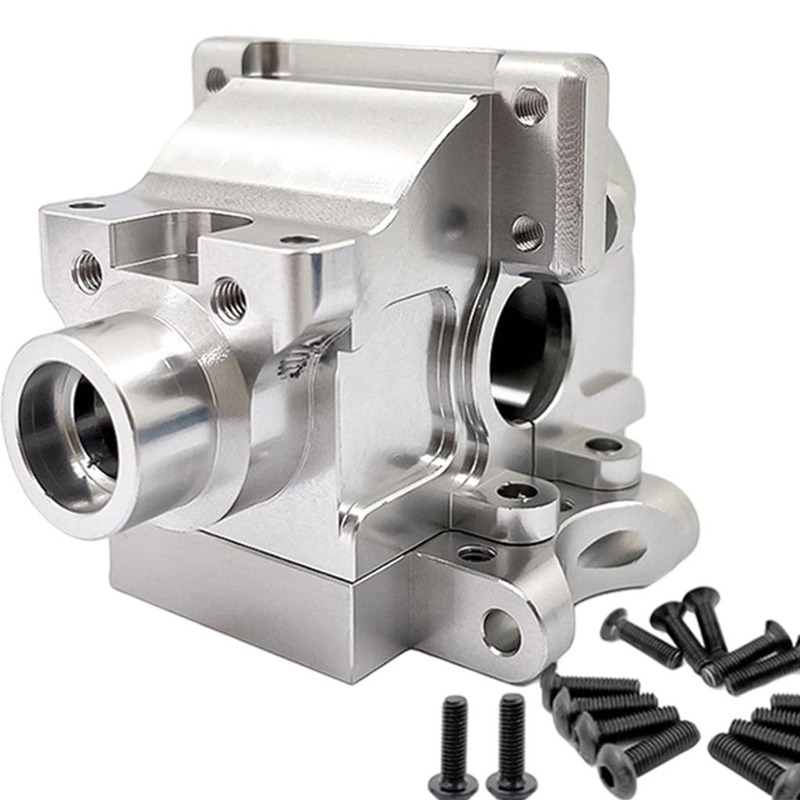
Common CNC thread manufacturing processes include:
- Tapping: Uses a tap to produce internal threads in a drilled hole.
- Thread milling: Uses a rotating cutting tool to machine internal or external threads.
- Thread turning: Produces external or internal threads on a lathe.
- Thread rolling: Forms threads through plastic deformation rather than material removal.
Thread milling is especially useful for precision CNC parts because it allows manufacturers to produce different thread diameters using suitable toolpaths and offers greater flexibility when machining difficult materials.
Thread Tolerances and Dimensional Accuracy
Thread tolerances determine whether a screw or bolt can properly engage with its mating component.
For metric ISO threads, common tolerance classes include:
- 6g for many external threads.
- 6H for many internal threads.
For example, an M6 × 1-6H internal thread is commonly paired with an appropriately specified external metric thread, such as M6 × 1-6g.
These tolerance classes control dimensional limits rather than guaranteeing a particular assembly preload.
CNC manufacturers must also control:
- Tap drill diameter and hole depth.
- Thread pitch and thread profile.
- Thread engagement length.
- Positional accuracy relative to other features.
- Surface finish and burr removal.
- Material deformation during machining.
A common mistake is specifying an M8 tapped hole without defining its required thread depth, location tolerance, or blind-hole bottom clearance. This can create assembly problems even when the nominal thread size is correct.
For precision components, these requirements should be clearly documented on the engineering drawing.
10. How to Choose Between a Screw and a Bolt for Your Project
The correct fastener should be selected according to the joint’s mechanical requirements, available installation space, material properties, and maintenance needs.
Use the following considerations during product design:
| Selection factor | Choose a bolt when | Choose a screw when |
|---|---|---|
| Joint configuration | A through-hole and nut are preferred | A tapped hole is available |
| Installation access | Both sides are accessible | Only one side is accessible |
| Maintenance | Nut-and-bolt replacement is convenient | Direct removal from the component is preferred |
| Component thickness | Sufficient space exists for a nut | The component supports adequate thread engagement |
| Assembly design | Separate fastening hardware is acceptable | A compact fastening arrangement is needed |
Practical Engineering Example: CNC Aluminum Components
Suppose a manufacturer needs to connect two 6061-T6 aluminum plates, each measuring 10 mm thick.
For a removable structural connection, M8 bolts with suitable nuts and washers may provide a practical solution. The engineer must determine the required bolt grade, grip length, preload, and hole dimensions.
For a compact equipment enclosure, M5 screws engaging with tapped holes may be more appropriate. The manufacturer can machine the holes directly into the aluminum housing, reducing the number of separate components.
The final selection should be validated against the expected tensile and shear loads, vibration conditions, thread strength, and service requirements.
Conclusion: Choose the Right Fastener with Xavier CNC Machining Expertise
Understanding the difference between a screw and a bolt is essential for designing reliable mechanical assemblies. Although both fasteners use external threads to connect components, their installation methods, thread engagement requirements, joint configurations, and load-transfer characteristics can be significantly different.
Bolts are generally suitable for through-hole connections secured with nuts, while screws are commonly used for direct engagement with tapped holes or materials. However, the final choice should always be based on engineering requirements rather than appearance alone.
At Xavier, we understand that precision fastening begins with accurate component design and manufacturing. As a professional CNC machining manufacturer, we provide custom CNC machining services for aluminum, stainless steel, carbon steel, brass, titanium, and other engineering materials.
Our manufacturing capabilities include CNC milling, CNC turning, precision drilling, tapping, thread milling, and various surface finishing processes. We pay close attention to dimensional tolerances, thread specifications, hole positioning, and surface quality to ensure that machined components fit correctly during final assembly.
Whether you need precision-machined aluminum housings, threaded mechanical components, automotive parts, aerospace components, or custom industrial brackets, Xavier can support your project from prototype development to production.
Looking for a reliable CNC machining partner?
Contact Xavier today and send us your 2D drawings or 3D CAD files. Our engineering team can help review your machining requirements, recommend suitable materials and manufacturing processes, and provide a competitive quotation for your custom CNC parts.
As an integrated CNC machining manufacturer combining production and trade, Xavier specializes in custom CNC machining and precision metal component manufacturing for global customers. We provide professional machining solutions for a wide range of materials, including alloy steel, aluminum, brass, bronze, copper, Inconel, Invar 36, mild steel, stainless steel, titanium, tool steel, ABS, FR4, G-10, nylon, PEEK, PEI, PET, PMMA (acrylic), polycarbonate, polyethylene, polypropylene, POM (acetal), PPSU, PTFE, and PVC. Our capabilities include CNC machining PEEK, CNC machining stainless steel, and CNC machining titanium, serving industries such as robotics, aerospace, marine engineering, automotive manufacturing, medical equipment, and precision engineering.
As an experienced PEEK machining manufacturer, we offer high-volume stainless steel CNC milling services. Feel free to contact us to inquire about titanium CNC machining prices and discuss your project requirements.
Some of the images and text in this article are collected and compiled from the internet. If there is anything inappropriate, please contact us for processing.