
Five key points of the text:
- What Does a Prototyping Company Do?
- Rapid Prototyping Technologies: CNC Machining vs 3D Printing vs Injection Molding
- Material Selection for Functional Prototypes
- Design for Manufacturability (DFM) During Prototype Development
- How to Choose the Right Prototyping Company for Production Success
What Does a Prototyping Company Do?
A prototyping company transforms product ideas into physical parts that engineers, designers, and manufacturers can evaluate before mass production. Instead of investing immediately in expensive tooling or production lines, companies first build prototypes to verify dimensions, functionality, appearance, and manufacturability.
Modern prototyping companies typically provide several manufacturing services under one roof, including CNC machining, sheet metal fabrication, vacuum casting, urethane casting, 3D printing, and low-volume production. Their role extends beyond simply producing parts—they also help customers optimize designs, reduce manufacturing costs, and shorten product development cycles.
Unlike traditional machine shops that focus solely on machining drawings, an experienced prototyping company collaborates with customers throughout the development process, providing engineering recommendations and manufacturing feedback.
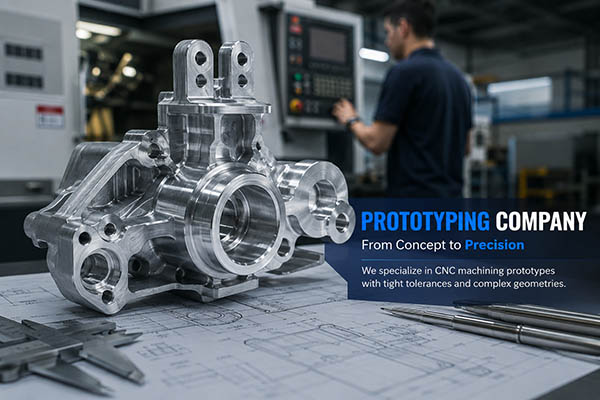
Typical Prototype Development Workflow
| Stage | Purpose | Output |
|---|---|---|
| CAD Design | Create 3D model | STEP, IGES, Parasolid files |
| Design Review | Identify manufacturing risks | DFM Report |
| Material Selection | Choose appropriate material | Material Recommendation |
| Prototype Manufacturing | Produce first article | Functional Prototype |
| Testing & Validation | Verify design performance | Test Report |
| Design Revision | Improve based on testing | Updated CAD |
| Low Volume Production | Produce bridge quantities | Small Batch Parts |
| Mass Production | Full-scale manufacturing | Production Parts |
This structured workflow allows engineers to identify problems before they become expensive production issues.
Why Companies Need Prototype Manufacturing
Developing a new product without prototypes significantly increases technical and financial risks. A prototype enables engineers to validate:
- Mechanical performance
- Assembly compatibility
- Surface appearance
- Ergonomics
- Dimensional accuracy
- Structural strength
- Heat resistance
- Functional reliability
For example, an aerospace bracket may appear perfectly acceptable in CAD software. However, after machining the first aluminum prototype, engineers may discover that the wall thickness causes vibration under dynamic loads. Detecting this issue before production can save tens of thousands of dollars in redesign costs.
Similarly, a medical device housing might require several iterations before achieving the optimal balance between weight, strength, and manufacturability.
Prototype Categories
Not every prototype serves the same purpose. Different development stages require different prototype types.
| Prototype Type | Primary Goal | Typical Manufacturing Method |
|---|---|---|
| Concept Prototype | Demonstrate appearance | SLA 3D Printing |
| Engineering Prototype | Verify dimensions | CNC Machining |
| Functional Prototype | Test real-world performance | CNC + Assembly |
| Appearance Prototype | Customer presentation | Vacuum Casting |
| Pilot Production Prototype | Manufacturing validation | CNC + Low Volume Production |
Each stage reduces uncertainty while increasing confidence before production begins.
Industries That Depend on Prototyping Companies
Modern product development across nearly every industry relies on rapid prototyping.
| Industry | Typical Prototype Parts |
|---|---|
| Aerospace | Mounting brackets, turbine housings, structural components |
| Automotive | Engine covers, transmission parts, sensor housings |
| Medical | Surgical instruments, implant tools, diagnostic equipment |
| Robotics | Joint housings, gearboxes, motor mounts |
| Electronics | Heat sinks, enclosures, connectors |
| Consumer Products | Wearables, smart devices, appliance housings |
| Industrial Equipment | Fixtures, valves, automation components |
The common objective is reducing development risk while accelerating product launch.
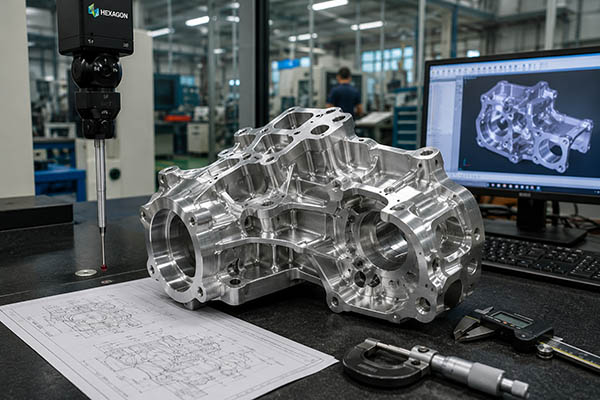
Advantages of Working with an Experienced Prototyping Company
A professional prototyping partner offers far more than manufacturing capacity.
Some key advantages include:
- Rapid quotation within hours
- Engineering consultation before machining
- Material recommendations
- Manufacturability analysis
- Tight machining tolerances
- Surface finishing services
- Quality inspection reports
- Fast global shipping
Many companies can reduce product development cycles from several months to only a few weeks by integrating these services into a single workflow.
Example: Robot Arm Development
Consider a company developing an industrial robot arm.
The first aluminum prototype reveals that the mounting holes interfere with internal wiring.
Instead of discovering this issue after investing in production tooling, engineers modify the CAD model and produce a second prototype within three days.
The revised design:
- Reduces assembly time by 30%
- Decreases weight by 12%
- Improves cable routing
- Eliminates machining interference
- Enhances maintenance accessibility
This iterative approach dramatically lowers development costs and accelerates commercialization.
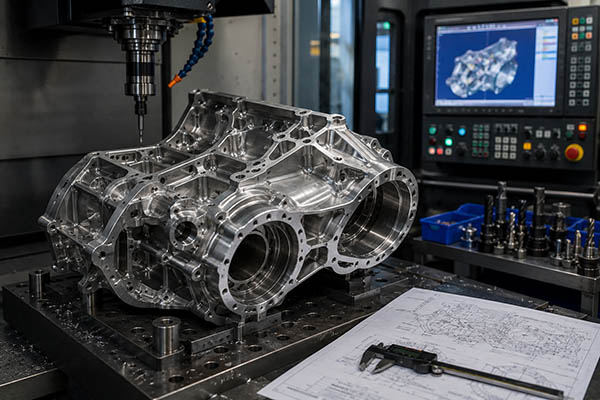
Rapid Prototyping Technologies: CNC Machining vs 3D Printing vs Injection Molding
Choosing the right manufacturing process is one of the most important decisions during prototype development. Each technology offers distinct advantages depending on design complexity, material requirements, production volume, and project timeline.
No single manufacturing method is ideal for every application. Instead, experienced prototyping companies evaluate the product’s geometry, functional requirements, mechanical performance, and anticipated production volume before recommending the most suitable process.
Comparison of Major Prototyping Technologies
| Feature | CNC Machining | 3D Printing | Injection Molding |
|---|---|---|---|
| Dimensional Accuracy | ±0.005–0.02 mm | ±0.1–0.3 mm | ±0.05 mm |
| Surface Finish | Excellent | Moderate | Excellent |
| Production Speed | Fast | Very Fast | Slow (Tooling Required) |
| Initial Cost | Medium | Low | High |
| Best Quantity | 1–500 Parts | 1–20 Parts | 5,000+ Parts |
| Material Selection | Very Wide | Limited | Production Plastics |
| Mechanical Strength | Excellent | Moderate | Excellent |
| Production Simulation | Excellent | Limited | Excellent |
For engineering prototypes where precise dimensions and material properties are critical, CNC machining is often the preferred solution. It allows manufacturers to produce parts directly from production-grade materials such as aluminum, stainless steel, titanium, brass, copper, PEEK, or ABS, ensuring that testing results closely reflect the final product’s performance.
By contrast, 3D printing excels during the earliest design stages, enabling engineers to create concept models with complex geometries in a matter of hours. Injection molding, while highly efficient for mass production, generally becomes cost-effective only after the product design has been validated and production volumes justify the investment in tooling.
Material Selection for Functional Prototypes
Selecting the right material is one of the most critical decisions during prototype development. Even a perfectly machined part may fail testing if the material does not accurately represent the final production requirements. An experienced prototyping company evaluates mechanical properties, machining characteristics, environmental conditions, cost, and intended application before recommending the most suitable material.
For appearance models, low-cost plastics may be sufficient. However, for functional prototypes that undergo mechanical testing, thermal cycling, or long-term durability evaluations, production-grade materials should be used whenever possible. This approach ensures that test results closely reflect the performance of the final product.
Factors That Influence Material Selection
Before machining begins, engineers typically evaluate several key factors:
| Selection Factor | Why It Matters | Typical Questions |
|---|---|---|
| Mechanical Strength | Determines load-bearing capability | Will the part experience high stress? |
| Weight | Affects portability and efficiency | Is lightweight design a priority? |
| Temperature Resistance | Prevents deformation or failure | Will the part operate in high-temperature environments? |
| Corrosion Resistance | Extends service life | Will it be exposed to moisture, chemicals, or salt spray? |
| Machinability | Impacts lead time and cost | Can the material be machined efficiently? |
| Surface Finish | Influences appearance and function | Does the product require cosmetic-quality surfaces? |
| Cost | Balances performance with budget | Is this a prototype or a production part? |
Considering these factors together helps avoid selecting a material based solely on strength or price, leading to prototypes that more accurately represent the final product.
Common Metal Materials for CNC Prototypes
Metal prototypes are widely used when strength, rigidity, and dimensional stability are essential.
| Material | Advantages | Typical Applications |
|---|---|---|
| Aluminum 6061 | Lightweight, easy to machine, corrosion resistant | Consumer electronics, robotics, fixtures |
| Aluminum 7075 | High strength-to-weight ratio | Aerospace components, drone parts |
| Stainless Steel 304 | Excellent corrosion resistance | Food equipment, medical housings |
| Stainless Steel 316 | Superior chemical resistance | Marine and pharmaceutical equipment |
| Brass | Outstanding machinability | Precision fittings, valves, connectors |
| Copper | Excellent thermal and electrical conductivity | Heat sinks, electrical components |
| Titanium Grade 5 | High strength, low weight, corrosion resistant | Aerospace, medical implants |
| Tool Steel | Exceptional hardness and wear resistance | Dies, molds, cutting tools |
For example, a drone manufacturer may choose Aluminum 7075 instead of 6061 for structural arms because it provides significantly higher tensile strength while maintaining a relatively low weight. Although machining costs increase slightly, the improved structural performance often justifies the investment.
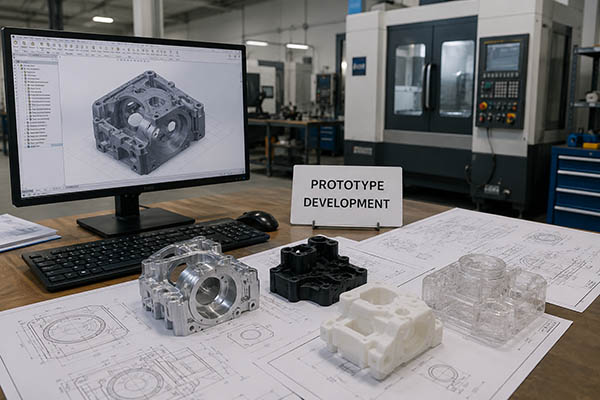
Common Engineering Plastics for Prototypes
Engineering plastics are frequently selected for lightweight components, electrical insulation, and chemically resistant applications.
| Plastic | Key Characteristics | Typical Uses |
|---|---|---|
| ABS | Tough, inexpensive, easy to machine | Consumer products, enclosures |
| POM (Delrin) | Low friction, excellent dimensional stability | Gears, bushings, sliding components |
| Nylon | High wear resistance | Bearings, rollers, mechanical assemblies |
| PEEK | Outstanding mechanical and thermal properties | Aerospace, semiconductor, medical |
| PTFE | Extremely low friction, chemical resistance | Seals, valve seats |
| Polycarbonate | High impact resistance | Safety covers, transparent housings |
| Acrylic (PMMA) | Excellent optical clarity | Display panels, optical prototypes |
| PVC | Good chemical resistance | Industrial piping components |
Choosing engineering plastics rather than standard plastics often provides better durability during repeated testing.
Material Comparison
| Property | Aluminum | Stainless Steel | Brass | PEEK | ABS |
|---|---|---|---|---|---|
| Weight | Very Low | High | High | Very Low | Very Low |
| Strength | High | Very High | Medium | High | Medium |
| Corrosion Resistance | Excellent | Excellent | Excellent | Excellent | Good |
| Machinability | Excellent | Moderate | Excellent | Moderate | Excellent |
| Cost | Medium | High | Medium | Very High | Low |
| Functional Testing | Excellent | Excellent | Good | Excellent | Limited |
This comparison demonstrates why there is no universal “best” material. Each offers different advantages depending on project goals.
Example: Selecting Materials for an Industrial Robot Gripper
An industrial robot gripper typically consists of several components, each requiring different material properties.
| Component | Recommended Material | Reason |
|---|---|---|
| Main Body | Aluminum 6061 | Lightweight with sufficient strength |
| Gripper Fingers | Tool Steel | High wear resistance |
| Guide Bushings | POM | Low friction |
| Fasteners | Stainless Steel | Corrosion resistance |
| Protective Cover | ABS | Cost-effective appearance |
Using multiple materials in a single prototype allows engineers to optimize both performance and manufacturing cost.
Material Selection Workflow
Professional prototyping companies generally follow a structured selection process:
- Review product requirements and operating conditions.
- Identify functional versus cosmetic components.
- Evaluate mechanical and thermal requirements.
- Compare available production-grade materials.
- Consider machining difficulty and cost.
- Produce prototypes using the selected materials.
- Conduct testing and collect performance data.
- Refine material choices if necessary before production.
This systematic approach minimizes design risks and improves the likelihood of a successful transition to manufacturing.
Design for Manufacturability (DFM) During Prototype Development
Design for Manufacturability (DFM) is the process of optimizing a product design so it can be manufactured efficiently, consistently, and cost-effectively. Rather than identifying production challenges after machining has begun, DFM addresses potential issues during the design phase.
A capable prototyping company does more than fabricate parts—it reviews CAD models and provides engineering feedback before production starts. This proactive collaboration helps eliminate unnecessary complexity, reduce machining time, improve assembly, and enhance overall product quality.
Why DFM Matters
Poorly designed parts often result in:
- Excessive machining time
- Higher material waste
- Complex fixturing requirements
- Difficult assembly
- Increased inspection costs
- Reduced production yield
A small design modification can significantly reduce manufacturing costs while maintaining the same product performance.
For example, increasing an internal corner radius from 0.5 mm to 2 mm allows the use of larger cutting tools, reducing machining time and extending tool life.
Common DFM Issues and Recommended Improvements
| Design Issue | Manufacturing Challenge | Recommended Solution |
|---|---|---|
| Deep narrow pockets | Long tool overhang causes vibration | Reduce pocket depth or widen the cavity |
| Extremely thin walls | Deformation during machining | Increase wall thickness where possible |
| Sharp internal corners | Requires EDM or tiny tools | Add internal radii |
| Excessively tight tolerances | Higher machining and inspection costs | Apply tight tolerances only where necessary |
| Difficult-to-access features | Multiple setups required | Simplify geometry or modify orientation |
| Unnecessary cosmetic surfaces | Additional finishing operations | Finish only visible or functional areas |
Addressing these issues early reduces both manufacturing time and production cost.
Example: Redesigning a CNC Prototype Housing
A customer submitted an aluminum electronics enclosure featuring several deep internal cavities with 90-degree sharp corners.
During the DFM review, engineers recommended:
- Increasing internal corner radii to R2 mm.
- Reducing pocket depth by 15%.
- Standardizing hole diameters to match common drill sizes.
- Combining multiple machining operations into a single setup.
Results after redesign:
| Metric | Original Design | Optimized Design |
|---|---|---|
| Machining Time | 8.5 hours | 5.9 hours |
| Tool Changes | 14 | 9 |
| Material Waste | Higher | Lower |
| Estimated Manufacturing Cost | 100% | Approximately 72% |
| Surface Quality | Good | Improved due to reduced vibration |
The functional performance of the enclosure remained unchanged, while manufacturing efficiency improved substantially.
DFM Checklist Before Prototype Production
Before releasing a design for prototype machining, engineers should verify:
- All critical dimensions are clearly defined.
- Tolerances are appropriate for functional requirements.
- Internal radii are compatible with standard cutting tools.
- Wall thickness is sufficient to prevent deformation.
- Hole sizes match standard tooling where possible.
- Surface finish requirements are specified only where needed.
- Material selection aligns with testing objectives.
- Assembly features are accessible and practical.
Completing this checklist helps reduce revisions and shortens the overall development cycle.
How to Choose the Right Prototyping Company for Production Success
Choosing a prototyping company is about more than finding the lowest quotation. A prototype often serves as the foundation for future production, so the supplier’s engineering capabilities, quality management, communication, and manufacturing capacity all play a significant role in the success of a project.
An experienced prototyping partner should be able to support the entire product development process—from reviewing CAD files and recommending design improvements to delivering precision-machined parts and scaling into low-volume or mass production. This continuity minimizes redesigns, shortens lead times, and ensures consistency between prototype and production parts.
Key Evaluation Criteria
Before selecting a supplier, evaluate the following areas:
| Evaluation Factor | Why It Matters | What to Look For |
|---|---|---|
| Engineering Support | Improves manufacturability | DFM feedback, material recommendations |
| Manufacturing Capabilities | Determines available processes | CNC milling, CNC turning, sheet metal, 3D printing, vacuum casting |
| Material Availability | Supports different applications | Aluminum, stainless steel, titanium, engineering plastics, brass, copper |
| Quality Control | Ensures dimensional accuracy | CMM inspection, material certificates, inspection reports |
| Lead Time | Influences project schedule | Rapid quotations and predictable delivery |
| Production Scalability | Supports future growth | Prototype, bridge production, mass production |
| Communication | Reduces project risks | Clear technical discussions and prompt responses |
A company that excels across these categories is more likely to become a long-term manufacturing partner rather than simply a one-time supplier.
Questions to Ask Before Starting a Project
A technical discussion before production can reveal whether a supplier understands your requirements. Consider asking questions such as:
- Can you review my CAD files and provide DFM recommendations?
- Which manufacturing process is most suitable for my design?
- Are production-grade materials available for functional testing?
- What tolerances can you consistently achieve?
- Can inspection reports be provided with shipment?
- How quickly can design revisions be incorporated?
- Do you support low-volume production after prototype approval?
- What surface finishing options are available?
The answers to these questions often provide a clearer indication of technical competence than pricing alone.
Prototype Capability Comparison
| Capability | Basic Machine Shop | Professional Prototyping Company |
|---|---|---|
| Engineering Review | Limited | Comprehensive DFM support |
| Material Guidance | Customer decides | Engineering recommendations |
| Manufacturing Processes | CNC only | Multiple rapid manufacturing processes |
| Inspection Reports | Optional | Standard quality documentation |
| Surface Finishing | Limited | Wide range of finishing options |
| Design Revision Support | Minimal | Fast engineering response |
| Low-Volume Production | Rare | Fully supported |
| Global Logistics | Limited | International shipping experience |
This comparison highlights the added value provided by companies that specialize in rapid prototyping rather than conventional machining alone.
Case Study: Accelerating Product Development
A robotics company required a lightweight gearbox housing for a collaborative robot. The initial CAD model contained several deep pockets, unnecessary cosmetic features, and multiple custom hole sizes.
During the engineering review, the prototyping team proposed:
- Standardizing threaded hole sizes.
- Increasing internal corner radii.
- Simplifying several non-functional cosmetic features.
- Optimizing machining orientation to reduce setups.
- Replacing two custom fasteners with standard components.
After implementing these recommendations:
| Performance Metric | Before Optimization | After Optimization |
|---|---|---|
| Prototype Lead Time | 12 Days | 7 Days |
| CNC Machining Time | 9.2 Hours | 6.4 Hours |
| Manufacturing Cost | 100% | Approximately 74% |
| Assembly Time | 38 Minutes | 24 Minutes |
| Design Revisions | 4 | 2 |
The prototype successfully completed functional testing, allowing the customer to move directly into pilot production with minimal additional modifications.
Signs of a Reliable Prototyping Partner
Reliable prototyping companies typically demonstrate the following characteristics:
- Transparent quotations with no hidden costs.
- Fast response to engineering questions.
- Experience across multiple industries.
- Consistent dimensional accuracy.
- Flexible manufacturing capacity.
- Ability to handle urgent prototype revisions.
- Comprehensive inspection and documentation.
- Long-term support from prototype to production.
These qualities help reduce project uncertainty and establish a dependable manufacturing partnership.
From Prototype to Production
The best prototyping companies are not limited to producing a single sample. Instead, they provide a seamless path from concept validation to full-scale manufacturing.
A typical progression includes:
- Design review and engineering consultation.
- Prototype machining and inspection.
- Functional testing and design refinement.
- Small-batch production for market validation.
- Process optimization for manufacturability.
- Full-scale production with consistent quality.
Working with one manufacturing partner throughout this process reduces communication gaps, maintains design consistency, and shortens the overall product development timeline.
Why Xavier Is a Trusted Prototyping Partner
Transforming an innovative concept into a production-ready product requires more than precision machining—it requires engineering expertise, manufacturing experience, and dependable project support.
At Xavier, we provide comprehensive prototyping solutions designed to accelerate product development while maintaining exceptional quality. From a single prototype to low-volume production, our engineering team works closely with customers to optimize designs, recommend suitable materials, and ensure every component meets functional and dimensional requirements.
Our capabilities include precision CNC milling, CNC turning, machining of complex metal and plastic components, surface finishing, and rigorous quality inspection. Whether you are developing aerospace components, robotic systems, industrial equipment, automotive parts, or consumer products, Xavier delivers reliable manufacturing solutions that help reduce development risks and shorten time to market.
By combining engineering support, advanced manufacturing technology, and responsive customer service, Xavier strives to become a long-term manufacturing partner that supports every stage of your product lifecycle—from concept to production.
We are an integrated manufacturer specializing in professional CNC machining services, providing custom CNC machining solutions for a wide range of metal and engineering plastic components. Our experienced team delivers high-precision parts for customers worldwide. We support
CNC Aluminum Machining,
CNC PEEK Machining, and
CNC Stainless Steel Machining,
along with machining for alloy steel, brass, bronze, copper, Inconel, Invar 36, low-carbon steel, titanium, tool steel, ABS, FR4, G-10, nylon, PEI, PET, PMMA (acrylic), polycarbonate, polyethylene, polypropylene, POM (acetal), PPSU, PTFE, PVC, and precision components used in robotics, aerospace, marine, automotive, medical, and other high-performance industries.
As a leading
CNC Aluminum Machining Manufacturer,
we provide high-volume
CNC PEEK Machining Services.
Contact us today for a competitive
CNC Stainless Steel Machining Price
and receive a fast quotation for your custom machining project.
Some of the images and text in this article are collected and compiled from the internet. If there is anything inappropriate, please contact us for processing.