Why Aluminium Has Become the Preferred Material for Precision Components
Aluminium has become one of the most widely used engineering materials in modern manufacturing. Compared with steel, brass, and titanium, aluminium offers an exceptional balance of lightweight properties, corrosion resistance, machinability, and cost efficiency. These characteristics make it the first choice for manufacturers producing precision components for aerospace, automotive, robotics, electronics, medical devices, industrial automation, and consumer products.
Unlike many engineering materials that require specialized machining strategies, aluminium allows manufacturers to achieve excellent dimensional accuracy while maintaining relatively high production efficiency. The lower cutting forces reduce tool wear, shorten machining cycles, and improve overall productivity.
The table below compares aluminium with several common CNC machining materials.
| Material | Density (g/cm³) | Machinability | Corrosion Resistance | Relative Cost | Typical Applications |
|---|---|---|---|---|---|
| Aluminium 6061 | 2.70 | Excellent | Excellent | Medium | Structural Parts |
| Aluminium 7075 | 2.81 | Very Good | Good | Medium-High | Aerospace |
| Stainless Steel 304 | 8.00 | Moderate | Excellent | High | Medical Equipment |
| Brass C360 | 8.50 | Excellent | Good | Medium | Valves & Fittings |
| Titanium Grade 5 | 4.43 | Difficult | Excellent | Very High | Aerospace & Medical |
The lightweight nature of aluminium directly contributes to reduced transportation costs, lower energy consumption, and improved product performance.
For example:
- Industrial robots benefit from reduced moving mass.
- Electric vehicles increase driving range.
- Aerospace structures improve fuel efficiency.
- Consumer electronics become lighter and easier to carry.
Choosing the Right Aluminium Alloy for Different Applications
Not all aluminium alloys perform the same. One of the biggest differences between an experienced aluminium parts manufacturer and a general machine shop is the ability to recommend the most suitable alloy according to mechanical requirements, corrosion environment, machining complexity, and final application.
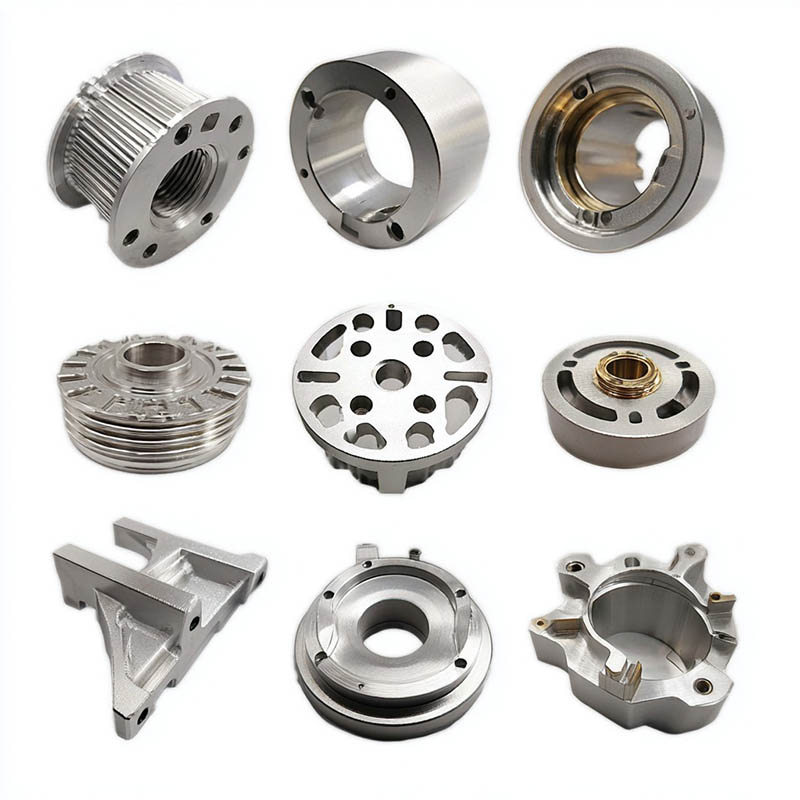
Aluminium 6061 — The Most Versatile Engineering Alloy
6061-T6 remains one of the world’s most commonly machined aluminium alloys.
Advantages include:
- Excellent machinability
- Good corrosion resistance
- High weldability
- Stable mechanical properties
- Competitive material cost
Typical applications include:
- Machine frames
- Automation equipment
- Mounting brackets
- Camera housings
- Industrial fixtures
- UAV components
Typical mechanical properties:
| Property | Value |
|---|---|
| Tensile Strength | 310 MPa |
| Yield Strength | 276 MPa |
| Hardness | 95 HB |
| Density | 2.70 g/cm³ |
Manufacturers frequently recommend 6061 when customers require a balance between strength and affordability.
Aluminium 7075 — High Strength for Aerospace Components
7075 aluminium is often called “aircraft aluminium.”
Its strength approaches that of many steels while weighing only about one-third as much.
Advantages include:
- Extremely high tensile strength
- Excellent fatigue resistance
- Outstanding stiffness
- Superior load-bearing capability
Common applications:
- Aircraft fittings
- Drone frames
- Racing vehicle parts
- Defense equipment
- Precision fixtures
- High-performance bicycle components
However, compared with 6061, 7075 offers:
- Lower corrosion resistance
- Higher material cost
- More difficult machining
- Reduced weldability
Because of these characteristics, manufacturers typically reserve 7075 for demanding structural applications where strength outweighs cost considerations.
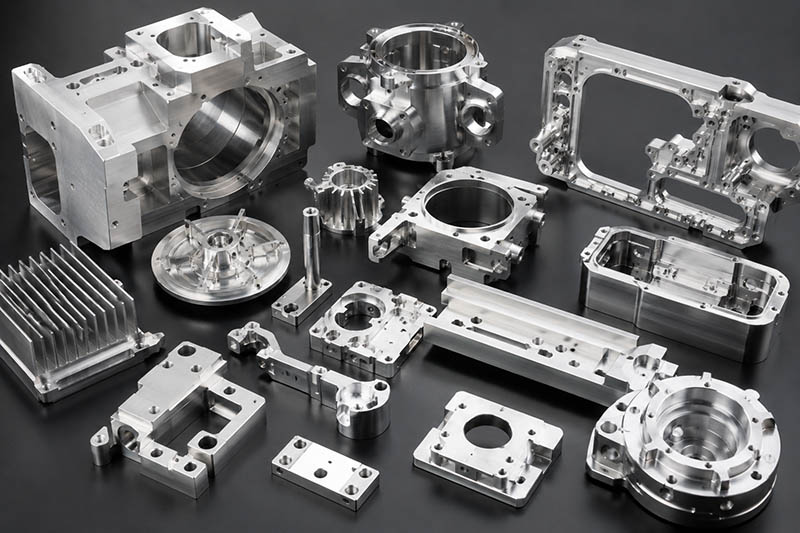
Aluminium 5052 for Corrosion Resistance
Marine equipment and outdoor applications require excellent corrosion protection.
5052 aluminium contains higher magnesium content, making it particularly suitable for saltwater environments.
Typical applications include:
- Marine brackets
- Boat accessories
- Outdoor enclosures
- Electrical cabinets
- Sheet metal assemblies
Its excellent formability also makes it popular for bending and fabrication.
Aluminium 2024 for Fatigue Resistance
Although less corrosion-resistant than other alloys, 2024 provides outstanding fatigue performance.
It is frequently used in:
- Aircraft structural members
- Aerospace brackets
- Precision load-bearing components
When combined with protective anodizing, it becomes an excellent solution for lightweight aerospace assemblies.
Quick Comparison of Popular Aluminium Alloys
| Alloy | Strength | Corrosion Resistance | Machinability | Typical Industry |
|---|---|---|---|---|
| 6061 | ★★★★☆ | ★★★★★ | ★★★★★ | General Engineering |
| 7075 | ★★★★★ | ★★★☆☆ | ★★★★☆ | Aerospace |
| 5052 | ★★★☆☆ | ★★★★★ | ★★★★☆ | Marine |
| 2024 | ★★★★★ | ★★☆☆☆ | ★★★★☆ | Aircraft |
| 6082 | ★★★★☆ | ★★★★☆ | ★★★★★ | Heavy Machinery |
A knowledgeable aluminium parts manufacturer evaluates not only the alloy itself but also production volume, machining complexity, expected service life, and cost targets before recommending the optimal material.
Manufacturing Processes for Precision Aluminium Parts
Producing high-quality aluminium components involves much more than simply cutting metal. Every stage—from material selection and fixture design to machining parameters and post-processing—directly affects dimensional accuracy, surface quality, and production efficiency. Modern aluminium parts manufacturers typically combine multiple manufacturing technologies to achieve the desired balance of precision, cost, and scalability.
CNC Milling for Complex Geometries
CNC milling is the most widely used process for manufacturing custom aluminium parts with intricate features.
Using multi-axis machining centers (3-axis, 4-axis, and 5-axis), manufacturers can produce:
- Deep pockets
- Thin walls
- Curved surfaces
- Internal cavities
- Precision mounting interfaces
- Complex aerospace geometries
For example, a 5-axis machining center can manufacture an impeller or a lightweight aerospace bracket in a single setup, reducing cumulative positioning errors and improving dimensional consistency.
Advantages of CNC milling include:
| Benefit | Description |
|---|---|
| High Accuracy | Tolerances can reach ±0.005 mm on critical features |
| Excellent Surface Finish | Suitable for cosmetic and functional parts |
| Design Flexibility | Handles complex 3D geometries |
| Short Lead Time | Ideal for prototypes and low-volume production |
| Repeatability | Consistent quality across production batches |
Because aluminium generates lower cutting forces than steel, higher spindle speeds and feed rates can often be used, increasing productivity while maintaining excellent surface quality.
Quality Control, Tolerances, and Inspection Standards
For precision aluminium components, machining capability alone is not enough. A professional aluminium parts manufacturer must also establish a comprehensive quality management system to ensure every part consistently meets customer specifications. Quality control begins before production starts and continues through material verification, in-process inspection, final measurement, packaging, and shipment.
Many industries—including aerospace, medical, semiconductor, robotics, and automotive—require documented inspection records and traceability for every batch of machined components. Even a small dimensional deviation can affect assembly performance, reduce service life, or cause complete product failure.
Material Certification and Incoming Inspection
Quality starts with the raw material.
Reliable manufacturers source aluminium from qualified mills and verify each batch before machining begins. Material certification confirms that the alloy meets the specified chemical composition and mechanical properties.
Typical inspection items include:
| Inspection Item | Purpose |
|---|---|
| Alloy Verification | Confirm correct material grade (6061, 7075, 5052, etc.) |
| Material Certificate Review | Verify compliance with customer requirements |
| Surface Condition | Check for scratches, oxidation, dents, or contamination |
| Thickness and Dimensions | Ensure stock size matches production drawings |
| Batch Identification | Maintain complete traceability |
For customers in aerospace or medical industries, manufacturers often retain mill certificates and inspection reports for years to satisfy audit requirements.
Precision Tolerances in CNC Aluminium Machining
Tolerance refers to the allowable variation in a part’s dimensions. The tighter the tolerance, the more demanding the machining process becomes.
The achievable tolerance depends on several factors:
- Machine tool accuracy
- Fixture rigidity
- Tool condition
- Cutting parameters
- Thermal stability
- Part geometry
- Measurement equipment
The following table shows typical tolerance capabilities.
| Feature | Standard Tolerance | High-Precision Tolerance |
|---|---|---|
| Linear Dimension | ±0.05 mm | ±0.01 mm |
| Hole Diameter | ±0.03 mm | ±0.008 mm |
| Flatness | 0.05 mm | 0.01 mm |
| Perpendicularity | 0.05 mm | 0.015 mm |
| Concentricity | 0.03 mm | 0.01 mm |
For example, a robotic gearbox housing may contain multiple bearing bores that must remain concentric within 0.01 mm. Any excessive deviation can increase friction, generate noise, accelerate bearing wear, and shorten the service life of the assembly.
Coordinate Measuring Machine (CMM) Inspection
Modern aluminium parts manufacturers commonly use Coordinate Measuring Machines (CMMs) to verify complex dimensions.
Unlike manual inspection tools, a CMM measures multiple geometric features with high accuracy and automatically generates digital inspection reports.
Typical features inspected by a CMM include:
- Hole position
- True position
- Flatness
- Parallelism
- Cylindricity
- Circularity
- Concentricity
- Surface profile
A typical inspection workflow includes:
- Import the CAD model into inspection software.
- Secure the machined part on the CMM table.
- Probe critical features automatically.
- Compare measured values with CAD dimensions.
- Generate a dimensional inspection report.
This process significantly reduces human error while improving repeatability.
Statistical Process Control (SPC)
For medium- and high-volume production, dimensional consistency is just as important as individual part accuracy.
Statistical Process Control (SPC) enables manufacturers to monitor machining trends over time and detect process drift before defects occur.
For example, if the diameter of a critical hole gradually increases due to tool wear, SPC software can identify the trend and alert operators to replace the cutting tool before parts fall outside specification.
Typical SPC parameters include:
| Parameter | Purpose |
|---|---|
| Mean Value | Process average |
| Standard Deviation | Process stability |
| Cp | Process capability |
| Cpk | Actual production capability |
| Control Chart | Monitor dimensional trends |
Rather than relying solely on final inspection, SPC emphasizes process stability and preventive quality control.
Surface Roughness Requirements
Surface finish influences both appearance and functionality.
Different applications require different roughness values.
| Surface Finish | Typical Ra Value | Application |
|---|---|---|
| Rough Machining | 6.3–12.5 μm | Structural Components |
| Semi-Finish | 3.2 μm | General Mechanical Parts |
| Precision Finish | 1.6 μm | Electronic Housings |
| Fine Finish | 0.8 μm | Medical Equipment |
| Mirror Finish | 0.2–0.4 μm | Optical Components |
For instance, an aluminium housing used in semiconductor manufacturing may require an Ra value below 0.8 μm to minimize particle adhesion and facilitate cleaning.
Inspection Equipment Used by Professional Manufacturers
A comprehensive inspection department typically includes a range of precision instruments.
| Equipment | Primary Function |
|---|---|
| Coordinate Measuring Machine (CMM) | Full dimensional inspection |
| Height Gauge | Vertical measurements |
| Digital Caliper | General dimensions |
| Micrometer | High-precision thickness and diameter |
| Bore Gauge | Internal diameter measurement |
| Optical Comparator | Profile inspection |
| Surface Roughness Tester | Surface finish evaluation |
| Thread Gauge | Thread verification |
By combining multiple inspection methods, manufacturers can verify both simple dimensions and complex geometric tolerances.
Example: Quality Control for an Aerospace Mounting Bracket
Consider an aluminium 7075 mounting bracket used in an unmanned aerial vehicle (UAV).
Critical quality requirements might include:
| Feature | Requirement |
|---|---|
| Material | 7075-T6 |
| Overall Tolerance | ±0.02 mm |
| Hole Position | ±0.015 mm |
| Surface Finish | Ra 1.6 μm |
| Anodizing Thickness | 20 ± 5 μm |
To meet these requirements, the manufacturer may follow this process:
- Verify incoming material certificates.
- Perform rough machining while leaving finishing allowance.
- Conduct stress relief if necessary.
- Complete finish machining on a 5-axis machining center.
- Inspect critical dimensions using a CMM.
- Apply anodizing.
- Reinspect key dimensions after surface treatment.
- Package each part individually to prevent scratches during transportation.
This systematic workflow helps ensure that every bracket delivered meets both dimensional and performance expectations.
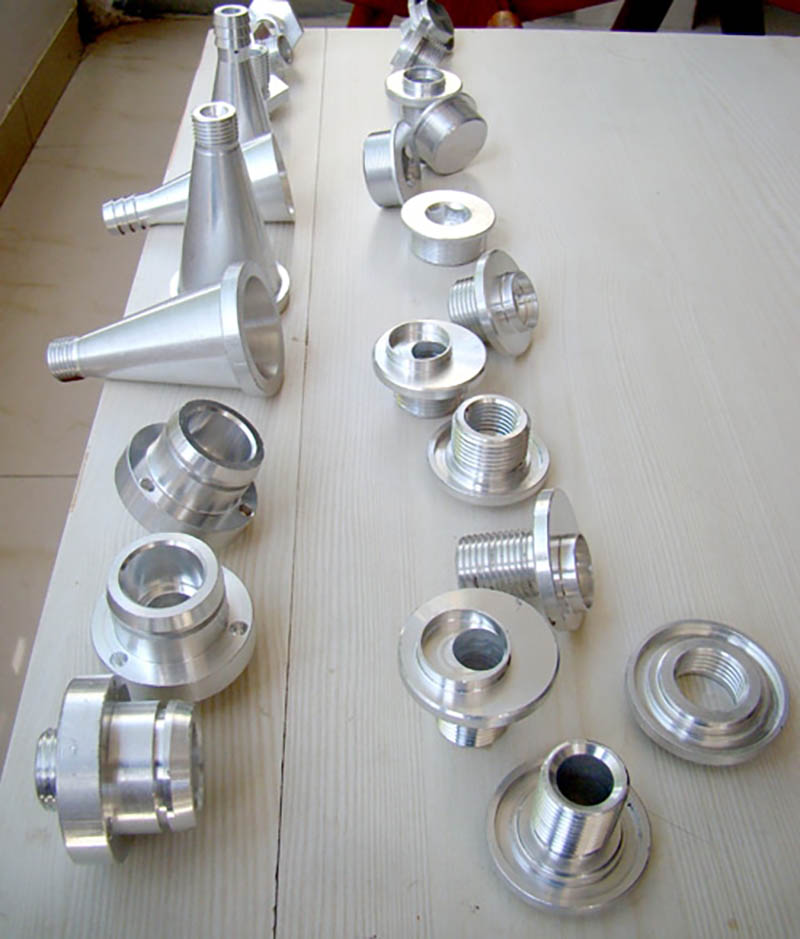
Surface Finishing Options for Aluminium Components
Although aluminium naturally forms a thin oxide layer that provides basic corrosion resistance, many applications require additional surface treatments to improve durability, appearance, wear resistance, electrical properties, or brand aesthetics.
Selecting the appropriate finishing process depends on the component’s operating environment, mechanical requirements, cosmetic expectations, and budget.
In the next section, we will examine the most widely used finishing methods for aluminium parts, compare their advantages and limitations, and discuss how each process affects product performance across different industries.
Surface Finishing Options for Aluminium Components
Surface finishing is often the final step that transforms a machined aluminium part into a durable, functional, and visually appealing product. Beyond improving appearance, the right surface treatment can significantly enhance corrosion resistance, wear resistance, electrical insulation, hardness, and product lifespan.
Professional aluminium parts manufacturers typically recommend a finishing process based on four factors:
- Operating environment
- Mechanical performance requirements
- Cosmetic expectations
- Production budget
Choosing the wrong surface finish can lead to premature corrosion, poor wear resistance, inconsistent appearance, or assembly issues. Therefore, surface engineering should be considered during the product design stage rather than after machining is complete.
Anodizing – The Most Popular Surface Treatment for Aluminium
Anodizing is by far the most widely used finishing process for aluminium parts. Unlike coatings that sit on top of the metal, anodizing converts the outer aluminium surface into a controlled aluminium oxide layer through an electrochemical process.
This oxide layer becomes an integral part of the material rather than an added coating, making it highly resistant to peeling or chipping.
Advantages of Anodizing
- Excellent corrosion resistance
- Increased surface hardness
- Improved wear resistance
- Better scratch resistance
- Attractive decorative appearance
- Wide range of color options
- Good electrical insulation
Common Anodizing Types
| Type | Characteristics | Typical Applications |
|---|---|---|
| Type I | Thin chromic acid anodizing | Aerospace components |
| Type II | Decorative sulfuric acid anodizing | Consumer electronics, machine housings |
| Type III | Hard anodizing | Industrial machinery, robotics, automotive parts |
Type III hard anodizing can increase surface hardness to approximately HV 400–600, making it significantly more wear-resistant than untreated aluminium.
For example, an aluminium robotic arm joint operating continuously in an automated production line may benefit from hard anodizing to reduce wear caused by repeated movement and friction.
Powder Coating for Outdoor Equipment
Powder coating is another widely used finishing process, particularly for products exposed to outdoor environments.
Instead of liquid paint, dry powder particles are electrostatically applied and then cured at high temperature to form a durable protective layer.
Advantages
- Thick protective coating
- Excellent UV resistance
- High impact resistance
- Good weather resistance
- Available in hundreds of colors and textures
- Environmentally friendly with minimal VOC emissions
Typical applications include:
- Industrial equipment enclosures
- Outdoor machinery
- Agricultural equipment
- Electric vehicle charging stations
- Architectural aluminium components
Comparison with Anodizing
| Feature | Anodizing | Powder Coating |
|---|---|---|
| Corrosion Resistance | Excellent | Excellent |
| Wear Resistance | Very High | Moderate |
| Color Variety | Good | Excellent |
| Scratch Resistance | Excellent | Good |
| Surface Thickness | 5–50 μm | 60–120 μm |
| Decorative Effect | Metallic | Wide variety of textures |
For applications requiring vibrant colors or textured finishes, powder coating is often preferred over anodizing.
Bead Blasting for Uniform Surface Texture
Bead blasting uses fine glass beads propelled by compressed air to create a smooth, matte finish on aluminium surfaces.
Unlike aggressive abrasive blasting, bead blasting removes minor machining marks without significantly altering dimensions.
Benefits
- Uniform satin appearance
- Reduced machining marks
- Improved cosmetic quality
- Enhanced anodizing consistency
- Non-directional surface texture
Many premium consumer products follow this process sequence:
CNC machining → Glass bead blasting → Anodizing
This combination produces the smooth metallic finish commonly seen on high-end electronics, camera bodies, and precision instrument housings.
Electropolishing and Chemical Brightening
Although electropolishing is more commonly associated with stainless steel, certain aluminium alloys can also undergo chemical brightening or specialized polishing processes to improve reflectivity.
Applications include:
- Optical equipment
- Decorative components
- Lighting fixtures
- Laboratory instruments
These treatments reduce microscopic surface irregularities and create a brighter, cleaner appearance.
Chromate Conversion Coating
Chromate conversion coating, often referred to as chemical conversion coating, provides corrosion protection while maintaining the electrical conductivity of aluminium.
Unlike anodizing, this process forms a very thin conversion layer without significantly changing part dimensions.
It is commonly used for:
- Electronic enclosures
- Aerospace assemblies
- Grounding components
- EMI shielding applications
Advantages
- Excellent corrosion protection
- Maintains electrical conductivity
- Ideal for threaded components
- Suitable as a paint primer
Because dimensional changes are minimal, conversion coatings are frequently selected for precision assemblies with tight tolerance requirements.
Mechanical Polishing
Mechanical polishing improves both appearance and surface smoothness through progressively finer abrasive media.
Depending on customer requirements, finishes may range from a satin sheen to a mirror-like surface.
Typical applications include:
- Luxury consumer products
- Decorative hardware
- Medical equipment
- Automotive trim
- Premium industrial products
Mirror polishing is particularly valuable for components where aesthetics are as important as functionality.
Laser Marking After Surface Treatment
Many aluminium parts require permanent identification after machining and finishing.
Laser marking provides:
- Serial numbers
- QR codes
- Company logos
- Part numbers
- Batch traceability
Unlike printed labels, laser markings are highly durable and resistant to wear, chemicals, and environmental exposure.
For anodized aluminium, laser engraving creates sharp, high-contrast markings without damaging the surrounding surface.
Selecting the Right Surface Finish
Each finishing method serves a different purpose. Selecting the most appropriate option depends on balancing functional requirements, environmental conditions, and cost.
| Requirement | Recommended Finish |
|---|---|
| Maximum Wear Resistance | Hard Anodizing |
| Decorative Appearance | Type II Anodizing |
| Outdoor Weather Resistance | Powder Coating |
| Electrical Conductivity | Chromate Conversion Coating |
| Matte Metallic Finish | Bead Blasting + Anodizing |
| Mirror Appearance | Mechanical Polishing |
| Permanent Identification | Laser Marking |
For example:
- A consumer electronics enclosure may benefit from bead blasting followed by black anodizing to achieve a premium matte finish.
- A robotic gearbox housing may require hard anodizing to withstand continuous friction.
- An outdoor control cabinet is better protected with powder coating, which offers excellent resistance to sunlight and weathering.
- An aerospace electrical bracket often uses chromate conversion coating to preserve conductivity while improving corrosion resistance.
Selecting the right surface finish is not merely a cosmetic decision—it directly affects product performance, durability, maintenance requirements, and overall lifecycle cost. Experienced aluminium parts manufacturers evaluate the application as a whole before recommending the most suitable finishing process.
Industries That Depend on Custom Aluminium Parts Manufacturers
Aluminium has become one of the most important engineering materials across modern industries. Its unique combination of lightweight construction, excellent machinability, corrosion resistance, thermal conductivity, and favorable strength-to-weight ratio allows engineers to design products that are both high-performing and cost-effective.
Unlike standardized components, many industries require custom-machined aluminium parts with unique geometries, tight tolerances, and specialized surface treatments. A professional aluminium parts manufacturer not only produces these components but also supports customers throughout design optimization, material selection, prototyping, and mass production.
Below are some of the industries that rely most heavily on precision aluminium machining.
Aerospace Industry
The aerospace industry places some of the highest demands on material performance and manufacturing precision.
Reducing aircraft weight is one of the most effective ways to improve fuel efficiency and payload capacity. Aluminium alloys such as 7075-T6, 2024-T4, and 6061-T6 remain widely used because they provide excellent mechanical strength while weighing approximately one-third as much as steel.
Typical aerospace aluminium parts include:
- Structural brackets
- Aircraft seat frames
- Wing support components
- Avionics housings
- Radar mounting plates
- UAV frames
- Satellite support structures
Typical aerospace manufacturing requirements include:
| Requirement | Typical Specification |
|---|---|
| Dimensional Tolerance | ±0.01 mm |
| Surface Finish | Ra ≤ 1.6 μm |
| Material Certification | Required |
| Traceability | Full Batch Tracking |
| Surface Treatment | Hard Anodizing or Chromate Conversion |
Because aircraft components often operate under continuous vibration and varying temperatures, manufacturers must carefully control machining stress, dimensional stability, and inspection procedures.
Automotive and Electric Vehicles
The transition toward electric vehicles (EVs) has significantly increased the demand for lightweight aluminium components.
Reducing vehicle weight helps improve:
- Driving range
- Battery efficiency
- Acceleration
- Handling
- Energy consumption
Common aluminium parts include:
- Battery housings
- Motor covers
- Cooling plates
- Suspension components
- Heat sinks
- Sensor brackets
- Transmission housings
For example, replacing a steel battery enclosure with an aluminium design can reduce component weight by 30–50%, depending on geometry and structural requirements.
Large production volumes also require manufacturers to optimize machining cycles, automate inspection, and maintain consistent quality across thousands of parts.
Robotics and Industrial Automation
Robotics has become one of the fastest-growing markets for precision aluminium machining.
Industrial robots operate continuously and require lightweight structures to reduce inertia while maintaining stiffness and positioning accuracy.
Typical aluminium robot components include:
- Robotic arm links
- Servo motor mounts
- Gearbox housings
- End-effector adapters
- Linear guide supports
- Vision system brackets
Advantages of aluminium in robotics:
| Benefit | Impact |
|---|---|
| Low Weight | Faster movement and lower energy consumption |
| High Rigidity | Improved positioning accuracy |
| Good Machinability | Reduced production cost |
| Corrosion Resistance | Longer service life |
| Easy Surface Treatment | Enhanced wear resistance |
Many collaborative robots (cobots) also use anodized aluminium housings to improve durability while maintaining an attractive appearance.
Medical Equipment
Medical device manufacturers demand precision, cleanliness, and repeatability.
Although stainless steel and titanium dominate implant applications, aluminium is widely used for non-contact equipment such as:
- Imaging equipment
- Laboratory instruments
- Surgical device housings
- Diagnostic equipment
- Optical platforms
- Medical automation systems
Medical aluminium components often require:
- Burr-free machining
- Smooth surface finishes
- Tight geometric tolerances
- Cleanroom-compatible packaging
- Complete dimensional inspection
Every production step must minimize contamination and ensure reliable long-term performance.
Electronics and Semiconductor Equipment
Modern electronic manufacturing relies heavily on aluminium because of its excellent thermal conductivity and dimensional stability.
Common applications include:
- Heat sinks
- Electronic enclosures
- LED lighting housings
- Precision fixtures
- Vacuum chamber components
- Semiconductor equipment frames
For high-power electronic devices, effective heat dissipation directly affects reliability and service life.
Example:
| Material | Thermal Conductivity (W/m·K) |
|---|---|
| Aluminium 6061 | ~167 |
| Aluminium 1050 | ~220 |
| Stainless Steel 304 | ~16 |
| Titanium Grade 5 | ~7 |
This substantial difference explains why aluminium is widely selected for heat management applications.
Renewable Energy
The renewable energy sector increasingly relies on aluminium because outdoor installations require long-term corrosion resistance with minimal maintenance.
Applications include:
- Solar panel mounting systems
- Wind turbine components
- Energy storage enclosures
- Battery cooling systems
- Electrical control cabinets
Anodized aluminium structures can withstand harsh environmental conditions while maintaining structural integrity for many years.
Consumer Products
Consumers increasingly expect products that are both durable and visually appealing.
Premium aluminium components are widely used in:
- Laptop housings
- Camera bodies
- Audio equipment
- Smart home devices
- Sports equipment
- Premium furniture accessories
Manufacturers often combine CNC machining, bead blasting, anodizing, and laser engraving to achieve a refined appearance and consistent product quality.
From Prototype to Mass Production
An experienced aluminium parts manufacturer should support the entire product lifecycle rather than simply providing machining services.
A typical project flow includes:
| Stage | Manufacturer Support |
|---|---|
| Design Review | DFM analysis and optimization |
| Material Selection | Alloy recommendation |
| Prototype Machining | Functional validation |
| Engineering Changes | Rapid iteration |
| Pilot Production | Process verification |
| Mass Production | Stable quality and cost control |
| Inspection | Full dimensional reports |
| Logistics | Global delivery support |
This integrated approach shortens development cycles, reduces manufacturing risks, and accelerates product launches.
Why Choose Xavier as Your Aluminium Parts Manufacturer
Selecting the right manufacturing partner is about more than equipment—it is about engineering expertise, process control, and a commitment to consistent quality.
Xavier specializes in custom CNC machining services for precision aluminium components, supporting customers from prototype development through high-volume production. Whether the project involves simple brackets or highly complex multi-axis machined parts, Xavier combines advanced CNC technology with rigorous quality management to deliver reliable, repeatable results.
Our capabilities include:
- Precision CNC milling and turning for a wide range of aluminium alloys, including 6061, 7075, 5052, 2024, and more.
- Tight machining tolerances to meet demanding industrial requirements.
- Comprehensive inspection using CMMs and other precision measuring equipment.
- A variety of surface finishing options, including anodizing, hard anodizing, bead blasting, powder coating, chromate conversion, and laser marking.
- Fast prototyping, low-volume production, and scalable manufacturing for mass production.
- Engineering support for Design for Manufacturability (DFM), helping optimize part geometry, reduce machining costs, and improve production efficiency.
Whether your application is in aerospace, automotive, robotics, electronics, medical devices, renewable energy, or industrial automation, Xavier is committed to providing high-quality aluminium parts that meet your technical requirements, delivery schedules, and performance expectations.
Partner with Xavier to transform your ideas into precision-engineered aluminium components built for reliability, efficiency, and long-term success.
As an integrated manufacturer specializing in CNC machining services, we focus on custom CNC machining and precision manufacturing of various metal components. We also provide CNC Electroless Nickel Plating Surface Finishing, CNC Anodizing Surface Finishing, and CNC Electropolishing Surface Finishing to meet different application requirements.
As a professional CNC Electroless Nickel Plating Surface Finishing Manufacturer, we provide high-volume CNC Anodizing Surface Finishing Services. Contact us today for competitive CNC Electropolishing Surface Finishing Prices. As an experienced aluminium parts manufacturer, we are committed to delivering high-quality CNC machining solutions for customers worldwide.
Some of the images and text in this article are collected and compiled from the internet. If there is anything inappropriate, please contact us for processing.