
Rapid Prototyping: Complete Guide to Modern Product Development and Manufacturing
Rapid prototyping is a cornerstone technology in modern product development, allowing engineers and designers to quickly transform digital designs into physical models. Instead of waiting weeks or months for tooling or production molds, companies can create functional prototypes within hours or days.
The process typically uses 3D CAD data to fabricate a physical model of a part or assembly, enabling testing, design validation, and performance evaluation before mass production begins.
Today, rapid prototyping technologies include additive manufacturing methods such as 3D printing as well as subtractive methods like CNC machining and hybrid techniques like vacuum casting.
This guide explores the key technologies, benefits, materials, and industrial applications of rapid prototyping.
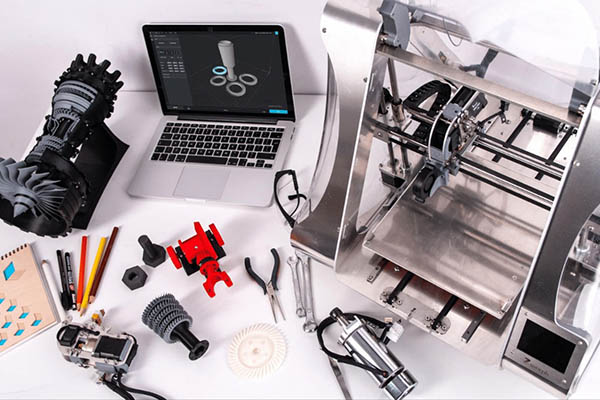
What Is Rapid Prototyping and Why It Matters in Manufacturing
Rapid prototyping refers to a group of manufacturing techniques used to quickly create a physical model of a part or product using digital design data. These prototypes allow engineers to test functionality, evaluate design features, and identify potential issues early in the development cycle.
Traditionally, prototype manufacturing required expensive tooling and lengthy production processes. Rapid prototyping eliminates these barriers by enabling fast, flexible iteration cycles.
Typical product development workflow:
| Development Stage | Traditional Manufacturing | Rapid Prototyping |
|---|---|---|
| Concept design | CAD modeling | CAD modeling |
| Prototype creation | Tooling & machining | Direct digital fabrication |
| Testing | Delayed | Immediate testing |
| Iteration | Expensive and slow | Fast and low-cost |
As a result, companies can dramatically shorten product development timelines.
Core Principles Behind Rapid Prototyping Technology
Rapid prototyping works by converting digital models into physical objects using layered or subtractive fabrication techniques.
The typical workflow includes:
- Creation of a 3D CAD model
- Conversion into manufacturing instructions
- Layered fabrication or CNC machining
- Post-processing and finishing
Many additive manufacturing methods construct parts layer by layer, stacking materials according to geometric slices generated from CAD files.
This layered approach allows manufacturers to produce extremely complex geometries that would be difficult or impossible with traditional machining methods.
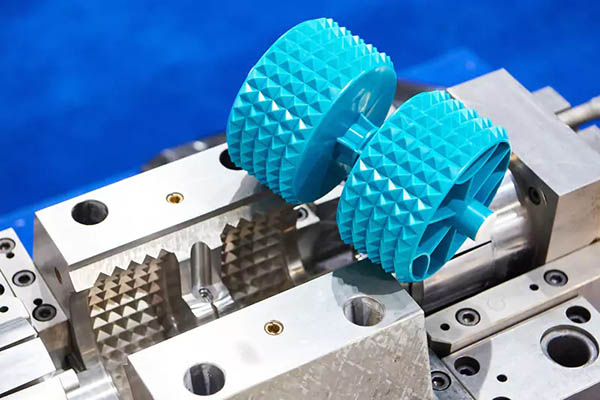
Main Types of Rapid Prototyping Technologies
Rapid prototyping technologies can be divided into two major categories: additive manufacturing and subtractive manufacturing.
| Technology Category | Examples |
|---|---|
| Additive manufacturing | SLA, SLS, FDM, MJF |
| Subtractive manufacturing | CNC machining |
| Hybrid manufacturing | Vacuum casting, rapid tooling |
Each technology has advantages depending on the prototype’s purpose, material, and mechanical requirements.
Stereolithography (SLA) Rapid Prototyping
SLA is one of the earliest and most widely used rapid prototyping technologies.
The process works by curing photosensitive resin with a UV laser, forming solid layers that gradually build a complete 3D object.
Key characteristics:
| Parameter | SLA Performance |
|---|---|
| Accuracy | ±0.1 mm |
| Surface roughness | Ra 0.8–1.6 µm |
| Typical material | Photopolymer resin |
SLA is ideal for prototypes that require:
- excellent surface finish
- detailed geometry
- aesthetic design verification
However, SLA parts are typically weaker than functional engineering plastics.
Selective Laser Sintering (SLS) for Functional Prototypes
SLS uses a laser to fuse powdered materials such as nylon or metal particles into solid objects.
Advantages include:
- no support structures required
- strong mechanical properties
- complex internal geometry capability
Parts produced by SLS often exhibit mechanical properties similar to injection-molded plastics, making them suitable for functional testing prototypes.
However, surface roughness tends to be higher due to powder particle size.
Fused Deposition Modeling (FDM) for Cost-Effective Prototyping
FDM is one of the most widely accessible rapid prototyping methods.
It works by melting thermoplastic filament and depositing it layer by layer to form a solid object.
Advantages include:
- low equipment cost
- wide material availability
- safe operation environment
Typical materials include:
| Material | Common Applications |
|---|---|
| ABS | functional prototypes |
| PLA | concept models |
| PETG | engineering prototypes |
FDM is ideal for concept verification and early-stage product development.
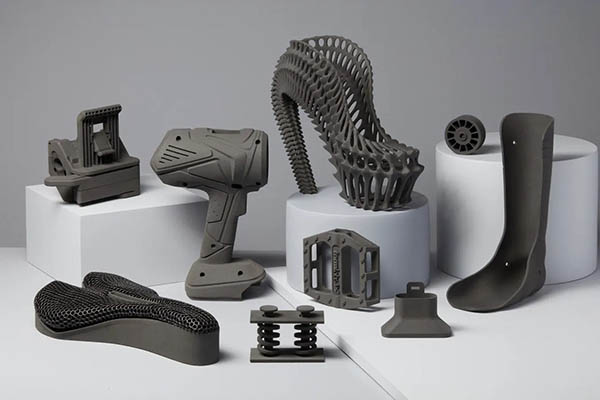
CNC Rapid Prototyping for Precision Engineering
CNC machining remains one of the most important rapid prototyping technologies, especially for functional parts.
Unlike additive processes, CNC machining uses subtractive manufacturing by removing material from solid blocks.
Advantages include:
- high precision (up to ±0.025 mm)
- real engineering materials
- excellent surface finish
CNC rapid prototyping can work with metals and plastics including:
- aluminum
- stainless steel
- ABS
- PEEK
- Delrin
This makes CNC machining ideal for functional testing and mechanical evaluation prototypes.
Rapid Prototyping Materials and Engineering Options
One major advantage of rapid prototyping is the broad range of available materials.
| Material Category | Examples |
|---|---|
| Engineering plastics | ABS, Nylon, PEEK |
| Metals | Aluminum, stainless steel, titanium |
| Elastomers | TPU, rubber-like materials |
| Composite materials | carbon-filled polymers |
Material selection depends on:
- mechanical strength requirements
- temperature resistance
- functional testing needs
In many cases, multiple materials are tested simultaneously to compare performance.
Advantages of Rapid Prototyping in Product Development
Rapid prototyping offers several key advantages for engineers and product developers.
Faster Time to Market
Prototypes can be produced in hours or days rather than weeks, accelerating development cycles.
Lower Development Costs
Early testing reduces the risk of costly design errors in mass production.
Improved Product Design
Physical prototypes allow designers to evaluate:
- ergonomics
- assembly compatibility
- aesthetic appearance
Iterative Design Capability
Rapid prototyping allows repeated design improvements through continuous testing and refinement.
Rapid Prototyping vs Traditional Manufacturing
Understanding the differences between prototyping and traditional manufacturing helps companies select the right process.
| Factor | Rapid Prototyping | Traditional Manufacturing |
|---|---|---|
| Production speed | Very fast | Slow |
| Tooling requirement | None or minimal | High |
| Cost for small batches | Low | High |
| Design flexibility | Very high | Limited |
Rapid prototyping is especially beneficial during early product development stages.
Industrial Applications of Rapid Prototyping
Rapid prototyping is widely used across many industries.
Automotive Industry
Prototypes are used to test:
- engine components
- dashboard parts
- structural components
Aerospace Industry
Rapid prototyping enables lightweight component testing and aerodynamic evaluation.
Medical Industry
Applications include:
- surgical guides
- medical device prototypes
- anatomical models
Consumer Electronics
Companies frequently prototype:
- smartphone housings
- wearable devices
- laptop components
Design Guidelines for Rapid Prototyping
Engineers should consider several factors when designing prototypes.
Wall Thickness
Thin walls may warp or break during printing or machining.
Tolerance Requirements
High precision prototypes often require CNC machining instead of 3D printing.
Surface Finish
Post-processing methods such as sanding, polishing, or coating may be required.
Cost Factors in Rapid Prototyping
The cost of rapid prototyping depends on multiple variables.
| Cost Factor | Impact |
|---|---|
| Material type | Metals cost more than plastics |
| Manufacturing technology | SLA vs CNC vs SLS |
| Part complexity | Complex geometry increases cost |
| Quantity | Batch size affects efficiency |
For example, small batches of 1–10 pieces using SLA prototypes can cost approximately $150–$300 per part depending on complexity.
Quality Control and Testing for Prototypes
Once a prototype is manufactured, several testing methods may be used:
- dimensional inspection
- functional testing
- stress testing
- assembly verification
These tests help engineers confirm whether the design meets performance requirements before moving to mass production.
Future Trends in Rapid Prototyping
Rapid prototyping technology continues to evolve with advancements in digital manufacturing.
Emerging trends include:
- AI-driven generative design
- multi-material 3D printing
- hybrid CNC-additive manufacturing
- automated prototype production lines
These technologies will further accelerate product innovation and manufacturing efficiency.
Why Choose Xavier for Rapid Prototyping Services
If your company requires reliable rapid prototyping services for product development, choosing an experienced manufacturing partner is essential.
Xavier provides comprehensive rapid prototyping solutions including:
- precision CNC rapid prototyping
- SLA and SLS additive manufacturing
- engineering material selection support
- low-volume production capabilities
Our engineering team works closely with product designers and manufacturers to transform digital concepts into high-quality prototypes quickly and efficiently.
Whether you are developing automotive components, electronics enclosures, or industrial machinery parts, Xavier delivers fast, reliable, and precise rapid prototyping services to accelerate your product development process.
Some of the images and text in this article are collected and compiled from the internet. If there is anything inappropriate, please contact us for processing.