
Nickel Plating Service: Complete Guide to Industrial Nickel Surface Coating
Nickel plating service is one of the most widely used metal finishing processes in modern manufacturing. By depositing a thin layer of nickel onto the surface of metal or plastic components, manufacturers can significantly improve corrosion resistance, wear resistance, and overall durability.
Industries such as automotive, aerospace, electronics, and precision CNC machining rely on nickel plating to extend the service life of parts and improve appearance. Nickel coatings act as a protective barrier against oxidation, chemicals, and mechanical wear.
This guide explores the engineering principles, process methods, material compatibility, and practical applications of nickel plating services.
What Is Nickel Plating
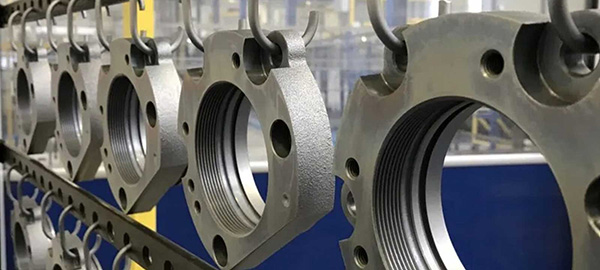
Nickel plating is a surface finishing process that deposits a thin layer of nickel onto a substrate material. The substrate can include steel, aluminum, copper, or even some plastics after appropriate surface preparation.
The purpose of nickel plating includes:
- Corrosion protection
- Increased hardness and wear resistance
- Decorative metallic appearance
- Improved solderability and conductivity
Nickel plating acts as a protective shield, preventing base metals from reacting with oxygen or moisture and slowing oxidation processes.
Typical nickel coating thickness ranges from 5 μm to 50 μm, depending on the application.
Types of Nickel Plating Processes
Nickel plating services are mainly divided into two major industrial methods.
Electrolytic Nickel Plating
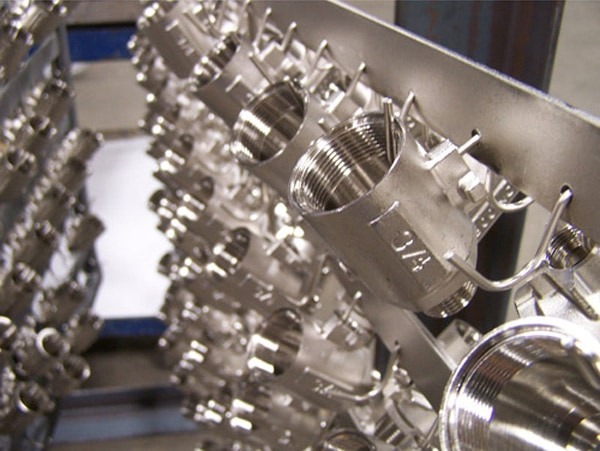
Electrolytic plating uses electric current to deposit nickel ions onto a metal surface through an electrolyte bath.
Basic process steps:
- Substrate cleaning
- Immersion in electrolyte solution
- Electrical current applied between electrodes
- Nickel ions deposit on the cathode (the part)
However, because current density varies across surfaces, plating thickness may become uneven on complex geometries.
Electroless Nickel Plating
Electroless nickel plating uses a chemical reduction reaction instead of electricity to deposit nickel onto the substrate.
Advantages include:
- Uniform thickness on all surfaces
- Even coating inside holes and cavities
- Excellent corrosion resistance
This process produces a nickel-phosphorus alloy coating with phosphorus content typically between 2% and 14%.
Nickel Plating Process Workflow
Professional nickel plating service follows a controlled manufacturing workflow to ensure consistent coating quality.
| Process Stage | Description |
|---|---|
| Cleaning | Degreasing removes oils and machining residues |
| Surface Activation | Acid treatment prepares the metal surface |
| Plating | Nickel ions deposit onto the substrate |
| Rinsing | Removes residual chemicals |
| Post-treatment | Heat treatment or sealing improves coating performance |
Surface preparation is particularly critical. Any contamination can lead to adhesion failure or uneven coating.
Key Performance Advantages of Nickel Plating
Nickel plating improves the functional performance of mechanical parts.
Corrosion Resistance
Nickel forms a protective barrier that slows chemical reactions between the base metal and the environment.
Electroless nickel coatings with higher phosphorus content are particularly resistant to corrosion because they form an amorphous structure without grain boundaries, reducing corrosion initiation points.
Wear Resistance
Nickel plating significantly increases surface hardness.
Typical hardness values:
| Coating Type | Hardness (HV) |
|---|---|
| Electroplated Nickel | 200–400 HV |
| Heat-treated Electroless Nickel | 800–1000 HV |
This makes nickel plating suitable for gears, valves, and sliding components.
Reduced Friction
Nickel coatings provide a smoother surface that reduces friction and prevents galling between metal components.
Nickel Plating Thickness and Engineering Specifications
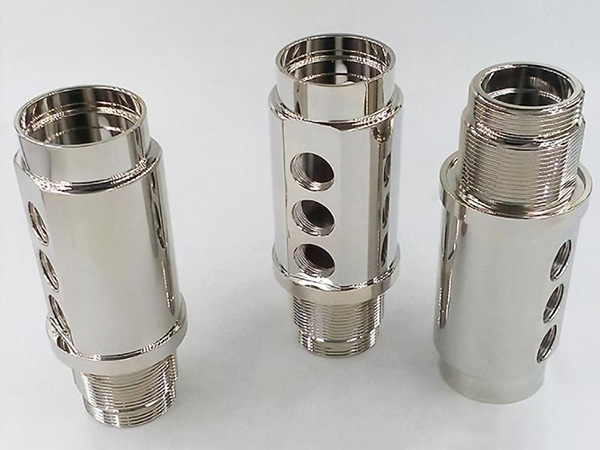
Coating thickness is one of the most important design parameters in nickel plating.
| Application | Typical Thickness |
|---|---|
| Decorative coating | 5–10 μm |
| Mechanical wear protection | 15–25 μm |
| Heavy corrosion protection | 25–50 μm |
Uniform thickness is particularly important for precision CNC components where tolerances must remain within ±0.01 mm.
Electroless nickel plating is preferred in these cases because it deposits evenly across the entire surface regardless of part geometry.
Materials Compatible with Nickel Plating
Nickel plating services can be applied to many materials.
| Substrate Material | Plating Compatibility |
|---|---|
| Steel | Excellent adhesion |
| Aluminum | Requires pre-treatment |
| Copper alloys | Good plating results |
| Plastics | Possible with electroless plating |
Electroless nickel plating is particularly useful because it can coat complex geometries and even non-conductive materials after surface activation.
Industrial Applications of Nickel Plating Services
Nickel plating is widely used across multiple industrial sectors.
Automotive Industry
Common applications:
- fuel injectors
- brake pistons
- gears
- turbocharger components
Nickel plating protects components from corrosion caused by fuel, oil, and road salts.
Aerospace Industry
Nickel coatings are used for:
- landing gear components
- hydraulic valves
- engine mounts
These parts require high corrosion resistance and mechanical durability.
Electronics Industry
Nickel plating improves solderability and electrical reliability for:
- connectors
- PCB components
- electronic housings
Nickel Plating vs Other Metal Finishes
Different plating technologies provide different advantages.
| Surface Finish | Corrosion Resistance | Wear Resistance | Cost |
|---|---|---|---|
| Nickel plating | High | High | Moderate |
| Chrome plating | Very high | Very high | Higher |
| Zinc plating | Moderate | Low | Low |
| Anodizing | High | Moderate | Moderate |
Nickel plating provides a balanced combination of durability, cost, and performance, making it one of the most versatile finishing methods.
Design Considerations for Nickel Plated CNC Parts
When designing parts that will undergo nickel plating, engineers must consider several factors.
Dimensional Tolerance
Because plating adds material thickness, engineers must compensate for coating buildup.
Example:
If plating thickness = 10 μm per side, a hole diameter may shrink by 20 μm after plating.
Edge Effects
Electroplating tends to deposit more material on sharp edges, which can cause uneven thickness.
Surface Finish
Pre-plating surface condition affects final appearance.
| Pre-finish | Final Nickel Appearance |
|---|---|
| Polished metal | Mirror-like plating |
| Bead blasted | Matte finish |
| Brushed metal | Satin finish |
Quality Standards for Nickel Plating Services
Industrial nickel plating is often regulated by international standards.
| Standard | Application |
|---|---|
| ASTM B689 | Electroless nickel coatings |
| AMS 2404 | Aerospace plating specification |
| ISO 4527 | Nickel coating testing |
These standards define coating thickness, adhesion, and corrosion resistance testing.
Maintenance and Cleaning of Nickel Plated Parts
Proper maintenance helps preserve nickel plating performance.
Recommended practices:
- clean with mild detergent
- avoid abrasive cleaners
- dry parts to prevent moisture accumulation
Because nickel surfaces are relatively inert, they resist oxidation and staining better than untreated metals.
Why Choose Xavier for Nickel Plating Service
If your project requires precision nickel plating for CNC machined parts, selecting a reliable manufacturing partner is critical.
Xavier provides advanced nickel plating services tailored for industrial components, including:
- electroless nickel plating for complex geometries
- high-precision thickness control
- corrosion-resistant coatings for demanding environments
- integration with CNC machining and surface finishing processes
Our engineering team ensures consistent coating quality, precise tolerances, and long-term durability for every component.
Whether you are producing automotive parts, aerospace components, or precision mechanical assemblies, Xavier delivers professional nickel plating services designed for reliability and performance. cnc machining service
Some of the images and text in this article are collected and compiled from the internet. If there is anything inappropriate, please contact us for processing.