
Heat Treating Aluminum 6061: Complete Guide to T4, T6, T651 and CNC Machining Performance
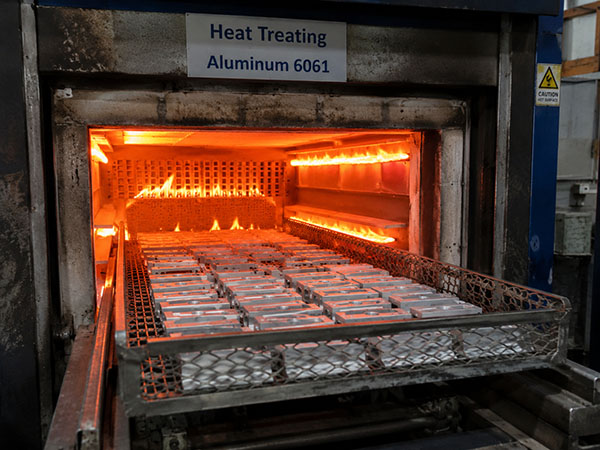
6061 Aluminum Alloy is one of the most widely used engineering materials in CNC machining because it combines excellent machinability, corrosion resistance, weldability, and a high strength-to-weight ratio. What makes 6061 especially valuable is that it can be significantly strengthened through heat treatment.
In its annealed condition, 6061 is relatively soft and easy to form. After solution heat treatment, quenching, and artificial aging, it becomes the familiar 6061-T6 temper used in aerospace, automotive, robotics, and precision machining.
This article explains exactly how heat treating 6061 aluminum works, which temperatures are used, what mechanical improvements can be expected, and how CNC manufacturers like Xavier use these tempers to produce stable, high-precision components.
15 Essential Topics About Heat Treating Aluminum 6061
- What Makes 6061 Heat Treatable
- Chemical Composition and Mg₂Si Strengthening
- Common Tempers: O, T4, T5, T6, T651
- Solution Heat Treatment Process
- Quenching Methods and Distortion Control
- Natural Aging (T4)
- Artificial Aging (T6)
- T651 Stress Relief for Precision Machining
- Annealing 6061 to O Temper
- Mechanical Property Changes After Heat Treatment
- Hardness and Conductivity Relationships
- Welding and Re-Heat Treatment
- CNC Machining Considerations
- Common Heat Treatment Defects
- Typical Industrial Applications
What Makes 6061 Heat Treatable
Unlike pure aluminum, 6061 contains alloying elements that can dissolve into the aluminum matrix and later precipitate as strengthening particles.
The key mechanism is precipitation hardening. During heat treatment:
- Alloying elements dissolve into solution.
- Rapid quenching traps them.
- Aging forms microscopic particles.
- These particles block dislocation movement.
- Strength and hardness increase dramatically.
This process can more than double yield strength compared with annealed material.
Chemical Composition and Mg₂Si Strengthening
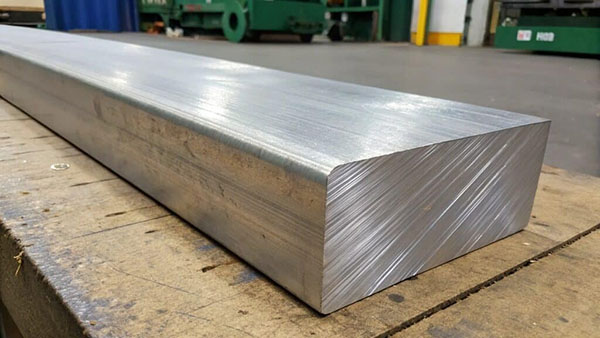
6061 belongs to the 6xxx series and contains magnesium and silicon as primary alloying elements.
| Element | Typical Content (%) | Purpose |
|---|---|---|
| Magnesium (Mg) | 0.8–1.2 | Strengthening |
| Silicon (Si) | 0.4–0.8 | Forms Mg₂Si |
| Copper (Cu) | 0.15–0.4 | Improves strength |
| Chromium (Cr) | 0.04–0.35 | Grain control |
| Aluminum | Balance | Base metal |
The main strengthening phase is Mg₂Si, which forms during artificial aging and creates the high strength associated with T6 temper.
Common Tempers: O, T4, T5, T6, T651
| Temper | Description | Characteristics |
|---|---|---|
| O | Annealed | Softest, highest ductility |
| T4 | Solution treated + naturally aged | Moderate strength |
| T5 | Cooled from shaping + aged | Used for extrusions |
| T6 | Solution treated + artificially aged | Highest common strength |
| T651 | T6 + stress relieved by stretching | Improved dimensional stability |
For precision CNC machining, T651 is often preferred because it reduces internal residual stresses.
Solution Heat Treatment Process
Solution treatment dissolves Mg₂Si and other soluble phases into the aluminum matrix.
Typical process conditions:
- Temperature: 530°C (985°F)
- Hold time: 30 minutes to 3 hours depending on thickness
- Atmosphere: Air-circulating furnace
- Goal: Create a homogeneous supersaturated solid solution
A common industrial rule is approximately one hour per inch of thickness for large sections.
Quenching Methods and Distortion Control
After solution treatment, parts must be cooled rapidly to retain dissolved elements.
Common Quenching Media
| Medium | Cooling Rate | Distortion Risk |
|---|---|---|
| Cold Water | Very fast | High |
| Warm Water (60–80°C) | Fast | Moderate |
| Polymer Quench | Controlled | Lower |
| Air | Too slow for most 6061 T6 applications | Low |
Best Practices
- Transfer to quench tank within 10 seconds.
- Use large tanks to maintain uniform cooling.
- Support thin-walled parts to prevent warping.
- Consider warm water for reduced residual stress.
Natural Aging (T4)
Immediately after quenching, 6061 is soft. At room temperature, solute atoms begin clustering naturally.
Typical T4 properties:
- Yield strength: ~110 MPa
- Tensile strength: ~240 MPa
- Excellent formability
T4 is ideal when the part will be bent or formed before final aging.
Artificial Aging (T6)
Artificial aging accelerates precipitation by holding parts at elevated temperatures.
Typical industrial cycles:
- 160°C (320°F) for 18 hours
- 175°C (345°F) for 8 hours
- 170°C for 10–18 hours
During aging, fine Mg₂Si precipitates form and dramatically increase hardness and strength.
T651 Stress Relief for Precision Machining
T651 includes a stretching operation after quenching.
Why It Matters
Quenching introduces residual stresses. When material is machined, removing stock can release these stresses and cause:
- Bowing
- Twisting
- Dimensional drift
T651 reduces this problem, making it the preferred choice for:
- Fixture plates
- Mold bases
- Aerospace brackets
- Robotics frames
Annealing 6061 to O Temper
When maximum ductility is required, 6061 can be fully annealed.
Typical annealing schedule:
- Heat to 415°C (775°F)
- Hold 2–3 hours
- Cool slowly to 260°C (500°F)
- Air cool to room temperature
Resulting properties:
- Yield strength: ~55 MPa
- Excellent bendability
- Reduced machinability
Mechanical Property Changes After Heat Treatment
| Temper | Yield Strength (MPa) | Tensile Strength (MPa) | Brinell Hardness |
|---|---|---|---|
| O | 55 | 125 | 30 |
| T4 | 110 | 240 | 60 |
| T6 | 240–276 | 290–320 | 95 |
| T651 | 240–276 | 290–320 | 95 |
Example Improvement
A structural bracket in O temper with 55 MPa yield strength can achieve nearly 5× greater yield strength after T6 treatment.
Hardness and Electrical Conductivity
As precipitation occurs, hardness rises.
| Condition | Typical Hardness (HB) |
|---|---|
| As-quenched | 35–45 |
| T4 | 55–65 |
| T6 | 90–100 |
| Overaged | 75–85 |
Hardness testing is commonly used to verify whether a heat treatment cycle was successful.
Welding and Re-Heat Treatment
Welding locally destroys the T6 temper.
Heat-Affected Zone (HAZ)
Near welds, temperatures coarsen precipitates and reduce strength significantly.
Typical reduction:
- Base metal T6: ~310 MPa tensile strength
- Weld zone: can drop by 40–60%
To restore properties, the entire assembly may need to be solution treated and re-aged.
CNC Machining Considerations
Best Temper for CNC Machining
| Temper | Machinability | Stability |
|---|---|---|
| O | Poor | Excellent |
| T4 | Fair | Good |
| T6 | Excellent | Good |
| T651 | Excellent | Excellent |
Why T651 Is Preferred
- Reduced internal stress
- Better flatness after machining
- More predictable tolerances
- Lower scrap rates
Example
A 500 mm fixture plate may warp 0.2–0.5 mm when machined from T6, while the same plate in T651 often remains within ±0.05 mm.
Common Heat Treatment Defects
Overheating
Temperatures above ~560°C can cause incipient melting and irreversible damage.
Delayed Quenching
Even a short delay can reduce final strength.
Overaging
Excessive aging time or temperature coarsens precipitates and lowers strength.
Distortion
Rapid quenching of thin sections may warp complex parts.
Surface Oxidation
Dirty furnaces or poor airflow can discolor surfaces.
Typical Industrial Applications
Heat-treated 6061 is used in:
- Aerospace brackets
- Drone frames
- Medical devices
- CNC machine components
- Bicycle parts
- Automotive suspension parts
- Semiconductor tooling
- Robotics structures
Its combination of lightweight strength and machinability makes it one of the most versatile materials in manufacturing.
Example Heat Treatment Workflow for a CNC Aerospace Bracket
| Step | Process | Parameters |
|---|---|---|
| 1 | Rough machining | Leave 0.5 mm stock |
| 2 | Solution treatment | 530°C |
| 3 | Water quench | Within 10 sec |
| 4 | Stretch | T651 stress relief |
| 5 | Artificial aging | 175°C × 8 h |
| 6 | Finish machining | Final tolerances ±0.01 mm |
| 7 | Anodizing | Optional |
This workflow produces high-strength parts with excellent dimensional stability.
T6 vs T651: Which Should You Choose?
| Requirement | Recommended Temper |
|---|---|
| Maximum strength | T6 |
| Tight tolerance machining | T651 |
| Forming before final aging | T4 |
| Maximum ductility | O |
For most CNC machined components, T651 provides the best balance of strength and dimensional control.
Frequently Asked Questions
Can 6061 aluminum be heat treated at home?
Yes, but maintaining precise temperature control and proper quenching is challenging without industrial equipment.
Does 6061 get harder after quenching alone?
No. Quenching creates a supersaturated structure, but aging is required to achieve full hardness.
What is the best aging cycle for 6061-T6?
Common industrial cycles include 160°C for 18 hours or 175°C for 8 hours.
Can welded 6061 regain T6 strength?
Yes, but the entire part typically needs to be re-heat treated.
Is T651 better than T6 for machining?
Yes. T651 offers lower residual stress and better dimensional stability.
Why Xavier Recommends 6061-T651 for Precision CNC Parts
At Xavier, we machine thousands of custom aluminum parts for aerospace, robotics, electronics, and industrial automation customers. Our engineering team typically recommends 6061-T651 because it delivers:
- High tensile strength up to ~310 MPa
- Excellent machinability
- Superior corrosion resistance
- Stable flatness after machining
- Reliable anodizing results
Whether you need a simple bracket or a complex 5-axis aerospace component, Xavier combines certified material sourcing, precision CNC machining, and expert heat treatment knowledge to deliver parts that meet demanding tolerances and performance requirements. cnc machining parts
If your project requires lightweight, strong, and dimensionally stable components, Xavier is your trusted manufacturing partner.
statement:Some of the images and text in this article are collected and compiled from the internet. If there is anything inappropriate, please contact us for processing.