
High-Value Knowledge Points About Machined Titanium Components
- Why titanium is used for precision machined components
- Common titanium grades for CNC machining
- Mechanical properties of titanium vs steel and aluminum
- Industries that rely on machined titanium components
- Challenges of machining titanium
- Recommended CNC cutting parameters
- Tooling and coatings for titanium machining
- Design guidelines for titanium parts
- Typical tolerances and achievable precision
- Surface finishes for titanium components
- Heat treatment and stress relief
- Cost drivers in titanium machining
- Quality inspection and certifications
- Real-world application examples
- How to choose a reliable titanium machining supplier
Why Machined Titanium Components Are Essential in High-Performance Engineering
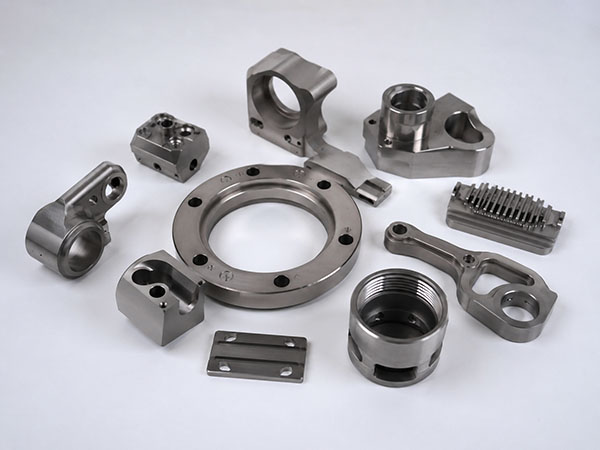
Machined titanium components are among the most valuable precision parts in aerospace, medical, marine, motorsports, and semiconductor industries. Titanium combines exceptional strength, low weight, corrosion resistance, and biocompatibility—properties that few metals can match.
Compared with steel, titanium offers similar strength at roughly 45% lower weight. Compared with aluminum, titanium is significantly stronger and performs better in harsh environments and elevated temperatures. This makes it ideal for applications where every gram matters and failure is unacceptable.
Why Titanium Is Used for Precision Machined Components
Titanium provides several engineering advantages:
| Property | Titanium Grade 5 | 6061 Aluminum | 316 Stainless Steel |
|---|---|---|---|
| Density (g/cm³) | 4.43 | 2.70 | 8.00 |
| Tensile Strength (MPa) | 895–950 | 310 | 515–620 |
| Corrosion Resistance | Excellent | Good | Excellent |
| Biocompatibility | Excellent | Poor | Moderate |
| Operating Temperature | Up to 400°C | Up to 150°C | Up to 800°C |
This unique property set allows engineers to reduce weight without sacrificing structural integrity.
Common Titanium Grades for CNC Machining
Different titanium grades are selected based on application requirements.
| Grade | Alloy Type | Key Features | Typical Applications |
|---|---|---|---|
| Grade 2 | Commercially Pure | Excellent corrosion resistance, easier to machine | Marine, chemical, heat exchangers |
| Grade 5 (Ti-6Al-4V) | Alpha-Beta Alloy | High strength, fatigue resistance | Aerospace, medical, motorsports |
| Grade 23 (Ti-6Al-4V ELI) | Extra Low Interstitial | Superior fracture toughness | Surgical implants |
| Grade 9 (Ti-3Al-2.5V) | Medium Strength | Good formability | Hydraulic tubing, bicycle frames |
Grade 5 accounts for approximately half of global titanium usage and is the most common alloy for CNC machined parts.
Mechanical Properties That Make Titanium Special
Titanium offers:
- High specific strength
- Outstanding fatigue resistance
- Excellent seawater resistance
- Low thermal expansion
- Non-magnetic behavior
- Complete biocompatibility
For example, aerospace brackets machined from titanium can reduce system weight by 30–60% compared with stainless steel equivalents.
Industries That Depend on Machined Titanium Components
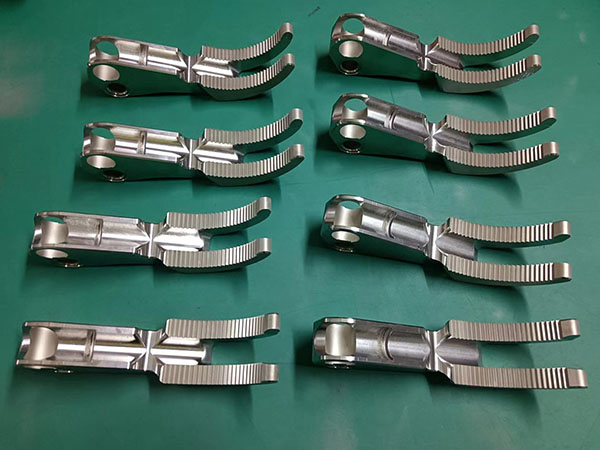
Titanium machining is essential in:
| Industry | Typical Components |
|---|---|
| Aerospace | Structural brackets, compressor blades, landing gear parts |
| Medical | Bone screws, dental implants, spinal cages |
| Marine | Propeller shafts, fasteners, pump housings |
| Motorsport | Connecting rods, valve retainers |
| Semiconductor | Vacuum chamber parts, wafer fixtures |
| Energy | Turbine components, heat exchanger parts |
####### Aerospace Titanium Components
Titanium is heavily used in modern aircraft because it withstands cyclic loading and high temperatures while minimizing weight.
Common machined aerospace parts include:
- Engine compressor components
- Structural mounting brackets
- Hydraulic fittings
- Fasteners
- Sensor housings
A weight reduction of just 1 kg on an aircraft can save thousands of dollars in fuel over its operational life.
######## Medical Titanium Components
Medical-grade titanium is ideal because the human body accepts it without adverse reactions.
Examples include:
- Orthopedic implants
- Dental abutments
- Surgical instruments
- Trauma fixation plates
Grade 23 titanium is often specified because of its superior fracture toughness and implant reliability.
######### Challenges of Machining Titanium
Titanium is considered a difficult-to-machine material due to:
- Low thermal conductivity (~7 W/m·K)
- High cutting temperatures
- Work hardening tendency
- Elastic springback
- Tool galling
- Risk of chip ignition
Unlike aluminum, most cutting heat remains concentrated at the tool edge rather than dissipating into the workpiece.
########## Recommended CNC Cutting Parameters
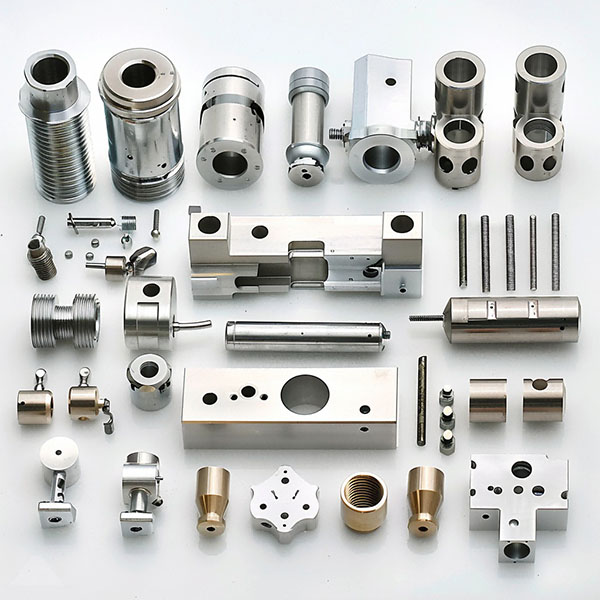
Typical milling parameters for Ti-6Al-4V:
| Parameter | Typical Range |
|---|---|
| Cutting Speed | 30–60 m/min |
| Feed per Tooth | 0.03–0.10 mm |
| Radial Engagement | 5–20% tool diameter |
| Axial Depth | 1–2× tool diameter |
| Coolant Pressure | 70–150 bar |
High-efficiency milling strategies with low radial engagement greatly improve tool life.
########### Tooling and Coatings for Titanium
The best tooling choices include:
- Micrograin carbide end mills
- TiAlN or AlTiN coatings
- High positive rake geometry
- Variable helix designs
- Through-tool coolant
Using incorrect tooling can reduce tool life by over 80%.
############ Design Guidelines for Titanium Parts
Good part design reduces machining costs substantially.
Recommended design rules:
| Feature | Recommendation |
|---|---|
| Minimum Wall Thickness | 1.0–1.5 mm |
| Internal Corner Radius | ≥0.5 mm |
| Thread Depth | ≤3× diameter |
| Hole Depth | ≤10× diameter |
| Pocket Depth | ≤4× tool diameter |
Avoid unnecessary deep cavities and sharp internal corners.
############# Typical Tolerances and Precision
Professional CNC shops can routinely achieve:
| Feature | Tolerance |
|---|---|
| Standard Dimensions | ±0.05 mm |
| Precision Features | ±0.01 mm |
| Critical Diameters | ±0.005 mm |
| Surface Roughness | Ra 0.4–1.6 µm |
Coordinate Measuring Machines (CMMs) verify these tolerances.
############## Surface Finishes for Titanium Components
Popular finishing options include:
- As-machined
- Glass bead blasting
- Polishing
- Passivation
- Titanium anodizing
- PVD coatings
Anodizing can create decorative colors such as blue, gold, purple, and green without adding significant thickness.
############### Heat Treatment and Stress Relief
Titanium parts may undergo:
- Annealing
- Stress relieving
- Solution treatment
- Aging
Stress relief is particularly important after rough machining large aerospace components to reduce distortion during final machining.
################ Cost Drivers in Titanium Machining
Titanium components cost more than aluminum or steel due to several factors.
| Cost Factor | Impact |
|---|---|
| Raw Material Price | High |
| Tool Wear | Very High |
| Longer Cycle Times | High |
| Specialized Coolant | Medium |
| Inspection Requirements | Medium |
| Material Certification | Medium |
Typical titanium machining costs are 2–5 times higher than comparable aluminum parts.
################# Quality Inspection and Certifications
Critical titanium parts often require:
- Material Certificates (EN 10204 3.1)
- Mill Test Reports (MTR)
- CMM Inspection Reports
- First Article Inspection (FAI)
- AS9100 Quality Systems
- ISO 13485 for medical manufacturing
- ISO 9001
These documents ensure full traceability and compliance.
################## Real-World Application Examples
Aerospace Bracket
- Material: Ti-6Al-4V
- Dimensions: 180 × 120 × 35 mm
- Tolerance: ±0.01 mm
- Weight Saving: 52% vs stainless steel
Dental Implant Abutment
- Material: Grade 23
- Surface Finish: Ra 0.2 µm
- Thread Accuracy: ±0.005 mm
Racing Valve Retainer
- Material: Grade 5
- Weight Reduction: 40% vs steel
################### How to Choose a Reliable Titanium Machining Supplier
Evaluate suppliers based on:
- Experience with titanium alloys
- 5-axis CNC machining capability
- Advanced CAM programming
- High-pressure coolant systems
- Certified quality systems
- Full material traceability
- Proven aerospace and medical experience
A knowledgeable supplier can reduce costs by optimizing design and toolpaths before production begins.
#################### Titanium vs Alternative Materials
| Requirement | Best Material |
|---|---|
| Lowest Weight | Aluminum |
| Highest Strength-to-Weight | Titanium |
| Lowest Cost | Carbon Steel |
| Best Corrosion Resistance | Titanium |
| Medical Implant Use | Titanium |
| Highest Temperature | Nickel Alloys |
Titanium is selected when performance outweighs material and machining costs.
##################### Typical Lead Times for Machined Titanium Components
| Production Stage | Typical Time |
|---|---|
| Engineering Review | 1–2 Days |
| Material Procurement | 3–10 Days |
| CNC Machining | 2–15 Days |
| Finishing | 1–5 Days |
| Inspection & Packaging | 1–2 Days |
Prototype orders can often be delivered in 5–10 working days depending on complexity.
Xavier Precision Machining for Titanium Components
When your project requires high-strength, corrosion-resistant, and mission-critical titanium components, Xavier delivers the expertise needed for success.
Xavier specializes in:
- CNC milling and turning of Grade 2, Grade 5, Grade 23, and Grade 9 titanium
- Complex 3/4/5 Axis machining
- Ultra-tight tolerances down to ±0.005 mm
- Aerospace and medical-grade quality control
- Material certifications and full traceability
- Prototype to mass production
Whether you need aerospace brackets, implant components, motorsport parts, or semiconductor fixtures, Xavier provides dependable quality, fast turnaround, and competitive pricing.
Contact Xavier today to get an engineering review and quotation for your machined titanium components.
Some of the images and text in this article are collected and compiled from the internet. If there is anything inappropriate, please contact us for processing.