
Melting Temp of Titanium: Complete Guide to Titanium Melting Point, Processing, and CNC Machining
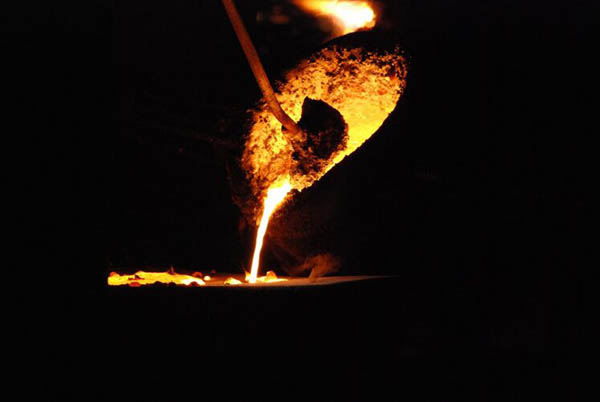
Titanium is one of the most important engineering metals used in aerospace, medical implants, automotive racing, marine equipment, and high-performance CNC-machined components. Among its many remarkable properties, the melting temperature of titanium is one of the key reasons why it performs exceptionally well in extreme environments.
Pure titanium melts at approximately 1,668°C (3,034°F), making it significantly more heat resistant than aluminum and many stainless steels. However, understanding titanium melting behavior involves much more than knowing a single number. Engineers must also consider alloy composition, phase transformations, vacuum melting processes, casting limitations, welding behavior, and machinability.
This comprehensive guide explores everything engineers, designers, and manufacturers need to know about titanium melting temperatures.
15 Important Topics Related to Titanium Melting Temperature
- What Is the Melting Temperature of Titanium?
- Titanium Melting Point Compared with Other Metals
- Why Titanium Has Such a High Melting Temperature
- Alpha-to-Beta Phase Transformation Before Melting
- Melting Temperatures of Common Titanium Alloys
- Solidus and Liquidus Temperatures Explained
- How Alloying Elements Affect Melting Behavior
- Vacuum Arc Remelting (VAR) Technology
- Electron Beam Melting (EBM) of Titanium
- Titanium Casting Challenges
- Titanium Welding and Heat-Affected Zones
- Titanium in High-Temperature Aerospace Applications
- Relationship Between Melting Point and CNC Machinability
- Additive Manufacturing and Titanium Melting
- Selecting the Right Titanium Grade for Manufacturing
What Is the Melting Temperature of Titanium?
Pure titanium has a melting point of approximately 1,668°C (3,034°F or 1,941 K) under atmospheric pressure. This temperature is substantially higher than aluminum and close to many heat-resistant steels.
| Material | Melting Point (°C) | Melting Point (°F) |
|---|---|---|
| Aluminum | 660 | 1220 |
| Magnesium | 650 | 1202 |
| Copper | 1085 | 1985 |
| Stainless Steel | 1370-1510 | 2498-2750 |
| Titanium | 1668 | 3034 |
| Tungsten | 3422 | 6192 |
This high melting temperature contributes to titanium’s excellent structural stability under demanding operating conditions.
Why This Matters
A higher melting point allows titanium components to:
- Retain strength at elevated temperatures
- Resist thermal deformation
- Survive aerospace operating conditions
- Handle repeated thermal cycling
Titanium Melting Point Compared with Other Engineering Metals
When engineers choose materials for aerospace or industrial equipment, melting temperature often serves as an indicator of thermal capability.
| Metal | Density (g/cm³) | Melting Point (°C) |
|---|---|---|
| Aluminum | 2.7 | 660 |
| Steel | 7.8 | 1370-1510 |
| Titanium | 4.5 | 1668 |
| Nickel | 8.9 | 1455 |
| Tungsten | 19.3 | 3422 |
Titanium offers a unique combination of:
- Low density
- High strength
- Excellent corrosion resistance
- High melting temperature
This combination explains why titanium is frequently chosen over steel in aircraft structures.
Why Titanium Has Such a High Melting Temperature
The high melting point originates from strong metallic bonding within titanium’s crystal structure. More energy is required to break these bonds and transform the solid metal into a liquid state.
Atomic Structure Factors
Titanium possesses:
- Strong atomic cohesion
- Stable crystal lattice
- Excellent resistance to thermal vibration
As temperature rises, titanium maintains its structural integrity much longer than aluminum or magnesium.
Engineering Benefits
These characteristics lead to:
- Improved creep resistance
- Better heat resistance
- Longer service life
- Increased safety margins
Alpha-to-Beta Phase Transformation Before Melting
One fascinating aspect of titanium is that significant metallurgical changes occur long before melting.
At approximately 882°C (1,620°F), titanium transforms from the Alpha (α) phase to the Beta (β) phase. This temperature is known as the Beta Transus Temperature.
| Temperature Range | Crystal Structure |
|---|---|
| Below 882°C | HCP (Alpha) |
| Above 882°C | BCC (Beta) |
| Above 1668°C | Liquid |
Manufacturing Impact
This phase transformation affects:
- Forging behavior
- Heat treatment response
- Grain size control
- Mechanical properties
Many aerospace-grade titanium components are processed based on the Beta Transus rather than the melting point itself.
Melting Temperatures of Common Titanium Alloys
Titanium alloys exhibit slightly different melting temperatures because alloying elements modify phase stability.
| Titanium Grade | Typical Melting Temp (°C) |
|---|---|
| Grade 1 | 1670 |
| Grade 2 | 1665 |
| Grade 4 | 1660 |
| Grade 5 (Ti-6Al-4V) | 1655 |
| Grade 23 | 1655 |
| Grade 9 | 1650 |
| Ti-6242 | 1650 |
Most Popular Alloy
Ti-6Al-4V accounts for approximately 50% of global titanium usage because it balances:
- Strength
- Corrosion resistance
- Weldability
- Machinability
Solidus and Liquidus Temperatures Explained
Unlike pure titanium, alloys usually melt across a temperature range.
Solidus Temperature
The temperature where melting begins.
Liquidus Temperature
The temperature where melting is complete.
For Ti-6Al-4V:
| Stage | Temperature |
|---|---|
| Solidus | ~1600°C |
| Liquidus | ~1655°C |
This melting range is critical during casting and additive manufacturing.
How Alloying Elements Affect Melting Behavior
Different alloying elements influence melting characteristics.
| Element | Effect |
|---|---|
| Aluminum | Strengthens Alpha phase |
| Vanadium | Stabilizes Beta phase |
| Molybdenum | Improves heat resistance |
| Tin | Enhances creep resistance |
| Iron | Increases hardenability |
Engineers carefully balance these elements to optimize performance while maintaining manufacturability.
Vacuum Arc Remelting (VAR) Technology
Molten titanium reacts aggressively with oxygen, nitrogen, and hydrogen. Therefore, conventional melting methods are unsuitable.
How VAR Works
- Titanium electrode is created
- Vacuum chamber is evacuated
- Electric arc melts the electrode
- Metal solidifies into a high-purity ingot
Advantages
- Low contamination
- Superior cleanliness
- Consistent chemistry
- Aerospace certification compliance
Electron Beam Melting (EBM) of Titanium
Electron Beam Melting is another advanced titanium melting technology.
Process Overview
A focused electron beam generates temperatures exceeding titanium’s melting point inside a vacuum chamber.
Benefits include:
- Precise thermal control
- Minimal contamination
- Excellent material utilization
- Complex geometry production
EBM is widely used in aerospace and medical implant manufacturing.
Titanium Casting Challenges
Casting titanium is significantly more difficult than casting aluminum or steel.
Main Challenges
- High melting temperature
- High reactivity
- Mold contamination risks
- Shrinkage control
Because molten titanium reacts with many refractory materials, specialized ceramic molds are required.
Typical Casting Applications
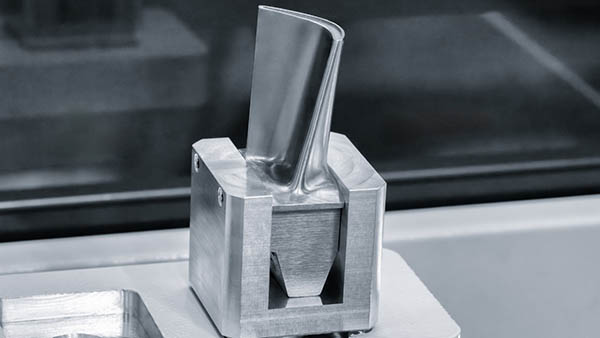
- Turbine blades
- Aerospace housings
- Medical implants
- Defense components
Titanium Welding and Heat-Affected Zones
Titanium welding requires stringent atmospheric protection.
At elevated temperatures, titanium absorbs oxygen and nitrogen rapidly, leading to embrittlement.
Common Welding Methods
- GTAW (TIG)
- Electron beam welding
- Laser welding
Shielding Requirements
- Argon gas
- Helium gas
- Vacuum chambers
Without protection, weld quality deteriorates dramatically.
Titanium in High-Temperature Aerospace Applications
Titanium’s melting temperature supports numerous aerospace applications.
Examples include:
| Component | Service Environment |
|---|---|
| Compressor Blades | Elevated temperatures |
| Airframe Structures | Thermal cycling |
| Engine Casings | High stress |
| Fasteners | Heat exposure |
Modern aircraft rely heavily on titanium because it provides high strength with relatively low weight.
Relationship Between Melting Point and CNC Machinability
A high melting temperature does not automatically mean easy machining.
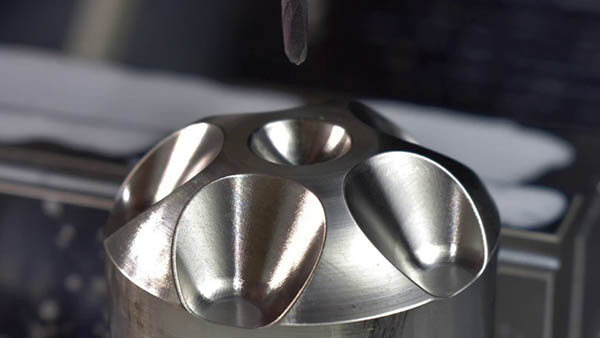
In fact, titanium is considered one of the most challenging engineering materials to machine.
Why?
Titanium:
- Generates concentrated heat
- Has low thermal conductivity
- Causes tool wear
- Produces high cutting forces
Research shows localized temperatures in shear zones can approach conditions where thermal softening becomes significant during machining.
CNC Best Practices
- Sharp carbide tools
- High-pressure coolant
- Reduced cutting speeds
- Optimized toolpaths
Additive Manufacturing and Titanium Melting
Metal 3D printing relies directly on controlled melting and solidification.
Common technologies include:
- EBM
- Laser Powder Bed Fusion
- Directed Energy Deposition
Advantages
- Lightweight lattice structures
- Reduced waste
- Complex geometries
- Faster prototyping
The melting and re-solidification process determines grain structure, porosity levels, and final mechanical properties.
Selecting the Right Titanium Grade for Manufacturing
Choosing the right titanium grade depends on application requirements.
| Requirement | Recommended Grade |
|---|---|
| Maximum Corrosion Resistance | Grade 2 |
| Aerospace Components | Grade 5 |
| Medical Implants | Grade 23 |
| Tubing Applications | Grade 9 |
| High Temperature Service | Ti-6242 |
Engineers should evaluate:
- Melting characteristics
- Operating temperature
- Strength requirements
- Manufacturing method
- Cost considerations
Why Titanium’s Melting Temperature Matters for CNC Manufacturing
For CNC machining companies, understanding titanium melting behavior is essential because it influences:
- Tool selection
- Cutting parameters
- Heat generation
- Surface quality
- Production costs
A component designed without considering titanium’s thermal properties can suffer from distortion, poor dimensional accuracy, or excessive tool wear.
Manufacturers that understand titanium metallurgy can achieve better tolerances, lower costs, and improved part reliability.
Xavier Precision Manufacturing: Your Titanium Machining Partner
At Xavier, we specialize in precision CNC machining of titanium components for aerospace, medical, automotive, robotics, and industrial applications. Our engineering team understands not only the mechanical properties of titanium but also the metallurgical factors related to its high melting temperature, phase transformations, and machining behavior.
Whether you require Grade 2 corrosion-resistant components, aerospace-grade Ti-6Al-4V parts, or complex custom titanium prototypes, Xavier delivers:
- High-precision CNC machining
- Tight-tolerance manufacturing
- Advanced quality inspection
- Rapid prototyping services
- Global production support
By combining deep titanium material expertise with advanced CNC technology, Xavier helps customers achieve superior performance while reducing manufacturing risks and production costs.
As a fully integrated manufacturer and supplier of CNC machining services, we specialize in custom CNC machining and the production of precision metal parts. We support
CNC Stainless Steel Machining,
CNC Aluminum Machining, and
CNC Nylon Machining
for industries such as robotics, aerospace, marine, automotive, medical devices, and other precision engineering applications.
As a professional
CNC Stainless Steel Machining Manufacturer,
we provide large-scale
CNC Aluminum Machining Services.
For a competitive
CNC Nylon Machining Price,
please feel free to contact us.
Some of the images and text in this article are collected and compiled from the internet. If there is anything inappropriate, please contact us for processing.