
Black Oxide Coating Stainless Steel: Complete Engineering and CNC Machining Guide
Black oxide coating on stainless steel is one of the most practical and cost-effective finishing methods for CNC machined components. It provides a deep black appearance, reduces glare, improves lubricity, and preserves dimensional accuracy because the coating is extremely thin. Unlike paint or powder coating, black oxide is a chemical conversion finish rather than a deposited layer, which means it does not chip or significantly alter part dimensions.
For stainless steel, the process is more specialized than standard black oxide used on carbon steel because the chromium-rich passive layer on stainless resists chemical conversion. Special activation and blackening solutions are required to produce a durable black finish that meets military and aerospace standards.
What Black Oxide Coating on Stainless Steel Actually Is
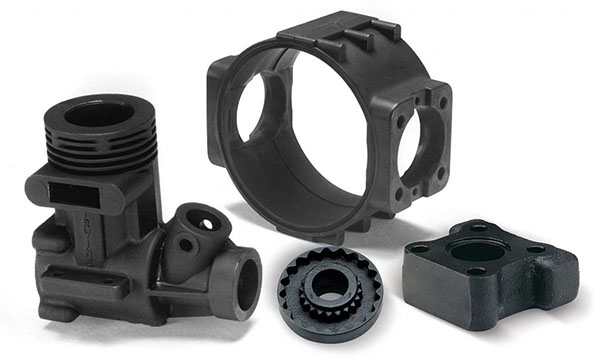
Black oxide is a chemical conversion coating that transforms the outermost surface of stainless steel into a dark oxide layer. It is not paint, electroplating, or powder coating.
The resulting layer is usually composed of magnetite-like oxides and is typically around 0.5–1.0 microns thick (approximately 0.000020 inch). Because the finish is so thin, it maintains the precision dimensions of machined parts.
Key Characteristics
| Property | Typical Value |
|---|---|
| Coating Type | Chemical conversion |
| Thickness | 0.5–1.0 µm |
| Dimensional Change | Negligible |
| Color | Satin black to matte black |
| Conductivity | Mostly retained |
| Chipping Risk | None |
| Base Material | Stainless steel, steel |
This makes black oxide ideal for precision CNC parts such as shafts, fasteners, surgical instruments, and optical components.
How the Chemical Conversion Process Works
Stainless steel naturally forms a chromium oxide layer that protects it from corrosion. This passive layer must be activated before black oxide can form.
The process generally includes:
- Alkaline cleaning
- Water rinse
- Acid activation
- Black oxide bath
- Water rinse
- Sealing with oil, wax, or dry film
The blackening solution reacts with the metal surface and creates an integral oxide layer rather than adding material to the surface. cnc machining service
Common Stainless Steel Grades for Black Oxide
Not all stainless steels blacken identically. Surface chemistry and alloy content affect the final appearance.
Recommended Grades
| Stainless Grade | Blackening Performance | Common Applications |
|---|---|---|
| 303 | Excellent | CNC turned fittings |
| 304 | Excellent | General industrial parts |
| 316 | Very Good | Marine and medical parts |
| 410 | Excellent | Cutlery and shafts |
| 420 | Excellent | Surgical tools |
| 17-4 PH | Excellent | Aerospace components |
300 and 400 series stainless steels are commonly processed successfully.
Typical Coating Thickness and Dimensional Impact
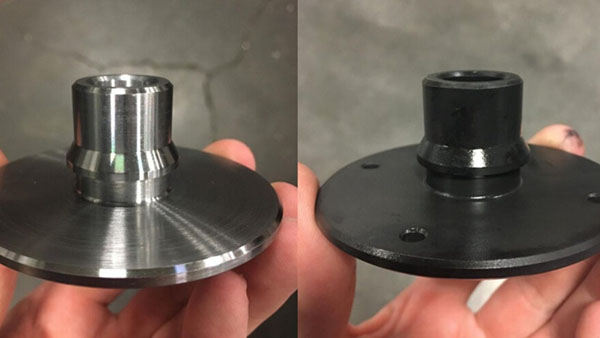
One of the main reasons engineers choose black oxide is dimensional stability.
0.000020 in≈1μm
A coating only one micron thick has virtually no effect on:
- Thread fit
- Bearing diameters
- Press-fit tolerances
- Precision bores
Real Example
A CNC shaft with diameter:
- Before coating: 12.0000 mm
- After coating: 12.0001 mm (often below measurement repeatability)
This is far thinner than powder coating, which may add 50–150 microns.
Corrosion Resistance With and Without Oil or Wax Sealers
Black oxide alone offers only mild corrosion resistance. The protective value comes mainly from the post-treatment sealant.
Salt Spray Performance (Typical)
| Finish | Salt Spray Hours to Red Rust |
|---|---|
| Black oxide only | 2–8 hours |
| Black oxide + oil | 24–100 hours |
| Black oxide + wax | 48–120 hours |
| Black oxide + dry film sealer | 100+ hours |
Actual performance depends on alloy, environment, and maintenance. MIL-DTL-13924 notes that black oxide provides limited corrosion protection without supplementary treatment.
ASTM, AMS, and MIL Specifications for Black Oxide
Industrial drawings often specify recognized standards.
Common Specifications
| Standard | Description |
|---|---|
| MIL-DTL-13924 Class 4 | Black oxide for corrosion-resistant steel |
| AMS 2485 | Aerospace black oxide specification |
| MIL-STD-171 | Surface treatment reference |
| ASTM A380 | Stainless cleaning and preparation guidance |
For aerospace, defense, and medical projects, compliance with these standards is often required.
Step-by-Step Black Oxide Process Flow
A typical production line for stainless steel includes multiple tanks.
Process Sequence
| Step | Function | Time |
|---|---|---|
| Degrease | Remove oils | 5–10 min |
| Rinse | Remove residues | 1–2 min |
| Activate | Strip passive film | 2–10 min |
| Black oxide | Form black coating | 10–20 min |
| Rinse | Stop reaction | 1–2 min |
| Seal | Improve corrosion resistance | 5–10 min |
| Dry | Final curing | 5–20 min |
Total cycle time is commonly 30–60 minutes.
Appearance, Surface Texture, and Gloss Options
Black oxide can produce several visual effects depending on substrate finish and sealant.
Appearance Matrix
| Base Surface | Final Look |
|---|---|
| Machined | Satin black |
| Bead blasted | Matte black |
| Polished | Semi-gloss black |
| Brushed | Directional black finish |
The coating preserves existing surface texture, making pre-finish preparation critical.
Wear Resistance and Abrasion Performance
Because the coating is integrated into the metal, it does not peel or flake. However, it is still thin and can polish with heavy rubbing.
Black oxide is best for:
- Low-friction components
- Optical parts
- Fasteners
- Fixtures
It is not a replacement for hard coatings such as PVD, DLC, or hard chrome.
Black Oxide vs Powder Coating vs PVD vs Black Anodizing
| Property | Black Oxide | Powder Coating | PVD Black | Black Anodizing |
|---|---|---|---|---|
| Substrate | Stainless steel | Most metals | Stainless/Titanium | Aluminum |
| Thickness | ~1 µm | 50–150 µm | 1–5 µm | 10–25 µm |
| Dimensional Impact | Negligible | Significant | Low | Moderate |
| Wear Resistance | Moderate | Moderate | Excellent | Good |
| Cost | Low | Low-Medium | High | Medium |
| Best Use | Precision parts | Decorative parts | Premium wear surfaces | Aluminum components |
CNC Machined Parts That Commonly Use Black Oxide
In CNC manufacturing, black oxide is widely used for both functional and aesthetic reasons.
Typical Parts
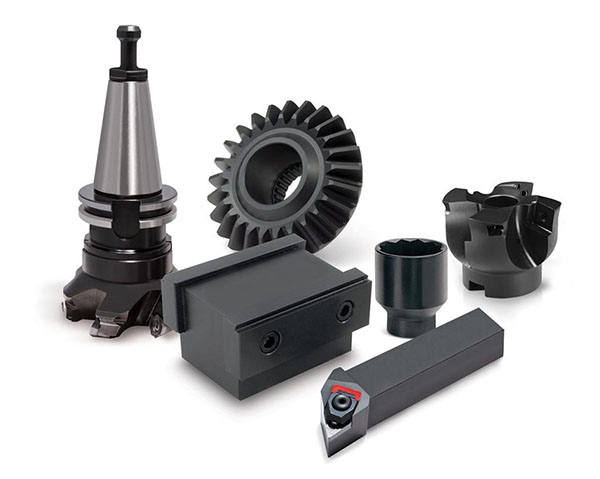
- Socket head screws
- Precision shafts
- Tool holders
- Jigs and fixtures
- Optical housings
- Surgical instruments
- Firearm accessories
- Sensor bodies
These parts benefit from glare reduction, improved lubricity, and preserved tolerances.
Design Guidelines for Threads, Blind Holes, and Tight Tolerances
Black oxide is especially suitable for intricate geometries.
Design Recommendations
- Blind holes should include drain paths
- Threads should be burr-free
- Sharp edges should be lightly broken
- Surface finish should be consistent
- Internal cavities should be clean
Because the coating is non-build-up, threads usually fit exactly as machined.
Common Defects and Troubleshooting
| Defect | Cause | Solution |
|---|---|---|
| Brown spots | Poor cleaning | Improve degreasing |
| Gray finish | Insufficient activation | Extend acid activation |
| Uneven color | Mixed alloys | Separate by grade |
| Rust after shipment | No sealer | Add oil or wax |
| Bleed-out | Blind holes retain chemistry | Improve rinsing |
Reddit and industry discussions frequently note that stainless grade and cleaning quality are the biggest variables affecting finish consistency.
Cost, Lead Time, and Production Scalability
Black oxide is one of the most economical finishing options for stainless steel.
Typical Industry Pricing
| Batch Size | Estimated Cost Per Part |
|---|---|
| Prototype (1–10 pcs) | $2–$20 |
| Small production (100 pcs) | $0.50–$5 |
| High volume (10,000+ pcs) | $0.05–$0.50 |
Typical Lead Time
- Prototype: 2–5 business days
- Production: 3–7 business days
- Expedited: 24–48 hours
Actual pricing depends on part geometry, masking, and quality requirements.
Why CNC Manufacturers Recommend Black Oxide for Precision Parts
For precision machining, the ideal surface finish must not alter tolerances. Black oxide meets this requirement while adding a professional black appearance and functional improvements.
Engineering Advantages
- Near-zero dimensional change
- Improved lubricity
- Reduced glare
- Low cost
- RoHS-compliant options
- No chipping or peeling
- Suitable for complex geometries
This combination makes it one of the most practical finishing choices for stainless steel components.
Practical Example: 316 Stainless Steel Sensor Housing
A customer machines a 316 stainless housing:
- OD tolerance: ±0.005 mm
- Internal thread: M20 × 1.5
- Application: Outdoor sensor
Selected finish:
- Bead blast
- Black oxide
- Wax seal
Results:
- Deep matte black appearance
- No thread rework required
- Improved corrosion resistance
- Reduced reflected light around optics
This is a common and cost-effective approach for industrial electronics and instrumentation.
Frequently Asked Questions
Does black oxide reduce corrosion on stainless steel?
Yes, but mainly when combined with an oil, wax, or other sealant.
Will black oxide change dimensions?
Practically no. The coating is about 1 micron thick.
Can 316 stainless steel be black oxidized?
Yes. 316 blackens well and is widely used in marine and medical applications.
Is black oxide better than paint?
For precision parts, yes. It preserves tolerances and will not chip.
Is black oxide food safe?
It depends on the specific chemistry and sealer. Validation is required for food-contact applications.
Why Xavier Recommends Black Oxide for Stainless Steel CNC Parts
At Xavier, we manufacture high-precision CNC stainless steel parts for aerospace, medical, industrial automation, and electronics customers worldwide. When customers need a durable, non-reflective black finish without affecting critical tolerances, black oxide is one of our most recommended surface treatments.
Our engineering team evaluates:
- Stainless alloy grade
- Surface finish requirements
- Corrosion environment
- Thread and tolerance constraints
- Compliance specifications
Whether you need prototype parts or large-scale production, Xavier provides precision machining and professional finishing services to deliver parts that look premium and perform reliably.
If your project requires black oxide coating on stainless steel, Xavier can help you choose the right material, machining strategy, and finishing process for the best combination of appearance, corrosion resistance, and cost.
Some of the images and text in this article are collected and compiled from the internet. If there is anything inappropriate, please contact us for processing.