
Complete Technical Guide to Black Oxide Metal in CNC Manufacturing
What Black Oxide Metal Means in Manufacturing
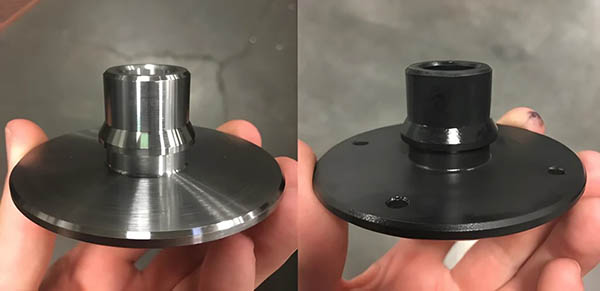
Black oxide metal refers to metal parts that have undergone a chemical conversion coating process, forming a thin black oxide layer on the surface. Unlike plating or painting, the coating is created by chemically converting the metal surface itself rather than adding new material.
This process is commonly applied to ferrous metals such as:
- carbon steel
- stainless steel
- cast iron
- copper alloys
The resulting finish provides:
- moderate corrosion resistance
- reduced light reflection
- improved aesthetics
Black oxide is widely used in automotive parts, machine components, tools, and fasteners, particularly where dimensional precision must remain unchanged.
The Chemical Composition Behind Black Oxide Coatings
The black oxide layer is primarily composed of magnetite (Fe₃O₄), a stable form of iron oxide.
During the treatment process, the iron atoms on the metal surface react with oxidizing chemicals to form this magnetite layer.
The simplified reaction is:
3Fe + 4H2O → Fe3O4 + 4H2
Magnetite is different from red rust (Fe₂O₃). Unlike rust, magnetite forms a dense and adherent layer that helps slow further corrosion.
Key properties of magnetite coatings:
| Property | Value |
|---|---|
| Chemical formula | Fe₃O₄ |
| Color | Black to bluish black |
| Structure | Dense crystalline oxide |
| Adhesion | Excellent |
This transformation is why black oxide is classified as a conversion coating rather than a surface coating.
How the Black Oxide Process Works Step-by-Step
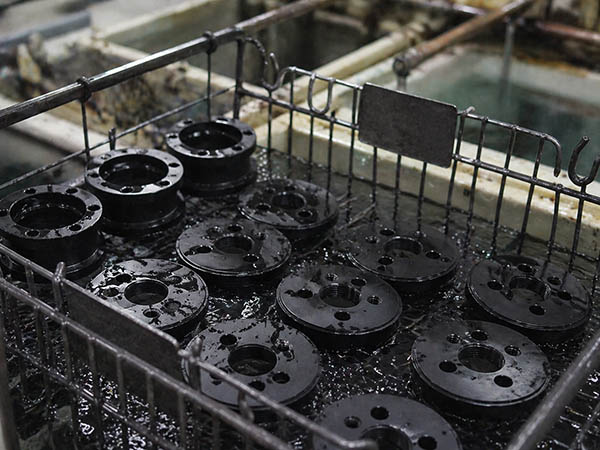
Black oxide finishing is performed in controlled chemical baths. A typical industrial process includes several stages.
| Step | Process | Purpose |
|---|---|---|
| 1 | Cleaning and degreasing | Remove oil and contaminants |
| 2 | Acid pickling | Remove oxide scale |
| 3 | Black oxide bath | Convert surface to magnetite |
| 4 | Rinsing | Remove chemical residues |
| 5 | Oil or wax sealing | Improve corrosion protection |
The oxidation bath usually contains:
- sodium hydroxide
- nitrates
- nitrites
The solution is heated to approximately 130–150°C (266–302°F) to trigger the chemical reaction.
After the oxide layer forms, parts are often coated with oil or wax to improve corrosion resistance.
Typical Thickness of Black Oxide Coatings
One major advantage of black oxide is its extremely thin coating thickness.
| Surface Finish | Typical Thickness |
|---|---|
| Black oxide | 1–5 μm |
| Electroplating | 5–25 μm |
| Powder coating | 50–150 μm |
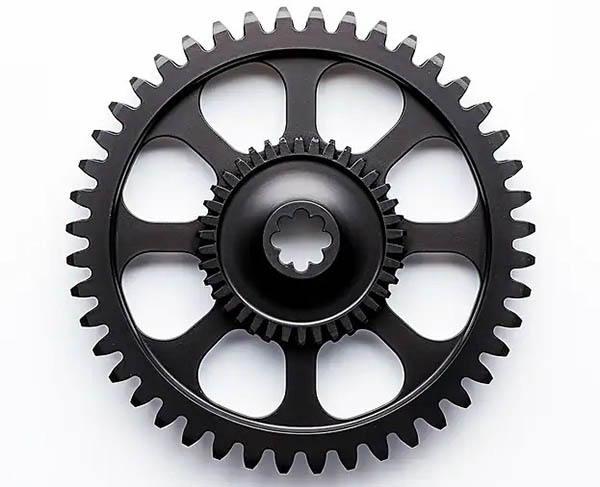
The thin layer means that black oxide causes almost no dimensional change, making it ideal for precision components such as gears, bearings, and threaded fasteners.
For CNC machined parts where tolerances may be ±0.01 mm, this property is extremely valuable.
Materials That Can Use Black Oxide Treatment
Black oxide is most effective on ferrous metals, but several other materials can also undergo adapted processes.
| Metal Type | Compatibility |
|---|---|
| Carbon steel | Excellent |
| Stainless steel | Good |
| Cast iron | Excellent |
| Copper | Possible |
| Brass | Possible |
| Aluminum | Limited |
Because the process relies on iron oxidation, it works best with steel-based alloys.
Key Advantages of Black Oxide Finishing
Black oxide is popular in manufacturing because it offers several technical advantages.
| Benefit | Explanation |
|---|---|
| Minimal dimensional change | Ultra-thin oxide layer |
| Corrosion resistance | Protects steel from rust |
| Low reflectivity | Ideal for optical equipment |
| Good appearance | Deep black aesthetic |
| Cost-effective | Lower cost than plating |
Another benefit is that black oxide does not cause hydrogen embrittlement, which can occur with electroplating processes.
Limitations and Weaknesses of Black Oxide Coatings
Despite its advantages, black oxide is not suitable for all environments.
Key limitations include:
- lower corrosion resistance compared with zinc plating
- requires oil sealing for best protection
- not suitable for marine environments
- coating can wear under heavy abrasion
Typical salt spray test results:
| Condition | Corrosion Resistance |
|---|---|
| Bare black oxide | 2–6 hours |
| Oil sealed | 24–72 hours |
These values highlight that black oxide is a moderate protection finish rather than a heavy corrosion barrier.
Black Oxide vs Other Metal Finishes
Surface finishing options vary depending on performance requirements.
| Finish | Thickness | Corrosion Resistance | Cost |
|---|---|---|---|
| Black oxide | 1–5 μm | Moderate | Low |
| Zinc plating | 5–25 μm | High | Medium |
| Phosphate coating | 5–15 μm | Medium | Low |
| Powder coating | 50–150 μm | Very high | High |
Black oxide is often selected when precision and appearance are more important than maximum corrosion protection.
Corrosion Resistance Performance Data
Corrosion performance varies depending on the sealing treatment applied.
| Finish Type | Protection Level |
|---|---|
| Black oxide only | Mild corrosion resistance |
| Black oxide + oil | Moderate protection |
| Black oxide + wax | Moderate protection |
| Black oxide + lacquer | Improved durability |
The porous oxide layer absorbs oil or wax, which acts as the main rust barrier.
Applications of Black Oxide Metal in Industry
Black oxide finishing appears in many engineering applications.
Typical industries include:
- automotive manufacturing
- aerospace components
- industrial machinery
- defense equipment
- consumer tools
Common parts treated with black oxide:
- gears
- bolts and nuts
- drill bits
- hydraulic components
- machine fixtures
These applications benefit from low reflectivity and precise dimensional stability.
Black Oxide for CNC Machined Parts
In CNC machining, black oxide is widely used as a post-processing surface finish.
Advantages for CNC parts include:
- preserves precision tolerances
- improves wear resistance
- enhances aesthetic quality
Example:
| CNC Part | Reason for Black Oxide |
|---|---|
| Precision shafts | corrosion protection |
| machine fixtures | reduced glare |
| threaded components | lubrication retention |
The finish is especially common for custom machined steel components.
Black Oxide for Fasteners and Precision Hardware
Many fasteners use black oxide finishing.
Common examples:
- socket head cap screws
- machine bolts
- washers
- drill bits
Reasons manufacturers choose black oxide:
- improves tool grip
- prevents light reflection
- provides lubricity during assembly
This finish is also common in high-end tools and firearms components.
Surface Preparation and Process Control
Proper preparation is critical for achieving a high-quality black oxide finish.
Key process control parameters include:
| Parameter | Typical Value |
|---|---|
| Bath temperature | 130–150°C |
| Solution composition | NaOH + nitrates |
| Process time | 10–20 minutes |
Surface cleanliness directly affects coating uniformity. Any oil residue can cause uneven coloration.
Cost Comparison of Black Oxide vs Other Finishes
Cost is one of the reasons black oxide is widely used.
Approximate relative cost comparison:
| Finish | Relative Cost |
|---|---|
| Black oxide | Low |
| Phosphate coating | Low |
| Zinc plating | Medium |
| Nickel plating | High |
Because the process is fast and scalable, it is ideal for high-volume hardware production.
How to Choose Black Oxide for Your CNC Manufacturing Project
Engineers should evaluate several factors before selecting black oxide finishing.
Key considerations:
- corrosion resistance requirements
- part tolerance requirements
- appearance requirements
- cost constraints
Example decision guide:
| Project Type | Recommended Finish |
|---|---|
| precision gears | black oxide |
| outdoor fasteners | zinc plating |
| decorative panels | powder coating |
Selecting the right finish ensures the best balance of performance and cost.
Why Xavier CNC Manufacturing Is a Reliable Partner
When producing precision metal components, surface finishing quality is just as important as machining accuracy.
Xavier CNC Manufacturing provides professional metal finishing services including:
- black oxide surface treatment
- precision CNC machining
- sheet metal fabrication
- custom metal components
With advanced CNC equipment and experienced engineers, Xavier ensures that black oxide metal parts achieve uniform coating quality, tight tolerances, and excellent durability.
If your project requires precision steel components with a durable black oxide finish, Xavier can deliver high-quality solutions tailored to your exact specifications. cnc milling service
Some of the images and text in this article are collected and compiled from the internet. If there is anything inappropriate, please contact us for processing.