17-4 PH Stainless Steel: Properties, Heat Treatment, Machining, and Industrial Applications
17-4 PH stainless steel (also known as AISI 630, UNS S17400, or DIN 1.4542) is one of the most widely used precipitation-hardening stainless steels in modern engineering. It combines high strength, good corrosion resistance, and excellent mechanical stability, making it ideal for aerospace, oil & gas, chemical processing, and precision CNC-machined components.
Unlike conventional stainless steels, 17-4 PH can achieve extremely high strength through precipitation hardening heat treatment, which forms copper-rich precipitates inside a martensitic microstructure.
This article explores the most important technical aspects of 17-4 PH stainless steel, including composition, heat treatment conditions, machining considerations, and industrial applications.
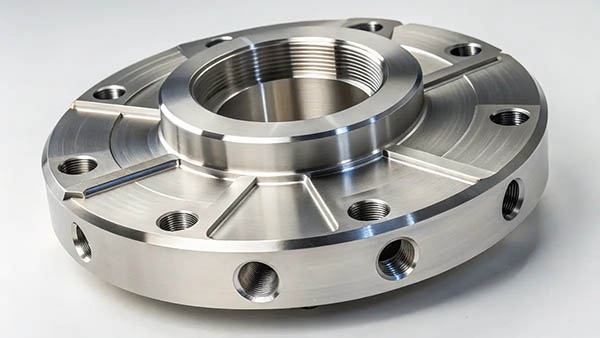
Chemical Composition and Alloy Design of 17-4 PH Stainless Steel
17-4 PH stainless steel contains chromium, nickel, and copper as its primary alloying elements. These elements create the unique balance of corrosion resistance and precipitation-hardening capability.
Typical chemical composition:
| Element | Content (%) | Function |
|---|---|---|
| Chromium (Cr) | 15–17.5 | Corrosion resistance |
| Nickel (Ni) | 3–5 | Strength and toughness |
| Copper (Cu) | 3–5 | Precipitation hardening |
| Niobium (Nb) | 0.15–0.45 | Stabilization |
| Carbon (C) | ≤0.07 | Controls hardness |
| Iron (Fe) | Balance | Base metal |
The chromium content (~17%) forms a passive oxide layer that protects the metal from corrosion. Meanwhile, copper enables precipitation hardening, which dramatically increases strength after heat treatment.
This carefully engineered composition is what makes 17-4 PH one of the most versatile stainless steels used in precision manufacturing.
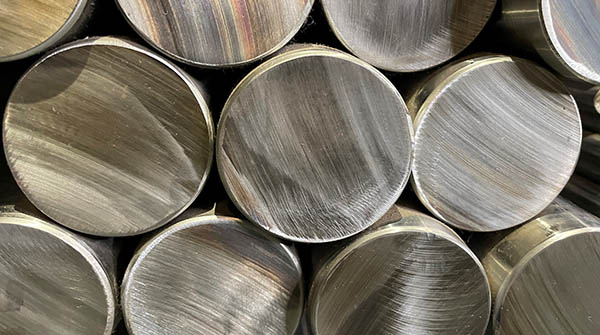
Mechanical Properties and Strength Characteristics
17-4 PH stainless steel is known for its exceptional strength compared with most stainless alloys.
Typical mechanical properties after heat treatment:
| Property | Typical Value |
|---|---|
| Tensile Strength | 1100–1300 MPa |
| Yield Strength | Up to 1000 MPa |
| Hardness | 38–42 HRC |
| Elongation | 10–15% |
High strength is achieved through precipitation hardening, where fine copper precipitates strengthen the martensitic structure.
For comparison:
| Material | Yield Strength |
|---|---|
| 304 Stainless Steel | ~215 MPa |
| 316 Stainless Steel | ~290 MPa |
| 17-4 PH Stainless Steel | Up to 1000 MPa |
This dramatic increase in strength makes the material ideal for load-bearing mechanical components.
Heat Treatment Conditions (H900, H1025, H1150)
The mechanical properties of 17-4 PH stainless steel are highly dependent on its heat treatment condition.
Common aging conditions:
| Condition | Aging Temperature | Typical Result |
|---|---|---|
| H900 | 482°C (900°F) | Highest strength |
| H1025 | 552°C (1025°F) | Balanced strength & toughness |
| H1150 | 621°C (1150°F) | Improved corrosion resistance |
The heat treatment process generally includes:
- Solution annealing at ~1040°C
- Rapid cooling (usually air cooling)
- Aging heat treatment to form precipitates
This aging process increases hardness and strength by forming copper-rich particles within the martensitic matrix.
Selecting the proper heat treatment is critical for achieving the desired performance.
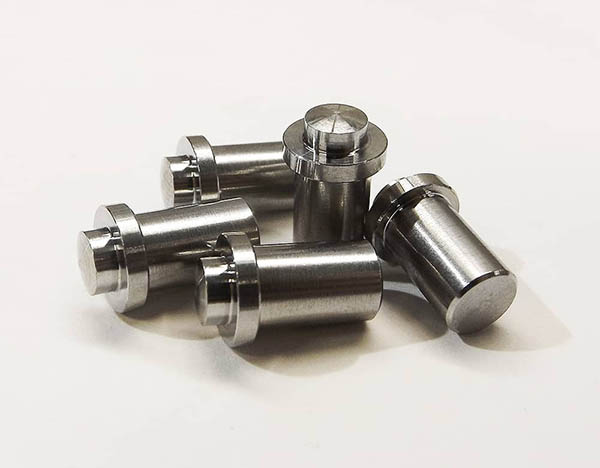
Corrosion Resistance Compared With Other Stainless Steels
17-4 PH offers good corrosion resistance, though it is slightly lower than that of 300-series austenitic stainless steels.
Corrosion resistance comparison:
| Stainless Steel Grade | Corrosion Resistance |
|---|---|
| 316 Stainless Steel | Excellent |
| 304 Stainless Steel | Very good |
| 17-4 PH Stainless Steel | Good |
The alloy performs well in:
- mild industrial environments
- atmospheric exposure
- diluted acids and salts
However, in highly chloride-rich environments such as seawater, 316 stainless steel may perform better.
Machinability of 17-4 PH Stainless Steel
17-4 PH stainless steel is widely used in CNC machining because it offers a good balance between machinability and strength.
Machining considerations:
| Condition | Machinability |
|---|---|
| Solution-annealed (Condition A) | Best for machining |
| H900 aged condition | Difficult machining |
Most CNC machining operations are performed before precipitation hardening, when the material is softer and easier to cut.
Typical tooling recommendations:
- carbide cutting tools
- low cutting speeds
- generous coolant use
These strategies help reduce tool wear and maintain dimensional accuracy.
Welding and Fabrication Characteristics
Compared with many high-strength alloys, 17-4 PH has relatively good weldability.
Fabrication capabilities:
| Process | Feasibility |
|---|---|
| TIG Welding | Good |
| MIG Welding | Good |
| Laser Welding | Excellent |
| Cold Forming | Moderate |
However, post-weld heat treatment is often required to restore mechanical properties.
The alloy can also be hot worked between 1010°C and 1230°C, allowing for forging and forming operations.
Physical Properties and Thermal Characteristics
Important physical properties include:
| Property | Value |
|---|---|
| Density | ~7.75 g/cm³ |
| Melting Point | 1400–1440°C |
| Thermal Conductivity | ~18 W/m·K |
| Elastic Modulus | ~200 GPa |
These values are similar to other stainless steels, allowing 17-4 PH to integrate easily into existing mechanical designs.
The alloy maintains mechanical stability at moderately elevated temperatures but should generally not be used above about 300°C–315°C for long periods.
Industrial Applications of 17-4 PH Stainless Steel
Due to its unique combination of strength and corrosion resistance, 17-4 PH stainless steel is widely used across many industries.
Typical applications include:
Aerospace
- turbine components
- aircraft structural parts
- landing gear components
Oil and Gas
- valve stems
- pump shafts
- drilling equipment
Chemical Processing
- fasteners
- mixers
- reactor components
Manufacturing and CNC Machining
- precision gears
- robotic parts
- high-strength mechanical housings
The alloy’s strength and toughness make it ideal for high-stress mechanical environments.
CNC Machining Considerations for 17-4 PH Components
Precision CNC machining is one of the most common manufacturing methods for 17-4 PH parts.
Typical manufacturing workflow:
| Step | Process |
|---|---|
| 1 | Material preparation |
| 2 | CNC milling / turning |
| 3 | Deburring |
| 4 | Heat treatment |
| 5 | Surface finishing |
Machining before aging heat treatment improves tool life and ensures dimensional accuracy.
Surface finishing options include:
- passivation
- polishing
- electropolishing
- bead blasting
These processes improve corrosion resistance and surface quality.
Advantages and Limitations of 17-4 PH Stainless Steel
Advantages:
- Extremely high strength
- Good corrosion resistance
- Heat-treatable properties
- Good machinability before aging
Limitations:
- Lower corrosion resistance than 316
- Reduced toughness in highest-strength condition
- Higher material cost than standard stainless steels
Understanding these trade-offs helps engineers select the right material for demanding applications.
Why Manufacturers Choose Xavier for 17-4 PH Stainless Steel CNC Parts
For industries requiring high-performance components, precision machining of 17-4 PH stainless steel demands experience, advanced equipment, and strict quality control.
Xavier specializes in producing precision CNC-machined metal components, including complex parts manufactured from 17-4 PH stainless steel.
Key advantages of working with Xavier include:
- Advanced CNC milling and turning capabilities
- Expertise machining high-strength stainless alloys
- Controlled heat treatment processes
- Strict dimensional tolerance management
- High-quality surface finishing options
From aerospace components to industrial machinery parts, Xavier provides reliable manufacturing solutions for high-performance 17-4 PH stainless steel parts.
Some of the images and text in this article are collected and compiled from the internet. If there is anything inappropriate, please contact us for processing.