
Zinc Nickel Electroplating: A Complete Guide to Corrosion Resistance, Coating Performance, and CNC Machined Parts
Introduction
Zinc nickel electroplating is an advanced metal surface treatment widely used in automotive, aerospace, industrial machinery, hydraulic systems, and precision-engineered components. It is particularly valuable for steel parts that require long-term corrosion protection, consistent coating thickness, and reliable performance in demanding environments.
Compared with conventional zinc plating, zinc nickel electroplating provides significantly improved corrosion resistance, especially when components are exposed to road salt, moisture, chemicals, and harsh operating conditions. It also offers good compatibility with additional surface treatments, making it a practical choice for precision CNC machined components.
For manufacturers and purchasing engineers, choosing the right zinc nickel coating involves more than simply specifying a plating process. Nickel content, coating thickness, passivation, hydrogen embrittlement, dimensional tolerances, and testing standards all influence the final performance.
The following guide explores ten important aspects of zinc nickel electroplating, from its working principle to its application in precision CNC manufacturing.
10 Key Topics About Zinc Nickel Electroplating
- What Is Zinc Nickel Electroplating?
- How Does the Zinc Nickel Electroplating Process Work?
- Zinc Nickel Coating Composition and Nickel Content
- Zinc Nickel Plating Thickness and Dimensional Tolerances
- Corrosion Resistance and Salt Spray Performance
- Zinc Nickel vs. Standard Zinc Plating
- Passivation, Topcoats, and Additional Surface Treatments
- Hydrogen Embrittlement and Heat Treatment Requirements
- Applications of Zinc Nickel Plating in CNC Machined Parts
- Quality Inspection, Standards, and Cost Considerations
1. What Is Zinc Nickel Electroplating?
Zinc nickel electroplating is an electrochemical surface finishing process that deposits a zinc-nickel alloy onto a metal component, usually carbon steel, alloy steel, or other ferrous materials. The coating consists primarily of zinc with a controlled percentage of nickel, creating a protective layer that provides better corrosion resistance than conventional zinc plating.
According to ASTM B841 and ISO 19598, commonly specified zinc-nickel alloy coatings contain approximately 12%–16% nickel by mass. This composition is particularly important because the nickel content directly influences the coating’s corrosion behavior, hardness, and electrochemical characteristics.
Unlike ordinary nickel plating, zinc nickel plating retains zinc as the primary coating metal. Zinc acts as a sacrificial anode, meaning it corrodes preferentially to protect the underlying steel when the coating is damaged or exposed to corrosive environments.
Main characteristics of zinc nickel electroplating:
- Excellent corrosion resistance in humid and salt-containing environments.
- Sacrificial protection for exposed steel surfaces.
- Good coating hardness and wear resistance.
- Compatibility with transparent, silver-gray, and black passivation systems.
- Suitable for automotive fasteners, hydraulic components, brackets, shafts, and precision CNC machined parts.
For example, a CNC-machined steel hydraulic connector used in an industrial environment may experience continuous exposure to moisture and hydraulic fluids. Applying zinc nickel electroplating helps protect its external steel surfaces against corrosion while maintaining the functional reliability of the component.
2. How Does the Zinc Nickel Electroplating Process Work?
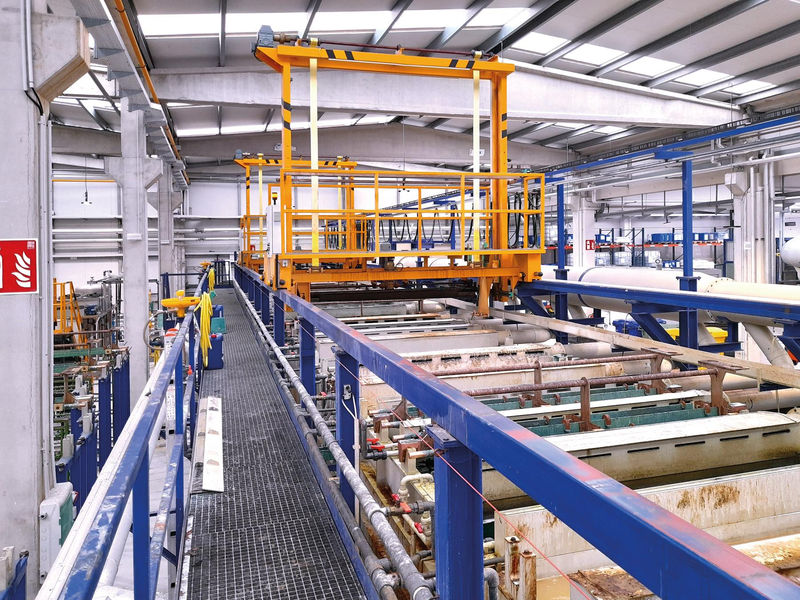
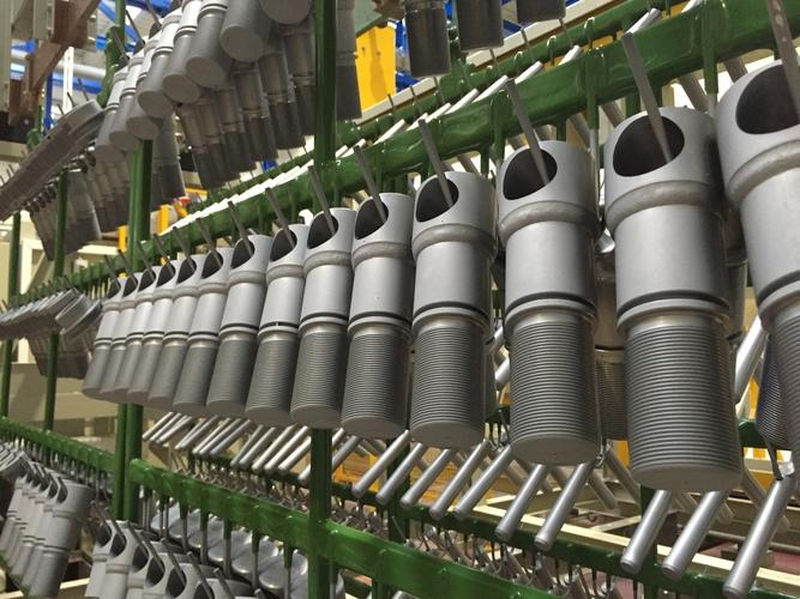
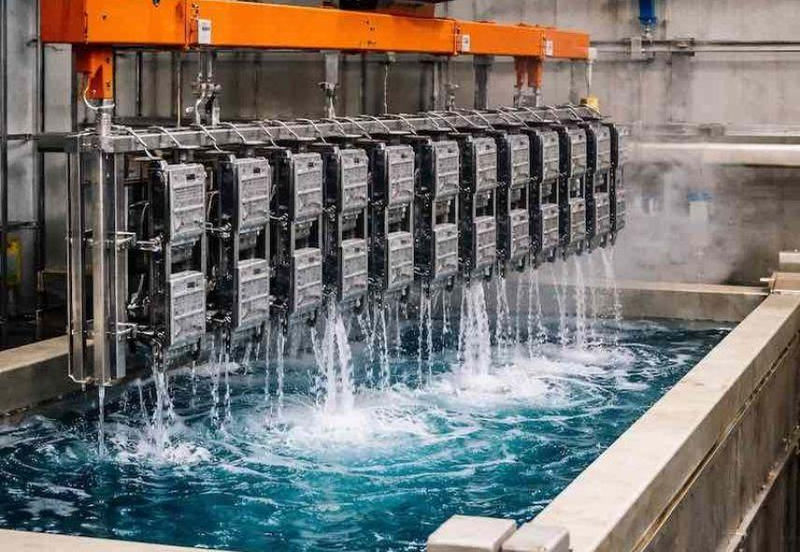
Zinc nickel electroplating involves several controlled manufacturing stages. The quality of the finished coating depends not only on the plating bath but also on surface preparation, electrical current, temperature, chemical composition, and post-treatment.
Step 1: Surface Cleaning and Degreasing
Before plating, components must be thoroughly cleaned to remove machining oil, cutting fluid, grease, polishing compounds, and other contaminants. Alkaline degreasing is commonly used to eliminate oil-based residues.
For CNC machined parts, this stage is particularly important because machining operations can leave coolant inside blind holes, threads, grooves, and small recesses. Residual contamination can prevent proper coating adhesion and produce blistering or unplated areas.
Step 2: Pickling and Surface Activation
Depending on the base material and pretreatment specification, an acid cleaning or activation process may be used to remove oxide films and expose a chemically active metal surface.
However, excessive acid exposure can damage the substrate and increase hydrogen absorption, particularly in hardened steel components. Therefore, cleaning chemistry and processing time must be controlled.
Step 3: Zinc Nickel Alloy Deposition
The prepared component is immersed in an electrolyte containing zinc and nickel ions. An external DC power supply drives the electrochemical reaction, causing the alloy to deposit onto the component’s surface.
Important process parameters include:
- Current density: influences deposition rate and coating distribution.
- Bath temperature: affects deposition efficiency and alloy composition.
- Nickel concentration: controls the final nickel percentage.
- Bath pH: influences alloy deposition behavior.
- Plating time: determines the resulting coating thickness.
Step 4: Passivation and Sealing
After electroplating, the component is rinsed and treated with a suitable conversion coating. A sealer or topcoat may then be applied to improve corrosion resistance and modify friction or appearance.
Step 5: Drying and Quality Inspection
Finally, components are dried under controlled conditions and inspected for coating thickness, adhesion, appearance, corrosion performance, and dimensional compliance.
A poorly controlled process can produce uneven coating thickness, especially around sharp edges, deep cavities, and recessed holes. These areas require particular attention when plating precision CNC components.
3. Zinc Nickel Coating Composition and Nickel Content
Nickel content is one of the most important variables in zinc nickel electroplating. It influences the alloy’s microstructure, electrochemical behavior, corrosion performance, and mechanical characteristics.
For most engineering applications, the commonly specified composition is between 12% and 16% nickel, with zinc making up the balance.
| Parameter | Typical specification |
|---|---|
| Coating type | Zinc-nickel alloy |
| Nickel content | 12%–16% |
| Main coating metal | Zinc |
| Secondary alloy element | Nickel |
| Appearance | Silver-gray, iridescent, or black |
| Deposition method | Electroplating |
| Common applications | Steel fasteners, brackets, shafts, and automotive components |
Why Is 12%–16% Nickel Important?
A properly controlled nickel percentage helps produce a corrosion-resistant zinc-nickel alloy coating. If the nickel content falls outside the required range, the resulting deposit may not deliver the expected performance.
For instance, a manufacturer producing steel automotive mounting brackets may specify 12%–16% nickel to meet a particular coating standard. Simply specifying zinc nickel plating without defining the alloy composition can lead to inconsistent results between suppliers.
It is also important to understand that higher nickel content does not automatically mean better corrosion resistance. The final performance depends on alloy structure, coating thickness, pretreatment, passivation, sealing, and process consistency.
4. Zinc Nickel Plating Thickness and Dimensional Tolerances
Coating thickness directly affects corrosion protection and the dimensional accuracy of finished components. For precision CNC machining, this is especially important because even a relatively thin coating can affect thread engagement, shaft diameter, bearing fits, and sealing surfaces.
Typical engineering specifications may use zinc-nickel coating thicknesses around 5–15 μm, although the actual requirement depends on the applicable standard, product design, and corrosion target.
| Coating thickness | Typical engineering consideration |
|---|---|
| 5 μm | Thin coating for controlled dimensional requirements |
| 8 μm | Common engineering coating range |
| 10 μm | Greater coating allowance for corrosion protection |
| 12–15 μm | Higher coating thickness where the specification permits |
How Does Plating Affect CNC Machining Dimensions?
Unlike a coating that only changes the chemical properties of a surface, electroplating physically adds material to the component.
For an external cylindrical shaft, if the coating thickness is 10 μm, the diameter increases by approximately 20 μm because the coating builds up on both sides.
For example:
- Original shaft diameter: 20.000 mm
- Zinc nickel coating: 10 μm per side
- Final diameter: approximately 20.020 mm
This calculation assumes uniform deposition and does not include dimensional variations caused by plating distribution.
Internal holes behave differently: the coating reduces the hole diameter by approximately twice the coating thickness.
CNC manufacturing recommendation: Machine the component according to its final coated dimensions rather than treating electroplating as an operation that can be added without affecting tolerances. Threads, precision bores, bearing seats, and sealing faces may require masking, dimensional compensation, or post-plating inspection.
5. Corrosion Resistance and Salt Spray Performance
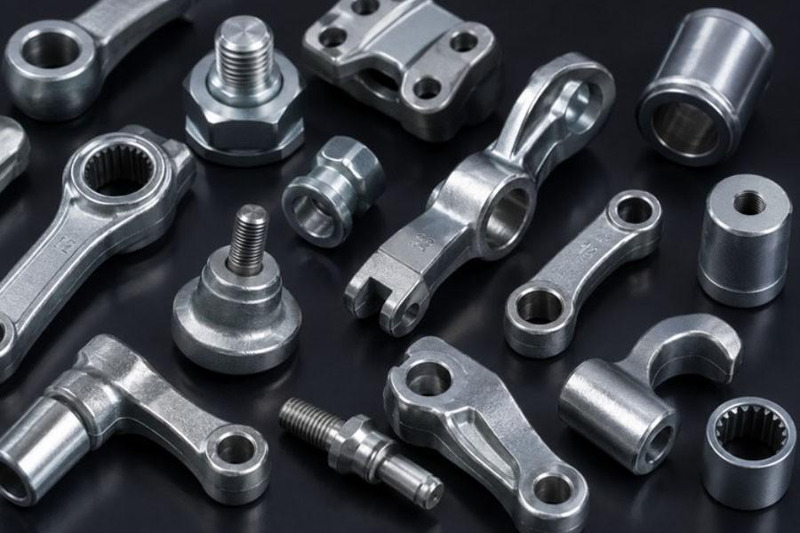
Corrosion resistance is one of the main reasons manufacturers choose zinc nickel electroplating instead of conventional zinc plating.
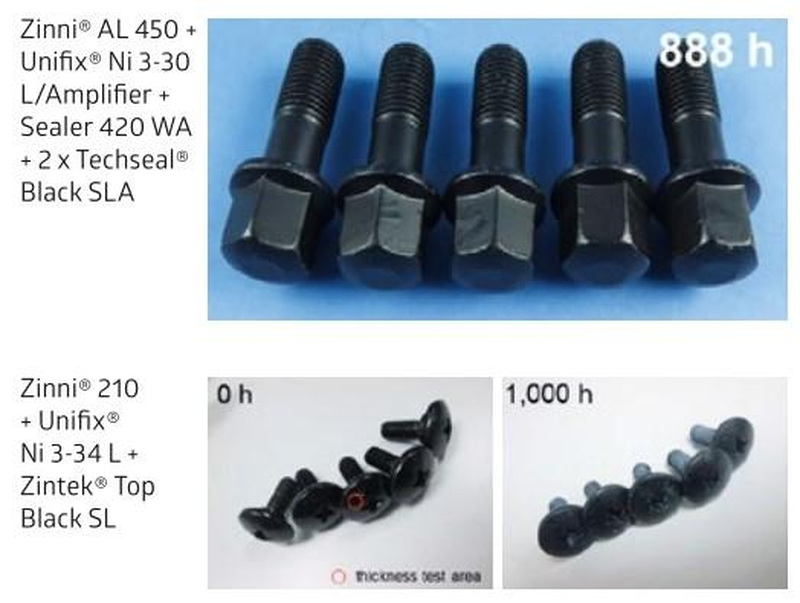
The coating protects steel through two mechanisms. First, it acts as a physical barrier that limits direct contact between the steel and the surrounding environment. Second, zinc provides sacrificial protection when localized coating damage exposes the underlying steel.
What Is the Salt Spray Test?
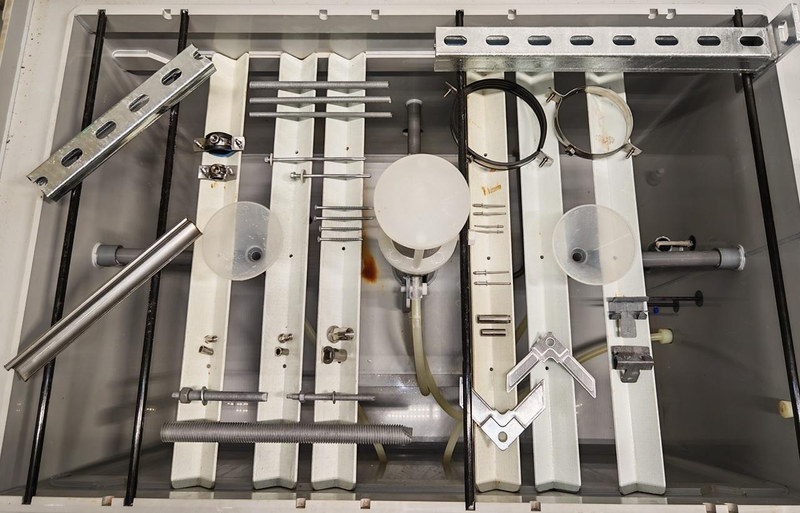
Salt spray testing evaluates coating corrosion behavior under controlled conditions. Neutral salt spray testing is commonly performed according to ASTM B117 or ISO 9227.
Results are generally expressed in exposure hours, with two important corrosion indicators:
- White corrosion: Corrosion products formed on the zinc-based coating.
- Red rust: Corrosion of the underlying iron or steel substrate.
A technical supplier example published by AUMOVIO reports 720 hours without red corrosion for its zinc-nickel plated samples, compared with 480 hours for its zinc-plated samples. These are supplier-specific results, not universal minimum requirements.
What Determines Salt Spray Performance?
Salt spray performance depends on several interacting factors:
- Nickel percentage and alloy structure.
- Actual coating thickness and uniformity.
- Passivation chemistry and coating condition.
- Whether a supplementary sealer or topcoat is applied.
- Surface preparation and coating adhesion.
A zinc-nickel coating with an appropriate passivation and sealing system can achieve substantially better corrosion protection than basic zinc plating. However, a statement such as “720-hour salt spray resistance” is incomplete unless the test method, evaluation criteria, coating system, and red-rust acceptance requirement are clearly defined.
For buyers, specifying the required number of hours without defining the failure criterion can create misunderstandings during supplier qualification and incoming inspection.
6. Zinc Nickel vs. Standard Zinc Plating
Both zinc plating and zinc nickel plating are widely used to protect steel components, but their performance and cost differ.
Standard zinc plating is generally selected for economical corrosion protection, whereas zinc nickel plating is preferred when components require stronger corrosion resistance and longer service life.
| Comparison | Standard zinc plating | Zinc nickel electroplating |
|---|---|---|
| Coating composition | Mainly zinc | Zinc with 12%–16% nickel |
| Corrosion resistance | Good | Generally excellent |
| Sacrificial protection | Yes | Yes |
| Coating hardness | Generally lower | Generally higher |
| Salt spray performance | Depends on system | Often substantially higher |
| Relative cost | Lower | Higher |
| Common applications | General fasteners, brackets | Automotive, hydraulic, industrial parts |
Which Coating Should You Choose?
Consider a steel mounting bracket installed inside a relatively dry industrial enclosure. Standard zinc plating may provide sufficient protection at a lower cost.
However, a hydraulic fitting used in a vehicle underbody environment faces water, road salt, temperature changes, and chemical contamination. In this situation, zinc nickel electroplating may provide a better long-term solution.
The decision should be based on operating conditions, expected service life, corrosion testing requirements, and total component cost rather than coating price alone.
7. Passivation, Topcoats, and Additional Surface Treatments
Zinc nickel electroplating is frequently combined with additional surface treatments to improve corrosion resistance and achieve specific appearance requirements.
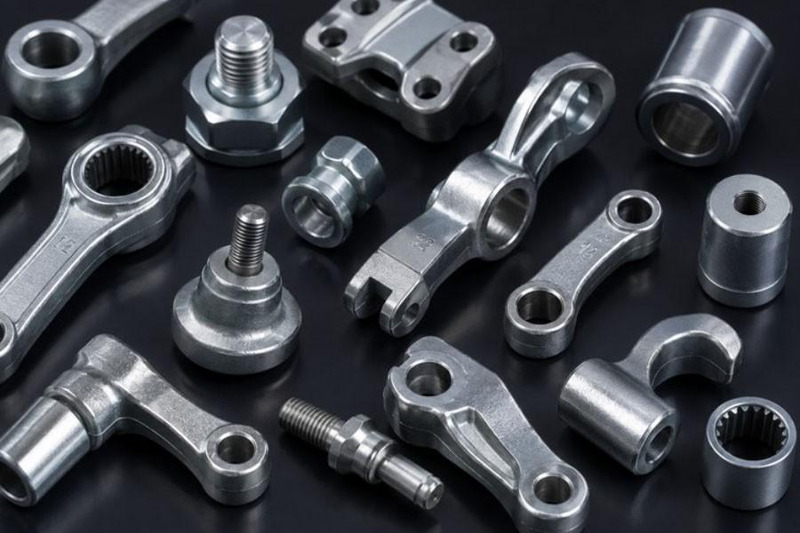
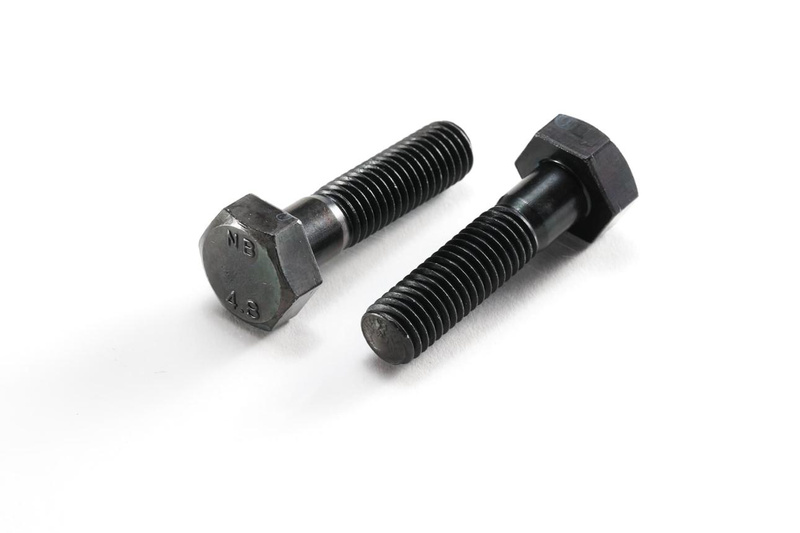
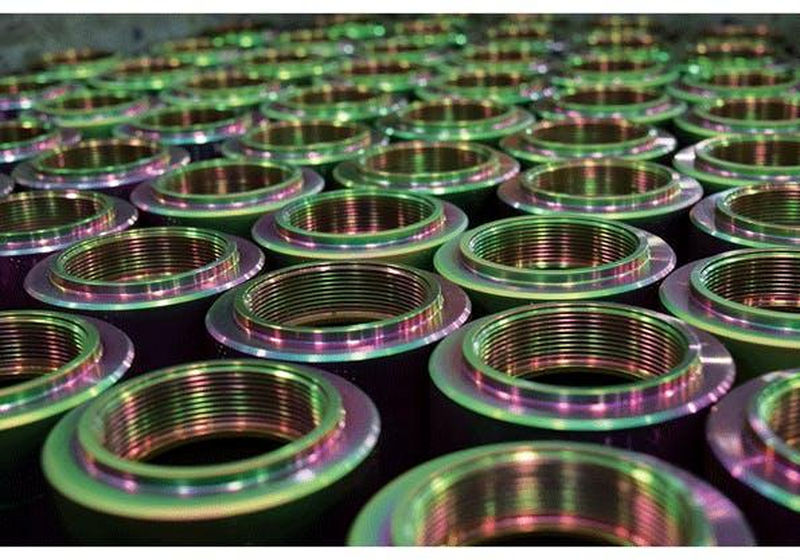
According to ISO 19598, common chromium(VI)-free passivation systems include transparent, iridescent, and black finishes. Additional sealers and topcoats can further improve the protective performance.
Common Zinc Nickel Surface Finishes
- Transparent passivation: Produces a relatively clean metallic appearance while providing additional corrosion protection.
- Iridescent passivation: Creates a slightly colored or rainbow-like surface appearance.
- Black passivation: Produces a dark finish commonly selected for automotive and industrial components.
- Sealer coating: Adds an additional protective layer and can improve corrosion performance.
- Topcoat: Can modify friction, chemical resistance, and other functional properties.
For threaded CNC components, certain topcoats can also incorporate lubricants to control friction during assembly. This is particularly useful for fasteners requiring consistent torque-tension behavior.
One important consideration is that a thicker post-treatment layer may influence electrical contact resistance, dimensional requirements, and coating compatibility with other components. These properties should be evaluated before selecting the final coating system.
8. Hydrogen Embrittlement and Heat Treatment Requirements
Hydrogen embrittlement is an important technical risk associated with electroplating hardened steel components. It occurs when hydrogen enters the steel during surface preparation or electrochemical processing, reducing the material’s ductility and potentially causing delayed cracking under tensile stress.
This issue is particularly important for high-strength fasteners, hardened shafts, structural connectors, and precision CNC machined steel components.
How Does Hydrogen Embrittlement Occur?
During acid cleaning, pickling, and electroplating, hydrogen can be generated at the metal surface. Some of this hydrogen may enter the steel instead of escaping into the surrounding solution.
When hydrogen accumulates in susceptible high-strength steel, it can contribute to cracking even after the component has passed its initial dimensional and visual inspections.
For example, a hardened alloy steel bolt may appear completely normal immediately after zinc nickel plating. However, if it contains excessive absorbed hydrogen and remains under tensile stress, cracking may develop later during service.
Hydrogen Relief Baking
Post-plating baking is one commonly used method to reduce the risk of hydrogen embrittlement. It involves heating the component within a specified temperature range for a controlled period to encourage diffusible hydrogen to escape.
Important considerations include:
- Material hardness and tensile strength.
- Plating bath chemistry and pretreatment conditions.
- Time between plating and baking.
- Baking temperature and duration.
- Applicable customer specifications and industry standards.
ASTM B850 provides guidance on post-coating treatments for reducing hydrogen embrittlement risk. ISO 4042:2022 also discusses hydrogen embrittlement controls for electroplated fasteners.
An important distinction is that alkaline zinc-nickel processes containing 12%–16% nickel are recognized as lower-hydrogen-embrittlement systems in certain applications. However, this does not mean that all high-strength parts can automatically skip baking. The decision must be supported by applicable requirements and appropriate verification testing.
Electroplated Coating Systems for Fasteners+2
9. Applications of Zinc Nickel Plating in CNC Machined Parts
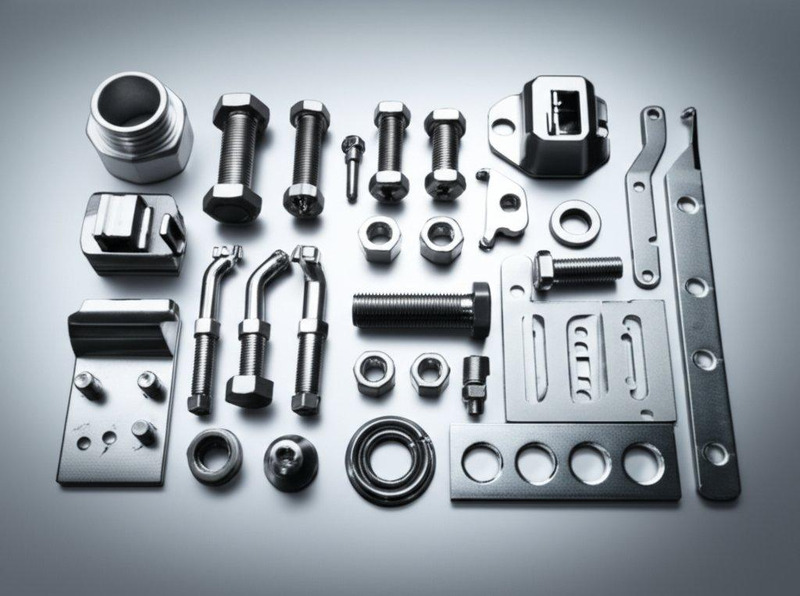
Zinc nickel electroplating is particularly suitable for steel components that require both precision manufacturing and long-term corrosion protection.
In CNC machining, components are frequently manufactured to tight dimensional tolerances before undergoing surface finishing. Selecting the appropriate plating system helps protect these components without compromising their functional requirements.
Automotive Components
Automotive manufacturing is one of the major application areas for zinc nickel electroplating.
Typical components include:
- Brake system fittings and connectors.
- Steering system brackets.
- Transmission components.
- Suspension fasteners.
- Engine mounting hardware.
- Precision steel connectors.
These components may experience moisture, road salt, temperature fluctuations, and mechanical vibration. Zinc nickel plating provides an additional protective layer that helps extend their service life.
Hydraulic and Industrial Machinery Components
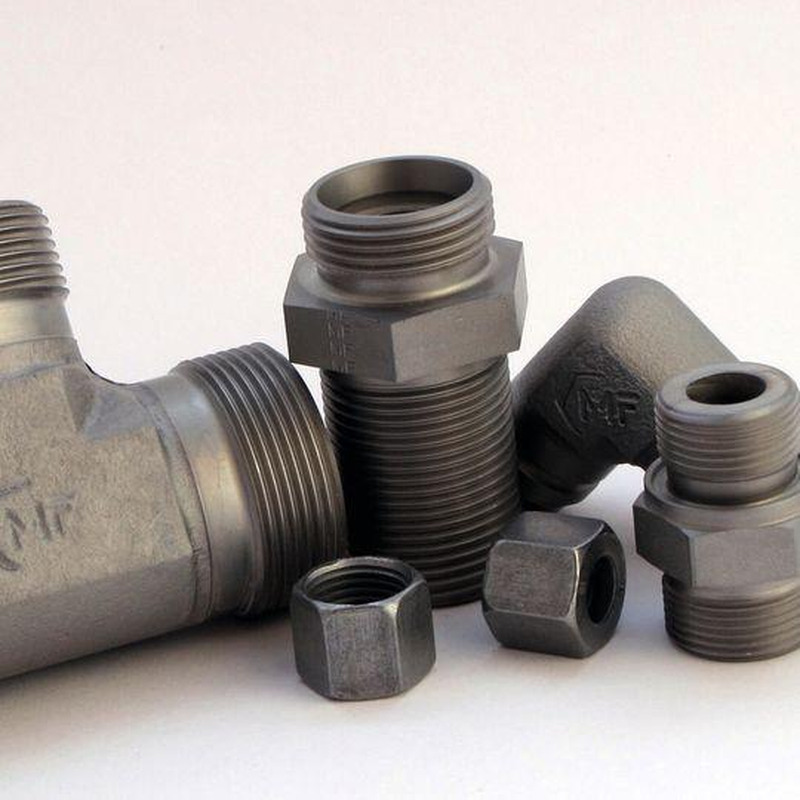
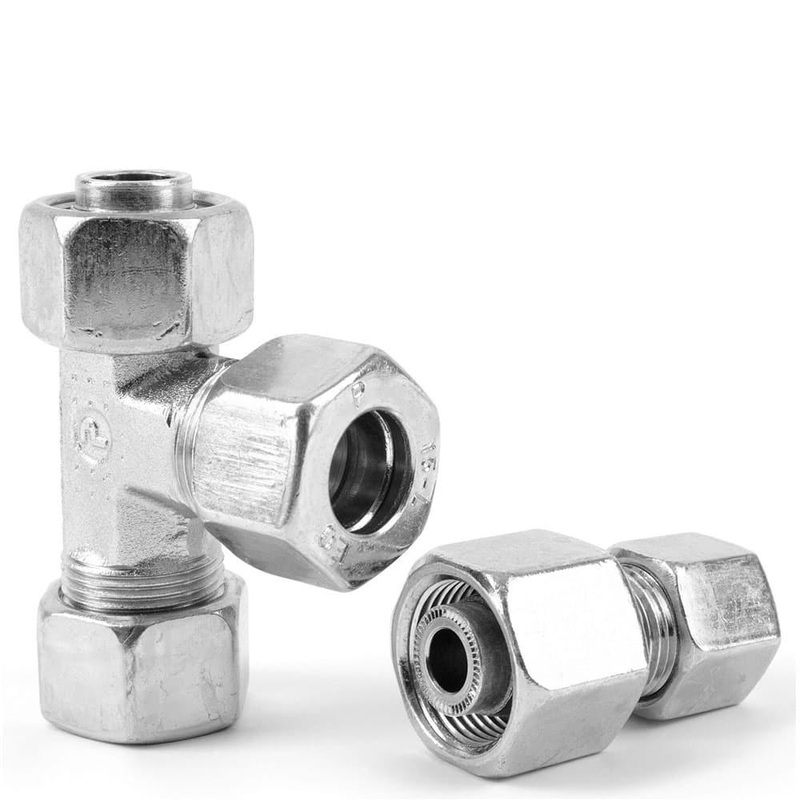
Hydraulic systems often contain steel connectors, valve components, adapters, and mounting elements. These parts must maintain their structural integrity and resist external corrosion during long operating cycles.
For example, a CNC-machined hydraulic adapter manufactured from 4140 alloy steel may require a zinc-nickel finish to protect its external surfaces in a humid industrial environment.
However, critical sealing surfaces, precision internal passages, and mating threads may require masking or special dimensional allowances to maintain their functional accuracy.
Aerospace and High-Strength Steel Components
Certain aerospace and specialized industrial applications use zinc nickel coatings for corrosion protection on steel components.
In these applications, process qualification, hydrogen embrittlement control, material traceability, and compliance with the customer’s engineering specifications are essential.
Zinc nickel electroplating should not be treated as a universal finish for every aerospace component. Material compatibility, operating environment, and applicable industry approvals must be evaluated before production.
10. Quality Inspection, Standards, and Cost Considerations
The quality of zinc nickel electroplating cannot be judged by appearance alone. A component may have a smooth, attractive surface but still fail to meet the required nickel content, coating thickness, corrosion resistance, or dimensional specifications.
For CNC manufacturers and purchasing engineers, a clear inspection plan is essential.
Important Inspection Methods
| Inspection item | Common method | Purpose |
|---|---|---|
| Coating thickness | X-ray fluorescence (XRF) | Measures deposited coating thickness |
| Nickel content | XRF or suitable chemical analysis | Verifies alloy composition |
| Corrosion resistance | ASTM B117 / ISO 9227 | Evaluates corrosion behavior |
| Adhesion | Applicable adhesion test | Checks coating bonding |
| Surface appearance | Visual inspection | Identifies discoloration, blistering, and bare areas |
| Dimensions | CMM, micrometer, gauges | Verifies final component dimensions |
| Hydrogen embrittlement | Applicable component testing | Evaluates cracking susceptibility |
Important Industry Standards
Several standards are relevant when specifying zinc nickel electroplating:
- ASTM B841: Covers electrodeposited zinc-nickel alloy coatings on iron and steel.
- ISO 19598: Specifies chromium(VI)-free electroplated zinc and zinc-alloy coatings and associated passivation systems.
- ISO 9227: Defines salt spray corrosion testing procedures.
- ASTM B117: Establishes the operating procedure for salt spray (fog) testing.
- ISO 4042: Addresses electroplated coating systems for fasteners, including hydrogen embrittlement considerations.
What Affects Zinc Nickel Plating Cost?
The final cost depends on more than the weight of the component or the thickness of the coating.
| Cost factor | Effect on production cost |
|---|---|
| Part geometry | Complex shapes may require special fixtures and process control |
| Coating thickness | Greater deposition requirements can increase processing time |
| Nickel content | Requires controlled bath chemistry |
| Passivation and sealer | Additional treatments increase processing costs |
| Masking requirements | Adds labor and setup time |
| Inspection requirements | Salt spray and composition testing add cost |
| Order quantity | Larger batches can reduce average processing costs |
For example, a simple steel washer can generally be processed in large batches using barrel plating. However, a precision CNC-machined hydraulic valve body with multiple threaded holes, narrow passages, and sealing surfaces may require rack plating, selective masking, and additional inspection.
Consequently, the most economical solution is not necessarily the coating with the lowest unit price. Buyers should consider coating performance, production consistency, inspection requirements, and the expected service life of the finished component.
Why Choose Xavier for CNC Machined Parts with Zinc Nickel Electroplating?
Selecting the right surface finishing process is only one part of producing reliable precision components. Material selection, CNC machining accuracy, surface preparation, coating compatibility, and final inspection must work together to achieve the required performance.
Xavier is a CNC machining service provider and integrated manufacturing company specializing in custom CNC machining and precision metal parts for international B2B customers.
We understand that different components have different functional requirements. A hydraulic connector, automotive mounting bracket, precision shaft, and industrial steel fitting may require different machining strategies and surface finishing specifications.
Our manufacturing capabilities focus on:
- Custom CNC milling and CNC turning for precision metal components.
- Steel, stainless steel, aluminum, brass, titanium, and other engineering materials.
- Surface finishing solutions, including zinc nickel electroplating through suitable finishing arrangements.
- Dimensional inspection and manufacturing quality control.
- Custom production for prototypes, low-volume orders, and larger manufacturing batches.
If your project requires zinc nickel electroplating, we recommend confirming the nickel content, coating thickness, passivation type, salt spray requirement, masking areas, and hydrogen embrittlement requirements before production.
This helps avoid unnecessary finishing costs while ensuring the final components meet their intended application requirements.
Looking for a reliable CNC machining partner for corrosion-resistant steel components?
Contact Xavier today. Send us your 2D drawings, 3D CAD files, material specifications, and surface finishing requirements. Our team can help evaluate your project and provide a suitable CNC machining and surface finishing solution.
Get a CNC Machining Quote from Xavier and turn your engineering drawings into precision-manufactured parts.
As an integrated CNC machining manufacturer and trading company, Xavier specializes in custom CNC machining and precision manufacturing of various metal components. We offer comprehensive machining solutions for a wide range of materials, including CNC machining PEEK, CNC machining stainless steel, and CNC machining brass, as well as alloy steel, aluminum, copper, bronze, Inconel, Invar 36, mild steel, titanium, tool steel, ABS, FR4, G-10, nylon, PEI, PET, PMMA (acrylic), polycarbonate, polyethylene, polypropylene, POM (acetal), PPSU, PTFE, and PVC. Our manufacturing capabilities support a broad range of applications, including robotics, aerospace components, marine parts, automotive components, medical devices, and other precision-engineered parts.
As an experienced PEEK CNC machining manufacturer, we provide high-volume stainless steel CNC milling services and offer competitive brass CNC machining prices. Feel free to contact us for professional machining solutions and a customized quotation.
Some content in this article is sourced from the internet. If there is any inappropriate content, please contact us for removal.