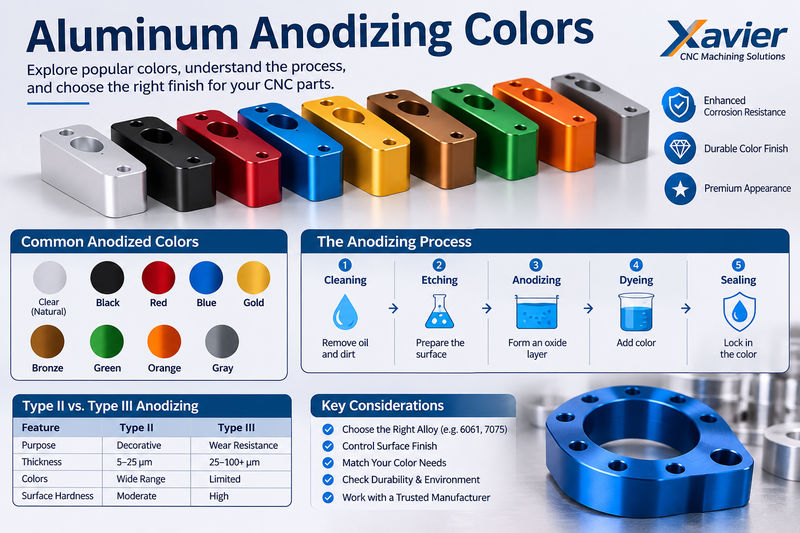
10 Important Topics About Aluminum Anodizing Colors
- What Colors Can Aluminum Be Anodized? – Common colors, color availability, and practical limitations.
- How Aluminum Anodizing Creates Different Colors – The electrochemical process, porous oxide layers, and dye absorption.
- Type II vs. Type III Anodizing Colors – Differences in color range, coating thickness, and performance.
- Popular Aluminum Anodizing Colors and Their Applications – Black, clear, red, blue, gold, bronze, green, and gray.
- How Aluminum Alloys Affect Anodized Colors – The influence of 6061, 6063, 7075, 2024, and other alloys.
- Surface Preparation and Texture Before Anodizing – Machining, polishing, bead blasting, and etching.
- Custom Anodized Colors and Color Matching – Pantone matching, sample approval, and batch consistency.
- Color Durability, UV Resistance, and Sealing – Dye fading, corrosion resistance, and environmental performance.
- Anodizing Thickness, Dimensional Tolerances, and Quality Control – Coating growth, dimensional changes, and inspection.
- How to Choose the Right Anodized Color for CNC Machined Parts – Engineering requirements, applications, and purchasing considerations.
Aluminum Anodizing Colors: Complete Guide to Color Options, Processes, and Applications
What Colors Can Aluminum Be Anodized?
Aluminum anodizing is one of the most widely used surface finishing processes for CNC-machined aluminum components. It improves corrosion resistance, increases surface hardness, and provides different decorative colors without covering the natural metallic appearance of aluminum.
Common aluminum anodizing colors include clear, black, red, blue, gold, bronze, green, orange, and gray. However, not every color is equally easy to achieve. The available colors depend on the anodizing process, aluminum alloy, oxide thickness, dye type, and sealing conditions.
The following table summarizes common anodized aluminum colors and their typical applications.
| Anodized Color | Typical Appearance | Common Applications |
|---|---|---|
| Clear / Natural | Silver or metallic gray | CNC housings, brackets, machinery |
| Black | Deep black or dark gray | Electronics, optical equipment, automotive parts |
| Red | Bright red to dark red | Consumer products, identification components |
| Blue | Light blue to deep blue | Electronics, industrial equipment |
| Gold | Champagne to metallic gold | Decorative hardware, premium products |
| Bronze | Light bronze to dark brown | Architectural and mechanical components |
| Green | Light to dark green | Identification and consumer products |
| Orange | Bright orange | Product identification, custom components |
| Gray | Light to dark gray | Industrial and mechanical components |
Type II sulfuric acid anodizing offers the widest range of decorative colors because its porous oxide layer can absorb dyes. Type III hardcoat anodizing generally produces darker natural shades and is more suitable for components requiring wear resistance.
One important limitation is that conventional anodizing cannot reproduce every paint color. Pure white, bright neon colors, and exact Pantone matches are generally difficult or impossible to achieve consistently.
How Aluminum Anodizing Creates Different Colors
Aluminum anodizing is an electrochemical process that converts the aluminum surface into an aluminum oxide layer. Unlike painting, which adds a separate coating, anodizing transforms the surface of the original metal.
During sulfuric acid anodizing, the aluminum component acts as the anode in an electrolytic bath. When electrical current passes through the solution, an oxide layer develops on the aluminum surface.
The resulting oxide contains microscopic pores. These pores allow dyes to penetrate the coating and create different colors.
The Main Steps of the Coloring Process
| Production Step | Process Description | Purpose |
|---|---|---|
| 1. Cleaning | Remove oil, dirt, and machining residues | Prepare a clean surface |
| 2. Etching | Chemically treat the aluminum surface | Control surface appearance |
| 3. Desmutting | Remove alloying-element residues | Improve coating uniformity |
| 4. Anodizing | Form the aluminum oxide layer | Create the porous protective coating |
| 5. Dyeing | Immerse the part in a selected dye bath | Develop the required color |
| 6. Sealing | Close the oxide pores | Improve dye retention and corrosion resistance |
| 7. Inspection | Check color and coating quality | Verify production requirements |
For example, when manufacturing a red anodized 6061 aluminum CNC-machined enclosure, the part first receives a controlled oxide layer. It is then immersed in a red dye solution, allowing the dye to enter the microscopic pores. After sealing, the color becomes integrated into the anodized surface.
This is why anodized colors generally resist chipping and peeling better than ordinary surface paint.
Type II vs. Type III Anodizing Colors
Choosing between Type II and Type III anodizing is important because the two processes have different coating structures, thicknesses, and coloring capabilities.
Type II anodizing is commonly selected for decorative applications, while Type III hardcoat is primarily designed for demanding mechanical environments.
| Feature | Type II Anodizing | Type III Hardcoat |
|---|---|---|
| Main purpose | Decorative and protective | Wear and abrasion resistance |
| Typical thickness | 5–25 μm | 25–100+ μm |
| Common colors | Clear, black, red, blue, gold, green | Natural gray, dark gray, black, bronze |
| Dye absorption | Generally good | More limited |
| Surface hardness | Improved over untreated aluminum | Generally much higher |
| Typical applications | Consumer products, housings, brackets | Mechanical components, industrial equipment |
Type II: Better for Decorative Colors
Type II anodizing creates a porous oxide coating that can absorb organic dyes. This makes it suitable for products requiring bright and recognizable colors.
For instance, manufacturers producing CNC-machined aluminum camera housings may choose black anodizing, while manufacturers of electronic accessories may select blue or red to match their product branding.
Type II is generally the preferred option when appearance and color selection are important.
Type III: Better for Mechanical Protection
Type III hardcoat produces a substantially thicker oxide coating. Its primary purpose is to improve resistance to abrasion, friction, and mechanical wear.
The natural coating color often becomes darker as thickness increases. Depending on the alloy and process conditions, the result may range from gray to bronze or dark brown. Black hardcoat is also available.
However, customers should not expect Type III to provide the same bright color range as Type II.
If a component requires both an attractive appearance and substantial wear resistance, the manufacturer should evaluate the actual operating conditions before selecting the anodizing process.
Popular Aluminum Anodizing Colors and Their Applications
Different anodized colors serve different product requirements. Color selection should consider appearance, lighting conditions, maintenance, operating environments, and the purpose of the component.
Black Anodized Aluminum
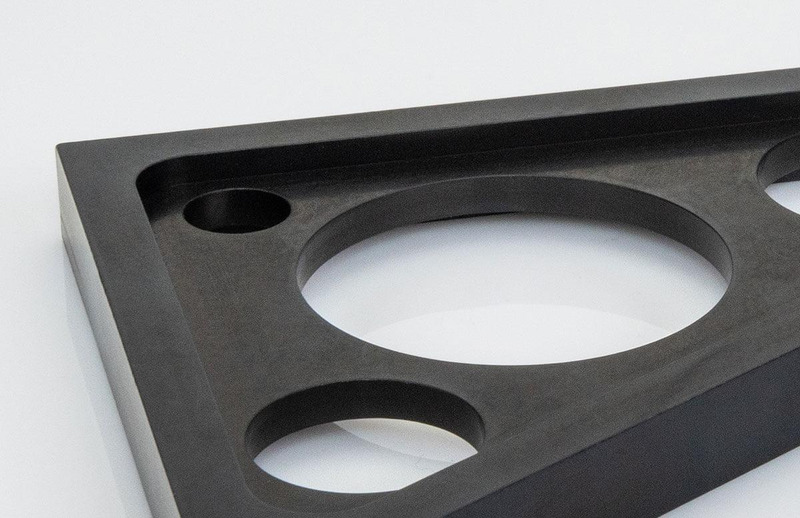
Black is one of the most widely requested anodized aluminum colors. It creates a professional appearance and works well with industrial equipment, electronics, camera components, and precision instruments.
Black anodizing can also reduce unwanted surface reflections, making it useful for certain optical and photographic components.
For example, a CNC-machined 6061-T6 camera bracket may use black Type II anodizing to achieve a uniform dark appearance while retaining the metallic surface texture.
Clear or Natural Anodized Aluminum
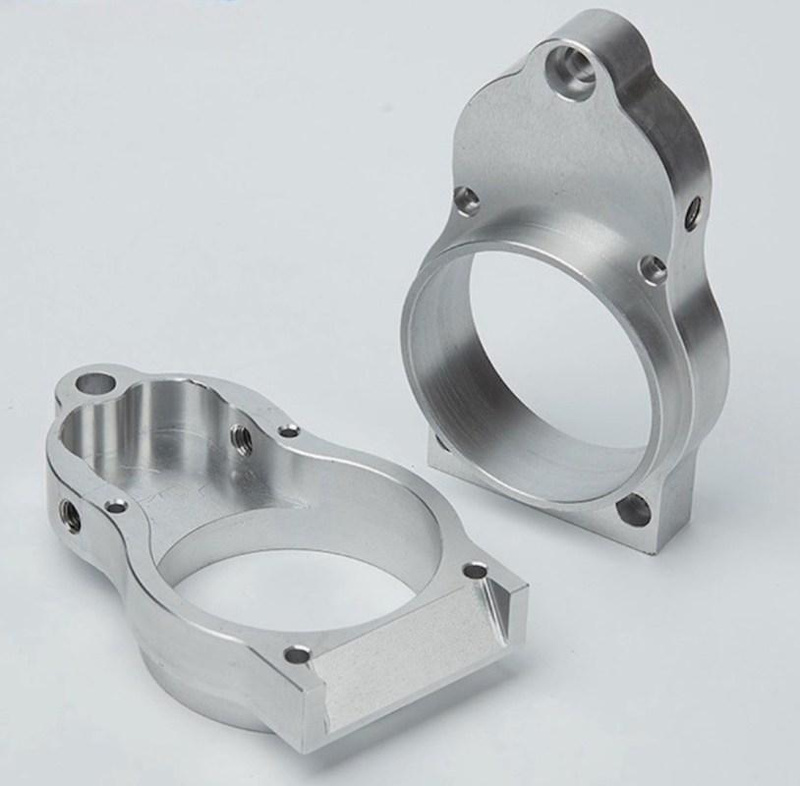
Clear anodizing preserves the natural silver-gray appearance of aluminum while adding an oxide layer.
It is commonly used for industrial housings, machine brackets, structural components, and electronic enclosures. The final appearance depends heavily on the original machining texture.
A polished aluminum part may appear brighter, while a bead-blasted component usually produces a more uniform matte silver appearance.
Red, Blue, and Green Anodized Aluminum
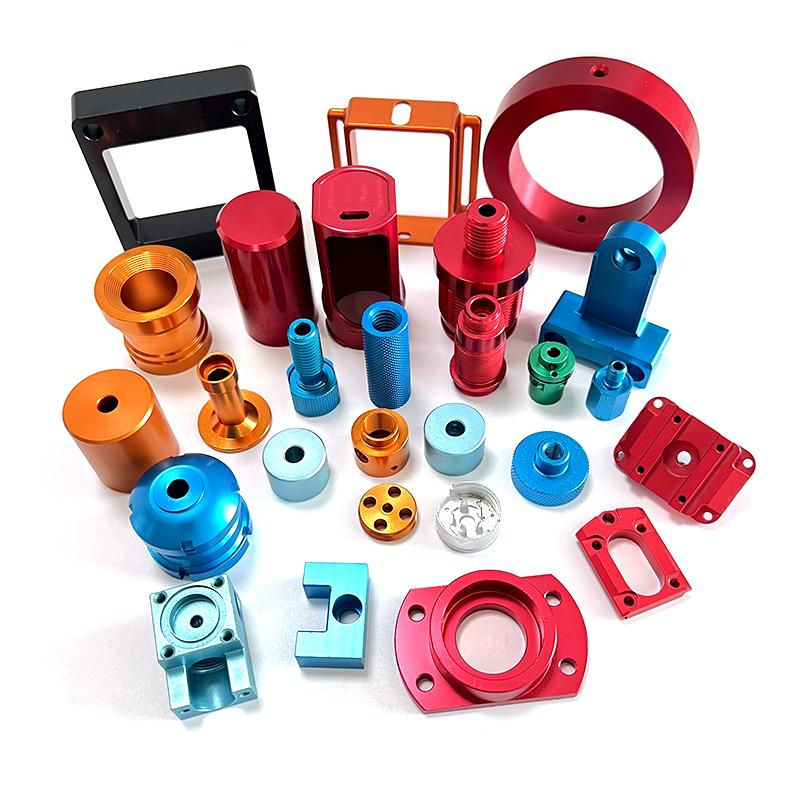
Bright colors are generally achieved through Type II dyeing.
- Red: Suitable for product branding, control knobs, and identification components.
- Blue: Common in electronic housings, industrial accessories, and consumer products.
- Green: Useful for product differentiation, equipment identification, and decorative components.
The final shade depends on dye concentration, coating structure, alloy composition, and sealing conditions. Therefore, a physical sample is recommended for products with strict cosmetic requirements.
Gold, Bronze, and Gray Anodized Aluminum
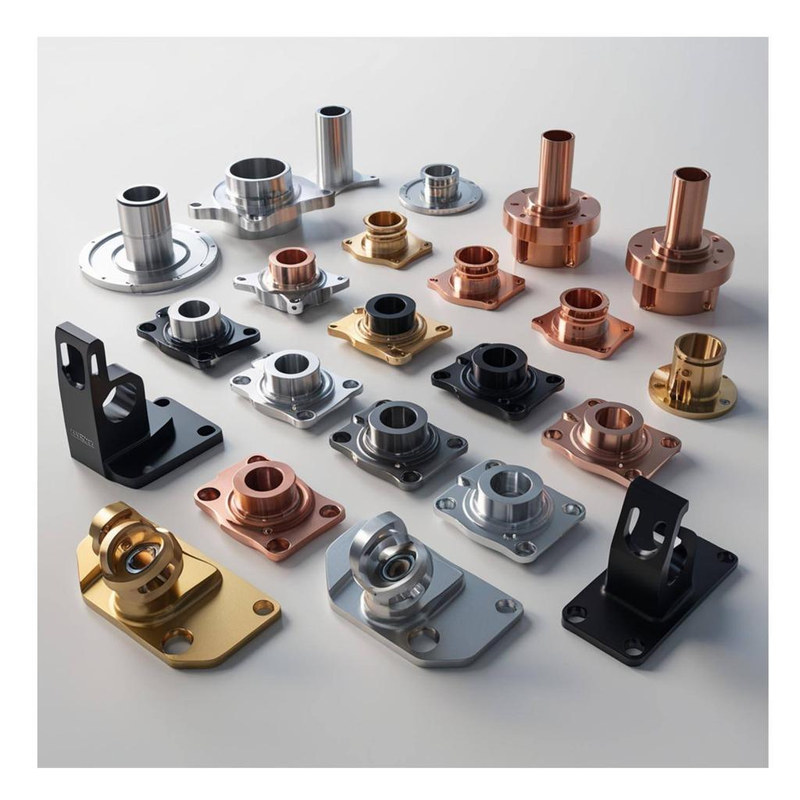
Gold and champagne anodizing are popular for decorative hardware, consumer electronics, and premium aluminum accessories. Bronze is often selected for architectural and industrial products.
Gray anodizing is particularly relevant to mechanical components where a darker metallic appearance is preferred.
It is important to distinguish dyed bronze from natural hardcoat bronze. Their appearance and production methods can be different, even when the colors seem similar.
How Aluminum Alloys Affect Anodized Colors
The aluminum alloy is one of the most important factors affecting anodized color consistency.
Although two components may use the same dye and anodizing parameters, they can produce different shades if their alloy compositions are different.
This happens because alloying elements such as copper, silicon, magnesium, and zinc influence the formation and appearance of the oxide layer.
| Aluminum Alloy | Anodizing Characteristics | Typical Considerations |
|---|---|---|
| 6061-T6 | Generally good anodizing performance | Common choice for colored CNC parts |
| 6063 | Often produces attractive finishes | Widely used for architectural components |
| 5052 | Good corrosion resistance | Appearance depends on material condition |
| 7075 | Higher alloy content can affect color | May produce darker or less uniform shades |
| 2024 | Copper content influences oxide appearance | More challenging for consistent decorative finishes |
| Cast aluminum | Silicon and casting structure affect appearance | Porosity and composition require attention |
Why 6061-T6 Is Commonly Used for Colored CNC Parts
6061-T6 is popular because it offers a useful combination of machinability, mechanical properties, availability, and anodizing performance.
It is commonly selected for CNC-machined brackets, housings, mounting plates, electronic enclosures, and precision mechanical components.
By comparison, 7075 aluminum is often chosen when higher strength is required. However, its anodized appearance may differ from 6061, so a color approval sample becomes especially important.
Cast aluminum also requires additional consideration because silicon content, casting porosity, and surface condition can create uneven visual results.
For projects involving multiple production batches, maintaining the same alloy grade and material source can significantly improve color consistency.
Surface Preparation and Texture Before Anodizing
The surface condition before anodizing directly affects the final appearance. Anodizing does not automatically hide machining marks, scratches, tool paths, or surface defects.
In many cases, the oxide layer makes the existing surface texture more visually noticeable.
| Surface Preparation | Final Appearance | Recommended Applications |
|---|---|---|
| CNC as-machined | Visible machining marks | Functional mechanical parts |
| Polishing | Smooth and reflective | Decorative components |
| Bead blasting | Uniform matte texture | Housings and consumer products |
| Chemical etching | More uniform, slightly matte | Decorative finishes |
| Brushing | Directional linear texture | Panels and enclosures |
Example: Bead Blasting Before Black Anodizing
Consider a CNC-machined 6061 aluminum electronic enclosure.
If the component is anodized directly after machining, tool marks may remain visible beneath the black oxide finish. If the customer prefers a more uniform appearance, bead blasting before anodizing can produce a consistent matte texture.
However, bead blasting also changes the surface profile and may affect critical dimensions or edges. The process should therefore be controlled rather than applied indiscriminately.
For precision components, manufacturers should identify cosmetic surfaces, functional surfaces, and sealing interfaces separately before selecting surface preparation methods.
Custom Anodized Colors and Color Matching
Custom aluminum anodizing colors are frequently requested for branded products, consumer electronics, and industrial equipment.
However, anodizing color matching is more complicated than matching ordinary paint.
Anodized coatings are translucent. The final appearance is influenced by the underlying aluminum, surface texture, oxide thickness, and dye absorption.
Can Anodized Aluminum Match Pantone Colors?
A supplier may be able to produce a commercial color close to a requested Pantone or RAL reference, but an exact match should not be assumed.
For example, a customer may request a specific corporate blue for 1,000 CNC-machined aluminum housings. A dye supplier can select a suitable blue dye and adjust the process, but the final color still depends on the production alloy and surface preparation.
A practical color approval process should include:
- Confirm the aluminum alloy and surface preparation.
- Produce a representative CNC-machined sample.
- Apply the specified anodizing process.
- Compare the finished sample against the approved reference.
- Confirm acceptable color variation and lighting conditions.
- Use the approved sample as the production master.
Color should be inspected under consistent lighting because the same anodized surface can look different under daylight, fluorescent lighting, and warm indoor lighting.
For repeat orders, maintaining an approved master sample is more reliable than relying only on a written description such as dark blue or champagne gold.
Color Durability, UV Resistance, and Sealing
Anodized aluminum colors are generally durable, but their long-term performance depends on the coloring method, sealing quality, coating thickness, and operating environment.
One important consideration is ultraviolet exposure.
Organic dyes used in decorative Type II anodizing may gradually fade under prolonged sunlight. Different dyes have different levels of lightfastness, so a color that performs well indoors may not retain the same appearance outdoors.
Organic Dye vs. Electrolytic Coloring
| Coloring Method | Available Colors | UV Resistance | Typical Applications |
|---|---|---|---|
| Organic dyeing | Red, blue, green, gold, black, etc. | Depends on dye | Indoor and decorative components |
| Electrolytic coloring | Bronze, gray, black and related dark shades | Generally excellent | Architectural and outdoor components |
| Natural anodizing | Metallic silver-gray and alloy-dependent shades | No decorative dye to fade | Industrial components |
Sealing is another important part of the process. It closes the pores in the anodic coating and helps improve corrosion resistance and color retention.
For example, an outdoor aluminum mounting bracket exposed to sunlight, moisture, and temperature changes should not be specified solely by its color. The manufacturer should also evaluate the required coating performance and suitable coloring system.
Anodizing Thickness, Dimensional Tolerances, and Quality Control
Anodizing changes the dimensions of CNC-machined aluminum parts because the oxide layer grows from the original aluminum surface.
For Type II anodizing, common coating thicknesses range from approximately 5 to 25 μm. Type III hardcoat is considerably thicker and may range from approximately 25 to 100 μm or more, depending on the specification.
A useful engineering approximation is that anodic coating growth is distributed partly inward and partly outward. Under commonly used process assumptions, approximately half the total coating thickness contributes to outward dimensional growth on each exposed surface.
For example, if a component receives a 20 μm anodized coating, the outward growth may be approximately 10 μm per surface. This is an approximation, not a universal allowance, because the actual growth ratio varies with alloy and process conditions.
Critical Dimensions That Need Attention
| Component Feature | Potential Issue | Recommended Control |
|---|---|---|
| Precision holes | Reduced effective diameter | Compensate machining dimensions |
| Shafts | Increased outside diameter | Allow for coating growth |
| Threaded holes | Thread interference | Mask or account for coating |
| Bearing seats | Assembly interference | Define post-finish tolerance |
| Mating surfaces | Reduced clearance | Review dimensional stack-up |
| Electrical contacts | Increased electrical resistance | Specify masking requirements |
Quality inspection should include coating thickness measurement, visual inspection, dimensional verification, and, where required, corrosion or sealing tests.
For aerospace and other controlled applications, the drawing should reference the applicable anodizing specification, such as MIL-PRF-8625, with the required type, class, and thickness clearly defined.
How to Choose the Right Anodized Color for CNC Machined Parts
The best anodized color is not necessarily the brightest or most attractive option. It should satisfy the component’s functional requirements, manufacturing limitations, and appearance expectations.
For example, a decorative electronic enclosure may prioritize color consistency, while a mechanical sliding component should prioritize wear resistance.
The following recommendations can help buyers select an appropriate finish.
| Project Requirement | Recommended Finish | Main Consideration |
|---|---|---|
| General-purpose CNC parts | Clear Type II | Natural metallic appearance |
| Premium electronic housings | Black Type II | Appearance and protection |
| Branded consumer products | Red or blue Type II | Color matching |
| Decorative hardware | Gold or bronze Type II | Visual consistency |
| Wear-resistant components | Type III hardcoat | Abrasion resistance |
| Outdoor architectural parts | Suitable electrolytic coloring | UV stability |
| Precision assemblies | Controlled anodizing with masking | Dimensional accuracy |
What Buyers Should Provide Before Production
To reduce unnecessary revisions and avoid inconsistent finished products, customers should provide the following information:
- Aluminum alloy and temper, such as 6061-T6.
- Required anodizing type and class.
- Target color and reference sample.
- Surface preparation, such as bead blasting or polishing.
- Required coating thickness.
- Critical dimensions and masking locations.
- Environmental exposure and performance requirements.
- Acceptable cosmetic variation between production batches.
Providing these details before manufacturing helps the CNC supplier evaluate the process, select suitable materials, and establish realistic quality requirements.
Why Choose Xavier for Custom CNC Machining and Aluminum Anodizing?
Selecting an anodized aluminum color is only one part of manufacturing a successful CNC component. Material selection, machining accuracy, surface preparation, coating thickness, and finishing consistency all contribute to the final product quality.
Xavier provides CNC machining services for international B2B customers, focusing on custom-machined metal components and integrated manufacturing solutions.
From aluminum alloy selection and CNC milling to precision turning, surface preparation, and anodizing coordination, Xavier helps customers evaluate manufacturing requirements before production.
Whether you need black anodized 6061-T6 housings, red or blue aluminum components, clear anodized brackets, or hardcoat mechanical parts, the finishing process should be selected according to your product’s actual application.
Our manufacturing team can help review your drawings, discuss material and finishing options, and identify potential dimensional or cosmetic issues before mass production.
Looking for a reliable CNC machining manufacturer for custom aluminum anodized parts?
Contact Xavier today and send us your 2D drawings, 3D CAD files, material requirements, and preferred anodizing color. Let us help you develop precision aluminum components with the right combination of appearance, dimensional accuracy, and surface performance.
As an integrated CNC machining manufacturer and trading supplier, Xavier specializes in custom CNC machining and precision metal part manufacturing for global customers. We provide comprehensive CNC anodizing surface finishing, CNC electroless nickel plating, and CNC chemical conversion coating services to improve the appearance, durability, and performance of machined components.
As an experienced CNC anodizing surface finishing manufacturer, we offer reliable bulk CNC electroless nickel plating services and competitive CNC chemical conversion coating prices for projects of different sizes. Whether you need custom-machined metal components or professional surface finishing solutions, feel free to contact us for more information and a quotation.
Some of the images and text in this article are collected and compiled from the internet. If there is anything inappropriate, please contact us for processing.