
CNC Aluminum Machining Parts: Complete Guide to Precision Manufacturing, Materials, Tolerances and Surface Finishing
Aluminum remains the most widely machined metal in the CNC industry because it combines lightweight performance, excellent machinability, corrosion resistance, and competitive material costs. From aerospace brackets and robotics components to electronic housings and automotive parts, CNC aluminum machining parts are found in nearly every modern industry. Industry reports consistently show that 6061 and 7075 aluminum alloys dominate precision machining projects due to their balance of strength, machinability, and cost efficiency.
Why Aluminum Is the Preferred Material for CNC Machining Parts
Aluminum offers several manufacturing advantages that make it ideal for CNC milling and CNC turning.
| Property | Aluminum | Stainless Steel | Titanium |
|---|---|---|---|
| Density | 2.7 g/cm³ | 7.9 g/cm³ | 4.5 g/cm³ |
| Machinability | Excellent | Moderate | Difficult |
| Corrosion Resistance | Good | Excellent | Excellent |
| Material Cost | Low | Medium | High |
| Weight Reduction | Excellent | Poor | Good |
The density of aluminum is approximately one-third that of steel, making it an excellent choice for weight-sensitive applications. At the same time, many aluminum alloys provide impressive mechanical strength while maintaining excellent machinability. Aluminum also allows higher spindle speeds and feed rates, reducing machining cycle time and lowering production costs.
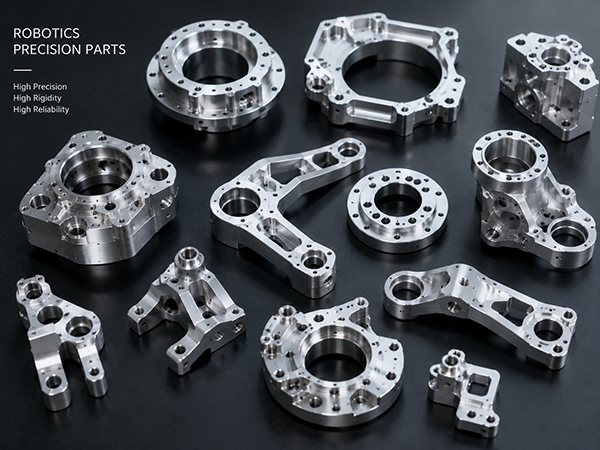
Key Benefits
- Lightweight construction
- High strength-to-weight ratio
- Excellent thermal conductivity
- Good corrosion resistance
- Fast machining speed
- Lower manufacturing costs
Common Aluminum Grades Used in CNC Machining
Different aluminum alloys are selected depending on the performance requirements of the final product.
6061 Aluminum
6061 is the most commonly machined aluminum alloy.
Characteristics:
- Excellent machinability
- Good corrosion resistance
- Easy anodizing
- Good weldability
- Cost-effective
Typical applications:
- Electronic enclosures
- Machine frames
- Heat sinks
- Industrial brackets
7075 Aluminum
7075 is considered the strongest commercially available aluminum alloy.
| Property | 6061-T6 | 7075-T6 |
|---|---|---|
| Yield Strength | ~270 MPa | ~500 MPa |
| Corrosion Resistance | Better | Moderate |
| Anodizing Appearance | Excellent | Slight yellow tint possible |
| Cost | Lower | Higher |
7075 is widely used in:
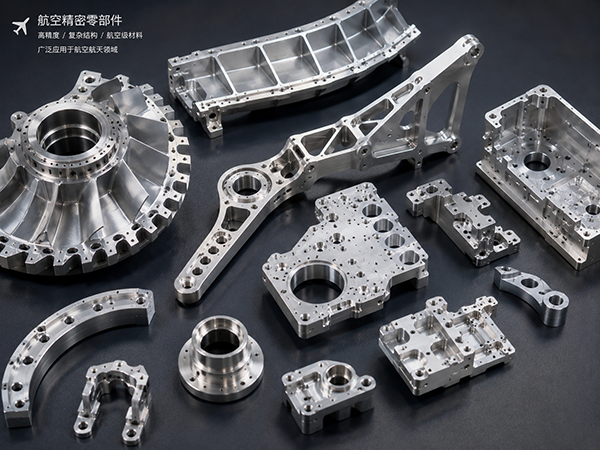
- Aerospace components
- UAV structures
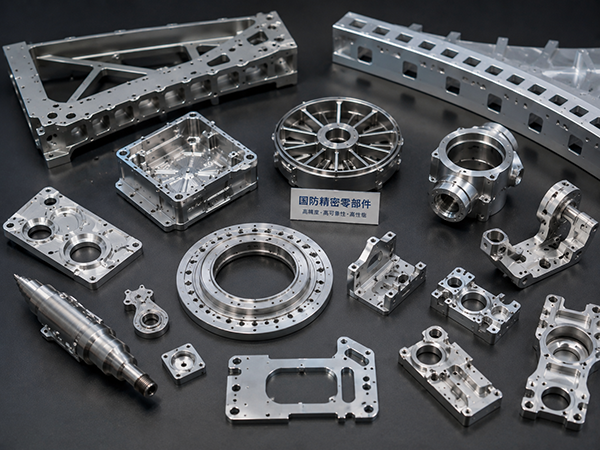
- Defense equipment
- Racing components
Although stronger, 7075 is more susceptible to stress corrosion cracking and typically costs more than 6061.
Other Common Grades
- 2024 Aluminum – aerospace structures
- 5052 Aluminum – marine applications
- 6063 Aluminum – architectural components
- 7050 Aluminum – aircraft structures
CNC Milling vs CNC Turning for Aluminum Parts
The manufacturing process directly affects part geometry, cost, and lead time.
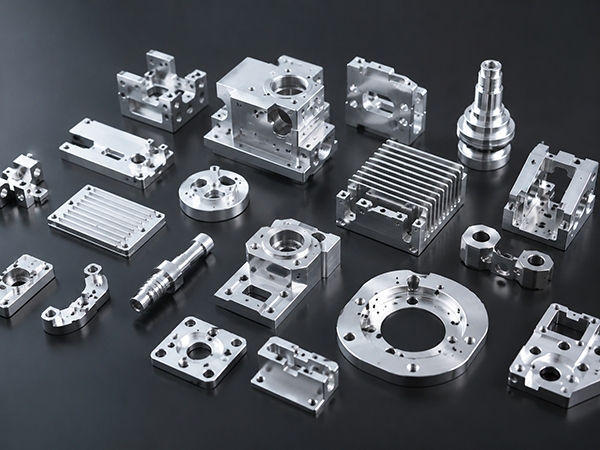
CNC Milling
Best for:
- Complex geometries
- Pockets
- Slots
- Surface contours
- Multi-face machining
Modern 5-axis CNC machines can machine highly complex aerospace and robotics components in a single setup.
CNC Turning
Best for:
- Shafts
- Bushings
- Sleeves
- Cylindrical connectors
Typical turned aluminum components achieve tighter concentricity and lower production costs for rotational parts.
| Process | Best Geometry |
|---|---|
| CNC Milling | Complex prismatic parts |
| CNC Turning | Cylindrical parts |
| 5-Axis Milling | Aerospace and medical parts |
Precision Tolerances Achievable in CNC Aluminum Machining
Tolerance requirements significantly influence manufacturing costs.
Standard Tolerance
Typical CNC machining tolerance:
±0.1 mm
Suitable for:
- Consumer products
- General industrial components
Precision Tolerance
Typical precision machining:
±0.025 mm
Suitable for:
- Mechanical assemblies
- Robotics
- Automation systems
Ultra-Precision Tolerance
Advanced CNC machining:
±0.005 mm
Suitable for:
- Aerospace
- Medical devices
- Semiconductor equipment
| Process | Standard | Tight |
|---|---|---|
| 3-Axis Milling | ±0.1 mm | ±0.025 mm |
| 5-Axis Milling | ±0.05 mm | ±0.01 mm |
| CNC Turning | ±0.025 mm | ±0.005 mm |
Surface Finish Standards for Aluminum Components
Surface finish directly affects functionality, wear resistance, and aesthetics.
Typical Surface Roughness Values
| Finish Type | Ra Value |
|---|---|
| Standard Machined | 3.2 μm |
| Fine Machined | 1.6 μm |
| Precision Finish | 0.8 μm |
| Polished | 0.4 μm |
Examples:
- Heat sink surfaces often require Ra ≤ 1.6 μm.
- Optical equipment housings may require Ra ≤ 0.8 μm.
- Decorative consumer products often require polishing before anodizing.
Tool sharpness, cutting parameters, and coolant management all significantly influence final surface quality.
Anodizing and Surface Treatment Options
Anodizing remains the most popular finishing process for CNC aluminum parts.
Type II Anodizing
Thickness:
5–25 μm
Advantages:
- Corrosion resistance
- Decorative appearance
- Multiple colors available
Type III Hard Anodizing
Thickness:
25–50 μm
Advantages:
- Superior wear resistance
- Improved hardness
- Industrial durability
Other common finishes include:
- Bead blasting
- Powder coating
- Electroless nickel plating
- Chromate conversion coating
| Finish | Purpose |
|---|---|
| Anodizing | Corrosion protection |
| Hard Anodizing | Wear resistance |
| Powder Coating | Appearance |
| Nickel Plating | Chemical resistance |
Design Guidelines for CNC Aluminum Parts
Proper design reduces machining costs and improves manufacturability.
Recommended Practices
Internal Corner Radius
Avoid sharp internal corners.
Recommended:
Radius ≥ Tool Diameter × 0.5
Pocket Depth
Maintain:
Depth ≤ 4 × Width
Hole Diameter
Avoid extremely small holes whenever possible.
Recommended minimum:
≥ 1 mm
Wall Thickness
Recommended:
- Structural parts: ≥ 1.5 mm
- Cosmetic parts: ≥ 1.0 mm
Following these guidelines reduces tool wear and shortens machining time.
Thin-Wall Aluminum Machining Challenges
Thin-wall components are common in aerospace and electronics.
Examples:
- UAV housings
- Battery enclosures
- Electronic chassis
Challenges include:
- Vibration
- Deflection
- Thermal deformation
Practical Example
A 1 mm wall thickness enclosure may deform after roughing if excessive material is removed from one side.
Professional machine shops typically use:
- Symmetrical machining strategies
- Multiple finishing passes
- Vacuum fixtures
- Stress-relief operations
These methods help maintain dimensional stability throughout production.
Major Applications of CNC Aluminum Machining Parts
Aerospace Industry
Typical parts:
- Aircraft brackets
- UAV structures
- Satellite housings
7075 and 7050 alloys dominate aerospace applications due to their exceptional strength-to-weight ratio.
Automotive Industry
Examples:
- Engine components
- Suspension parts
- EV battery enclosures
Electronics Industry
Examples:
- Heat sinks
- Smartphone housings
- Instrument enclosures
Robotics Industry
Examples:
- Robot arms
- Servo housings
- Structural frames
Aluminum’s combination of low weight and high strength makes it ideal for robotic systems where inertia reduction is critical.
Cost Optimization Strategies for CNC Aluminum Parts
Many buyers focus only on unit price, but design optimization often saves more money than material selection.
Cost Reduction Methods
Use Standard Material Thicknesses
Standard stock sizes reduce waste.
Avoid Excessively Tight Tolerances
Every tolerance reduction increases machining time.
Minimize Setup Operations
Parts designed for single-setup machining are significantly cheaper.
Select Appropriate Alloy
Not every project requires 7075.
For example:
- Industrial brackets → 6061
- Aerospace mounts → 7075
Batch Production
Increasing quantity often reduces per-part cost by 30–60%.
Why Xavier Is a Reliable Partner for CNC Aluminum Machining Parts
Selecting the right manufacturing partner is just as important as selecting the right aluminum alloy. A professional supplier should provide engineering support, material traceability, dimensional inspection, and scalable production capacity.
At Xavier, we specialize in custom CNC aluminum machining parts for aerospace, robotics, automotive, electronics, and industrial equipment manufacturers. Our capabilities include:
- CNC milling and CNC turning
- 3-axis, 4-axis, and 5-axis machining
- Precision tolerances down to ±0.005 mm
- 6061, 7075, 2024, 5052, 7050, and other aluminum alloys
- Anodizing, hard anodizing, powder coating, nickel plating, and custom finishes
- Prototype, low-volume, and mass production services
Whether you need a lightweight aerospace bracket, a precision robotic component, or a cosmetic anodized enclosure, Xavier delivers consistent quality, competitive pricing, and rapid lead times to support your project from prototype to production.
We are an integrated CNC machining company specializing in custom CNC manufacturing and precision machining of metal parts. With extensive experience in contract manufacturing, we provide machining solutions for a wide range of materials and industries. Our capabilities include CNC machining stainless steel, CNC machining nylon, and CNC machining Inconel alloy. We manufacture high-precision components for robotics, aerospace, marine, automotive, medical, and other demanding applications.
As a CNC Machining Stainless Steel Manufacturer, we provide high-volume CNC Machining Nylon Services. For competitive CNC Machining Inconel Alloy Prices and custom production solutions, please feel free to contact us.
Some of the images and text in this article are collected and compiled from the internet. If there is anything inappropriate, please contact us for processing.