
Small Metal Parts Manufacturing: Processes, Materials, Precision, and Cost Optimization
Modern industries rely heavily on small metal parts manufacturing to produce precision components used in aerospace, automotive, medical devices, robotics, electronics, industrial automation, and consumer products. Although these parts are physically small, they often require micron-level tolerances, excellent surface quality, and consistent dimensional accuracy. Selecting the appropriate manufacturing method is one of the most important decisions because it directly affects production cost, delivery time, mechanical properties, and long-term product reliability.
Manufacturers today combine CNC machining, metal stamping, precision casting, powder metallurgy, metal injection molding (MIM), laser cutting, and additive manufacturing to meet different production volumes and complexity requirements. Understanding the strengths and limitations of each process enables engineers to choose the most efficient solution for their applications.
Five Major Topics Covered in This Guide
- Choosing the Right Manufacturing Process for Small Metal Parts
- Material Selection and Performance Considerations
- Precision Tolerances and Quality Control
- Surface Finishing and Post-Processing Options
- Cost Optimization from Prototype to Mass Production
Choosing the Right Manufacturing Process for Small Metal Parts
No single manufacturing process is suitable for every component. The ideal solution depends on several engineering factors:
- Annual production volume
- Material type
- Part geometry
- Required tolerance
- Surface finish
- Mechanical strength
- Budget
- Delivery schedule
Selecting the wrong process may increase manufacturing costs by several times while reducing production efficiency.
Comparing Common Manufacturing Processes
| Manufacturing Process | Best Production Volume | Typical Tolerance | Complexity | Tooling Cost | Unit Cost |
|---|---|---|---|---|---|
| CNC Machining | Low–Medium | ±0.005 mm | Excellent | None | Medium |
| Metal Stamping | High | ±0.05 mm | Medium | High | Very Low |
| Metal Injection Molding | High | ±0.3% | Very High | Very High | Very Low |
| Die Casting | High | ±0.1 mm | High | High | Low |
| Precision Investment Casting | Medium | ±0.15 mm | Excellent | Medium | Medium |
| Powder Metallurgy | High | ±0.02 mm | Moderate | High | Low |
| Swiss CNC Machining | Low–High | ±0.002 mm | Excellent | None | Medium |
As shown above, each manufacturing technology excels in different scenarios.
CNC Machining for Precision Components
CNC machining remains the preferred manufacturing method for high-precision small metal components because it removes material directly from solid stock while maintaining excellent dimensional control.
Typical applications include:
- Aerospace fasteners
- Hydraulic valve bodies
- Medical implants
- Optical equipment
- Robotic joints
- Semiconductor fixtures
A five-axis CNC machining center can machine multiple surfaces during one setup, significantly reducing accumulated positioning errors while improving production efficiency.
For example:
A titanium orthopedic implant may require:
- ±0.01 mm dimensional tolerance
- Ra 0.4 μm surface finish
- Complex curved geometry
- Internal threaded holes
Such requirements are difficult to achieve through casting or stamping but are well suited to precision CNC machining.
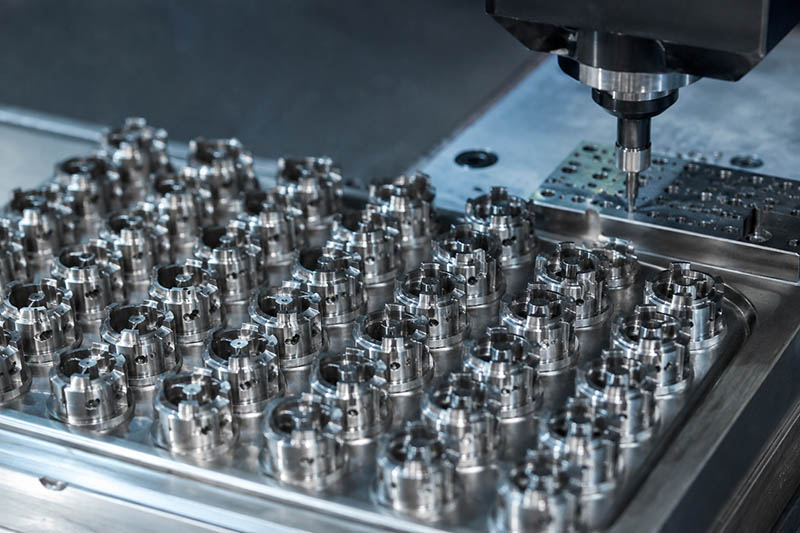
Swiss CNC Machining for Micro Parts
Swiss-type CNC lathes have become increasingly popular for manufacturing miniature cylindrical components.
Advantages include:
- Outstanding concentricity
- Minimal deflection
- Continuous bar feeding
- High productivity
- Excellent repeatability
Typical industries include:
| Industry | Example Components |
|---|---|
| Medical | Bone screws, dental implants |
| Electronics | Connector pins |
| Automotive | Fuel injector nozzles |
| Aerospace | Precision shafts |
| Robotics | Miniature drive pins |
Swiss machining is particularly effective for parts with a length-to-diameter ratio greater than 4:1, where conventional turning may suffer from vibration and dimensional instability.
Metal Stamping for Large Production Runs
When manufacturing millions of identical metal components, metal stamping offers exceptional productivity.
Common stamped products include:
- Brackets
- Electrical terminals
- Battery contacts
- Heat shields
- Electronic housings
Progressive dies allow multiple operations—including punching, bending, embossing, and trimming—to be completed in a single press cycle.
Although tooling investment is high, the cost per part decreases dramatically as production volume increases.
For example:
| Annual Quantity | Recommended Process |
|---|---|
| 100 pcs | CNC Machining |
| 1,000 pcs | CNC Machining |
| 20,000 pcs | CNC or Casting |
| 100,000 pcs | Metal Stamping |
| 1,000,000 pcs | Progressive Die Stamping |
This comparison demonstrates why production volume is one of the first considerations when selecting a manufacturing process.
Metal Injection Molding (MIM) for Complex Small Parts
Metal Injection Molding combines plastic injection molding technology with powdered metallurgy to produce intricate metal parts.
The process includes:
- Mixing metal powder with binder
- Injection molding
- Debinding
- Sintering
- Secondary machining (if required)
Typical materials include:
- Stainless Steel 316L
- 17-4 PH
- Tool Steel
- Titanium alloys
Advantages include:
- Extremely complex geometries
- Near-net-shape production
- Minimal machining
- Excellent repeatability
However, MIM requires expensive molds and is generally economical only for high-volume production.
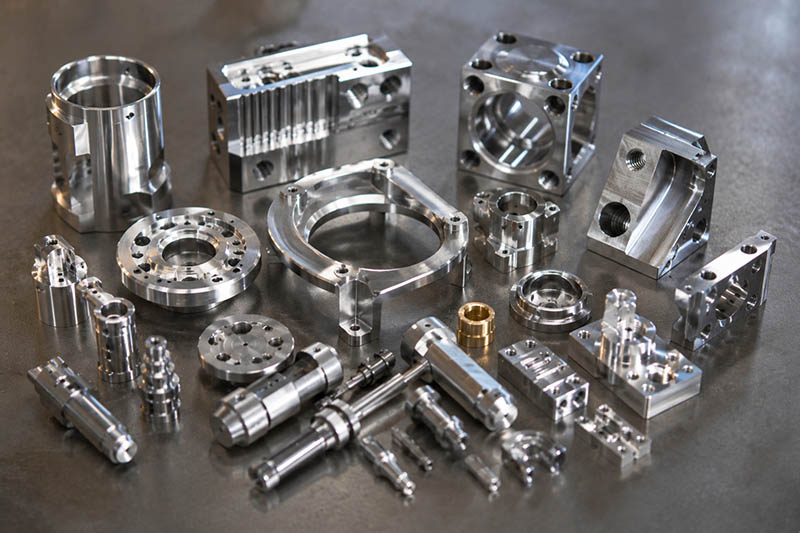
Real Manufacturing Example
Suppose an electronics manufacturer requires:
- Stainless steel bracket
- 18 mm × 12 mm × 3 mm
- Annual demand: 600,000 pieces
Several manufacturing methods can be evaluated.
| Process | Estimated Cost | Suitability |
|---|---|---|
| CNC Machining | Very High | Poor |
| Laser Cutting + Bending | Medium | Good |
| Progressive Stamping | Low | Excellent |
| MIM | Medium | Acceptable |
Because the geometry is relatively simple and production volume is high, progressive stamping provides the lowest overall manufacturing cost while maintaining excellent consistency.
Material Selection and Performance Considerations
Selecting the right material is just as important as selecting the manufacturing process. The material determines not only the strength and durability of the finished component but also its machinability, corrosion resistance, thermal performance, and manufacturing cost.
An unsuitable material may increase machining time, shorten tool life, or fail to meet the mechanical requirements of the application. Engineers typically evaluate material properties alongside production volume and operating environment before finalizing a design.
Key Factors in Material Selection
When choosing a metal for small precision parts, manufacturers commonly consider:
- Mechanical strength
- Hardness
- Weight
- Corrosion resistance
- Thermal conductivity
- Electrical conductivity
- Machinability
- Wear resistance
- Availability
- Cost
The importance of each factor varies depending on the intended application.
For example:
- Aerospace components prioritize high strength-to-weight ratio.
- Medical devices require excellent biocompatibility and corrosion resistance.
- Electronic connectors demand high electrical conductivity.
- Industrial tooling focuses on hardness and wear resistance.
Comparison of Common Metals for Small Parts Manufacturing
| Material | Strength | Machinability | Corrosion Resistance | Typical Applications |
|---|---|---|---|---|
| Aluminum 6061 | Medium | Excellent | Good | Housings, brackets, robotics |
| Aluminum 7075 | Very High | Excellent | Moderate | Aerospace parts |
| Stainless Steel 304 | Medium | Fair | Excellent | Food equipment, consumer products |
| Stainless Steel 316 | Medium | Fair | Outstanding | Marine, medical devices |
| Brass C360 | Medium | Excellent | Good | Valves, electrical fittings |
| Copper C110 | Low | Good | Excellent | Electrical contacts |
| Titanium Grade 5 | Very High | Difficult | Excellent | Aerospace, implants |
| Tool Steel D2 | Extremely High | Moderate | Poor | Dies, punches, cutting tools |
These materials cover the majority of applications encountered in precision small metal parts manufacturing.
Aluminum: Lightweight and Easy to Machine
Aluminum alloys are among the most widely used materials for precision components because they combine low density with good strength and excellent machinability.
Benefits include:
- High cutting speeds
- Reduced machining time
- Good thermal conductivity
- Easy anodizing
- Excellent strength-to-weight ratio
Common applications include:
- UAV components
- Camera housings
- Heat sinks
- Robotic frames
- Consumer electronics
- Precision fixtures
Compared with steel, aluminum can significantly reduce component weight while maintaining sufficient structural performance in many applications.
Precision Tolerances and Quality Control
Precision is the defining characteristic of high-quality small metal parts. Whether manufacturing aerospace fasteners, medical implants, hydraulic valves, or semiconductor fixtures, dimensional accuracy directly influences assembly performance, reliability, and product lifespan.
Unlike larger components that may tolerate minor dimensional variations, miniature metal parts often function within assemblies where even a deviation of 0.01 mm can cause excessive wear, vibration, leakage, or complete assembly failure.
For this reason, precision manufacturing combines advanced CNC equipment, optimized machining strategies, in-process inspection, and rigorous quality management to consistently produce parts within specification.
Understanding Manufacturing Tolerances
Tolerance refers to the allowable variation from a specified dimension. Tighter tolerances improve assembly accuracy but also increase machining complexity, inspection time, and production cost.
The following table illustrates typical tolerance capabilities for different manufacturing processes.
| Manufacturing Process | Typical Tolerance | High-Precision Capability |
|---|---|---|
| CNC Milling | ±0.02 mm | ±0.005 mm |
| CNC Turning | ±0.01 mm | ±0.003 mm |
| Swiss CNC Turning | ±0.005 mm | ±0.002 mm |
| Precision Grinding | ±0.002 mm | ±0.001 mm |
| Metal Stamping | ±0.05 mm | ±0.02 mm |
| Investment Casting | ±0.15 mm | ±0.08 mm |
| Die Casting | ±0.10 mm | ±0.05 mm |
| MIM | ±0.30% | ±0.10% |
While ultra-tight tolerances improve part accuracy, they should only be specified where functionally necessary. Over-specifying tolerances increases machining time, tool wear, inspection costs, and scrap rates without adding practical value.
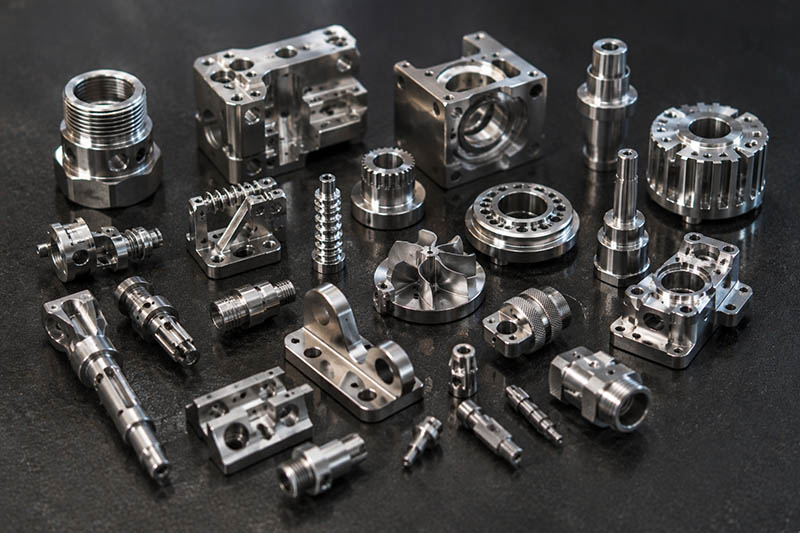
Critical Dimensions That Require Tight Control
Not every dimension on a part needs micron-level precision. Engineers typically identify critical-to-function (CTF) features that have the greatest influence on assembly and performance.
Examples include:
| Feature | Typical Tolerance |
|---|---|
| Bearing Bore | ±0.005 mm |
| Shaft Diameter | ±0.003 mm |
| Thread Pitch Diameter | ISO Class Standard |
| Flatness | 0.01 mm |
| Parallelism | 0.01 mm |
| Perpendicularity | 0.01 mm |
| Concentricity | 0.005 mm |
| Surface Roughness | Ra 0.4–1.6 μm |
Other non-functional dimensions may allow significantly wider tolerances, reducing manufacturing costs while maintaining overall performance.
Factors Affecting Dimensional Accuracy
Achieving consistent precision requires control over multiple variables throughout the manufacturing process.
Machine Tool Rigidity
High-quality machining centers feature rigid cast iron structures, precision linear guides, and thermally stable spindles. Reduced machine vibration leads to improved dimensional consistency and surface finish.
Cutting Tool Selection
Tool geometry, coating, and wear directly influence machining accuracy. For example:
- Carbide end mills for aluminum maintain sharp cutting edges at high spindle speeds.
- TiAlN-coated tools are suitable for stainless steel and heat-resistant alloys.
- Diamond-coated tools are preferred for graphite and abrasive composite materials.
Regular tool life monitoring prevents dimensional drift caused by tool wear.
Workholding Stability
Improper fixturing can result in vibration, deformation, or positional errors. Precision vises, vacuum fixtures, soft jaws, and custom fixtures are commonly used to securely hold small parts during machining.
Thermal Expansion
Temperature changes can subtly alter both the workpiece and machine dimensions. In high-precision environments, climate-controlled workshops maintained at 20 ±1°C help minimize thermal variation and ensure measurement consistency.
In-Process Inspection
Rather than waiting until production is complete, manufacturers increasingly perform inspection throughout the machining process.
Typical inspection methods include:
- First Article Inspection (FAI)
- In-process probing
- Tool wear compensation
- Statistical Process Control (SPC)
- Automatic tool breakage detection
Modern CNC machines often use touch probes to automatically measure features and adjust tool offsets in real time, improving consistency while reducing manual intervention.
Final Inspection Equipment
Before shipment, finished components undergo comprehensive dimensional verification using specialized metrology equipment.
| Inspection Equipment | Purpose |
|---|---|
| Coordinate Measuring Machine (CMM) | Full dimensional inspection |
| Optical Comparator | Profile measurement |
| Laser Scanner | 3D contour verification |
| Height Gauge | Linear measurements |
| Digital Micrometer | Outside diameter measurement |
| Bore Gauge | Internal diameter measurement |
| Surface Roughness Tester | Ra measurement |
| Thread Gauge | Thread verification |
These inspection methods ensure every critical feature meets engineering drawings and customer specifications.
Example: Medical Connector Housing
A manufacturer producing a stainless steel medical connector housing may require:
- Overall tolerance: ±0.01 mm
- Bore concentricity: 0.005 mm
- Surface roughness: Ra 0.4 μm
- Burr-free edges
- 100% visual inspection
To achieve these requirements, the manufacturing process may include:
- Swiss CNC turning
- Precision milling
- Deburring under magnification
- Ultrasonic cleaning
- Passivation
- CMM inspection
- Final packaging in a cleanroom
Each step contributes to maintaining dimensional accuracy and product reliability.
Surface Finishing and Post-Processing Options
Machining produces the desired geometry, but surface finishing enhances appearance, corrosion resistance, wear resistance, and overall functionality. Selecting the appropriate post-processing method depends on the material, application, and environmental conditions.
Why Surface Finishing Matters
Proper surface finishing can:
- Improve corrosion resistance
- Increase wear resistance
- Enhance fatigue life
- Reduce friction
- Improve electrical conductivity
- Improve cosmetic appearance
- Remove machining marks
- Meet industry standards
For precision components used in demanding environments, surface treatment is often as important as the machining process itself.
Common Surface Finishing Processes
| Surface Finish | Suitable Materials | Primary Benefits |
|---|---|---|
| Anodizing | Aluminum | Corrosion resistance, decorative finish |
| Hard Anodizing | Aluminum | Wear resistance, increased hardness |
| Electropolishing | Stainless Steel | Smooth surface, improved cleanliness |
| Passivation | Stainless Steel | Enhanced corrosion resistance |
| Zinc Plating | Carbon Steel | Rust protection |
| Nickel Plating | Steel, Brass | Wear and corrosion resistance |
| Chrome Plating | Steel | Hardness and decorative appearance |
| Powder Coating | Various Metals | Durable protective coating |
| Sand Blasting | Most Metals | Uniform matte finish |
| Bead Blasting | Aluminum, Stainless Steel | Smooth satin appearance |
Each finishing method offers unique advantages depending on the application.
Anodizing for Aluminum Components
Anodizing is one of the most common surface treatments for aluminum precision parts. It creates a controlled oxide layer that improves corrosion resistance, hardness, and appearance.
Common anodized colors include:
- Natural
- Black
- Blue
- Red
- Gold
- Green
- Silver
Hard anodizing is widely used for:
- Aerospace brackets
- Drone components
- Robotic arms
- Bicycle parts
- Industrial fixtures
The oxide layer can significantly increase surface hardness while maintaining the lightweight advantages of aluminum.
Passivation for Stainless Steel
Unlike coatings, passivation is a chemical treatment that removes free iron from the surface of stainless steel, allowing a protective chromium oxide layer to form naturally.
Applications include:
- Surgical instruments
- Food processing equipment
- Marine hardware
- Pharmaceutical machinery
- Laboratory devices
Passivation improves corrosion resistance without altering the part’s dimensions or appearance, making it ideal for precision components.
Electropolishing
Electropolishing removes microscopic surface irregularities through an electrochemical process, producing an exceptionally smooth and clean finish.
Benefits include:
- Lower surface roughness
- Improved corrosion resistance
- Easier cleaning
- Reduced bacterial adhesion
- Enhanced fatigue performance
Industries such as medical, semiconductor, and food processing frequently specify electropolishing for critical components.
Example: Surface Finish Selection
Consider three different components:
| Component | Material | Recommended Finish | Reason |
|---|---|---|---|
| UAV Motor Mount | Aluminum 7075 | Hard Anodizing | Wear resistance and lightweight |
| Marine Valve Stem | Stainless Steel 316 | Passivation | Corrosion resistance in saltwater |
| Hydraulic Shaft | Alloy Steel | Hard Chrome Plating | Wear resistance and low friction |
Choosing the appropriate finish ensures that each part performs reliably in its intended operating environment.
Deburring and Edge Preparation
Small metal parts often contain sharp edges or burrs after machining. These imperfections can interfere with assembly, damage mating components, or create safety risks.
Common deburring methods include:
- Manual deburring
- Vibratory tumbling
- Thermal deburring
- Electrochemical deburring
- Abrasive flow machining
For high-precision industries such as aerospace and medical manufacturing, edge quality is carefully controlled to ensure safe handling and proper assembly.
Cost Optimization from Prototype to Mass Production
Cost optimization is one of the most important objectives in small metal parts manufacturing. While achieving high precision and excellent quality is essential, manufacturers must also minimize production costs to remain competitive. The total cost of a metal part extends far beyond machining time—it includes material utilization, tooling, labor, inspection, secondary processing, logistics, and inventory management.
The key is to optimize the entire manufacturing lifecycle rather than focusing solely on the unit price.
Understanding the Cost Structure
The overall manufacturing cost of a small metal part can be divided into several categories.
| Cost Category | Typical Percentage | Optimization Opportunity |
|---|---|---|
| Raw Material | 25–45% | Improve material utilization |
| CNC Machining | 20–40% | Reduce cycle time |
| Tooling | 5–25% | Standardize cutting tools |
| Surface Finishing | 5–15% | Batch processing |
| Inspection | 5–10% | Automated measurement |
| Packaging & Logistics | 3–8% | Optimized packaging |
| Scrap & Rework | 2–8% | Process control |
For high-volume production, even a 5-second reduction in machining time can translate into significant annual savings.
Design for Manufacturability (DFM)
One of the most effective ways to reduce costs is to apply Design for Manufacturability (DFM) principles during the product development stage.
A well-designed component is easier to machine, requires fewer setups, and minimizes unnecessary operations.
Recommended DFM Practices
- Use standard drill sizes whenever possible.
- Avoid unnecessarily deep pockets.
- Minimize extremely thin walls.
- Reduce the number of setups required.
- Standardize thread sizes.
- Add appropriate internal corner radii instead of sharp corners.
- Specify tight tolerances only on functional features.
Example Comparison
| Poor Design | Improved Design |
|---|---|
| Multiple custom hole diameters | Standardized drill sizes |
| Sharp internal corners | Radius equal to tool diameter |
| Deep narrow pocket | Wider, machinable pocket |
| Excessive tolerance on all dimensions | Tight tolerance only where required |
By implementing these improvements, machining time can often be reduced by 15–30%, while extending tool life and reducing production costs.
Material Utilization
Material waste directly impacts manufacturing costs, especially when working with expensive alloys such as titanium, Inconel, or high-performance stainless steels.
Efficient nesting, optimized stock sizes, and near-net-shape manufacturing methods help maximize material utilization.
For example:
| Material | Approximate Relative Cost | Typical Material Utilization |
|---|---|---|
| Aluminum 6061 | Low | 80–90% |
| Brass C360 | Medium | 75–85% |
| Stainless Steel 316 | Medium-High | 70–85% |
| Titanium Grade 5 | High | 60–75% |
| Inconel 718 | Very High | 55–70% |
For high-value materials, reducing waste by just a few percentage points can result in substantial cost savings over large production runs.
Reducing Machining Time
Machining time is one of the largest contributors to the overall manufacturing cost. Manufacturers continuously optimize toolpaths and cutting strategies to improve efficiency without compromising quality.
Common optimization techniques include:
- High-speed machining (HSM)
- Trochoidal milling
- Adaptive clearing strategies
- Multi-axis machining
- High-performance carbide tooling
- Optimized spindle speeds and feed rates
Example
A precision aluminum housing originally required 22 minutes of machining time.
After optimizing the CAM toolpath:
| Operation | Before | After |
|---|---|---|
| Rough Milling | 12 min | 8 min |
| Finish Milling | 6 min | 5 min |
| Drilling | 4 min | 3 min |
| Total | 22 min | 16 min |
The result was a 27% reduction in cycle time, increasing production capacity without additional equipment.
Automation and Smart Manufacturing
Automation is increasingly adopted to improve consistency, reduce labor costs, and support unattended production.
Common automation solutions include:
- Robotic loading and unloading
- Automatic pallet changers
- Tool life monitoring
- In-machine probing
- Barcode traceability
- Manufacturing Execution Systems (MES)
These technologies enable manufacturers to operate multiple machines simultaneously while maintaining stable quality and reducing downtime.
Selecting the Right Manufacturing Method Based on Production Volume
Production quantity has a major influence on the most economical manufacturing process.
| Annual Production Volume | Recommended Process |
|---|---|
| 1–100 pcs | CNC Machining |
| 100–1,000 pcs | CNC Machining or Swiss Machining |
| 1,000–10,000 pcs | CNC + Dedicated Fixtures |
| 10,000–100,000 pcs | Investment Casting + CNC Finishing |
| Over 100,000 pcs | Metal Stamping, Die Casting, or MIM |
Choosing a process that aligns with production volume helps balance tooling investment, lead time, and unit cost.
Case Study: Reducing the Cost of a Precision Valve Component
A manufacturer producing a stainless steel valve component sought to reduce costs while maintaining performance.
Original Process
- Material: Stainless Steel 316
- CNC Machining Time: 18 minutes
- Surface Finish: Electropolishing
- Monthly Production: 12,000 pieces
Optimization Measures
- Standardized drill diameters
- Combined two machining operations into one setup
- Introduced custom soft jaws
- Optimized cutting parameters
- Automated in-process probing
Results
| Metric | Before | After |
|---|---|---|
| Cycle Time | 18 min | 13 min |
| Tool Consumption | 100% | 78% |
| Scrap Rate | 2.8% | 0.9% |
| Monthly Output | 12,000 pcs | 16,000 pcs |
| Unit Manufacturing Cost | Reduced by approximately 22% | — |
This example demonstrates how process optimization, rather than changing materials or equipment, can significantly improve manufacturing efficiency and profitability.
Why Partner with Xavier for Small Metal Parts Manufacturing?
Selecting a manufacturing partner is just as important as selecting the right process or material. An experienced supplier not only produces high-quality parts but also provides engineering support, manufacturability recommendations, and reliable project management throughout the production lifecycle.
At Xavier, we specialize in custom small metal parts manufacturing for customers across industries such as aerospace, automotive, robotics, medical devices, industrial automation, electronics, and energy.
Our capabilities include:
- Precision CNC milling and turning
- 5-axis CNC machining for complex geometries
- Swiss machining for miniature precision parts
- Prototype and low-volume production
- High-volume manufacturing support
- Aluminum, stainless steel, brass, copper, titanium, tool steel, and engineering plastics
- A wide range of surface finishing options, including anodizing, passivation, electropolishing, nickel plating, zinc plating, bead blasting, and powder coating
- Comprehensive quality inspection using CMM, optical measurement systems, and advanced metrology equipment
Whether you need a single prototype or hundreds of thousands of production components, Xavier focuses on delivering consistent quality, competitive pricing, and on-time delivery. Our engineering team works closely with customers from design review through final production, helping optimize manufacturability, reduce costs, and ensure every precision part meets the required specifications.
We are an integrated CNC machining manufacturer specializing in custom CNC manufacturing services and precision machining of various metal parts. Our capabilities include CNC electrogalvanizing surface finishing, CNC anodizing surface finishing, and CNC chemical conversion coating surface finishing to meet different industrial requirements.
As a professional CNC electrogalvanizing manufacturer, we provide bulk CNC anodizing service and offer competitive CNC chemical conversion coating pricing. Feel free to contact us for more details.
Some of the images and text in this article are collected and compiled from the internet. If there is anything inappropriate, please contact us for processing.