Plastic components have become essential across industries including aerospace, automotive, medical devices, robotics, electronics, industrial automation, and consumer products. Compared with metal components, engineered plastics provide lighter weight, corrosion resistance, electrical insulation, and lower manufacturing costs while maintaining excellent mechanical performance.
However, manufacturing a high-quality custom plastic part is far more complex than simply selecting a plastic resin and machining or molding it. Every project requires balancing geometry, tolerances, production quantity, tooling investment, lead time, material performance, and long-term reliability.
An experienced custom plastic parts manufacturer helps engineers optimize every stage—from design review and material selection to prototype validation and full-scale production—ensuring parts meet functional requirements while minimizing manufacturing costs. The following guide explores the most important considerations when selecting a manufacturing partner and developing precision custom plastic components.
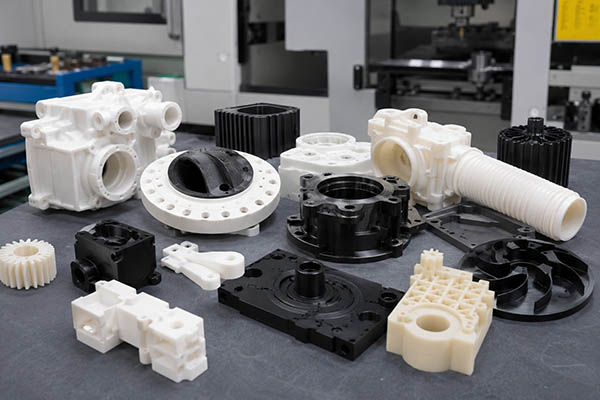
Choosing the Right Manufacturing Process for Custom Plastic Parts
One of the biggest mistakes companies make is assuming all plastic parts should be manufactured using injection molding. In reality, the optimal manufacturing process depends on production volume, geometry, tolerance requirements, budget, and delivery schedule.
Selecting the wrong process can significantly increase costs, extend lead times, or reduce part quality. Manufacturers typically evaluate several factors before recommending a production method, including annual production volume, part complexity, dimensional accuracy, material compatibility, and expected product lifecycle.
Comparison of Common Manufacturing Processes
| Manufacturing Process | Best Production Volume | Typical Lead Time | Initial Tooling Cost | Precision | Typical Applications |
|---|---|---|---|---|---|
| CNC Machining | 1–500 pcs | 2–7 days | None | ±0.02–0.05 mm | Functional prototypes, precision components |
| Injection Molding | 1,000+ pcs | 3–8 weeks | High | ±0.05–0.10 mm | Mass production |
| Vacuum Casting | 10–100 pcs | 7–15 days | Low | Medium | Appearance prototypes |
| 3D Printing | 1–20 pcs | 1–5 days | None | Medium | Concept verification |
CNC Machining for Engineering Plastics
CNC machining remains one of the most versatile manufacturing methods for custom plastic parts.
Unlike molding, CNC machining removes material from solid plastic stock, allowing manufacturers to produce components without investing in expensive tooling.
Advantages include:
- Extremely fast project startup
- Tight dimensional tolerances
- Easy engineering changes
- Excellent surface finishes
- Ideal for complex geometries
- Compatible with engineering plastics such as PEEK, Delrin, Nylon, PTFE, UHMW, ABS, and Polycarbonate
For example, a robotics manufacturer developing a new gearbox housing may initially require only 30 pieces for functional testing. Producing an injection mold could cost several thousand dollars and take weeks, whereas CNC machining enables delivery within days while allowing design revisions between production batches.
Injection Molding for Large Production Runs
Injection molding becomes economically advantageous once production volumes increase.
Although tooling costs are relatively high, the cost per part decreases dramatically during large-scale manufacturing.
Typical applications include:
- Automotive clips
- Consumer electronics housings
- Medical disposable devices
- Industrial connectors
- Plastic gears
- Appliance components
For instance:
| Annual Quantity | Recommended Process |
|---|---|
| 10 pcs | CNC Machining |
| 100 pcs | CNC Machining |
| 500 pcs | CNC Machining or Vacuum Casting |
| 5,000 pcs | Injection Molding |
| 100,000 pcs | Injection Molding |
Choosing the right process early can reduce manufacturing costs by more than 40% while shortening development cycles.
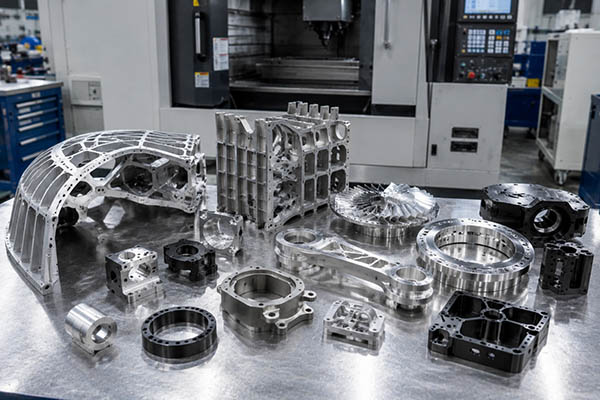
Plastic Material Selection Determines Part Performance
Material selection is often more important than the manufacturing process itself. Two parts with identical geometry can perform entirely differently depending on the resin selected.
Engineers must evaluate multiple properties, including:
- Tensile strength
- Impact resistance
- Heat resistance
- Chemical compatibility
- Moisture absorption
- UV resistance
- Electrical insulation
- Wear resistance
- Dimensional stability
- Cost
A professional manufacturer should recommend materials based on the application’s working environment rather than simply choosing the least expensive option.
Common Engineering Plastics
| Material | Advantages | Typical Applications |
|---|---|---|
| ABS | Easy machining, low cost | Consumer products |
| Nylon (PA) | Wear resistance | Gears, bearings |
| POM (Delrin) | Low friction | Precision mechanical parts |
| PEEK | High temperature resistance | Aerospace, medical |
| PTFE | Excellent chemical resistance | Seals, valves |
| Polycarbonate | High impact strength | Safety covers |
| Acrylic (PMMA) | Optical clarity | Transparent components |
| HDPE | Chemical resistance | Tanks, industrial equipment |
Example: Selecting Materials for Industrial Equipment
Suppose an engineer needs a custom guide block for an automated production line.
Requirements include:
- Continuous operation
- Low friction
- Dimensional stability
- Resistance to oil
- Long service life
Instead of aluminum, engineers may choose POM because it offers:
- Excellent machinability
- Lower weight
- Natural lubricity
- Reduced machine wear
- Lower production cost
This example illustrates why experienced manufacturers focus on functional requirements before recommending materials.
Material Selection by Industry
| Industry | Preferred Materials |
|---|---|
| Medical | PEEK, PC, PPSU |
| Aerospace | PEEK, PEI |
| Electronics | ABS, PC |
| Food Processing | UHMW, PTFE |
| Automotive | Nylon, POM |
| Robotics | Delrin, Nylon |
Selecting the wrong material can lead to premature wear, cracking, excessive deformation, or unexpected maintenance costs. Therefore, manufacturers often evaluate the entire application environment—including operating temperature, load conditions, chemical exposure, and service life—before finalizing a material recommendation.
Design for Manufacturability (DFM) Reduces Cost and Improves Quality
Even the best manufacturing equipment cannot compensate for poor product design. This is why experienced manufacturers perform a Design for Manufacturability (DFM) review before production begins.
DFM is the process of optimizing a part so it can be manufactured efficiently, consistently, and economically while maintaining all functional requirements. Companies that invest time in DFM often experience fewer production issues, lower tooling costs, and faster product launches.
Key Areas Evaluated During DFM
A comprehensive DFM review typically examines:
- Wall thickness consistency
- Corner radii
- Draft angles
- Undercuts
- Rib design
- Boss placement
- Tolerance feasibility
- Material shrinkage
- Machining accessibility
- Surface finish requirements
Common Design Problems and Their Solutions
| Design Issue | Manufacturing Risk | Recommended Improvement |
|---|---|---|
| Sharp internal corners | Tool stress, cracking | Add internal radii |
| Thick wall sections | Sink marks, warpage | Maintain uniform wall thickness |
| Deep narrow pockets | Difficult machining | Increase tool access |
| Tight tolerances everywhere | High machining cost | Apply critical tolerances selectively |
| Unsupported thin walls | Vibration, deformation | Add ribs or redesign geometry |
Example of Cost Reduction Through DFM
Consider a plastic enclosure originally designed with multiple deep cavities and numerous sharp corners. During the DFM review, engineers recommended:
- Increasing internal corner radii.
- Simplifying pocket geometry.
- Standardizing wall thickness.
- Reducing unnecessary cosmetic features.
These changes shortened CNC machining time, lowered tool wear, improved dimensional consistency, and reduced the overall production cost without affecting the product’s functionality. Similar design optimizations are common across custom plastic manufacturing projects and often have a greater impact on cost than material changes alone.
Precision Manufacturing and Quality Control
For custom plastic parts, dimensional accuracy is often the difference between a component that functions properly and one that causes assembly failures, excessive wear, or product recalls.
Precision manufacturing involves far more than simply running a machine. It requires process control, proper fixturing, tool management, environmental control, and systematic inspection throughout production.
Industries such as medical devices, aerospace, robotics, semiconductor equipment, and automation frequently require tolerances measured in hundredths of a millimeter.
Typical Tolerance Capabilities
| Manufacturing Method | Typical Tolerance |
|---|---|
| CNC Plastic Machining | ±0.02–0.05 mm |
| Precision Injection Molding | ±0.05–0.10 mm |
| Standard Injection Molding | ±0.10–0.25 mm |
| 3D Printing | ±0.10–0.30 mm |
| Vacuum Casting | ±0.15–0.30 mm |
Critical Inspection Equipment
A professional custom plastic parts manufacturer typically uses:
- CMM (Coordinate Measuring Machine) Verifies complex 3D dimensions
- Digital calipers and micrometers Checks linear dimensions
- Optical comparators Measures profiles and contours
- Surface roughness testers Confirms finish quality
- Height gauges Inspects datum relationships
- Go/No-Go gauges Performs fast production verification
Example: Robotic Joint Component
A robotic joint assembly may contain a Delrin bushing with:
Inner bore: 25.000 ±0.020 mm
Outer diameter: 32.000 ±0.030 mm
Concentricity: 0.03 mm
Surface finish: Ra 0.8 μm
If the bore is oversized by only 0.05 mm, the bearing may develop excessive play, reducing positioning accuracy.
This is why high-end manufacturers inspect critical dimensions during production rather than only after completion.
Statistical Process Control (SPC)
For recurring production orders, manufacturers often implement SPC to monitor dimensional trends.
Specification
25.000 ±0.020 mm
Measured average
Process center
25.004 mm
In control
Process variation
Short-term spread
±0.008 mm
Cp/Cpk target
Capability goal
1.33
Pass
SPC helps detect tool wear, thermal drift, or machine instability before parts fall outside specification.
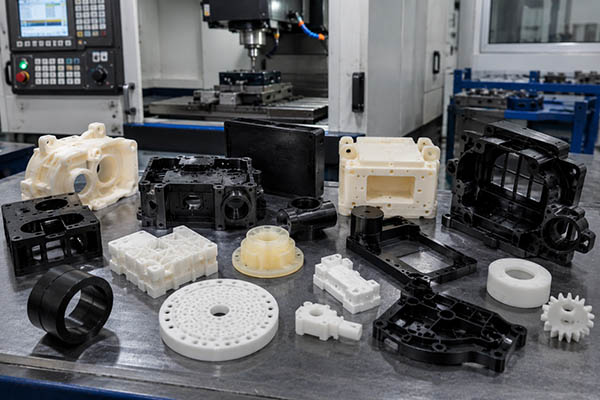
Prototype to Mass Production Workflow
Successful custom plastic projects rarely move directly into mass production. Instead, manufacturers follow a structured development process that minimizes risk and validates performance before large investments are made.
Typical Development Stages
| Stage | Purpose |
|---|---|
| Concept Prototype | Verify geometry and fit |
| Functional Prototype | Test performance |
| Engineering Validation | Confirm design requirements |
| Pilot Production | Evaluate manufacturing process |
| Mass Production | Full-scale manufacturing |
Example Timeline
Prototype development
Week 1
3D printed concept
Functional testing
Week 2
CNC-machined prototype
Design refinement
DFM review completed
Week 3
Engineering approval
Tooling preparation
Injection mold fabrication
Weeks 4-6
Production tooling
Pilot run
500 sample parts
Week 7
Process verification
Mass production
10,000+ units
Week 8+
Full release
Benefits of a Phased Approach
Detect design issues early
Reduce tooling modification costs
Validate material performance
Improve assembly compatibility
Shorten overall development time
Reduce production scrap
Many manufacturers now combine CNC machining for prototypes with injection molding for production, providing a seamless transition from development to volume manufacturing.
How to Choose the Right Custom Plastic Parts Manufacturer
Not all manufacturers offer the same capabilities. Some specialize only in molding, while others provide machining, prototyping, tooling, assembly, and quality management under one roof.
When evaluating suppliers, engineers should look beyond price and consider technical capability, responsiveness, and long-term manufacturing support.
Key Evaluation Criteria
| Criteria | Why It Matters |
|---|---|
| Material expertise | Ensures correct resin selection |
| Manufacturing range | Supports prototypes and production |
| Inspection capability | Verifies critical dimensions |
| DFM support | Reduces cost and risk |
| Lead time | Impacts product launch schedule |
| Communication | Speeds engineering revisions |
| Industry experience | Improves problem-solving |
| Quality certifications | Demonstrates process control |
Questions to Ask a Manufacturer
Supplier qualification checklist
Ask before ordering
1
What tolerances can you consistently maintain?
2
Which engineering plastics do you regularly process?
3
Can you provide inspection reports?
4
Do you offer DFM recommendations before production?
5
Can you scale from prototypes to mass production?
6
What is your typical lead time for urgent orders?
7
How do you manage dimensional consistency across batches?
Red Flags
Warning signs
- No material traceability
- No inspection documentation
- Unrealistically low pricing
- Vague tolerance claims
- Limited engineering communication
- Inability to discuss process limitations
The lowest quote is not always the lowest total cost. A manufacturer that identifies potential issues before production can save significant time and expense later.
Conclusion: Why Xavier Is a Reliable Partner for Custom Plastic Parts
Custom plastic parts manufacturing requires a combination of engineering knowledge, material expertise, precision machining, quality control, and scalable production capability. Whether a project involves a single prototype or thousands of production components, selecting the right manufacturing partner directly affects product performance, development speed, and overall cost.
Xavier provides comprehensive custom plastic manufacturing services for industries including robotics, automation, aerospace, medical equipment, electronics, and industrial machinery. By combining advanced CNC machining, engineering-grade plastic materials, detailed DFM support, and rigorous inspection procedures, Xavier helps customers move efficiently from concept to production while maintaining tight tolerances and consistent quality.
For companies seeking a dependable custom plastic parts manufacturer capable of producing complex, high-precision components with fast turnaround times, Xavier offers a practical and technically focused solution.
We are an integrated manufacturing and trading company specializing in CNC machining services, mainly providing custom CNC machining and precision machining solutions for various metal parts. We support CNC machining titanium, CNC machining PEEK, and CNC machining aluminum for industries including robotics, aerospace components, marine parts, automotive components, medical parts, and high-precision mechanical parts.
We are a professional CNC machining titanium manufacturer, offering CNC machining PEEK services in large-volume production, and you can contact us to get competitive CNC machining aluminum prices.
Some of the images and text in this article are collected and compiled from the internet. If there is anything inappropriate, please contact us for processing.