
Zinc Nickel Electroplating: The Complete Guide to Corrosion Protection, Process Control, and Industrial Applications
Zinc nickel electroplating has become one of the most widely used surface finishing technologies in automotive, aerospace, military, electronics, and industrial manufacturing. Compared with conventional zinc plating, zinc-nickel coatings offer significantly improved corrosion resistance, better thermal stability, and longer service life in harsh environments.
A properly applied zinc nickel coating can provide more than 1,000 hours of salt spray resistance, making it an ideal choice for critical components exposed to moisture, road salts, chemicals, and extreme temperatures.
This comprehensive guide explores the science, process, advantages, challenges, and applications of zinc nickel electroplating, helping engineers, buyers, and manufacturers make informed decisions.
Important Topics Related to Zinc Nickel Electroplating
What Is Zinc Nickel Electroplating?
How Zinc Nickel Electroplating Works
Chemical Composition of Zinc Nickel Coatings
Why Nickel Content Matters
Corrosion Resistance Performance
Salt Spray Testing Standards
Zinc Nickel vs Traditional Zinc Plating
Zinc Nickel vs Cadmium Plating
Common Coating Thickness Specifications
Hydrogen Embrittlement Considerations
Chromate Passivation Systems
Automotive Industry Applications
Aerospace and Defense Applications
CNC Machined Parts and Zinc Nickel Finishing
Cost Analysis and Return on Investment
What Is Zinc Nickel Electroplating?
Zinc nickel electroplating is an electrochemical deposition process that applies a thin alloy coating consisting primarily of zinc and nickel onto a metal substrate.
Unlike ordinary zinc plating, which deposits pure zinc, zinc nickel coatings typically contain approximately 12–15% nickel by weight. This alloy structure dramatically improves corrosion resistance and durability.
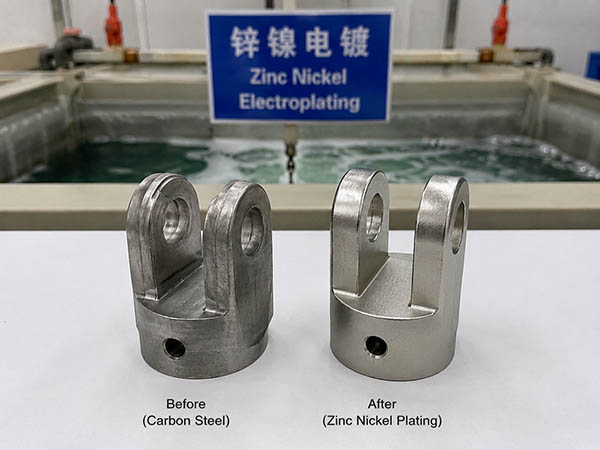
The process is commonly applied to:
- Carbon steel components
- Alloy steel parts
- Fasteners
- Hydraulic fittings
- CNC-machined components
- Automotive hardware
The resulting coating acts as a sacrificial barrier, protecting the underlying steel from corrosion while maintaining excellent appearance and functionality.
How Zinc Nickel Electroplating Works
The electroplating process relies on controlled electrical current passing through an electrolyte solution.
Basic Process Flow
Surface Preparation
Before plating begins, parts must undergo:
- Degreasing
- Alkaline cleaning
- Acid activation
- Water rinsing
Even microscopic contamination can affect coating adhesion.
Electroplating Stage
The workpiece becomes the cathode inside a plating bath containing zinc and nickel ions.
Under direct current:
- Zinc ions reduce onto the surface
- Nickel ions co-deposit with zinc
- An alloy layer gradually forms
Post-Treatment
After plating, components usually receive:
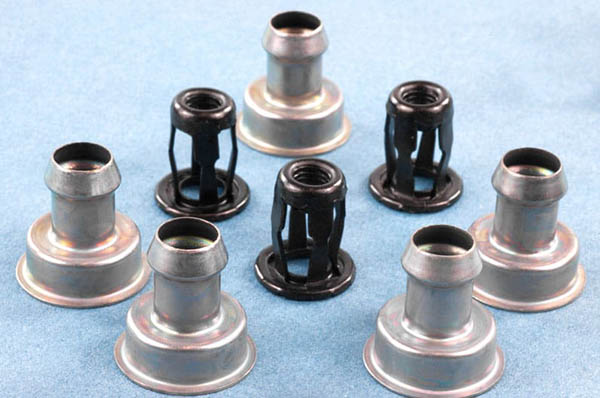
- Passivation treatment
- Sealers
- Topcoats
These additional layers further enhance corrosion protection.
Chemical Composition of Zinc Nickel Coatings
The performance of zinc nickel plating largely depends on nickel concentration.
| Nickel Content | Typical Performance |
|---|---|
| 5–8% | Moderate corrosion resistance |
| 10–12% | Good performance |
| 12–15% | Optimal corrosion resistance |
| Above 15% | May become brittle |
Most automotive specifications require nickel content between 12% and 15%.
This range produces a gamma-phase alloy structure that offers maximum protection against corrosion.
Why Nickel Content Matters
Many engineers assume thicker coatings automatically provide better protection.
In reality, nickel percentage often has a greater influence on performance than thickness alone.
Effects of Proper Nickel Content
Improved Corrosion Resistance
Nickel slows zinc consumption during corrosion exposure.
Better Heat Resistance
Traditional zinc coatings degrade at elevated temperatures.
Zinc nickel coatings can remain stable at temperatures exceeding 200°C.
Enhanced Wear Performance
The alloy structure provides greater hardness compared to pure zinc.
Typical hardness values:
| Coating Type | Hardness (HV) |
| Zinc Plating | 70-120 |
| Zinc Nickel | 350-550 |
This increased hardness improves wear resistance in moving assemblies.
Corrosion Resistance Performance
One of the primary reasons manufacturers choose zinc nickel electroplating is corrosion protection.
Typical Salt Spray Results
| Coating System | White Rust Resistance |
| Zinc Plating | 24-96 Hours |
| Zinc + Passivation | 96-240 Hours |
| Zinc Nickel + Passivation | 500-1500 Hours |
| Zinc Nickel + Sealer | 1000-2000+ Hours |
These values depend on coating thickness, nickel percentage, passivation chemistry, and testing conditions.
For automotive applications, requirements often exceed 720 hours before red rust appears.
Salt Spray Testing Standards
Salt spray testing is widely used to evaluate coating performance.
ASTM B117
This is the most common corrosion testing standard.
Components are exposed to:
- 5% sodium chloride solution
- Continuous fog environment
- Controlled temperature conditions
Common Industry Requirements
| Industry | Typical Requirement |
| General Hardware | 240 Hours |
| Automotive | 720-1000 Hours |
| Aerospace | 1000+ Hours |
| Military | 1500+ Hours |
Manufacturers frequently use ASTM B117 results to compare coating systems.
Zinc Nickel vs Traditional Zinc Plating
The comparison between zinc and zinc nickel plating is important for engineers evaluating surface finishing options.
| Property | Zinc Plating | Zinc Nickel |
| Corrosion Resistance | Moderate | Excellent |
| Heat Resistance | Low | High |
| Wear Resistance | Moderate | Good |
| Cost | Lower | Higher |
| Service Life | Shorter | Longer |
Although zinc nickel costs more initially, it often reduces lifecycle maintenance expenses.
Zinc Nickel vs Cadmium Plating
For decades, cadmium plating was widely used in aerospace applications.
However, environmental regulations have pushed many manufacturers toward zinc nickel alternatives.
Comparison
| Property | Cadmium | Zinc Nickel |
| Corrosion Protection | Excellent | Excellent |
| Toxicity | High | Lower |
| Environmental Impact | Significant | Reduced |
| Regulatory Restrictions | Increasing | Limited |
Today, zinc nickel plating is often considered the preferred replacement for cadmium coatings.
Common Coating Thickness Specifications
Thickness selection depends on environmental exposure and performance requirements.
Typical Specifications
| Environment | Thickness |
| Indoor Use | 5 μm |
| Moderate Outdoor Exposure | 8 μm |
| Automotive Components | 10-15 μm |
| Marine Applications | 15-25 μm |
Increasing thickness generally improves durability but also increases processing cost.
Engineers must balance protection requirements with budget constraints.
Hydrogen Embrittlement Considerations
Hydrogen embrittlement remains a major concern when plating high-strength steels.
During electroplating:
- Hydrogen atoms can enter the metal structure.
- Internal stresses increase.
- Cracking risk rises.
High-Risk Materials
- Grade 10.9 bolts
- Grade 12.9 fasteners
- Aerospace steels
- Hardened alloy steels
Mitigation Method
Parts are often baked immediately after plating.
Typical baking parameters:
- 190°C to 230°C
- 2 to 24 hours
This process removes absorbed hydrogen and reduces failure risk.
Chromate Passivation Systems
Passivation is a critical post-treatment step.
It creates an additional protective layer over the zinc nickel coating.
Common Colors
Clear/Blue Passivation
Used for modern automotive applications.
Black Passivation
Provides decorative appearance and corrosion resistance.
Yellow/Iridescent Passivation
Traditional appearance with excellent protection.
Modern systems are typically trivalent chromium based to comply with environmental regulations.
Automotive Industry Applications
Automotive manufacturers are among the largest users of zinc nickel coatings.
Typical Components
- Brake system fittings
- Fuel line connectors
- Suspension hardware
- Steering components
- Fasteners
Modern vehicles must survive years of exposure to:
- Road salt
- Moisture
- Temperature cycling
- Chemical contamination
Zinc nickel plating helps achieve these durability requirements.
Aerospace and Defense Applications
Aerospace environments place extreme demands on coatings.
Applications include:
- Aircraft fasteners
- Landing gear hardware
- Hydraulic fittings
- Structural connectors
These components require:
- Corrosion resistance
- Fatigue durability
- Thermal stability
- Long service life
Because zinc nickel coatings maintain performance under demanding conditions, they have become increasingly common in aerospace specifications.
CNC Machined Parts and Zinc Nickel Finishing
For CNC machining manufacturers, zinc nickel plating adds significant value to precision components.
Benefits for CNC Parts
Improved Corrosion Resistance
Machined steel parts gain long-term environmental protection.
Better Appearance
Uniform metallic finishes improve product aesthetics.
Enhanced Durability
Components experience less wear and degradation.
Customer Compliance
Many OEM specifications require zinc nickel coatings.
Examples include:
- Hydraulic manifolds
- Precision shafts
- Threaded fittings
- Sensor housings
- Industrial connectors
Proper machining tolerances must account for coating thickness during design.
Cost Analysis and Return on Investment
Zinc nickel plating generally costs 20–50% more than traditional zinc plating.
However, evaluating only plating cost can be misleading.
Long-Term Benefits
- Reduced warranty claims
- Longer component life
- Less maintenance
- Lower replacement frequency
- Improved customer satisfaction
Example:
A hydraulic fitting protected by zinc plating may require replacement after several years in a corrosive environment.
The same fitting finished with zinc nickel plating can often remain functional significantly longer, reducing total ownership cost.
For critical components, zinc nickel plating frequently provides the best balance between performance and economics.
Best Practices for Designing Parts for Zinc Nickel Electroplating
Engineers can improve coating quality by incorporating plating considerations into part design.
Design Recommendations
Avoid Deep Blind Holes
These areas may receive uneven coating thickness.
Maintain Smooth Surface Transitions
Sharp corners create current concentration and thickness variation.
Consider Thread Tolerances
Coating buildup affects thread fit.
Provide Drainage Features
Trapped solution can reduce finish quality.
By designing with electroplating in mind, manufacturers achieve more consistent coating performance.
Xavier Precision Manufacturing: Your Trusted CNC Machining and Surface Finishing Partner
At Xavier, we understand that producing a high-quality CNC component involves more than precision machining. Surface finishing plays a critical role in determining corrosion resistance, durability, appearance, and long-term performance.
Our team provides precision CNC machining services combined with professional finishing solutions, including zinc nickel electroplating for demanding industrial, automotive, aerospace, and hydraulic applications.
Whether you need prototype quantities or high-volume production, Xavier delivers:
- Precision CNC milling and turning
- Tight-tolerance manufacturing
- Zinc nickel plating support
- Engineering consultation
- Comprehensive quality inspection
- Global supply capabilities
By combining advanced machining expertise with reliable surface finishing technologies, Xavier helps customers achieve longer-lasting, higher-performing components while reducing lifecycle costs.
As an integrated manufacturing and trading company specializing in CNC machining services, we focus on custom CNC machining and the production of precision metal and plastic parts. Our expertise includes CNC Aluminum Machining, CNC PEEK Machining, and CNC Tool Steel Machining. We provide machining solutions for robotics, aerospace components, marine equipment, automotive parts, medical devices, and other precision-engineered products.
As a CNC Aluminum Machining Manufacturer, we provide high-volume CNC PEEK Machining Services. Contact us today for a competitive quote on CNC Tool Steel Machining Prices.
Some of the images and text in this article are collected and compiled from the internet. If there is anything inappropriate, please contact us for processing.