
15 Key Points from This Article:
- What Is Bronze Polishing?
- Why Bronze Requires Specialized Polishing Techniques
- Types of Bronze Alloys and Their Polishing Characteristics
- Surface Conditions Before Polishing Bronze
- Manual Bronze Polishing Methods
- Mechanical Bronze Polishing Processes
- Abrasives Used in Bronze Polishing
- Step-by-Step Bronze Polishing Procedure
- Mirror Finish Bronze Polishing Techniques
- Bronze Polishing for CNC Machined Parts
- Common Problems During Bronze Polishing
- Oxidation and Tarnish Removal
- Protective Coatings After Polishing
- Industrial Applications of Polished Bronze Components
- Future Trends in Automated Bronze Surface Finishing
What Is Bronze Polishing?
Bronze polishing is the process of refining the surface of bronze components to improve appearance, reduce surface roughness, increase corrosion resistance, and prepare parts for decorative or functional applications.
Bronze is primarily composed of copper and tin, although modern bronze alloys may also contain aluminum, silicon, manganese, nickel, or phosphorus. Unlike steel or aluminum, bronze develops a natural patina over time, which can either be desirable or undesirable depending on the application.
Polishing removes:
- Oxidation layers
- Surface scratches
- Tool marks
- Machining burrs
- Stains and discoloration
The final result may range from a satin finish to a highly reflective mirror finish.
| Surface Finish | Typical Ra Value |
|---|---|
| As-Cast Bronze | 12.5–25 μm |
| CNC Machined Bronze | 1.6–3.2 μm |
| Brushed Bronze | 0.8–1.6 μm |
| Fine Polished Bronze | 0.2–0.8 μm |
| Mirror Polished Bronze | Below 0.1 μm |
The lower the Ra value, the smoother and more reflective the surface becomes.
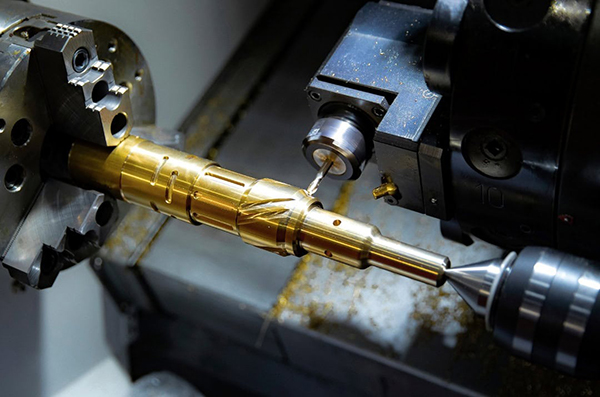
Why Bronze Requires Specialized Polishing Techniques
Bronze behaves differently than stainless steel, aluminum, or brass during polishing.
Several characteristics influence polishing behavior:
High Copper Content
Copper-rich bronze is relatively soft compared with hardened steels.
During aggressive polishing, heat buildup may smear the metal rather than cut it cleanly.
Oxidation Sensitivity
Bronze begins oxidizing immediately after exposure to air.
Even freshly polished parts can show discoloration within days if left unprotected.
Surface Dragging
Because bronze is softer than many engineering metals, polishing compounds must be selected carefully to avoid surface dragging and waviness.
A polishing process suitable for stainless steel may produce poor results on bronze.
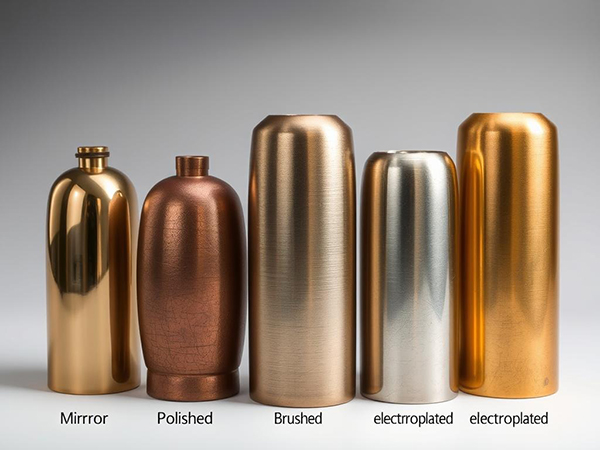
Types of Bronze Alloys and Their Polishing Characteristics
Not all bronze alloys polish the same way.
Phosphor Bronze
Contains:
- Copper
- Tin
- Phosphorus
Characteristics:
- Excellent wear resistance
- Good polishability
- Common in bearings and bushings
Aluminum Bronze
Contains 5–12% aluminum.
Advantages:
- High strength
- Excellent corrosion resistance
Challenges:
- Harder than traditional bronze
- Requires longer polishing cycles
Silicon Bronze
Contains silicon additions.
Advantages:
- Excellent decorative finish
- High corrosion resistance
Widely used in architectural applications.
Manganese Bronze
Frequently used for:
- Marine propellers
- Heavy-duty gears
- Structural hardware
The higher hardness increases polishing time but improves long-term surface durability.
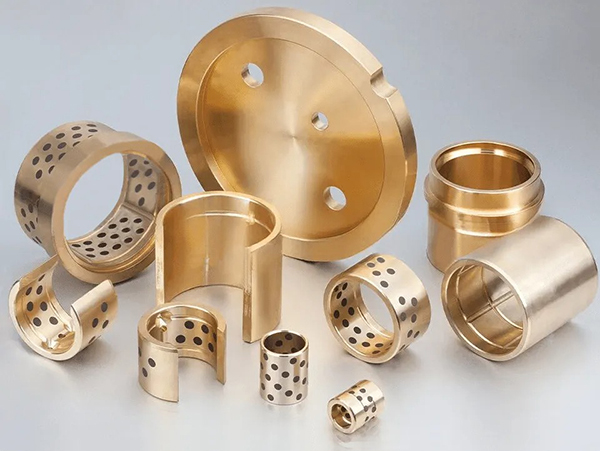
| Bronze Type | Polishing Difficulty |
| Silicon Bronze | Easy |
| Phosphor Bronze | Moderate |
| Tin Bronze | Moderate |
| Aluminum Bronze | Difficult |
| Manganese Bronze | Difficult |
Surface Conditions Before Polishing Bronze
Successful polishing begins with proper surface preparation.
Common surface defects include:
- Casting porosity
- Tool marks
- Oxide layers
- Grinding scratches
- Embedded contaminants
Surface inspection should occur before polishing begins.
Cast Bronze Components
Castings typically require:
- Deburring
- Grinding
- Surface leveling
before polishing can begin.
CNC Machined Bronze Parts
CNC-machined components often require less preparation because machining already produces relatively smooth surfaces.
However, cutter marks and feed-line patterns still need removal for high-gloss finishes.
Manual Bronze Polishing Methods
Manual polishing remains widely used for:
- Sculptures
- Architectural hardware
- Decorative products
- Restoration projects
Typical hand-polishing sequence:
- 320 grit sanding
- 600 grit sanding
- 800 grit sanding
- 1200 grit sanding
- Polishing compound application
Manual polishing provides excellent control over complex geometries but is labor intensive.
Example:
A decorative bronze door handle may require 30–60 minutes of hand polishing to achieve a mirror finish.
Mechanical Bronze Polishing Processes
Industrial manufacturers use mechanical polishing to improve consistency and productivity.
Belt Polishing
Suitable for:
- Flat surfaces
- Panels
- Architectural components
Buffing Wheels
Most common method for mirror finishing.
Wheel materials include:
- Cotton
- Sisal
- Felt
Vibratory Finishing
Ideal for:
- Small CNC parts
- Fasteners
- Precision components
Thousands of parts can be processed simultaneously.
Robotic Polishing
Modern factories increasingly use robotic polishing systems.
Benefits include:
- Consistent finish quality
- Reduced labor cost
- Higher throughput
Automated systems can reduce polishing cycle times by 30–50%.
Abrasives Used in Bronze Polishing
Choosing the correct abrasive directly affects finish quality.
| Abrasive | Typical Use |
| Aluminum Oxide | General polishing |
| Silicon Carbide | Initial grinding |
| Diamond Paste | Ultra-fine polishing |
| Cerium Oxide | High-gloss finishing |
| Emery Compound | Scratch removal |
For mirror finishes, many manufacturers progress through multiple abrasive stages rather than attempting aggressive material removal in one step.
Step-by-Step Bronze Polishing Procedure
A professional polishing workflow generally follows this sequence:
Step 1: Cleaning
Remove oils and contaminants.
Step 2: Initial Grinding
Remove casting defects and machining marks.
Step 3: Progressive Sanding
Typical progression:
320 → 600 → 800 → 1200 → 2000 grit
Step 4: Buffing
Apply polishing compounds using cloth wheels.
Step 5: Inspection
Check:
- Surface uniformity
- Reflection quality
- Scratch removal
Step 6: Protective Coating
Apply wax, lacquer, or clear coating.
Skipping intermediate sanding stages often leads to visible polishing defects later.
Mirror Finish Bronze Polishing Techniques
Mirror polishing is often required for luxury architectural components and decorative products.
Critical factors include:
Scratch Elimination
Every scratch from the previous abrasive stage must be completely removed.
Temperature Control
Excessive heat can create:
- Surface smearing
- Color variations
- Compound buildup
Multiple Buffing Compounds
Typical sequence:
- Cutting compound
- Intermediate polishing compound
- Final coloring compound
A properly polished bronze surface can achieve reflectivity approaching that of polished stainless steel.
Bronze Polishing for CNC Machined Parts
Bronze remains a popular CNC machining material because of:
- Excellent machinability
- Low friction
- Good wear resistance
Common CNC bronze parts include:
- Bushings
- Bearings
- Gears
- Marine components
- Valve parts
After machining, polishing improves:
- Appearance
- Corrosion resistance
- Surface smoothness
For precision components, excessive polishing must be avoided because dimensional tolerances may be affected.
Example:
A bronze bearing with a ±0.01 mm tolerance may require controlled polishing to prevent dimensional drift.
Common Problems During Bronze Polishing
| Problem | Cause | Solution |
| Surface Smearing | Excessive pressure | Reduce wheel pressure |
| Orange Peel Texture | Improper abrasive progression | Use finer intermediate grits |
| Burn Marks | Excessive heat | Lower polishing speed |
| Swirl Marks | Dirty buffing wheel | Replace wheel |
| Uneven Gloss | Inconsistent polishing | Standardize process |
Process control is often more important than polishing equipment itself.
Oxidation and Tarnish Removal
Bronze naturally oxidizes over time.
Common tarnish colors include:
- Brown
- Dark brown
- Green
- Blue-green
Removal methods include:
- Mild acidic cleaners
- Specialized bronze polishing compounds
- Mechanical buffing
For valuable architectural bronze, aggressive chemical stripping should be avoided to preserve material integrity.
Protective Coatings After Polishing
A polished surface is vulnerable unless protected.
Common protection methods include:
Wax Coatings
Advantages:
- Easy application
- Low cost
Clear Lacquer
Advantages:
- Long-term protection
- High transparency
PVD Coatings
Advantages:
- Exceptional durability
- Decorative colors
| Protection Method | Typical Service Life |
| Wax | 3–12 Months |
| Lacquer | 2–5 Years |
| PVD Coating | 10+ Years |
Industrial Applications of Polished Bronze Components
Polished bronze is widely used across industries.
Applications include:
Marine Industry
- Propellers
- Pumps
- Valve bodies
Architecture
- Door hardware
- Railings
- Decorative panels
Industrial Equipment
- Bearings
- Bushings
- Wear plates
Luxury Products
- Watches
- Sculptures
- Furniture hardware
The combination of aesthetics and durability makes polished bronze highly desirable.
Future Trends in Automated Bronze Surface Finishing
The polishing industry is becoming increasingly automated.
Emerging technologies include:
- AI-assisted process optimization
- Robotic buffing systems
- Machine vision inspection
- Automated roughness measurement
- Digital twin process simulation
Manufacturers adopting automation often achieve higher consistency while reducing labor dependency.
Why Choose Xavier for Bronze Machining and Polishing Services?
At Xavier, we understand that achieving a premium bronze surface requires far more than simply running a part through a polishing wheel. Our engineering team combines advanced CNC machining expertise with professional surface finishing technologies to deliver bronze components that meet demanding cosmetic and functional requirements.
Our capabilities include:
- CNC machining of bronze alloys
- Precision polishing and buffing
- Mirror finish bronze surfaces
- Architectural bronze fabrication
- Marine-grade bronze components
- Tight-tolerance industrial parts
- Prototype and mass production support
Whether you need highly polished decorative hardware, marine components, precision bearings, or complex CNC-machined bronze parts, Xavier provides reliable manufacturing solutions with exceptional surface quality, dimensional accuracy, and global delivery support.
As an integrated manufacturer and supplier specializing in CNC machining services, we focus on custom CNC machining for a wide range of metal components. We also offer advanced surface finishing solutions, including
CNC Zinc Plating Surface Finishing,
CNC Chemical Conversion Coating Surface Finishing, and
CNC Anodizing Surface Finishing
to meet diverse industrial requirements.
We are a professional CNC Zinc Plating Surface Finishing Manufacturer, providing high-volume CNC Chemical Conversion Coating Surface Finishing Services. Contact us today for competitive CNC Anodizing Surface Finishing Prices and expert support for your next project.
Some content in this article is sourced from the internet. If there is any inappropriate content, please contact us for removal.