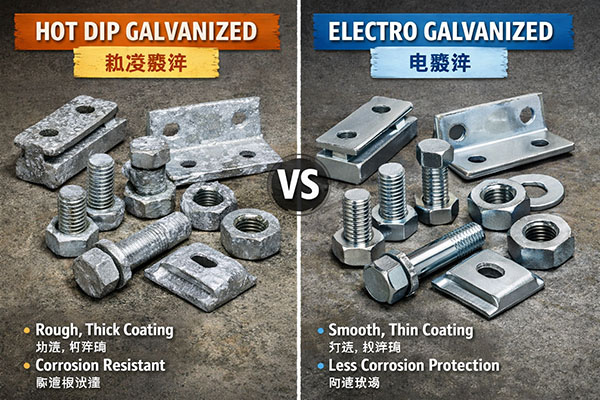
Hot Dip vs Electrogalvanized: Key Differences in Zinc Coating, Durability, and Industrial Applications
Galvanizing is one of the most widely used surface treatments for protecting steel against corrosion. Two major methods dominate industrial manufacturing: hot-dip galvanizing (HDG) and electro-galvanizing (EG).
Although both processes apply a zinc layer to steel surfaces, they differ significantly in coating structure, thickness, corrosion resistance, appearance, and manufacturing applications. Choosing the correct galvanizing method can determine whether a component lasts 2 years or 50 years in corrosive environments.
For engineers working with CNC machined steel parts, fasteners, sheet metal, and structural components, understanding these differences is essential.
Below are 10 critical technical aspects that explain how hot-dip galvanizing compares to electrogalvanizing.
Manufacturing Process: Immersion vs Electrochemical Deposition
The most fundamental difference between these two coatings lies in how the zinc layer is applied.
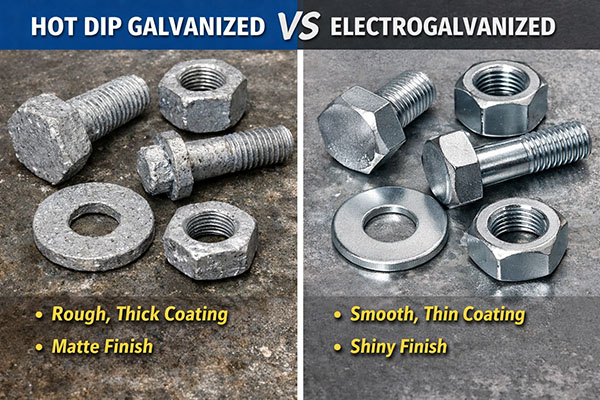
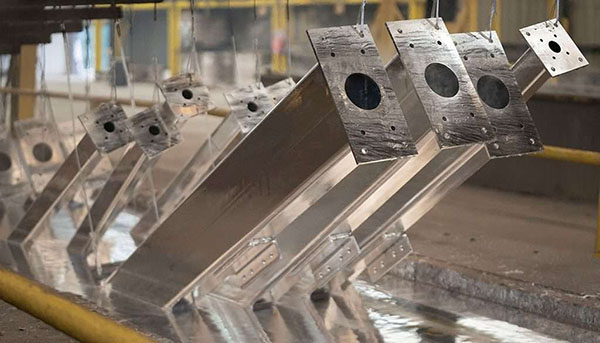
Hot-dip galvanizing involves immersing steel components into molten zinc, typically at about 450 °C (842 °F). During immersion, a metallurgical reaction occurs between iron and zinc, forming several layers of zinc-iron alloy that bond tightly to the base metal. hot dip vs electrogalvanized
Electrogalvanizing, by contrast, uses an electroplating process. Steel parts are placed in an electrolyte solution containing zinc ions. When an electrical current passes through the bath, zinc ions deposit onto the steel surface.
Process comparison:
| Parameter | Hot Dip Galvanizing | Electrogalvanizing |
|---|---|---|
| Method | Immersion in molten zinc | Electrochemical plating |
| Temperature | ~450 °C | Room temperature bath |
| Coating structure | Zinc-iron alloy layers | Pure zinc layer |
| Bond type | Metallurgical bond | Electrochemical adhesion |
The metallurgical bonding in hot-dip galvanizing produces a stronger and more durable coating, especially for outdoor structures.
Coating Thickness and Zinc Mass
Coating thickness is one of the most important factors influencing corrosion resistance.
Typical thickness values:
| Coating Type | Thickness Range |
|---|---|
| Hot-dip galvanized | 45–150 µm |
| Electro-galvanized | 5–25 µm |
Hot-dip galvanizing can produce coatings 3–10 times thicker than electrogalvanizing.
This difference directly affects:
- corrosion resistance
- mechanical durability
- service life
For example, structural steel used in bridges or transmission towers typically requires zinc coatings above 80 µm, which is difficult to achieve using electroplating.
Corrosion Resistance and Outdoor Durability
Zinc protects steel through two mechanisms:
- Barrier protection – preventing oxygen and moisture contact
- Sacrificial protection – zinc corrodes before steel
Because hot-dip coatings contain much more zinc mass, they provide significantly longer corrosion protection.
Typical performance comparison:
| Environment | Hot Dip Galvanized | Electrogalvanized |
|---|---|---|
| Indoor dry environment | 20+ years | 5–10 years |
| Urban outdoor exposure | 30–50 years | 5–10 years |
| Coastal or industrial environment | 20–30 years | 2–5 years |
Hot-dip galvanized coatings can exceed 50 years of service life in rural environments.
Electrogalvanized coatings are better suited to indoor environments where corrosion risk is lower.
Surface Appearance and Aesthetic Quality
Surface finish is another important difference.
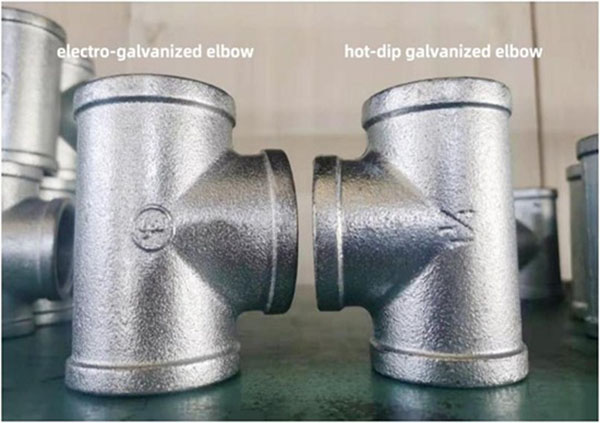
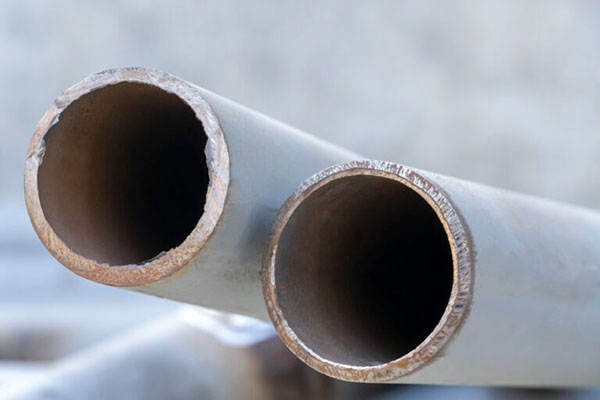
Hot-dip galvanized coatings often display a spangled or crystalline pattern formed as molten zinc cools and solidifies.
Typical visual characteristics:
Hot-dip galvanized surface
- matte gray
- slightly rough texture
- visible spangle pattern
Electro-galvanized surface
- smooth and bright
- uniform thickness
- ideal for painting or decorative finishes
Because of this smoother appearance, electrogalvanized steel is commonly used in automotive panels, appliances, and electronics enclosures.
Adhesion Strength and Mechanical Durability
The bonding mechanism strongly affects how well the coating survives abrasion or impact.
Hot-dip galvanizing forms zinc-iron alloy layers that are metallurgically bonded to the steel substrate. This results in extremely strong adhesion and resistance to peeling. hot dip vs electrogalvanized
Electro-galvanized coatings, however, are primarily mechanically adhered layers of pure zinc.
Practical implication:
Hot-dip galvanized coatings perform better in:
- structural steel
- outdoor fasteners
- highway guardrails
- transmission towers
Electro-galvanized coatings are more suitable for:
- thin sheet metal
- stamped parts
- decorative components
Dimensional Accuracy and Manufacturing Tolerance
For precision manufacturing such as CNC machining, coating thickness tolerance can be critical.
Electro-galvanizing allows very precise thickness control because the plating rate is determined by:
- electrical current
- plating time
- electrolyte composition
Therefore, electrogalvanized coatings are often used for tight-tolerance parts such as precision fasteners or automotive components. hot dip vs electrogalvanized
Hot-dip coatings, on the other hand, are thicker and may vary slightly across surfaces due to molten zinc flow.
Mechanical Properties and Surface Hardness
Hot-dip galvanizing creates multiple alloy layers with increasing hardness toward the steel substrate.
Typical layer structure:
| Layer | Composition | Hardness |
|---|---|---|
| Eta layer | Pure zinc | Soft |
| Zeta layer | Zn-Fe alloy | Medium |
| Delta layer | Zn-Fe alloy | Hard |
This layered structure improves:
- abrasion resistance
- impact resistance
- long-term durability
Electro-galvanized coatings consist mostly of pure zinc, which is softer and more easily damaged.
Cost Comparison and Life-Cycle Economics
The cost difference between these processes is not always obvious.
Typical comparison:
| Cost Factor | Hot Dip | Electrogalvanized |
|---|---|---|
| Initial processing cost | Higher | Lower |
| Maintenance cost | Very low | Higher |
| Life expectancy | Decades | Shorter |
Although hot-dip galvanizing may cost more initially, the longer service life often results in lower total lifecycle cost, particularly in infrastructure projects.
Typical Industrial Applications
Hot-dip galvanizing is widely used for heavy-duty infrastructure.
Examples include:
- bridges and steel structures
- highway guardrails
- pipelines and scaffolding
- electrical transmission towers
Electro-galvanizing is more common in precision manufacturing and consumer products.
Typical uses:
- automotive body panels
- household appliances
- electronics housings
- small fasteners and brackets
For CNC machining companies producing precision steel parts, electrogalvanizing is often preferred when appearance and tolerance control are critical.
Which Galvanizing Method Should You Choose?
The decision between hot-dip and electrogalvanized coatings depends mainly on environmental exposure and design requirements.
Choose hot-dip galvanizing when:
- the component will be used outdoors
- corrosion resistance is critical
- long service life is required
Choose electro-galvanizing when:
- surface finish matters
- dimensional precision is critical
- the environment is relatively mild
For many engineered components, designers also combine galvanizing with powder coating or painting to achieve both corrosion resistance and aesthetics. hot dip vs electrogalvanized
Xavier Precision Manufacturing Recommendation
Selecting the right coating method is only part of producing durable components. The machining process itself also affects coating performance. hot dip vs electrogalvanized
At Xavier, we specialize in manufacturing precision metal parts designed for galvanizing and other surface treatments. Our capabilities include:
- CNC machining for galvanized steel components
- design optimization for coating uniformity
- tight tolerance control before plating
- compatibility with hot-dip galvanizing and electroplating processes
Whether you need heavy-duty structural parts with hot-dip galvanizing or precision electro-galvanized CNC components, Xavier engineers can help optimize both manufacturing efficiency and corrosion protection performance.
Some of the images and text in this article are collected and compiled from the internet. If there is anything inappropriate, please contact us for processing.