
Magnesium is one of the lightest structural metals used in modern engineering. Its melting point is a critical property that determines how the material behaves during casting, machining, heat treatment, and high-temperature applications. For industries such as aerospace, automotive, and electronics, understanding the melting point of magnesium is essential for selecting the right manufacturing process and preventing structural failure.
Below are 10 important knowledge topics related to the melting point of magnesium commonly discussed in engineering resources and materials science references.
Key Knowledge Topics About the Melting Point of Magnesium
- The exact melting point of pure magnesium
- Physical and thermal properties of magnesium
- Why magnesium has a relatively low melting point
- Comparison of magnesium melting point with other metals
- The difference between melting point and boiling point of magnesium
- Effects of alloying elements on magnesium melting temperature
- Industrial processing methods influenced by melting point
- Heat treatment temperatures relative to magnesium melting point
- Safety risks when melting magnesium
- How melting point affects CNC machining and manufacturing
Understanding the Melting Point of Magnesium
What Is the Melting Point of Magnesium?
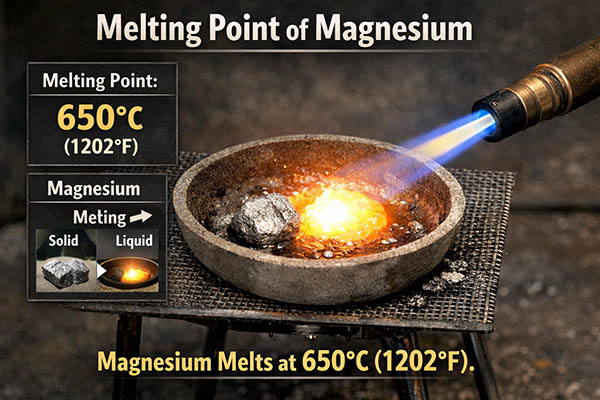
The melting point of pure magnesium is approximately 650°C (1202°F) under standard atmospheric pressure. At this temperature, magnesium transitions from a solid metallic structure into a liquid state.
Compared with many engineering metals, magnesium melts at a relatively low temperature. This property makes it highly suitable for die casting and lightweight metal manufacturing, where energy efficiency and fast cycle times are important.
Basic Thermal Data for Magnesium
| Property | Value |
|---|---|
| Melting point | 650°C |
| Boiling point | 1107°C |
| Density | 1.74 g/cm³ |
| Atomic number | 12 |
| Crystal structure | Hexagonal close-packed (HCP) |
Magnesium’s density is significantly lower than aluminum and steel, which explains why it is widely used in lightweight structural applications.
Physical and Thermal Properties of Magnesium
Magnesium is a silvery-white alkaline earth metal that combines lightweight characteristics with good mechanical strength.
Key Engineering Properties
| Property | Magnesium | Aluminum | Steel |
|---|---|---|---|
| Density (g/cm³) | 1.74 | 2.70 | 7.87 |
| Melting point (°C) | 650 | 660 | 1538 |
| Strength-to-weight ratio | High | Medium | Medium |
Magnesium is roughly two-thirds the weight of aluminum, making it one of the lightest structural metals available for industrial use.
Because of this combination of low density and moderate melting temperature, magnesium alloys are widely used in:
- automotive parts
- aerospace components
- electronic housings
- sporting equipment
Why Magnesium Has a Relatively Low Melting Point
The melting point of any metal depends on the strength of atomic bonds within its crystal structure.
Magnesium has:
- a hexagonal close-packed lattice
- relatively weak metallic bonding compared to transition metals
- fewer valence electrons participating in metallic bonding
These characteristics reduce the energy required to break the atomic lattice, resulting in a melting temperature around 650°C, much lower than steels or titanium alloys.
For comparison:
| Metal | Melting Point (°C) |
|---|---|
| Magnesium | 650 |
| Aluminum | 660 |
| Copper | 1085 |
| Steel | ~1538 |
This explains why magnesium is easier to melt and cast than most structural metals.
Comparison of Magnesium Melting Point with Other Engineering Metals
Understanding melting points is essential when choosing materials for high-temperature environments.
| Metal | Melting Point (°C) | Typical Application |
|---|---|---|
| Magnesium | 650 | Automotive housings |
| Aluminum | 660 | Aerospace structures |
| Titanium | 1668 | Jet engines |
| Iron | 1538 | Structural steel |
Magnesium and aluminum have similar melting points, but magnesium is significantly lighter. This makes magnesium alloys ideal for lightweight design strategies in electric vehicles and aircraft.
Melting Point vs Boiling Point of Magnesium
A common misunderstanding in metallurgy is confusing melting point with boiling point.
| Property | Temperature |
|---|---|
| Melting point | 650°C |
| Boiling point | 1107°C |
The large gap between these temperatures means magnesium remains in liquid form over a wide processing window, allowing engineers to cast or shape the metal before vaporization occurs.
This wide liquid range is particularly important in:
- die casting
- gravity casting
- alloy production
How Alloying Elements Change Magnesium Melting Temperature
Pure magnesium melts at a fixed temperature, but magnesium alloys melt across a temperature range.
Common alloying elements include:
- aluminum
- zinc
- manganese
- rare earth elements
Example Magnesium Alloy Melting Ranges
| Alloy | Melting Range (°C) | Application |
|---|---|---|
| AZ91 | 437 – 595 | Automotive die casting |
| AM60 | 595 – 640 | Structural components |
| WE43 | ~540 – 640 | Aerospace |
Alloying improves properties such as:
- corrosion resistance
- strength
- creep resistance
However, it also modifies melting behavior.
Industrial Processing Methods Influenced by Melting Point
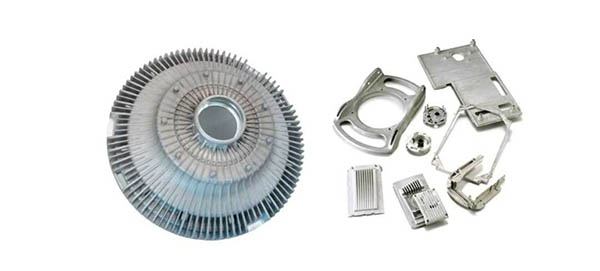
Because magnesium melts at relatively low temperatures, it is ideal for high-volume casting processes.
Common Manufacturing Methods
| Process | Typical Temperature | Use Case |
|---|---|---|
| Die casting | 650–700°C | Automotive parts |
| Sand casting | 660–720°C | Large components |
| Permanent mold casting | ~700°C | Structural parts |
Lower melting temperature means:
- reduced energy consumption
- faster production cycles
- lower furnace wear
This is why magnesium is heavily used in mass manufacturing industries.
Heat Treatment Temperatures Relative to Melting Point
Heat treatment must stay well below the melting temperature to avoid structural damage.
Typical Heat Treatment Ranges
| Treatment | Temperature |
|---|---|
| Solution annealing | 410–430°C |
| Aging | 150–200°C |
| Stress relief | 250–300°C |
These temperatures are carefully selected to remain below the melting point while improving mechanical properties such as hardness and fatigue strength.
Safety Risks When Melting Magnesium
One major concern when melting magnesium is flammability.
Molten magnesium can ignite if exposed to oxygen under certain conditions, and burning magnesium reacts violently with water.
Key Safety Guidelines
| Risk | Prevention |
|---|---|
| Oxidation | Use inert gas shielding |
| Ignition | Avoid sparks and static |
| Fire hazard | Use Class D fire extinguishers |
Industrial foundries typically use argon atmospheres or protective fluxes to reduce oxidation during melting.
How the Melting Point of Magnesium Affects CNC Manufacturing
Although magnesium is often cast, it is also widely CNC machined for precision parts.
Because magnesium has:
- relatively low melting temperature
- high thermal conductivity
- good machinability
it allows for:
- high cutting speeds
- reduced tool wear
- efficient material removal
Typical CNC applications include:
- aerospace housings
- drone frames
- automotive brackets
- lightweight electronic enclosures
However, machining must control chip accumulation because magnesium chips can ignite under certain conditions.
Why Choose Xavier for Magnesium CNC Machining
If your project requires precision magnesium components, choosing the right manufacturing partner is critical.
Xavier CNC Machining specializes in producing high-precision magnesium parts for industries requiring lightweight and high-performance components.
Key advantages include:
- advanced 3-axis, 4-axis, and 5-axis CNC machining
- experience with magnesium alloys such as AZ91 and WE43
- tight tolerance machining for aerospace and automotive parts
- optimized cutting strategies to ensure safety and surface quality
Whether you need prototype magnesium parts or full production machining, Xavier delivers reliable performance and consistent quality for demanding engineering applications. melting point of magnesium
Some of the images and text in this article are collected and compiled from the internet. If there is anything inappropriate, please contact us for processing.