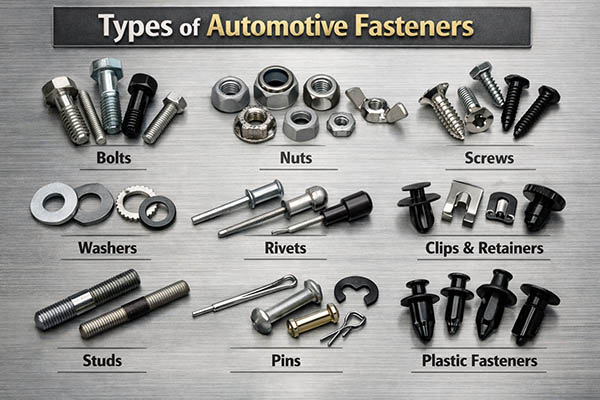
Types of Automotive Fasteners: Complete Guide for Vehicle Engineering and Manufacturing
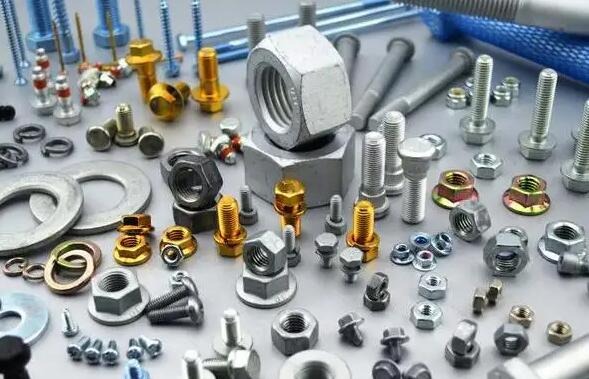
Automotive fasteners are the small but critical components that hold together nearly every part of a vehicle—from the engine block and suspension to interior panels and electronic modules. Modern vehicles contain thousands of fasteners, each designed to withstand vibration, load, corrosion, and thermal stress. Selecting the right fastener type is essential for reliability, safety, and serviceability in automotive manufacturing and repair.
Below are 10 essential types of automotive fasteners commonly used in vehicles today.
10 Key Types of Automotive Fasteners
- Bolts
- Nuts
- Screws
- Washers
- Rivets
- Studs
- Pins
- Clips and Retainers
- Rivet Nuts (Threaded Inserts)
- Custom or Specialty Automotive Fasteners
Bolts – The Primary Structural Fasteners in Vehicles
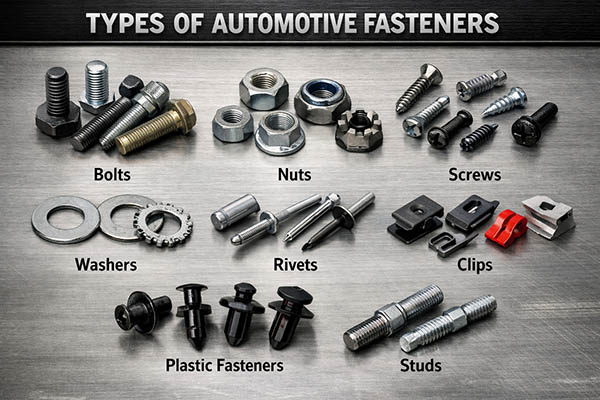
Bolts are externally threaded fasteners used to clamp components together with a nut or threaded hole. They are widely used in high-load structural areas such as engines, suspension systems, and chassis frames.
Common Automotive Bolt Type
| Bolt Type | Typical Application | Key Advantage |
|---|---|---|
| Hex Bolts | Engine mounts, chassis | Easy installation |
| Flange Bolts | Transmission housing | Larger load distribution |
| U-Bolts | Suspension and axle mounting | Strong clamping force |
| Wheel Bolts | Wheels and brake hubs | High tensile strength |
Example: Engine Mount Bolt Strength
| Bolt Grade | Tensile Strength | Typical Automotive Use |
|---|---|---|
| Grade 5 | ~120 ksi | General vehicle assemblies |
| Grade 8 | ~150 ksi | High-stress structural joints |
| Class 12.9 | ~170 ksi | Performance engines |
Flanged bolts are especially common in automotive applications because their integrated washer distributes load over a larger surface area, reducing deformation in softer materials like aluminum housings.
Nuts – The Locking Partner of Bolts
Nuts provide the internal threads that secure bolts, forming one of the most reliable removable mechanical joints used in vehicle construction.
Typical Automotive Nut Types
| Nut Type | Function | Example Application |
|---|---|---|
| Hex Nut | Standard fastening | Suspension brackets |
| Lock Nut | Prevents loosening | Steering components |
| Flange Nut | Built-in washer | Exhaust systems |
| Lug Nut | Wheel attachment | Vehicle wheels |
Engineering Considerations
Automotive nuts must resist:
- High vibration
- Thermal expansion
- Corrosion
For example, wheel lug nuts often use conical seats that center the wheel precisely and prevent loosening during driving.
Screws – Versatile Fasteners for Panels and Interior Parts
Screws differ from bolts because they usually thread directly into the material instead of using a nut.
They are ideal for thinner components such as:
- Plastic interior panels
- Sheet metal body panels
- Electronic housings
Common Automotive Screw Types
| Screw Type | Feature | Example Use |
|---|---|---|
| Self-tapping screws | Cut their own thread | Plastic trim |
| Machine screws | Used with threaded holes | Electrical modules |
| Sheet metal screws | Sharp threads | Body panels |
Self-tapping screws are especially valuable in automotive assembly because they eliminate the need for pre-threading operations.
Washers – Load Distribution and Surface Protection
Washers are flat discs placed under bolt heads or nuts to distribute load and protect surfaces from damage.
Key Functions
- Prevent surface deformation
- Improve load distribution
- Reduce friction
- Provide sealing
Automotive Washer Types
| Washer Type | Purpose |
|---|---|
| Flat washer | Basic load distribution |
| Lock washer | Prevent loosening |
| Sealing washer | Prevent fluid leaks |
| Fender washer | Large diameter for soft materials |
For example, sealing washers are widely used in fuel systems and oil lines to prevent leakage.
Rivets – Permanent Fasteners for Lightweight Structures
Rivets create permanent joints, meaning they cannot be removed without destroying the fastener.
They are frequently used in:
- Automotive body panels
- Aluminum structural frames
- Interior bracket assemblies
Popular Automotive Rivet Types
| Rivet Type | Typical Use |
|---|---|
| Solid rivet | Structural body joints |
| Blind (pop) rivet | Thin sheet metal |
| Structural rivet | High-strength connections |
Automakers favor rivets when welding could distort thin panels or when access to the backside of a joint is limited.
Studs – Threaded Fasteners Without a Head
Studs are threaded rods with threads on one or both ends. They are commonly used where repeated assembly is required.
Automotive Applications
| Stud Type | Example Use |
|---|---|
| Wheel studs | Mounting wheels |
| Cylinder head studs | Engine assembly |
| Exhaust manifold studs | Heat-resistant joints |
Studs provide superior alignment and durability compared to bolts in high-temperature environments.
Pins – Alignment and Retention Components
Pins are cylindrical fasteners used primarily for alignment and locking functions.
Typical Pin Types
| Pin Type | Application |
|---|---|
| Cotter pin | Prevents nut loosening |
| Dowel pin | Precision alignment |
| Spring pin | Flexible retention |
Example:
A cotter pin inserted through a castle nut ensures that critical components such as steering linkages cannot loosen during operation.
Clips and Retainers – Quick Assembly Solutions
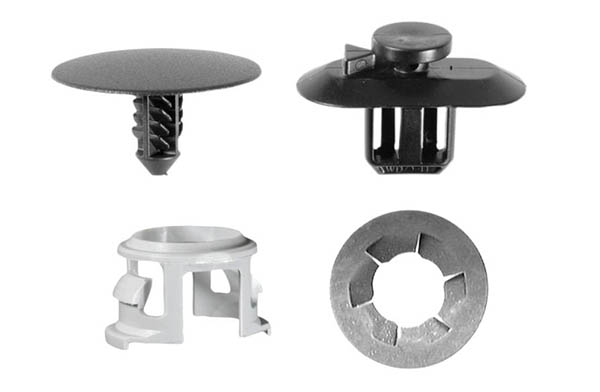
Clips are widely used in automotive manufacturing because they allow rapid installation without tools.
Examples in Vehicles
| Clip Type | Use Case |
|---|---|
| Panel clips | Interior trim panels |
| Push-in clips | Bumpers and covers |
| Hose clamps | Cooling system hoses |
Plastic push clips are particularly common because they reduce assembly time and vehicle weight.
Rivet Nuts (Threaded Inserts) – Threads in Thin Materials
Rivet nuts create strong internal threads in thin sheet materials where traditional tapping is impossible.
Advantages
- Works with thin metal panels
- Accessible from one side
- Provides strong threaded mounting points
Typical Automotive Uses
- Body panels
- Battery trays
- Structural brackets
This type of fastener is critical in modern lightweight aluminum vehicle structures.
Custom Automotive Fasteners – Engineered for Specific Applications
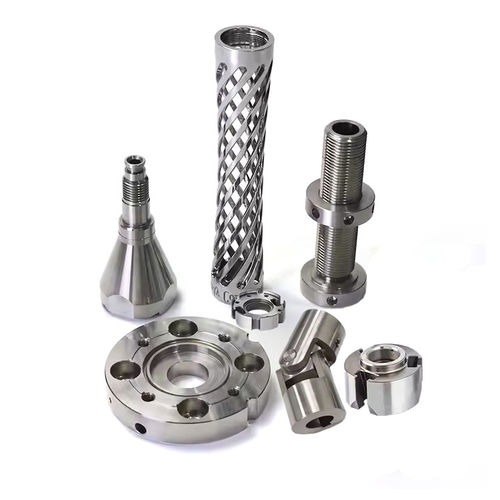
Many automakers rely on custom-designed fasteners to meet specialized performance requirements.
Custom Fastener Features
- Unique head shapes
- Specialized coatings
- High-strength alloys
- Integrated sealing functions
For example, torque-to-yield (TTY) bolts used in cylinder heads are designed to stretch slightly during installation, providing extremely consistent clamping force.
Materials Used in Automotive Fasteners
Different fasteners require different materials depending on load and environment.
| Material | Properties | Typical Use |
|---|---|---|
| Carbon steel | High strength | Structural joints |
| Stainless steel | Corrosion resistance | Exterior components |
| Aluminum | Lightweight | Interior parts |
| Titanium | High strength-to-weight | High-performance vehicles |
Steel remains the most common fastener material due to its strength and durability, while plastics are often used for lightweight trim components.
Why Fastener Selection Matters in Automotive Engineering
Choosing the wrong fastener can cause:
- Structural failure
- Excess vibration
- Fluid leaks
- Component misalignment
Engineers must consider torque, friction, surface contact, and material compatibility when specifying automotive fasteners.
Why CNC Machining Is Critical for Precision Automotive Fasteners
High-performance automotive fasteners often require tight tolerances and consistent thread quality, which is where CNC machining becomes essential.
CNC manufacturing allows:
- Precision thread cutting
- Custom fastener geometries
- High-strength alloy machining
- Small-batch or prototype fastener production
This is particularly important for motorsports, electric vehicles, and aerospace-grade automotive components.
Why Choose Xavier for Automotive Fastener Manufacturing
When sourcing automotive fasteners or custom precision components, manufacturing quality determines performance and safety.
Xavier CNC Machining provides:
- Precision-machined fasteners and automotive hardware
- High-strength alloy and stainless steel machining
- Tight tolerance CNC turning and milling
- Custom fastener prototypes for automotive applications
Whether you need custom studs, specialty bolts, or precision threaded inserts, Xavier’s advanced CNC machining capabilities ensure durability, reliability, and consistent performance for demanding automotive environments.
If your project requires custom automotive fasteners or precision-machined components, Xavier offers the expertise and manufacturing capacity to support both prototyping and production.
Some of the images and text in this article are collected and compiled from the internet. If there is anything inappropriate, please contact us for processing.