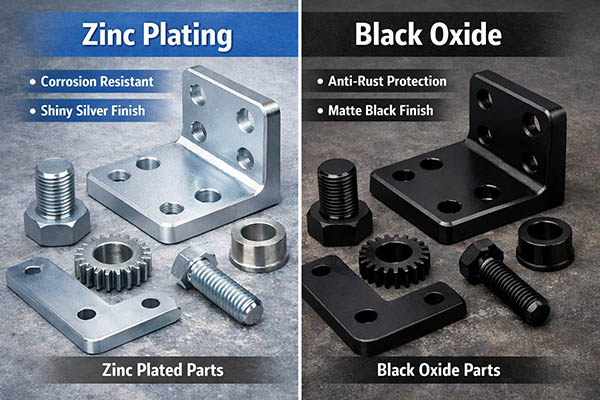
Zinc Plating vs Black Oxide: Which Surface Finish Is Better for Metal Parts?
Metal components used in CNC machining, automotive manufacturing, aerospace, and industrial equipment must withstand corrosion, wear, and environmental exposure. Two of the most commonly used protective finishes are zinc plating and black oxide coating.
Although they may appear similar at first glance, the mechanism, performance, thickness, cost, and application scenarios differ significantly. Choosing the wrong finish could lead to premature corrosion, assembly tolerance problems, or unnecessary manufacturing costs.
This guide explains the technical differences between zinc plating and black oxide, compares their performance metrics, and provides real engineering insights for selecting the right surface treatment.
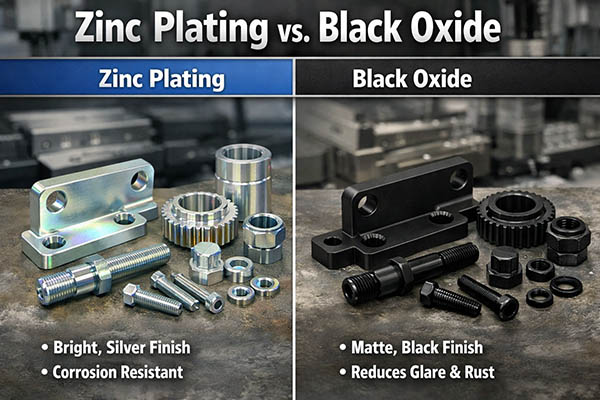
The Core Principle of Zinc Plating vs Black Oxide
Before comparing performance, it’s important to understand how each process works at the material level.
Zinc Plating Mechanism
Zinc plating is an electrochemical deposition process where a thin layer of zinc is applied to the metal surface—usually steel or iron. The zinc layer acts as a sacrificial coating, meaning it corrodes first to protect the base metal.
Key characteristics:
- Zinc acts as a galvanic barrier
- Protects steel even when scratched
- Typically applied by electroplating
- Compatible with chromate passivation (blue, yellow, black)
Because zinc sacrifices itself before steel corrodes, it significantly increases part lifespan in humid or outdoor environments.
Black Oxide Mechanism
Black oxide works differently. It is a chemical conversion coating that transforms the metal surface into magnetite (Fe₃O₄) through a controlled chemical reaction.
Key characteristics:
- No separate coating layer
- Surface chemically converted
- Extremely thin oxide film
- Requires oil or wax sealing for protection
Unlike zinc plating, black oxide does not provide sacrificial corrosion protection, making it suitable mainly for controlled environments.
Coating Thickness and Dimensional Impact
For precision CNC parts, coating thickness can affect assembly tolerances and thread fit.
| Surface Finish | Typical Thickness | Dimensional Impact |
|---|---|---|
| Zinc Plating | 5–25 µm (up to 150 µm for galvanizing) | Moderate |
| Black Oxide | 0.5–2 µm | Negligible |
Zinc plating deposits a measurable layer onto the part, which can affect tight tolerance assemblies, threaded holes, and press fits.
Black oxide is almost dimensionless, making it ideal for:
- precision gears
- optical components
- threaded fasteners
- firearm parts
Example:
A precision steel gear with a tolerance of ±5 µm could experience fit problems after zinc plating but would remain unchanged with black oxide.
Corrosion Resistance Performance
Corrosion resistance is one of the most critical factors when selecting a coating.
Zinc Plating Corrosion Protection
Zinc plating provides strong protection due to the sacrificial anode effect. Even if the coating is scratched, zinc corrodes first and protects the underlying steel.
Typical salt spray resistance:
| Coating Type | Salt Spray Resistance |
|---|---|
| Zinc Plating + Chromate | 96–240 hours |
| Zinc Plating + Sealant | 300–720 hours |
This is why zinc plating is widely used in:
- automotive bolts
- outdoor fasteners
- machinery components
- construction hardware
Black Oxide Corrosion Protection
Black oxide offers only limited corrosion resistance unless supplemented with oil or wax sealing.
Typical performance:
| Finish | Salt Spray Resistance |
|---|---|
| Black Oxide (dry) | < 12 hours |
| Black Oxide + Oil | 24–48 hours |
Without post-treatment sealing, the oxide layer can rust quickly in humid environments.
Therefore, black oxide is typically used indoors or in low-moisture environments.
Surface Appearance and Aesthetic Differences
Surface finish appearance can influence both product design and branding.
| Feature | Zinc Plating | Black Oxide |
|---|---|---|
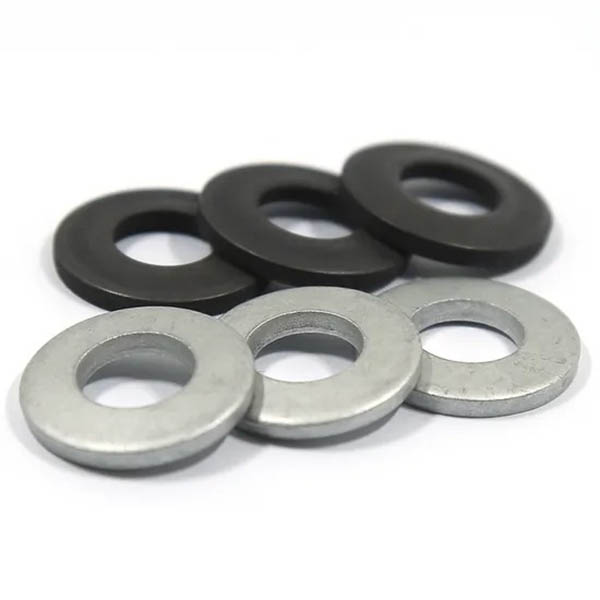
| Color | Silver, blue, yellow, black | Matte black |
| Reflectivity | Moderate to high | Low (non-reflective) |
| Surface Texture | Smooth | Matte |
Black oxide coatings provide a deep matte black appearance, which is commonly used in:
- tactical equipment
- camera components
- optical instruments
The low reflectivity also helps reduce light glare.
Zinc plating offers more visual flexibility through chromate passivation finishes.
Cost Comparison in Industrial Manufacturing
Cost is another major factor for high-volume production.
| Surface Finish | Relative Cost | Process Complexity |
|---|---|---|
| Zinc Plating | Medium | Electroplating + passivation |
| Black Oxide | Low | Chemical bath process |
Black oxide coatings generally cost 20–40% less than zinc plating due to simpler processing and fewer chemical steps.
However, the lower price comes with tradeoffs:
- weaker corrosion resistance
- shorter lifespan in harsh environments
Therefore, the cheapest option is not always the best choice.
Durability and Wear Resistance
While both finishes provide surface benefits, their wear resistance differs.
Zinc Plating
Advantages:
- Good environmental durability
- Moderate abrasion resistance
- Suitable for outdoor hardware
Limitations:
- Zinc layer can wear off under friction
Black Oxide
Advantages:
- Improves lubricity
- Reduces galling between metal parts
Limitations:
- Very thin layer
- Low abrasion resistance
Black oxide is often used in machine components where lubrication retention is beneficial.
Industrial Applications of Each Finish
Typical Zinc Plating Applications
Industries commonly using zinc plating include:
- automotive manufacturing
- construction hardware
- industrial machinery
- agricultural equipment
Example components:
- bolts and nuts
- brackets
- hinges
- structural fasteners
Typical Black Oxide Applications
Black oxide is widely used in:
- precision CNC machining
- firearms
- cutting tools
- gears and bushings
Example components:
- socket head screws
- drill bits
- firearm receivers
- optical mounts
These applications prioritize dimensional stability and aesthetics over corrosion resistance.
Engineering Decision Guide: Which Finish Should You Choose?
Below is a practical selection guide used by many CNC engineers.
| Requirement | Best Choice |
|---|---|
| Outdoor corrosion resistance | Zinc Plating |
| Precision tolerance parts | Black Oxide |
| Low-cost coating | Black Oxide |
| Automotive fasteners | Zinc Plating |
| Decorative matte black finish | Black Oxide |
| Harsh industrial environments | Zinc Plating |
In general:
- Choose zinc plating for durability and corrosion resistance
- Choose black oxide for precision parts and aesthetics
Real Engineering Example: CNC Steel Fasteners
Consider a CNC machined M6 steel bolt used in two different scenarios.
Scenario 1 – Outdoor Equipment
Requirements:
- rain exposure
- humidity
- corrosion resistance
Best choice:
Zinc plating with chromate passivation
Expected service life: 5–20 years
Scenario 2 – Precision Machine Assembly
Requirements:
- tight threads
- dimensional accuracy
- indoor environment
Best choice:
Black oxide coating
Expected service life: 5+ years indoors
Xavier Recommendation: Choosing the Right Finish for CNC Parts
At Xavier Precision Manufacturing, we work with global OEM clients who require reliable surface finishing for CNC-machined metal parts.
Our engineering team typically recommends:
- Zinc plating for outdoor structural hardware and industrial equipment
- Black oxide for precision components where dimensional accuracy and appearance matter
Xavier provides:
- CNC machining for steel, aluminum, titanium, and stainless steel
- multiple finishing options including anodizing, plating, passivation, and powder coating
- engineering support to help customers select the optimal coating for their application
If your project involves high-precision metal parts, selecting the correct surface finish is just as important as the machining itself. Xavier ensures both are optimized for performance and longevity.zinc plating vs black oxide
Some of the images and text in this article are collected and compiled from the internet. If there is anything inappropriate, please contact us for processing.