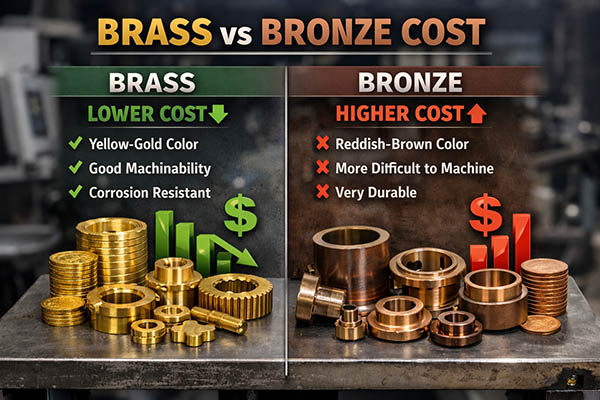
Brass vs Bronze Cost: Price Differences, Material Properties, and CNC Machining Considerations
When engineers or product designers compare copper alloys, the question “brass vs bronze cost” frequently comes up. Both materials belong to the copper alloy family and are widely used in manufacturing industries such as automotive, plumbing, marine engineering, electronics, and CNC machining.
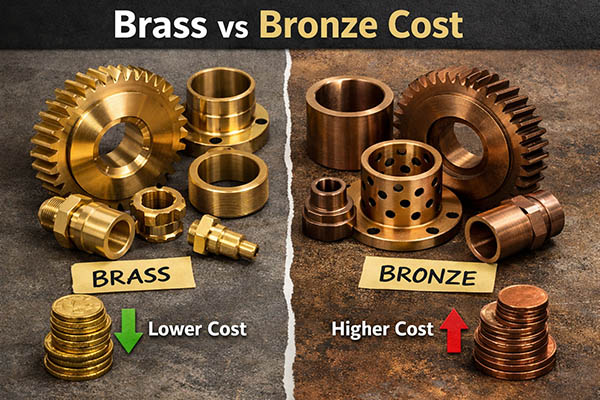
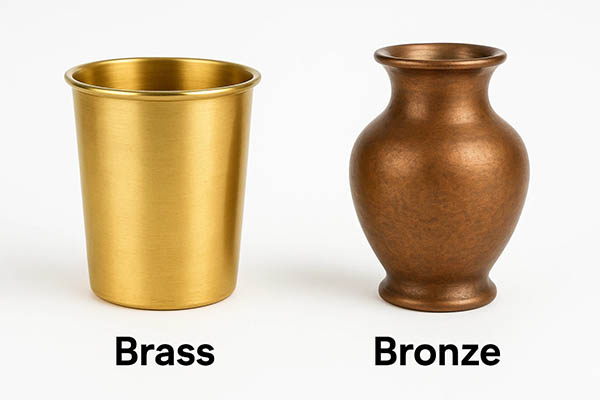
Although brass and bronze may look similar, their chemical composition, machining behavior, durability, and production cost are significantly different. In most cases, brass is the more economical option, while bronze offers superior mechanical performance and corrosion resistance.
Understanding how these materials differ in raw material price, machining cost, durability, and lifecycle cost helps engineers choose the most cost-effective solution for their projects.
What Is Brass?
Brass is a copper alloy primarily composed of copper and zinc. The zinc content typically ranges from 5% to 45%, which allows manufacturers to create multiple brass grades with different mechanical properties.
Typical Brass Composition
| Element | Percentage Range |
|---|---|
| Copper (Cu) | 55–95% |
| Zinc (Zn) | 5–45% |
| Other elements | Small additions of lead, aluminum, or tin |
The addition of zinc improves ductility and machinability, making brass one of the most machinable copper alloys used in CNC manufacturing.
Common applications include:
- plumbing fittings
- valves
- musical instruments
- electrical connectors
- decorative hardware
Because brass is easy to machine and relatively inexpensive, it is often chosen for high-volume production components.
What Is Bronze?
Bronze is another copper alloy, but instead of zinc it mainly contains tin as the primary alloying element.
Typical Bronze Composition
| Element | Percentage Range |
|---|---|
| Copper (Cu) | 80–90% |
| Tin (Sn) | 10–12% |
| Other elements | Aluminum, phosphorus, silicon |
Tin significantly increases hardness and wear resistance. As a result, bronze is commonly used in heavy-duty mechanical applications such as bearings, bushings, and marine hardware.
Typical applications include:
- marine propellers
- industrial pump parts
- bearings and bushings
- heavy machinery components
Bronze’s superior durability often justifies its higher price in demanding environments.
Raw Material Price Comparison
The most direct factor affecting brass vs bronze cost is the price of their alloying elements.
Metal Price Influence (2026 Market Estimate)
| Metal | Approximate Market Price |
|---|---|
| Copper | ~$13/kg |
| Zinc | ~$3/kg |
| Tin | ~$53/kg |
Tin is dramatically more expensive than zinc. Because bronze relies on tin while brass uses zinc, bronze alloys naturally cost more to produce.
Typical Material Cost
| Material | Estimated Price per kg |
|---|---|
| Brass | $10 – $12 |
| Bronze | $15 – $20 |
In many cases, bronze can be 40–60% more expensive than brass due to the higher cost of tin and greater copper content.
Composition Impact on Cost
The composition of each alloy has a direct influence on pricing.
Brass Composition Cost Factors
Brass uses zinc, which is widely available and relatively inexpensive. This makes brass alloys cost-efficient for large-scale production.
For example:
- C360 brass (free-cutting brass)
- C260 cartridge brass
These alloys are commonly used in precision machining because they offer excellent machinability at relatively low cost.
Bronze Composition Cost Factors
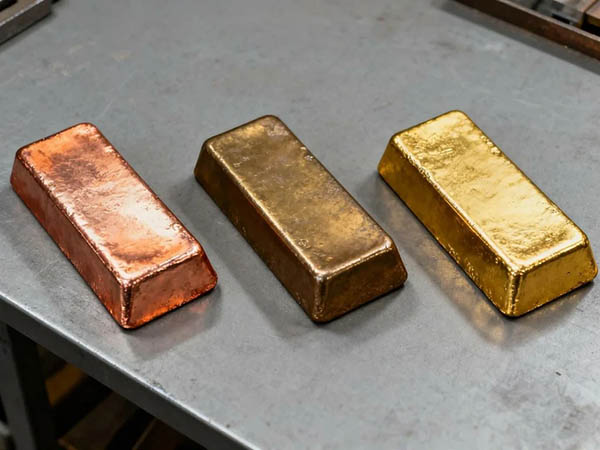
Bronze contains tin, which is significantly more expensive than zinc. In addition, some bronze alloys include:
- aluminum
- phosphorus
- silicon
These elements further increase material cost.
Because of these alloying elements, bronze typically costs more even before manufacturing begins.
Manufacturing and Processing Costs
Material price alone does not determine the final cost of a component. Manufacturing processes also play a major role.
Brass Manufacturing Advantages
Brass offers several processing advantages:
- low melting point (~900 °C)
- excellent machinability
- easy casting and forming
Because of these properties, brass can be produced using:
- die casting
- hot forging
- CNC machining
- stamping
These efficient manufacturing methods reduce production costs.
Bronze Manufacturing Challenges
Bronze tends to be:
- harder
- more brittle
- more difficult to machine
As a result:
- cutting tools wear faster
- machining speed must be reduced
- production time increases
This leads to higher machining costs compared with brass components.
CNC Machining Cost Differences
For CNC machining companies, machining efficiency directly affects part pricing.
Machinability Comparison
| Property | Brass | Bronze |
|---|---|---|
| Machinability rating | ~100% | ~20–50% |
| Tool wear | Low | Higher |
| Cutting speed | High | Moderate |
| Chip formation | Excellent | Less predictable |
Brass is widely known as one of the best metals for CNC machining, producing clean chips and minimal tool wear.
Bronze, while machinable, requires slower speeds and more durable cutting tools.
This means:
- shorter cycle time for brass parts
- higher machining cost for bronze parts
Durability and Lifecycle Cost
While bronze is more expensive initially, it may provide lower lifecycle cost in demanding applications.
Performance Comparison
| Property | Brass | Bronze |
|---|---|---|
| Hardness | Moderate | Higher |
| Wear resistance | Moderate | Excellent |
| Corrosion resistance | Moderate | Excellent |
| Marine durability | Limited | Outstanding |
Bronze develops a protective oxide layer that helps it resist corrosion in seawater environments.
Because of this property, bronze is commonly used in:
- ship propellers
- marine valves
- offshore equipment
In these environments, brass components may wear or corrode faster.
Industry Applications Based on Cost
Different industries choose brass or bronze depending on performance requirements and budget.
When Brass Is Preferred
Brass is often selected for applications requiring:
- cost efficiency
- high machining speed
- aesthetic appearance
Typical examples include:
- plumbing fittings
- electrical connectors
- decorative hardware
- musical instruments
When Bronze Is Preferred
Bronze is chosen when durability and wear resistance are critical.
Examples include:
- bearings
- gears
- bushings
- marine hardware
- heavy industrial machinery
Although bronze costs more, its long service life can offset the higher initial material price.
Cost Optimization Strategies in Manufacturing
Manufacturers often optimize costs by selecting materials strategically.
Common strategies include:
1. Using Brass for Non-Critical Parts
If a component does not require extreme durability, switching from bronze to brass can significantly reduce production cost.
2. Hybrid Designs
Some assemblies use both materials:
- brass housings
- bronze bearings
This approach balances performance and cost.
3. Recycling Copper Alloys
Both brass and bronze can be recycled efficiently, reducing raw material cost in large production runs.
Why CNC Manufacturers Often Prefer Brass
Many CNC machining companies prefer brass for production parts because of its unique combination of properties:
- excellent machinability
- stable dimensional accuracy
- relatively low cost
- wide availability
These advantages make brass particularly attractive for high-volume CNC manufacturing projects.
Bronze is still used for specialized components, but brass remains the more economical choice for general machining applications.
Why Xavier Is a Reliable CNC Machining Partner for Brass and Bronze Parts
Choosing the right material is only part of the manufacturing process. Achieving consistent quality also requires a professional machining partner.
At Xavier Precision Manufacturing, we specialize in machining copper alloys such as:
- brass (C360, C260, C377)
- bronze (phosphor bronze, aluminum bronze)
- copper alloys for industrial components
With advanced 3/4/5-axis CNC machining technology, Xavier can produce complex metal parts with:
- tight tolerances
- superior surface finish
- optimized production efficiency
Whether your project requires cost-efficient brass components or high-durability bronze parts, Xavier engineers can help you select the most appropriate material based on:
- operating environment
- mechanical load
- production budget
By combining material expertise with precision machining, Xavier helps customers reduce manufacturing costs while maintaining high product quality.
Conclusion
When comparing brass vs bronze cost, brass is generally the more economical material due to its zinc content and excellent machinability. Bronze, however, offers superior durability, wear resistance, and corrosion protection, especially in harsh environments.
For many engineering projects, the best choice depends on balancing material cost, machining efficiency, and long-term performance. Brass works well for cost-sensitive applications, while bronze is ideal for heavy-duty components that require exceptional strength and longevity.
Understanding these differences allows manufacturers to make smarter decisions that improve both product performance and overall production efficiency.
Some of the images and text in this article are collected and compiled from the internet. If there is anything inappropriate, please contact us for processing.