Sandblasting Abrasive: Complete Guide to Types, Grit Sizes, and Industrial Applications
Sandblasting abrasive—also known as blasting media—is one of the most critical elements in surface preparation and finishing. In industries such as CNC machining, automotive manufacturing, aerospace, shipbuilding, and metal fabrication, abrasive blasting is widely used to remove contaminants, create surface roughness, and improve coating adhesion.
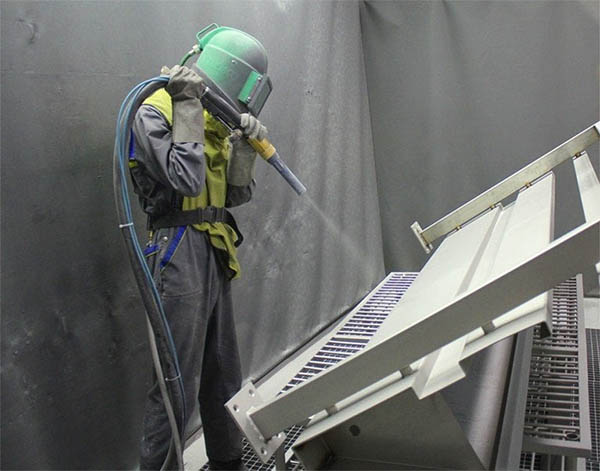
The sandblasting process works by propelling abrasive particles at high velocity using compressed air or centrifugal wheels, allowing the particles to impact the material surface and remove rust, paint, scale, or contaminants.
However, the final result depends heavily on the type, hardness, shape, and grit size of the abrasive media selected.
Below are ten critical knowledge topics engineers and manufacturers should understand when selecting sandblasting abrasives.
What Is Sandblasting Abrasive?
Sandblasting abrasive refers to granular particles accelerated toward a surface to clean, smooth, roughen, or texture materials. These particles transfer kinetic energy to the substrate, removing unwanted layers such as rust, grease, oxidation, or paint.
The process is essential in industrial manufacturing because it creates a microscopic anchor profile, allowing coatings, adhesives, or plating to bond effectively.
Typical functions of abrasive blasting include:
- Rust and corrosion removal
- Paint and coating stripping
- Surface roughening for coating adhesion
- Deburring machined parts
- Decorative surface finishing
In CNC manufacturing, sandblasting is commonly applied to aluminum, stainless steel, titanium, and CNC-machined parts before anodizing or powder coating.
Key Physical Properties That Define Abrasive Media
Not all blasting abrasives behave the same. Engineers evaluate several core parameters when selecting the correct media.
| Property | Description | Impact on Blasting |
|---|---|---|
| Hardness | Measured using Mohs scale | Determines cutting strength |
| Shape | Angular or spherical | Influences surface texture |
| Density | Particle mass per volume | Affects impact energy |
| Grit Size | Particle diameter | Controls surface roughness |
Harder materials produce deeper surface profiles, while softer materials produce smoother finishes. For example, silicon carbide and aluminum oxide are among the hardest blasting abrasives, while plastic or organic media are used for delicate cleaning.
Aluminum Oxide Abrasive: The Most Common Industrial Media
Aluminum oxide is one of the most widely used sandblasting abrasives in manufacturing.
Key characteristics:
| Property | Value |
|---|---|
| Mohs hardness | 8–9 |
| Particle shape | Angular |
| Reusability | High |
| Typical use | Rust removal, coating preparation |
Because of its hardness and durability, aluminum oxide can be recycled multiple times, making it cost-effective for industrial blasting systems.
Applications include:
- CNC machined aluminum parts finishing
- Aircraft component surface preparation
- Stainless steel cleaning before welding
However, due to its aggressive cutting ability, it may damage soft materials such as plastics or thin sheet metal.
Glass Beads for Surface Finishing and Polishing
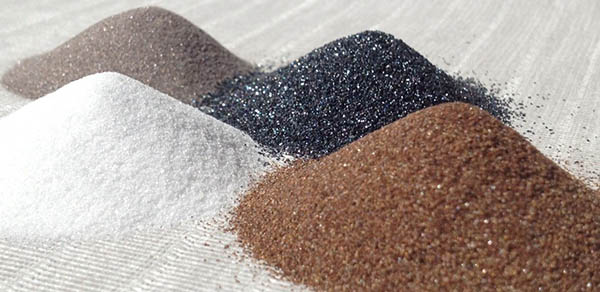
Glass beads are spherical abrasive particles designed for gentle blasting and surface finishing.
Key characteristics:
| Property | Value |
|---|---|
| Shape | Round |
| Hardness | Moderate |
| Surface effect | Smooth satin finish |
Unlike angular abrasives, glass beads do not aggressively cut the substrate, making them ideal for:
- cosmetic finishing of aluminum parts
- stainless steel polishing
- deburring precision components
Glass bead blasting is commonly used for CNC machined parts requiring aesthetic finishes, especially in electronics housings and consumer product components.
Garnet Abrasive: High Efficiency and Low Dust
Garnet is a natural mineral abrasive known for its excellent cutting power and environmental safety.
Typical properties:
| Property | Value |
|---|---|
| Hardness | 7–8 Mohs |
| Dust generation | Low |
| Recyclability | Moderate |
Because garnet contains less than 1% silica, it is considered a safer alternative to traditional silica sand.
Industries commonly using garnet blasting:
- marine ship hull cleaning
- oil pipeline maintenance
- bridge steel structure surface preparation
Its ability to remove heavy coatings quickly makes it popular in large industrial blasting operations.
Steel Shot and Steel Grit for Heavy-Duty Blasting
Metallic abrasives such as steel shot and steel grit are widely used in industrial wheel-blasting machines.
| Media | Shape | Main Function |
|---|---|---|
| Steel shot | Round | Peening and polishing |
| Steel grit | Angular | Rust and scale removal |
Steel grit can create deep surface profiles between 2.5 and 5 mil, which is ideal for coatings that require strong mechanical adhesion.
Steel shot, on the other hand, is frequently used for:
- shot peening
- improving fatigue strength
- cleaning castings
These metallic abrasives produce low dust and high productivity in automated blasting systems.
Crushed Glass and Eco-Friendly Blasting Media
Crushed glass abrasives are produced from recycled glass materials and are considered environmentally friendly.
Advantages include:
- silica-free composition
- strong cutting ability
- cost-effective single-use abrasive
Crushed glass is commonly used for outdoor blasting applications, such as concrete cleaning or rust removal from steel structures.
However, compared with aluminum oxide or steel grit, crushed glass typically has shorter service life.
Abrasive Grit Size and Surface Profile Control
The grit size of blasting media directly influences the surface texture created during blasting.
Common grit size ranges include:
| Grit Size | Typical Mesh | Application |
|---|---|---|
| Coarse | 16–30 | Heavy rust removal |
| Medium | 40–60 | General cleaning |
| Fine | 80–120 | Surface finishing |
| Ultra fine | 150+ | Polishing |
Larger particles create deeper anchor profiles, while finer particles produce smoother surfaces suitable for decorative finishing.
Selecting the correct grit size is critical for achieving the desired Ra surface roughness before coating or anodizing.
Safety Considerations in Abrasive Blasting
Although abrasive blasting is highly effective, it also presents health risks if improper media is used.
Traditional silica sand blasting has largely been phased out because silica dust can cause silicosis, a serious lung disease.
Modern safety practices include:
- using silica-free abrasives
- wearing blast helmets and respirators
- dust extraction systems
- wet blasting techniques
These safety improvements have significantly reduced workplace hazards in modern blasting operations.
Industrial Applications of Sandblasting Abrasives
Sandblasting abrasives are used across numerous industries:
| Industry | Application |
|---|---|
| Aerospace | Surface prep before coating |
| Automotive | Rust removal and paint stripping |
| CNC manufacturing | Surface finishing of machined parts |
| Shipbuilding | Hull cleaning and corrosion removal |
| Construction | Concrete surface preparation |
For CNC-machined components, blasting is often used before:
- anodizing aluminum
- powder coating steel
- electropolishing stainless steel
This ensures strong coating adhesion and improved visual appearance.
Choosing the Right Sandblasting Abrasive
Selecting the correct abrasive requires balancing several engineering factors:
| Factor | Consideration |
|---|---|
| Material hardness | Steel vs aluminum vs plastic |
| Surface finish | Rough vs polished |
| Production cost | reusable vs disposable media |
| Environmental safety | silica content and dust |
For example:
- Aluminum oxide → aggressive rust removal
- Glass beads → decorative finish
- Steel grit → heavy industrial cleaning
- Plastic media → delicate aerospace parts
Understanding these differences ensures optimal blasting performance and lower operating costs.
Why Manufacturers Choose Xavier for Precision Surface Finishing
At Xavier, we specialize in precision manufacturing and surface finishing for high-performance industrial components.
Our capabilities include:
- CNC machining for metal and composite parts
- industrial sandblasting and surface preparation
- anodizing and powder coating preparation
- custom finishing for aerospace and automotive components
By combining advanced machining technology with professional surface treatment processes, Xavier helps clients achieve high-quality finishes, improved durability, and reliable coating adhesion.
If your project requires precision CNC machining combined with professional abrasive blasting, Xavier provides the expertise and manufacturing capability to deliver consistent results.
Some of the images and text in this article are collected and compiled from the internet. If there is anything inappropriate, please contact us for processing.