
Basalt Fiber vs Carbon Fiber: Complete Engineering Comparison for Modern Composites
Composite materials have transformed modern engineering—from aerospace structures to automotive components and industrial machinery. Among the most discussed reinforcement materials today are basalt fiber and carbon fiber. Both provide exceptional strength-to-weight ratios and durability, yet their properties, costs, and applications differ significantly.
For engineers, product designers, and CNC machining companies working with composite components, understanding these differences is critical when selecting the right material for structural performance, manufacturing feasibility, and cost efficiency.
This guide explores the key technical differences between basalt fiber and carbon fiber, supported by real material data, comparison tables, and industry use cases.
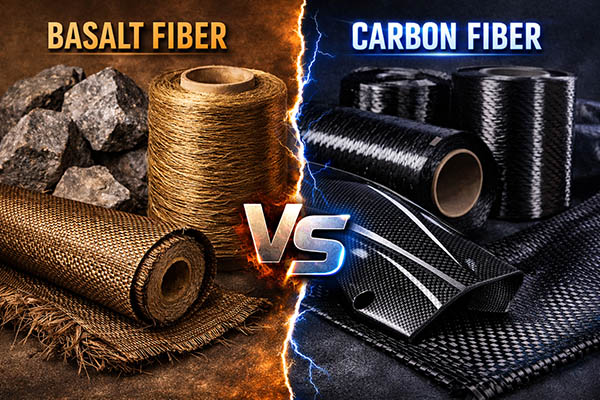
What Is Basalt Fiber?
Basalt fiber is a continuous mineral fiber made from melted volcanic basalt rock, typically processed at temperatures around 1450–1500 °C before being drawn into filaments.
Unlike many synthetic fibers, basalt fiber requires no chemical additives during production, making it a naturally derived reinforcement material with relatively low environmental impact.
The resulting fibers exhibit:
- High tensile strength
- Excellent corrosion resistance
- High temperature tolerance
- Good chemical stability
Typical basalt fiber mechanical properties include:
| Property | Typical Value |
|---|---|
| Density | 2.6–2.9 g/cm³ |
| Tensile strength | 3000–4800 MPa |
| Elastic modulus | 80–110 GPa |
| Operating temperature | −269 °C to 700 °C |
These characteristics make basalt fiber popular in construction reinforcement, marine structures, pipelines, and industrial insulation.
What Is Carbon Fiber?
Carbon fiber is a synthetic fiber produced from polyacrylonitrile (PAN) or pitch-based precursors, which are carbonized at extremely high temperatures to form long chains of carbon atoms.
Its primary advantage lies in exceptional stiffness and strength-to-weight ratio.
Typical carbon fiber properties include:
| Property | Typical Value |
|---|---|
| Density | 1.6–1.8 g/cm³ |
| Tensile strength | 3500–7000 MPa |
| Elastic modulus | 200–500 GPa |
| Fatigue resistance | Very high |
Because of these characteristics, carbon fiber dominates industries such as:
- Aerospace structures
- Performance automotive components
- Racing equipment
- UAV and drone frames
Its high stiffness and lightweight properties are the main reasons it is widely used in high-performance structural designs.
Raw Material Origin and Manufacturing Differences
One of the biggest distinctions between basalt and carbon fiber lies in their raw materials and manufacturing processes.
| Factor | Basalt Fiber | Carbon Fiber |
|---|---|---|
| Raw material | Natural basalt rock | Synthetic polymer (PAN or pitch) |
| Processing | Melting + fiber drawing | Stabilization + carbonization |
| Additives | None required | Multiple chemical processes |
| Environmental impact | Lower | Higher energy consumption |
Basalt fiber is produced from naturally abundant volcanic rock, which reduces raw material costs and simplifies the production chain.
Carbon fiber manufacturing, however, involves complex heat treatment and oxidation stages, which significantly increase production costs and energy consumption.
Mechanical Strength and Structural Performance
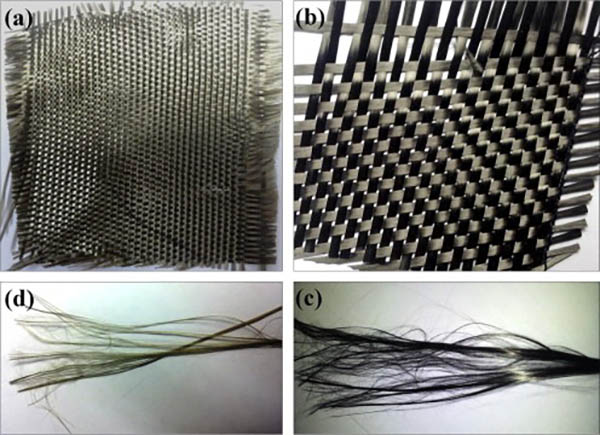
When comparing composite reinforcements, tensile strength and stiffness are critical metrics.
| Mechanical Property | Basalt Fiber | Carbon Fiber |
|---|---|---|
| Tensile strength | 3000–4800 MPa | 3500–7000 MPa |
| Elastic modulus | 80–100 GPa | 200–500 GPa |
| Density | 2.6–2.9 g/cm³ | 1.6–1.8 g/cm³ |
Carbon fiber clearly dominates in stiffness and lightweight structural applications, while basalt fiber offers balanced strength with higher density but lower cost.
For example:
- Aircraft wings require extremely high stiffness → carbon fiber preferred
- Structural reinforcement bars in concrete → basalt fiber sufficient
Temperature Resistance and Thermal Stability
Basalt fiber performs exceptionally well in high-temperature environments.
| Temperature Property | Basalt Fiber | Carbon Fiber |
|---|---|---|
| Continuous operating temp | Up to ~700 °C | ~400 °C in air |
| Instantaneous resistance | ~1200 °C | Higher in inert gas |
| Thermal shock resistance | Excellent | Moderate |
Basalt fiber maintains structural stability across a wide range of temperatures from −269 °C to 700 °C, making it suitable for insulation and extreme environments.
Typical applications include:
- Industrial furnace insulation
- Fire-resistant panels
- thermal protection systems
Corrosion Resistance and Chemical Durability
Basalt fiber demonstrates excellent resistance to acid, alkali, and salt environments.
Laboratory tests show that basalt fiber retains more than 90 % of its strength in environments with pH values between 2 and 12.
This makes basalt fiber ideal for:
- coastal infrastructure
- chemical storage tanks
- marine structural reinforcement
Carbon fiber also has good corrosion resistance, but it can suffer from galvanic corrosion when combined with metals such as aluminum.
Weight Advantage and Specific Strength
Carbon fiber is significantly lighter.
| Material | Density |
|---|---|
| Steel | 7.8 g/cm³ |
| Aluminum | 2.7 g/cm³ |
| Basalt fiber | ~2.7 g/cm³ |
| Carbon fiber | ~1.7 g/cm³ |
Carbon fiber is roughly 30–40% lighter than basalt fiber, making it the ideal solution for weight-sensitive designs like aircraft, racing vehicles, and drones.
However, in many structural applications, the weight difference may not justify the much higher cost.
Cost Comparison and Industrial Economics
Cost is often the deciding factor for large-scale applications.
| Fiber Type | Relative Cost |
|---|---|
| Glass fiber | Low |
| Basalt fiber | Medium |
| Carbon fiber | High |
Because basalt fiber uses abundant volcanic rock, its raw material cost is significantly lower than carbon fiber.
This cost advantage has driven its adoption in:
- civil engineering reinforcement
- pipeline structures
- automotive components
In large infrastructure projects, basalt fiber can reduce composite material costs by 30–50% compared with carbon fiber alternatives.
Environmental Impact and Sustainability
Sustainability is becoming a critical consideration in modern engineering.
Basalt fiber offers several environmental advantages:
- No toxic additives in production
- Lower energy consumption
- Recyclable mineral origin
Studies indicate basalt fiber production can reduce lifecycle carbon footprint compared with other reinforcement fibers.
Carbon fiber, by contrast, requires energy-intensive carbonization processes, making it more resource-intensive.
Typical Industry Applications
Both fibers serve different industries based on their strengths.
| Industry | Basalt Fiber Applications | Carbon Fiber Applications |
|---|---|---|
| Construction | Reinforcement bars, bridge structures | Limited use |
| Automotive | Heat shields, panels | racing chassis |
| Aerospace | Thermal insulation | aircraft structures |
| Marine | corrosion-resistant structures | performance hulls |
| Sports equipment | budget composite gear | premium gear |
Carbon fiber dominates performance-critical sectors, while basalt fiber is rapidly expanding in cost-efficient structural applications.
Hybrid Composites: Combining Basalt and Carbon Fiber
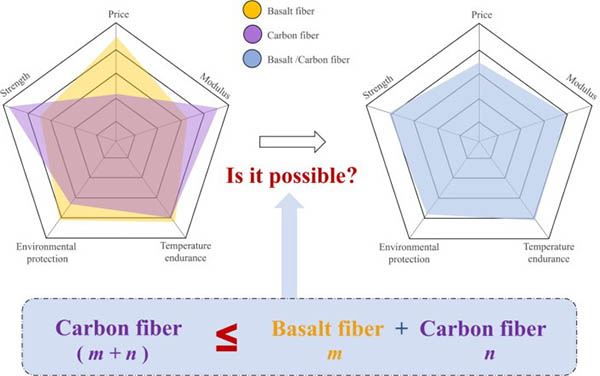
A growing trend in advanced materials engineering is the use of hybrid composite laminates combining both fibers.
Advantages include:
- Carbon fiber → structural stiffness
- Basalt fiber → impact resistance and cost reduction
Hybrid laminates are now used in:
- wind turbine blades
- UAV frames
- structural panels
This approach helps manufacturers achieve balanced performance while controlling material costs.
Manufacturing Considerations for CNC and Composite Machining
For companies producing precision composite parts, material behavior during machining is critical.
Carbon fiber composites:
- very stiff but brittle
- abrasive to cutting tools
- requires diamond or carbide tools
Basalt fiber composites:
- slightly softer but still abrasive
- easier machining compared with carbon fiber
- suitable for CNC trimming, drilling, and milling
For precision component production, tool wear management and coolant strategies must be considered carefully.
Final Recommendation: Choosing the Right Fiber for Your Project
Both materials offer impressive engineering capabilities:
Choose basalt fiber when:
- cost efficiency is critical
- corrosion resistance is required
- high temperature stability is needed
- infrastructure applications dominate
Choose carbon fiber when:
- extreme stiffness and lightweight performance are essential
- aerospace or racing applications demand maximum strength-to-weight ratio
- advanced high-performance structures are required
Why Engineers Choose Xavier for Precision Composite Manufacturing
At Xavier, we specialize in machining and manufacturing high-performance composite components for demanding industries. Whether your project uses carbon fiber, basalt fiber, aluminum, or titanium, our engineering team ensures precision, durability, and optimized manufacturing efficiency. basalt fiber vs carbon fiber
Our capabilities include:
- CNC machining for composite and metal components
- prototype and low-volume production
- aerospace-grade tolerance control
- custom composite part development
If you are developing next-generation composite structures, Xavier can help transform your design into reliable, production-ready components.
Some of the images and text in this article are collected and compiled from the internet. If there is anything inappropriate, please contact us for processing.