
Sandblasting Aluminum: Complete Engineering Guide to Surface Preparation, Parameters, and Industrial Applications
Aluminum is widely used in aerospace, automotive, electronics housings, and CNC-machined components because of its lightweight structure, corrosion resistance, and excellent machinability. However, aluminum parts often require surface finishing before coating, anodizing, or assembly, and sandblasting is one of the most common industrial methods.
Sandblasting aluminum (also called abrasive blasting) uses compressed air to propel abrasive particles toward the surface. This process removes oxide layers, contaminants, or previous coatings while generating a controlled surface texture that improves coating adhesion.
For CNC manufacturers and industrial buyers, understanding media selection, pressure settings, roughness control, and process sequences is essential to achieving repeatable quality.
Below are 10 key technical topics that dominate Google search results and industrial practices for sandblasting aluminum.
What Sandblasting Does to Aluminum Surfaces
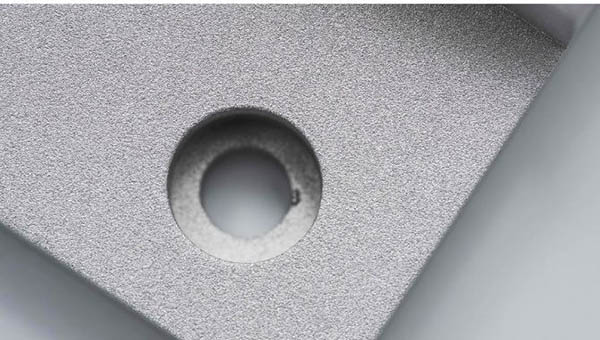
Sandblasting alters the aluminum surface through mechanical impact of abrasive particles. Depending on the abrasive shape, the impact can either cut the surface or compress it.
Two common surface effects occur:
| Effect | Media Type | Surface Result | Typical Application |
|---|---|---|---|
| Cutting | Aluminum oxide, crushed glass | Sharp micro-grooves | Paint or powder coating adhesion |
| Peening | Glass beads | Smooth satin matte | Decorative aluminum housings |
Angular abrasives create deeper micro-profiles that improve coating adhesion, while rounded media generate a uniform matte finish with lower surface roughness (Ra).
For example:
- CNC aluminum heat sinks often use bead blasting for cosmetic finish.
- Aerospace brackets use aluminum oxide blasting to maximize coating adhesion.
The resulting surface roughness usually ranges from Ra 0.6–1.2 μm for bead blasting, depending on media size and pressure.
Why Aluminum Requires Special Sandblasting Parameters
Aluminum behaves very differently from steel during abrasive blasting.
Key differences:
| Property | Aluminum | Steel |
|---|---|---|
| Hardness | Soft | Hard |
| Thermal conductivity | High | Medium |
| Warping risk | High | Low |
| Surface damage risk | High | Low |
Because aluminum is softer and conducts heat quickly, excessive pressure can cause surface distortion or pitting.
Typical safe blasting pressure ranges:
| Pressure Range | Application |
|---|---|
| 10–40 PSI | Thin aluminum sheet or delicate parts |
| 40–80 PSI | Standard coating preparation |
| 80–100 PSI | Heavy oxidation removal |
Most industrial sandblasting operations for aluminum operate between 50–60 PSI to balance cleaning efficiency and surface protection.
Choosing the Best Sandblasting Media for Aluminum
Media selection determines surface roughness, cleaning speed, and final appearance.
| Media Type | Shape | Surface Result | Common Use |
|---|---|---|---|
| Glass bead | Round | Satin smooth | Cosmetic parts |
| Aluminum oxide | Angular | High adhesion profile | Powder coating |
| Crushed glass | Angular | Medium roughness | Paint stripping |
| Walnut shell | Soft organic | Very gentle | Sensitive parts |
| Soda blasting | Powder | Non-aggressive cleaning | Restoration |
Industrial CNC components frequently use aluminum oxide 100–150 grit for coating preparation.
Meanwhile, 80–120 grit glass bead is preferred for decorative aluminum surfaces such as:
- electronic housings
- lighting components
- consumer product casings
Optimal Sandblasting Process Parameters
Achieving consistent results requires controlling five key variables.
| Parameter | Typical Range | Notes |
|---|---|---|
| Pressure | 30–80 PSI | Depends on thickness |
| Nozzle distance | 150–250 mm | Prevents excessive cutting |
| Blasting angle | 60°–80° | Improves uniformity |
| Travel speed | Constant sweeping motion | Avoid localized overheating |
| Overlap | 30–50% | Ensures even coverage |
Operators must always keep the nozzle moving. Staying in one position for too long can cause uneven surface texture or heat distortion.
Industrial blasting systems often use robotic arms or rotary tables to maintain consistent motion.
Surface Roughness Control After Sandblasting
Surface roughness determines coating adhesion performance.
Typical roughness levels:
| Blasting Media | Surface Roughness (Ra) | Application |
|---|---|---|
| Glass bead | 0.6–1.2 μm | Cosmetic matte finish |
| Aluminum oxide | 1.5–3.5 μm | Powder coating prep |
| Garnet | 2.5–4.0 μm | Heavy oxide removal |
If the roughness is too low, coatings may peel.
If roughness is too high, coating thickness becomes uneven.
In aerospace and precision CNC parts, engineers often specify Ra 1.6–3.2 μm as an optimal range for coating adhesion.
Sandblasting vs Bead Blasting for Aluminum Parts
Although the terms are often used interchangeably, they produce different results.
| Process | Abrasive | Surface Appearance | Best For |
|---|---|---|---|
| Sandblasting | Angular media | Rougher surface | Coating adhesion |
| Bead blasting | Glass beads | Smooth satin finish | Decorative surfaces |
Many manufacturers combine both processes.
Typical sequence:
- Aluminum oxide blasting for adhesion
- Light bead blasting pass
- Powder coating or anodizing
This hybrid approach balances appearance and coating durability.
Industrial Applications of Sandblasted Aluminum
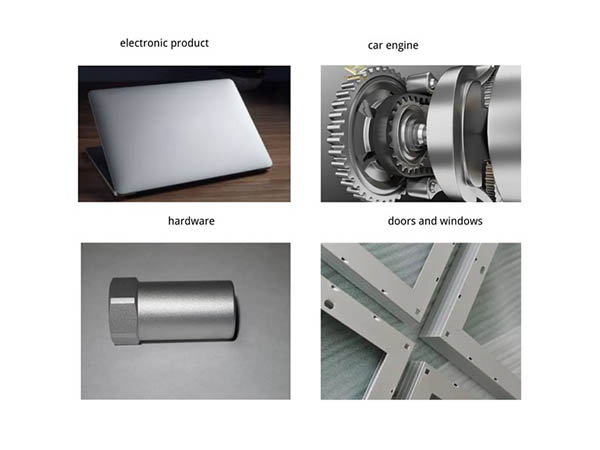
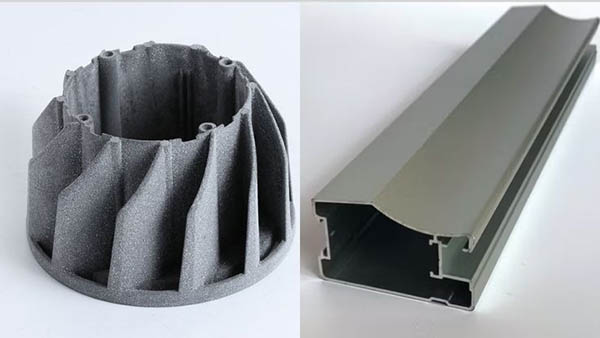
Sandblasting is widely used across multiple industries.
Aerospace
- aircraft brackets
- turbine housings
- structural fittings
Automotive
- aluminum wheels
- engine housings
- intake manifolds
Electronics
- aluminum heat sinks
- LED lighting housings
- laptop chassis
CNC Machining Industry
- precision machined enclosures
- robotic components
- automation parts
Sandblasting improves fatigue resistance and coating durability by creating a controlled surface profile.
Typical Workflow for Sandblasting Aluminum Parts
Industrial production lines follow a standardized sequence.
| Step | Process |
|---|---|
| 1 | Degreasing and cleaning |
| 2 | Masking sensitive areas |
| 3 | Sandblasting |
| 4 | Air blow-off cleaning |
| 5 | Surface inspection |
| 6 | Coating or anodizing |
After blasting, parts should be coated within 4–24 hours to prevent oxidation and contamination.
Common Sandblasting Defects and How to Avoid Them
| Defect | Cause | Solution |
|---|---|---|
| Warping | Excess pressure | Reduce PSI |
| Over-rough surface | Coarse grit | Use finer media |
| Embedded contaminants | Wrong media | Use clean abrasives |
| Uneven finish | Inconsistent movement | Use controlled blasting pattern |
One critical rule is never use silica sand for aluminum blasting because it can contaminate the surface and create health hazards.
Sandblasting Aluminum in CNC Manufacturing
For CNC-machined aluminum parts, sandblasting is often used as a secondary finishing process.
Typical workflow:
CNC Machining → Deburring → Sandblasting → Anodizing / Powder Coating
Benefits include:
- removal of machining marks
- uniform matte appearance
- improved coating adhesion
- enhanced corrosion resistance
Precision machining suppliers often integrate automated blasting cabinets to ensure batch consistency.
Why Manufacturers Choose Xavier for Sandblasted Aluminum Parts
For buyers sourcing CNC aluminum parts, sandblasting quality directly affects coating durability and final product appearance.
At Xavier, our manufacturing workflow integrates precision CNC machining with controlled sandblasting processes.
Key advantages include:
- optimized blasting parameters for aluminum alloys
- controlled roughness for anodizing and powder coating
- automated blasting equipment for batch consistency
- strict surface inspection standards
From aerospace brackets to consumer electronics housings, Xavier delivers precision-machined and professionally sandblasted aluminum parts ready for finishing and assembly.
If your project requires high-quality CNC machining with professional sandblasting treatment, Xavier provides a reliable solution for global manufacturing partners.
Some of the images and text in this article are collected and compiled from the internet. If there is anything inappropriate, please contact us for processing.