
Understanding Grade 5 Titanium: Properties, Applications, and Machining Insights
Overview of Ti-6Al-4V Titanium Alloy
Grade 5 titanium, commonly identified as Ti-6Al-4V, is considered the most widely used titanium alloy in modern engineering. The designation refers to its composition—approximately 6% aluminum and 4% vanadium—while the remainder is primarily titanium. Due to its exceptional balance of strength, weight reduction, and corrosion resistance, this alloy dominates the titanium market in industries such as aerospace, medical technology, and high-performance engineering.
In many technical discussions, when professionals mention a titanium alloy, they are usually referring to Grade 5 titanium. The alloy is also known as Ti 6-4 and may appear under specifications such as AMS 4911 for sheet and plate or AMS 4928 for bar products. Its versatility and reliable performance make it a standard material for components requiring high mechanical performance with reduced structural weight.
Mechanical Characteristics of Grade 5 Titanium
In the typical annealed condition, Ti-6Al-4V demonstrates excellent mechanical strength and structural stability. The alloy normally exhibits an ultimate tensile strength between roughly 895 MPa and 965 MPa (130–140 ksi). Aerospace standards often specify a minimum of 895 MPa, while specialized heat treatments such as aging can raise the strength beyond 1100 MPa.
The yield strength of Grade 5 titanium is usually around 828 MPa in the annealed state, although heat-treating processes such as solution treatment and aging can increase it to approximately 1000 MPa. Despite being slightly less ductile than commercially pure titanium grades, the alloy still maintains elongation values in the range of 10–15%, providing a useful level of toughness for demanding structural applications.
The elastic modulus of the alloy is about 113 GPa, which is comparable to other titanium materials but slightly higher due to the alloying elements. Hardness typically falls between Rockwell C 30 and 34 after annealing, although additional heat treatment can push hardness above RC 40. The density of Ti-6Al-4V is approximately 4.43 g/cm³, which remains relatively low compared with many structural metals.
Chemical Composition and Microstructure
The strength and performance of Grade 5 titanium come from its balanced chemical composition. Titanium accounts for roughly 90% of the alloy, while aluminum contributes about 6% and vanadium about 4%. Small amounts of impurities such as oxygen and iron may also be present within controlled limits.
Aluminum acts as an alpha-phase stabilizer, while vanadium stabilizes the beta phase. Because both phases coexist at room temperature, Ti-6Al-4V is categorized as an alpha-beta titanium alloy. This dual-phase microstructure provides a valuable combination of mechanical strength, fatigue resistance, and thermal stability.
Comparing Grade 5 Titanium with Other Titanium Grades
When compared with commercially pure titanium grades, Grade 5 titanium offers dramatically higher mechanical strength. For instance, the tensile strength of Grade 5 can exceed 900 MPa, while Grade 2 titanium typically reaches around 345 MPa. However, this strength comes with reduced formability. Unlike pure titanium grades, Grade 5 cannot easily undergo cold forming processes such as deep drawing or stamping.
Among other titanium alloys, Ti-6Al-4V remains a reference standard. While certain beta alloys may offer higher strength, they often come with increased cost or reduced weldability. Materials such as Grade 9 titanium provide improved formability but lower strength. Meanwhile, Grade 23 titanium—a medical variant with extremely low interstitial impurities—offers similar strength but enhanced biocompatibility.
Comparison with Steel and Aluminum Alloys
From an engineering perspective, Grade 5 titanium provides a unique balance between strength and weight. Its strength levels approach those of high-strength steels while maintaining roughly half the density. This allows designers to reduce component mass significantly without sacrificing structural integrity.
Compared with aluminum alloys, Ti-6Al-4V delivers far greater strength and stiffness. While aluminum alloys such as 6061 or 7075 are widely used in structural applications, Grade 5 titanium typically provides two times the strength of common aluminum grades. Additionally, titanium maintains mechanical stability at temperatures up to approximately 400°C, whereas aluminum loses much of its strength at lower temperatures.
Typical Forms and Industrial Applications
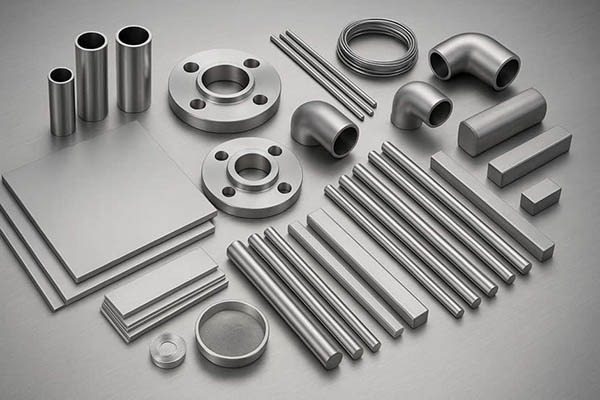
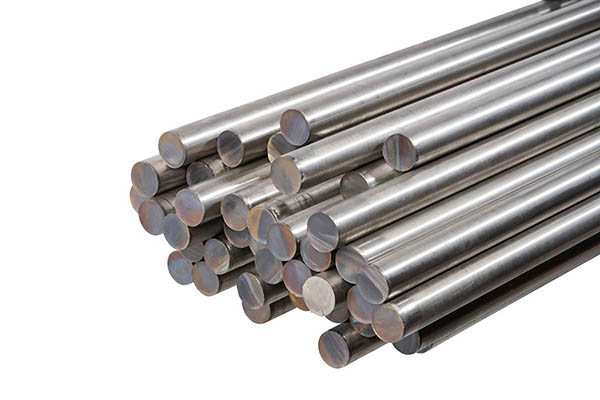
Grade 5 titanium is manufactured in numerous mill product forms to meet diverse engineering requirements. Common supply forms include sheet, plate, round bar, rod, billet, tubing, and wire. These materials are widely used in industries that require lightweight but extremely strong structural components.
In the aerospace sector, Ti-6Al-4V plays a crucial role in aircraft structures and jet engine systems. Components such as compressor blades, engine discs, airframe brackets, and structural supports often rely on this alloy. Modern aircraft like the Boeing 787 utilize significant amounts of titanium alloy to improve strength-to-weight ratios and corrosion resistance.
The medical industry also depends heavily on this alloy. Under medical specifications such as ASTM F136, the ELI version of Grade 5 titanium is commonly used for orthopedic implants, surgical screws, dental implants, and prosthetic devices. Its biocompatibility and resistance to body fluids make it ideal for long-term implantation.
Beyond aerospace and healthcare, Ti-6Al-4V appears in automotive racing components, oil and gas equipment, marine hardware, and power generation systems. High-performance consumer products such as bicycle frames, golf club heads, luxury watches, and smartphone housings also benefit from the durability and lightweight characteristics of titanium alloys.
CNC Machining of Grade 5 Titanium
Because of its strength and thermal properties, Grade 5 titanium is frequently processed through CNC machining rather than traditional forming methods. Manufacturers often rely on precision CNC machining services to produce complex parts such as aerospace brackets, medical implants, and high-performance automotive components.
During titanium CNC machining, careful tool selection and cutting parameters are essential. Titanium alloys generate significant heat at the cutting interface and have relatively low thermal conductivity, meaning the heat tends to remain concentrated near the cutting tool. For this reason, carbide cutting tools, optimized cutting speeds, and effective cooling strategies are typically used.
Advanced CNC milling and turning processes allow manufacturers to achieve tight tolerances and complex geometries while maintaining material integrity. With modern 5-axis CNC machining, intricate aerospace components and medical devices can be produced from Ti-6Al-4V with high precision and excellent surface quality.
Welding and Fabrication Considerations
Although Grade 5 titanium can be welded successfully, the process requires strict control of environmental conditions. Welding is usually performed in inert gas environments to prevent oxygen contamination at high temperatures. Shielding methods such as trailing shields or sealed chambers are commonly used to maintain weld quality.
Unlike commercially pure titanium, Ti-6Al-4V is not highly suitable for cold forming. Attempting to bend the material sharply at room temperature may lead to cracking. As a result, many components are manufactured through machining, forging, or hot-forming processes rather than traditional sheet forming.
Interesting Facts About Grade 5 Titanium
Throughout the history of modern engineering, Grade 5 titanium has played a transformative role in aerospace technology. Early jet engine designs dramatically improved performance after switching to titanium compressor components, helping increase thrust-to-weight ratios.
The alloy’s reputation has earned it nicknames such as the “workhorse titanium alloy” and even the “wonder metal.” Today, it appears not only in aircraft and spacecraft but also in sports equipment, luxury consumer products, and advanced industrial systems.
One particularly interesting historical story involves the development of the SR-71 Blackbird reconnaissance aircraft. During its production, the United States needed enormous quantities of Ti-6Al-4V. Much of the raw titanium was indirectly sourced from foreign markets—including the Soviet Union—unintentionally contributing to the construction of the very aircraft designed to monitor their territory.
Some of the images and text in this article are collected and compiled from the internet. If there is anything inappropriate, please contact us for processing.