Advanced Guide to Bronze CNC Machining: Processes, Alloys, and Industrial Applications
Understanding Bronze Machining and Its Importance in Modern Manufacturing
When people hear the word bronze, they often think about ancient statues or historical coins. In reality, bronze remains an essential material in modern engineering and manufacturing. Through bronze machining, manufacturers can create highly durable components that are widely used in marine engineering, industrial machinery, and electrical systems.
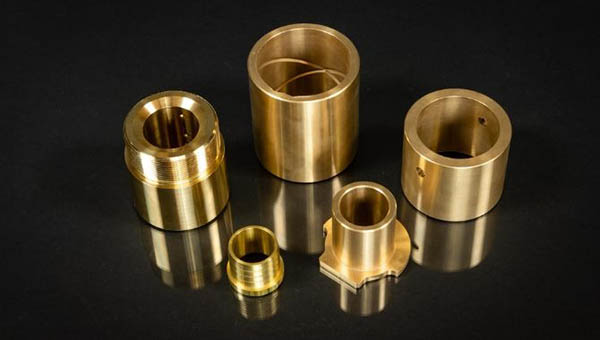
In modern manufacturing, CNC machining plays a crucial role in shaping bronze alloys into high-precision parts. Since bronze is a copper-based alloy typically combined with tin and other elements, it provides excellent corrosion resistance, mechanical strength, and wear resistance. These characteristics make CNC bronze machining an ideal process for producing long-lasting mechanical components.
What Is Bronze Machining?
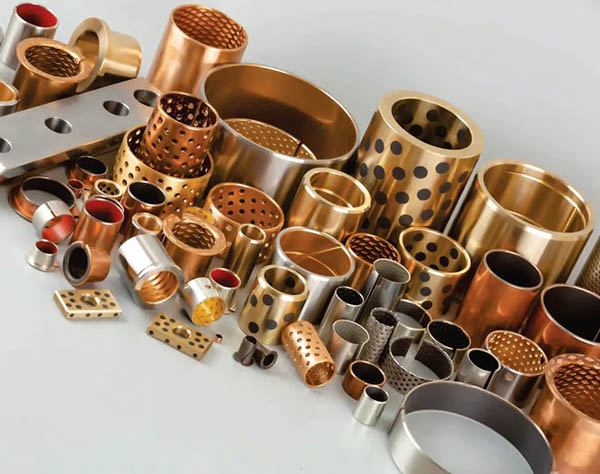
Bronze machining refers to the process of shaping bronze alloys using advanced manufacturing methods such as CNC milling, CNC turning, drilling, grinding, and other precision machining techniques.
Through CNC machining services, manufacturers transform raw bronze materials into parts with strict tolerances and complex geometries. The process is widely applied in industries that require high durability and resistance to harsh environments, including marine equipment, aerospace components, and heavy machinery systems.
Is Bronze Difficult to Machine?
In general, bronze is considered a machinable material, especially when the correct tools and cutting strategies are applied. The machinability mainly depends on the specific alloy type.
For instance, phosphor bronze is widely recognized for its fine grain structure and consistent mechanical properties. These qualities make it a popular option for producing intricate parts using precision CNC machining, particularly when tight tolerances are required.
Historical Evolution of Bronze in Manufacturing
Bronze has been used for thousands of years, dating back to the Bronze Age around 3000 BC. Early civilizations relied on bronze for tools and weapons due to its superior hardness compared with pure copper.
As manufacturing technologies advanced, bronze gradually transitioned from simple tools to complex mechanical components. Today, machined bronze parts are critical in industries where durability and corrosion resistance are essential, particularly in marine engineering and industrial machinery.
Step-by-Step Bronze Machining Process
Producing high-quality bronze components requires a well-structured machining workflow and a deep understanding of material behavior.
Material Selection
The first step in bronze CNC machining is selecting the appropriate alloy based on the application. For example, aluminum bronze is often chosen for high-strength environments, while phosphor bronze is used for wear-resistant and precision components.
Material Preparation
The raw bronze material is cut into workable shapes using sawing or shearing methods. This preparation stage ensures that the material dimensions are suitable for subsequent machining operations.
Core Machining Operations
Several machining processes are commonly used in CNC bronze machining:
CNC Milling
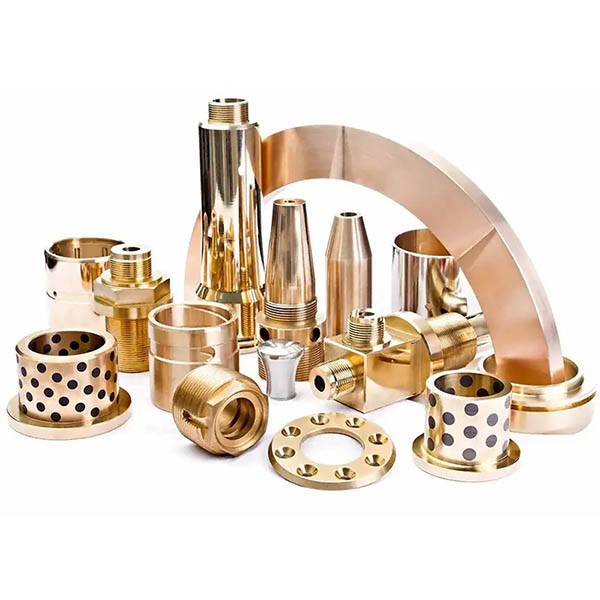
CNC milling uses rotating cutting tools to remove material from the bronze workpiece. This method allows manufacturers to produce complex shapes with high dimensional accuracy. It is commonly used to manufacture bearings, bushings, and other precision components.
CNC Turning
In CNC turning, the bronze workpiece rotates while a cutting tool shapes it into cylindrical forms. This process is ideal for producing shafts, valves, and other rotational components.
Drilling
Drilling is used to create holes or internal channels within bronze components. Proper tool selection and speed control are necessary to ensure clean and accurate hole formation.
Grinding
Grinding improves dimensional accuracy and surface smoothness by removing minimal material using abrasive wheels.
Post-Processing Steps
After machining, additional finishing steps may include:
- Deburring to remove sharp edges
- Polishing to improve appearance and functionality
- Heat treatment to enhance mechanical properties
- Quality inspection using precision measurement tools
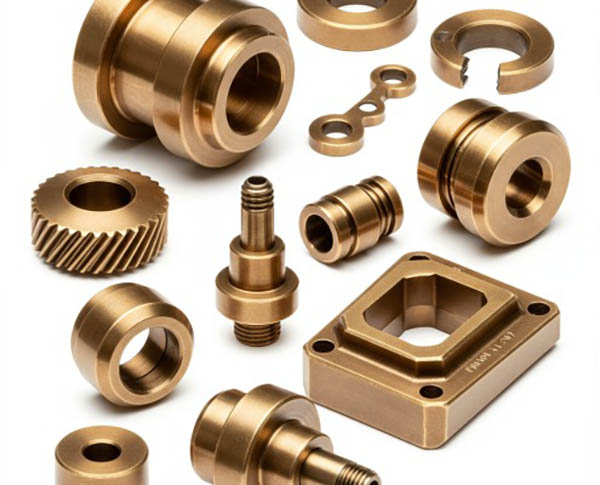
These finishing operations ensure that custom bronze machined parts meet strict engineering requirements.
Advanced Machining Methods for Bronze Components
Beyond conventional machining, several specialized techniques are used for complex geometries.
Sawing
Sawing is typically used during the initial stage to cut large bronze blocks into manageable pieces before precision machining.
Broaching
Broaching uses multi-tooth tools to create internal shapes such as keyways or splines. This technique is efficient for producing complex internal profiles in bronze components.
Electrical Discharge Machining (EDM)
EDM machining uses electrical sparks to remove material from the workpiece. It is particularly useful for intricate internal features that are difficult to achieve using conventional machining.
Waterjet Cutting
Waterjet cutting uses high-pressure water mixed with abrasives to cut bronze materials without introducing heat distortion. This process is especially useful for thin sheets and precision profiles.
Common Types of Bronze Used in CNC Machining
Different bronze alloys offer unique properties, making them suitable for specific applications.
Aluminum Bronze
Aluminum bronze contains copper and aluminum, often with iron or nickel added for strength. It provides excellent corrosion resistance and is widely used in marine applications such as propellers and underwater fasteners.
Phosphor Bronze
Phosphor bronze includes copper, tin, and phosphorus. It offers superior wear resistance and is commonly used for electrical connectors and precision components.
Silicon Bronze
Silicon bronze provides excellent corrosion resistance and good machinability. It is frequently used for pump parts, valves, and architectural components.
Manganese Bronze
Manganese bronze is known for its strength and durability. It is often used in automotive components and heavy industrial machinery.
Nickel Aluminum Bronze
This alloy includes nickel, which improves corrosion resistance and fatigue strength. It is commonly found in marine, aerospace, and offshore applications.
Leaded Bronze
Leaded bronze contains lead to improve lubricity and machinability. It is commonly used for bearings and bushings in mechanical systems.
Tin Bronze
Tin bronze offers strong corrosion resistance and good mechanical strength. It is frequently used in gears, bearings, and marine equipment.
Bismuth Bronze
Bismuth bronze improves machinability and casting quality, making it suitable for detailed precision components and decorative applications.
Copper-Nickel Bronze
Copper-nickel bronze offers excellent resistance to saltwater corrosion, making it ideal for shipbuilding and offshore engineering.
Which Bronze Alloys Are the Easiest to Machine?
Among the many bronze materials available, several alloys stand out for their machinability.
Leaded bronze is one of the easiest to machine because the lead content acts as a lubricant during cutting operations. Aluminum bronze also performs well because it produces less abrasive chips. Phosphor bronze is another favorable option thanks to its fine grain structure and consistent cutting performance.
Popular Bronze Grades for CNC Machining
Some bronze grades are particularly popular in CNC machining services due to their balance between machinability and durability.
C93200, also known as leaded tin bronze, is widely used for bearings and bushings.
C95400 aluminum bronze is valued for its high strength and wear resistance.
C51000 phosphor bronze is commonly selected when electrical conductivity and spring properties are required.
Surface Finishing Options for Bronze Machined Parts
Surface finishing improves both functionality and appearance for precision bronze parts.
As-Machined Finish
The as-machined finish retains visible tool marks and is suitable for functional components where aesthetics are not critical.
Polishing
Polishing produces a smooth and reflective surface, making it ideal for decorative or visible components.
Sanding
Sanding removes minor imperfections and creates a smoother surface texture.
Brushing
Brushing generates a uniform matte finish with fine lines, often used for architectural components.
Bead Blasting
Bead blasting creates a consistent matte appearance by blasting small abrasive beads onto the surface.
Chemical Coating
Chemical coatings enhance corrosion resistance and may alter the color of the bronze surface.
Anodizing
Although more common for aluminum, certain bronze alloys can undergo anodizing treatments to improve corrosion resistance and add decorative colors.
Patination
Patination uses chemical reactions to create aged color effects such as green or brown tones.
Electroplating
Electroplating deposits a thin layer of metals such as nickel, silver, or gold onto the bronze surface to enhance durability and appearance.
Advantages of Bronze Compared to Other Metals
Bronze offers several advantages that make it a preferred material for many applications.
- Excellent corrosion resistance, especially in marine environments
- Non-sparking properties suitable for hazardous environments
- Good machinability for complex parts
- High wear resistance for mechanical components
- Attractive appearance for decorative applications
- Good thermal conductivity for heat transfer systems
Industrial Applications of Machined Bronze Parts
Due to its unique properties, machined bronze components are widely used across many industries.
Common applications include:
- Bearings and bushings in industrial machinery
- Valves and fittings in plumbing systems
- Precision gears in mechanical devices
- Sculptures and architectural elements
- Electrical connectors in electronic equipment
Challenges in Bronze Machining
Despite its advantages, machining bronze can present several technical challenges.
The material’s hardness can cause accelerated tool wear. Long, stringy chips may form during cutting operations, which can interfere with machining processes. Some alloys also experience work hardening, making additional machining passes more difficult.
Additionally, bronze expands when exposed to heat, which can affect dimensional accuracy in high-precision components.
Best Practices for Efficient Bronze Machining
Achieving high-quality results in bronze CNC machining requires careful optimization of tools and machining parameters.
Carbide cutting tools are commonly used to improve durability and cutting performance. Maintaining appropriate cutting speeds helps reduce work hardening while improving surface finish.
Using sufficient coolant is also important to control heat buildup and extend tool life.
Regular inspection of cutting tools and proper lubrication further improve machining consistency and product quality.
Optimizing Cutting Conditions for Bronze Machining
Optimizing machining parameters is essential for improving efficiency and part quality.
Higher cutting speeds can help prevent work hardening, while feed rates should be adjusted based on the hardness of the bronze alloy. Adequate coolant usage also prevents overheating and distortion during machining.
When machining phosphor bronze, optimized cutting parameters can significantly improve surface finish and machining efficiency.
Safety Guidelines When Machining Bronze
Safety is a critical factor in precision CNC machining operations.
Machining areas should have adequate ventilation to prevent inhalation of fine metal particles. Operators should wear protective equipment such as gloves, safety glasses, and hearing protection.
Regular machine maintenance reduces the risk of mechanical failures, and fire safety equipment should always be available in case sparks ignite nearby materials.
Regulatory Requirements in Bronze Machining
Certain industries require strict compliance with quality and safety standards.
Aerospace manufacturing often demands extremely tight tolerances and high durability. Marine industries focus on corrosion resistance and structural reliability, especially for components exposed to seawater environments.
Meeting these standards ensures that precision machined bronze parts perform reliably in demanding applications.
Quality Control in Bronze Machining
Quality assurance plays a vital role in producing reliable bronze components.
Common inspection methods include visual checks, dimensional measurement using calipers or micrometers, and material testing for hardness and composition.
Quality control procedures typically include initial material inspection, in-process monitoring, and final testing to ensure all parts meet engineering specifications.
Proper documentation also helps maintain traceability throughout the manufacturing process.
Outsourcing Bronze Machining Services
For companies seeking reliable production, outsourcing bronze CNC machining services can be an efficient solution.
Manufacturers like Xavier offer advanced machining capabilities ranging from rapid prototyping to large-scale production. With modern CNC mills, precision lathes, and coordinate measuring systems, experienced engineers can produce parts with complex geometries and strict tolerances.
Each component undergoes detailed inspection before delivery, ensuring that all custom CNC machined parts meet high industry standards.
Conclusion
Bronze machining remains a vital manufacturing process due to the alloy’s excellent durability, corrosion resistance, and mechanical performance. Through modern CNC machining technology, bronze can be transformed into high-precision components used in industries ranging from marine engineering to electronics.
With proper material selection, optimized machining parameters, and strict quality control procedures, manufacturers can produce reliable bronze parts that deliver long service life and exceptional performance.
Frequently Asked Questions
Is bronze easier to machine than brass?
Bronze is usually more challenging to machine than brass because it is harder and more abrasive. However, this added strength makes machined bronze parts highly durable and well suited for demanding industrial applications.
Is 932 bronze easy to machine?
Yes, C93200 bronze, often referred to as bearing bronze, offers excellent machinability. It is widely used for producing bushings, bearings, and similar mechanical components that require durability and resistance to metal fatigue. cnc machining services
Some of the images and text in this article are collected and compiled from the internet. If there is anything inappropriate, please contact us for processing.