Custom Titanium Machining: A Complete Manufacturing Guide for Precision Components
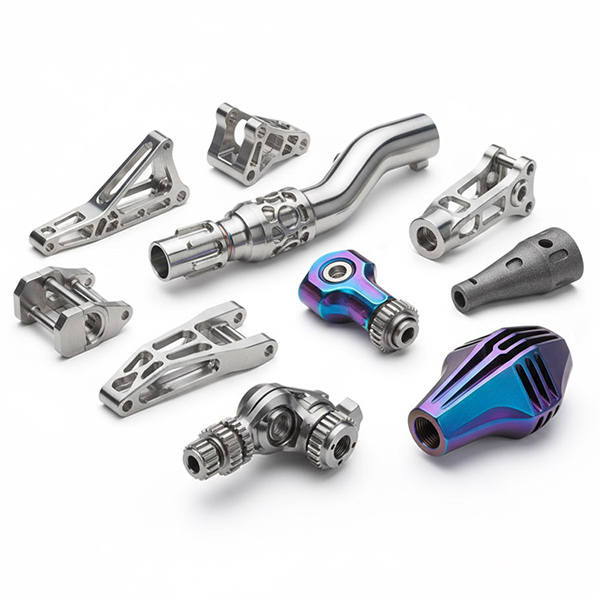
Titanium is widely recognized as one of the most advanced engineering metals used in aerospace, medical devices, automotive performance components, and high-end industrial equipment. Its exceptional strength-to-weight ratio, corrosion resistance, and biocompatibility make it ideal for demanding environments.
However, titanium is also considered one of the most difficult materials to machine due to its low thermal conductivity and high chemical reactivity with cutting tools. For this reason, manufacturers rely heavily on advanced CNC machining techniques to produce high-precision titanium parts.
Custom titanium machining allows engineers to create complex geometries, tight tolerances, and specialized surface finishes tailored for specific applications.
Titanium Grades Commonly Used in Custom Machining
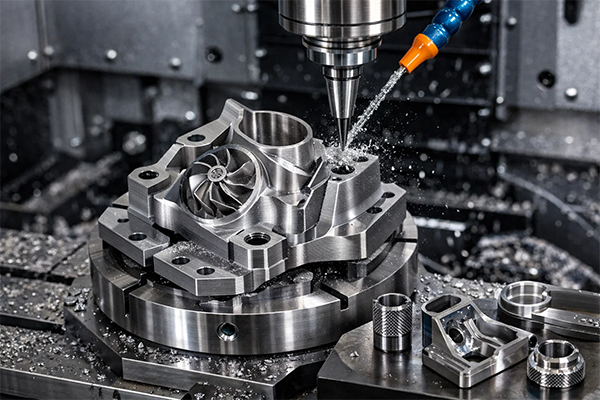
Not all titanium alloys behave the same during machining. Different grades are selected depending on mechanical requirements and application environments.
Common CNC Machining Titanium Alloys
| Titanium Grade | Type | Key Characteristics | Typical Applications |
|---|---|---|---|
| Grade 2 | Commercially pure | Excellent corrosion resistance | Chemical equipment |
| Grade 5 (Ti-6Al-4V) | Alloy | High strength and lightweight | Aerospace components |
| Grade 23 | Medical alloy | Biocompatible | Surgical implants |
| Grade 9 | Alpha-beta alloy | Good formability | Aerospace tubing |
Among these materials, Ti-6Al-4V (Grade 5) accounts for nearly 50–60% of all titanium used in aerospace and industrial machining due to its excellent mechanical properties.
Mechanical Property Comparison
| Material | Density (g/cm³) | Tensile Strength (MPa) |
|---|---|---|
| Titanium Grade 5 | 4.43 | 900 – 1100 |
| Stainless Steel 316 | 8.0 | 480 – 620 |
| Aluminum 6061 | 2.7 | 310 |
This table shows why titanium is so attractive: it provides steel-level strength at almost half the weight.
Mechanical Properties of Titanium and Machining Challenges
Titanium’s properties make it both valuable and difficult to machine.
Key Machining Challenges
| Property | Effect on Machining |
|---|---|
| Low thermal conductivity | Heat concentrates at the cutting edge |
| High strength | Increased tool wear |
| Work hardening | Difficult finishing cuts |
| Chemical reactivity | Tool adhesion and galling |
For example, during CNC milling, 80% of the cutting heat stays near the tool tip rather than dissipating into the material. This accelerates tool wear and requires careful cutting parameter control.
Typical titanium cutting speeds are 60–120 m/min, compared to 300–600 m/min for aluminum.
CNC Machining Processes Used for Titanium Parts
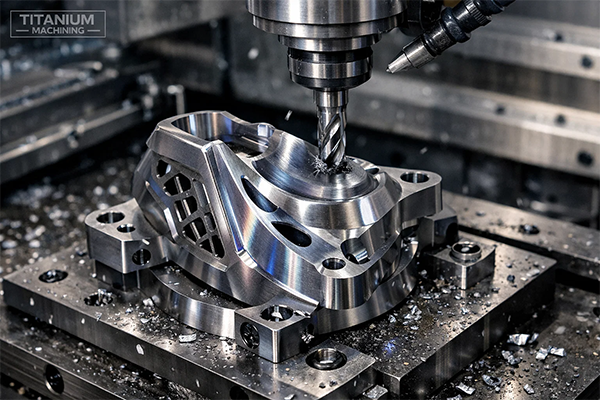
Several CNC machining processes are used depending on part geometry.
Common Titanium Machining Methods
| Process | Description | Applications |
|---|---|---|
| CNC Milling | Multi-axis machining for complex shapes | Aerospace brackets |
| CNC Turning | Cylindrical part machining | Fasteners and shafts |
| 5-Axis Machining | Multi-angle machining | Turbine components |
| Swiss Machining | Micro precision turning | Medical implants |
5-axis machining is particularly valuable because it reduces the number of setups required to machine complex titanium parts, improving both precision and production efficiency.
Cutting Tools and Parameters for Titanium Machining
Tool selection is critical when machining titanium.
Typical Tool Materials
| Tool Material | Advantages |
|---|---|
| Carbide tools | High wear resistance |
| Coated carbide (TiAlN) | Improved heat resistance |
| Ceramic tools | Suitable for high-speed cutting |
Typical CNC cutting parameters:
| Parameter | Range |
|---|---|
| Cutting speed | 60 – 120 m/min |
| Feed rate | 0.05 – 0.3 mm/rev |
| Depth of cut | 0.5 – 3 mm |
Coolant systems are essential. High-pressure coolant (70–100 bar) is often used to reduce heat buildup and improve chip evacuation.
Precision and Tolerances Achievable in Titanium Machining
Titanium components often require extremely high precision.
Typical tolerance levels include:
| Precision Level | Tolerance |
|---|---|
| Standard CNC machining | ±0.05 mm |
| Precision machining | ±0.01 mm |
| Ultra-precision machining | ±0.005 mm |
Advanced aerospace components may require micron-level tolerances to ensure proper assembly and mechanical performance.
CMM inspection systems are typically used for quality verification.
Surface Finishing Methods for Titanium Components
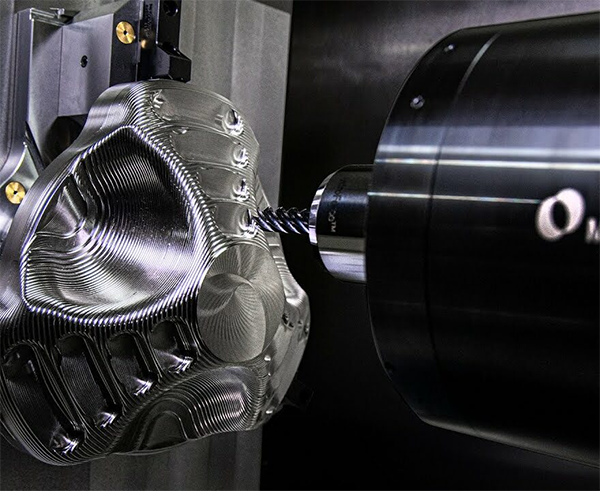
Titanium parts often require additional finishing processes to improve performance and appearance.
Common Titanium Surface Treatments
| Surface Treatment | Purpose |
|---|---|
| Sandblasting | Uniform surface texture |
| Polishing | Smooth medical-grade surfaces |
| Anodizing | Improved corrosion resistance |
| Passivation | Removal of surface contaminants |
For medical implants, surface roughness may be controlled between Ra 0.2 – 0.8 µm to improve biocompatibility and tissue integration.
Cost Structure of Custom Titanium Machining
Titanium machining is significantly more expensive than aluminum or steel due to machining difficulty and material cost.
Typical Titanium Material Prices
| Material | Approx Price per kg |
|---|---|
| Aluminum 6061 | $5 – $8 |
| Stainless Steel 316 | $6 – $10 |
| Titanium Grade 5 | $35 – $60 |
CNC Machining Cost Factors
| Cost Factor | Impact |
|---|---|
| Raw material cost | Titanium is expensive |
| Tool wear | Frequent tool replacement |
| Machining time | Slower cutting speeds |
| Complexity | Multi-axis machining increases cost |
Example pricing:
| Part Type | Typical Price |
|---|---|
| Simple titanium bracket | $120 – $350 |
| Aerospace titanium component | $400 – $1500 |
| Medical titanium implant | $500 – $3000 |
These values depend on geometry complexity, batch size, and finishing requirements.
Industries That Depend on Custom Titanium Parts
Titanium machining plays a critical role in many high-performance industries.
Major Industries Using Titanium Machining
| Industry | Typical Components |
|---|---|
| Aerospace | Aircraft structural components |
| Medical | Surgical implants |
| Automotive racing | Lightweight engine components |
| Marine | Corrosion resistant parts |
| Energy | Turbine and pressure components |
In aerospace, titanium is commonly used in landing gear structures, compressor blades, and structural brackets.
Design for Manufacturability (DFM) for Titanium Parts
Proper design significantly reduces machining cost.
Titanium Machining Design Tips
| Design Factor | Recommendation |
|---|---|
| Wall thickness | ≥1 mm recommended |
| Internal corners | Use radii instead of sharp edges |
| Deep pockets | Avoid extremely deep cavities |
| Thin ribs | Reinforce to reduce vibration |
For example, increasing corner radii from 0.5 mm to 2 mm can significantly reduce tool wear and machining time.
Why Xavier Is a Reliable Custom Titanium Machining Partner
When sourcing precision titanium components, selecting the right machining partner is essential.
Xavier provides advanced CNC machining solutions for custom titanium parts used in aerospace, medical, automotive, and industrial applications.
Xavier offers:
- Advanced 3-axis, 4-axis, and 5-axis CNC machining centers
- Expertise in machining Ti-6Al-4V and other aerospace-grade titanium alloys
- High-precision tolerances down to micron levels
- Complete surface finishing services including anodizing and polishing
- Strict quality control and inspection processes
With extensive experience in precision machining, Xavier can deliver high-quality custom titanium components with reliable performance and competitive manufacturing efficiency.
For companies seeking a dependable custom titanium machining manufacturer, Xavier provides the technology, expertise, and production capability required for demanding engineering applications.
Some of the images and text in this article are collected and compiled from the internet. If there is anything inappropriate, please contact us for processing.