
What Medical Machining Services Are
Medical machining services refer to precision manufacturing processes tailored to healthcare components — including surgical instruments, diagnostic equipment, dental parts, implants, prosthetics, and life-critical devices. Unlike general machining, medical machining requires strict quality control, biocompatibility, traceability, and defect-free delivery because errors can directly affect patient safety and regulatory approval.
At the core of medical machining services are advanced CNC (Computer Numerical Control) systems — such as multi-axis milling, Swiss turning, and micro-machining — capable of producing complex geometries with micron-level precision. These services are essential across the medical device supply chain, from prototyping to low-volume production and full scale manufacturing.
Regulatory and Quality Standards in Medical Machining
Strict certification and compliance are foundational to medical machining services. The industry commonly adheres to quality standards such as:
| Standard | Purpose |
|---|---|
| ISO 13485 | Medical device quality management system |
| ISO 9001 | General quality management practices |
| IATF 16949 (when applicable) | Automotive-like traceability processes for devices |
| ASTM/ISO Biocompatibility Specifications | Material biocompatibility standards |
ISO 13485 is critical — it enforces documented process controls, traceability from raw material to final part, stringent inspection procedures, and corrective action systems, all of which are audited regularly.
For medical machining providers, certification signals that products and processes meet the rigorous requirements expected by OEMs (Original Equipment Manufacturers), hospitals, and regulatory bodies like the FDA or EU MDR.
Biocompatible Materials and Their Machining Requirements
Medical components often interact directly with human tissue or bodily fluids, so material selection focuses on biocompatibility, corrosion resistance, and sterilization compatibility. Common materials include:
| Material | Standard/Spec | Typical Medical Use |
|---|---|---|
| Titanium Ti-6Al-4V | ASTM F136 | Orthopedic and dental implants |
| Stainless Steel 316L | ASTM F138 | Surgical instruments |
| PEEK (Polyether ether ketone) | ISO 10993 | Implantable parts and housings |
| Cobalt-Chrome | ASTM F75 | High-wear joint surfaces |
| Medical Plastics (PEI, PSU) | Various biocompatibility tests | Diagnostic housings |
Each material presents machining challenges: titanium alloys are strong and heat resistant but cause tool wear, while PEEK and other engineering plastics can be sensitive to heat and burr formation. A capable medical machining service engineer will select optimized tooling and cutting strategies accordingly.
Precision Tolerances and Functional Accuracy
Medical machining demands exceptionally tight tolerances because functionality often depends on small geometric differences. Typical tolerance targets in medical machining include:
| Component Category | Typical Tolerance | Example |
|---|---|---|
| Surgical instruments | ±0.005 – ±0.01 mm | Forceps, drill guides |
| Implants | ±0.002 – ±0.005 mm | Hip stems, spinal cages |
| Diagnostic device parts | ±0.005 – ±0.02 mm | Housings, connectors |
Achieving these tolerances requires not only precise CNC machines (including 5-axis and Swiss machining platforms) but also comprehensive inspection systems like CMM (Coordinate Measuring Machines) that verify multi-axis geometries.
High accuracy is essential for proper assembly, patient safety, and regulatory approval, especially for implants and surgical tooling where geometric fit can affect clinical outcomes.
CNC Machining Processes Used in Medical Parts
Medical machining leverages a range of CNC processes to balance precision, surface quality, and production efficiency:
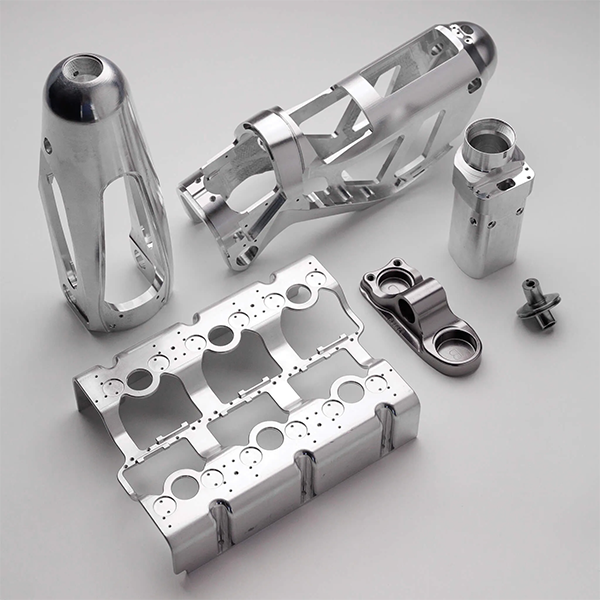
CNC Milling: Creates complex 3D shapes — housings, flanges, and bushing surfaces — using 3- to 5-axis machines that can reach undercuts and tight internal radii.
Swiss Machining: Ideal for micro-diameter and long, slender parts (like pins, screws, and connectors) in a single setup with minimal deflection.
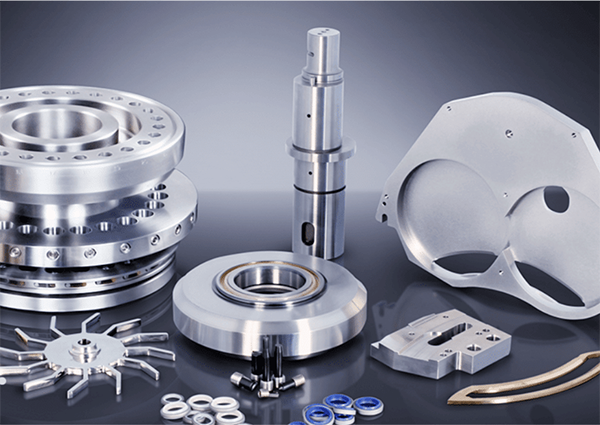
CNC Turning: Produces rotational parts like shafts, standoffs, or smooth bores with precise diameters and finishes.
Micro-Drilling and Micro-Milling: For tiny holes or features in implants or diagnostic components that may be 0.5–2 mm or smaller.
These processes are often combined with in-process probing, fixture automation, and multi-axis programming to reduce setups and improve repeatability, particularly for high-risk medical parts where consistency is paramount.
Surface Finishing and Secondary Treatments
Surface quality in medical machining impacts sterilization, tissue interaction, and functionality. Typical finishing and secondary processes include:
| Process | Main Purpose |
|---|---|
| Electropolishing | Eliminates micro burrs and contaminants; improves corrosion resistance |
| Passivation | Removes free iron and restores protective oxide layer |
| Anodizing/Coating | Adds wear resistance; can color-code parts |
| Laser Marking & UDI | Permanent, sterile traceability marks |
Electropolishing and passivation are especially critical for parts intended for implantation or surgical use because they reduce surface roughness and help prevent bacterial harborage and corrosion. Proper finishing in medical machining helps parts withstand sterilization processes like autoclaving and chemical cleaning without degradation.
Cleanroom Handling, Contamination Control, and Traceability
Medical machining does more than shape parts — it ensures cleanliness and traceability. This includes:
- Dedicated medical machining zones to prevent cross-contamination
- Ultrasonic cleaning and vapor degreasing to remove machining residues
- UDI or unique laser marking on each part for supply chain traceability
- Material traceability back to mill test reports and lot records
Effective contamination control and cleanroom-ready handling are essential for parts that will enter sterile environments or bodily contact. In certified facilities, specific protocols ensure that chips, oils, and abrasives are fully removed before inspection and packaging.
Key Medical Machining Applications
Medical machining services support a wide range of critical healthcare technologies:
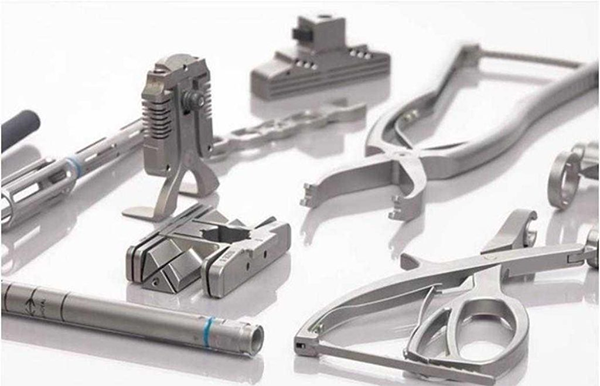
Surgical Instruments: From scalpels to forceps and orthopedic tools, these components must be ergonomic, sterile, and dimensionally consistent.
Implants & Prosthetics: Custom hip stems, dental abutments, and spinal cages interface directly with bone or tissue, requiring biocompatible materials and precise surface finishes.
Diagnostic Equipment Components: Imaging and monitoring devices use machined housings, connectors, and mechanical parts that need repeatable performance.
Cardiovascular Device Parts: Precision machined shafts, cams, and internal lumens in delivery systems for valves or stents demand complex geometries with strict tolerances.
Each application has unique demands — for example, orthopedic implants often use 5-axis machining to mimic natural bone contours while maintaining strength and fit.
Cost Drivers and Manufacturing Efficiency
While quality is non-negotiable in medical machining, cost efficiency still matters. Key cost drivers include:
| Factor | Impact |
|---|---|
| Material Selection | Titanium and PEEK are expensive and cause higher tool wear |
| Tolerance Tightness | Tighter tolerances increase cycle times |
| Surface Finishing | Electropolishing/passivation adds value and cost |
| Inspection and Documentation | Regulatory documentation (e.g., ISO 13485) requires additional labor |
| Batch Size | Small production runs keep flexibility but reduce economies of scale |
Manufacturers often optimize tooling strategies, automation, and batch grouping to balance production cost with high quality. For example, batching similar parts can significantly reduce setup overhead and improve throughput without sacrificing precision.
Rapid prototyping for medical parts — enabled by CNC machining — can reduce development time by 30–60% compared with traditional manual methods, lowering risk and cost before full scale production.
Choosing the Right Medical Machining Service Provider
Selecting a medical machining partner involves evaluating:
- Certifications and compliance (ISO 13485, ISO 9001)
- Material expertise with biocompatible metals and plastics
- Advanced machining technologies such as 5-axis and Swiss systems
- Surface finishing capabilities including electropolishing and laser marking
- Cleanroom and contamination control practices
- Traceability and documentation support
A provider with proven medical machining expertise can help streamline regulatory approval, reduce rework, and improve device reliability — all while controlling costs.
Xavier — Trusted Medical Machining Services for Precision Healthcare Components
When precision, regulatory compliance, and performance matter, Xavier stands out as a medical machining services partner that delivers engineering excellence and clinical reliability. Xavier combines advanced CNC technologies (including multi-axis milling, Swiss turning, and micro-machining), strict ISO 13485 and ISO 9001 quality systems, and deep expertise in biocompatible materials such as titanium, stainless steel, PEEK, and medical plastics.
From high-precision surgical instruments and implantable medical components to diagnostic device parts and custom prosthetics, Xavier ensures each component meets exacting tolerances, cleanroom readiness, and traceability requirements. With robust surface finishing — including electropolishing, passivation, and compliant laser marking — alongside contamination control protocols, Xavier helps healthcare innovators deliver safe, reliable, and performance-driven medical products that enhance patient outcomes and accelerate time-to-market.
Some of the images and text in this article are collected and compiled from the internet. If there is anything inappropriate, please contact us for processing.