
Understanding CNC Plastic Machining Prototypes
CNC plastic machining prototypes refer to early-stage functional parts manufactured from engineering plastics using computer-controlled milling or turning machines. Unlike injection molding, which requires expensive molds, CNC machining removes material from solid plastic blocks to create precise geometries.
Prototype machining is widely used during product development and engineering validation. Companies often machine a prototype before committing to tooling because machining enables rapid changes in design dimensions, features, or materials.
Typical prototype lead times range from 1–7 days, depending on part complexity and quantity. This makes CNC machining one of the fastest ways to produce functional prototypes suitable for mechanical testing, assembly checks, and user evaluation.
Common Plastics Used in CNC Prototype Machining
Plastic prototypes require materials that simulate final product properties. CNC machining allows engineers to test real engineering plastics before committing to production tooling.
| Plastic Material | Key Properties | Typical Prototype Applications |
|---|---|---|
| ABS | Impact resistance, easy machining | Consumer electronics housings |
| Nylon (PA6 / PA66) | High strength, wear resistance | Gears, bushings |
| POM (Delrin / Acetal) | Low friction, dimensional stability | Precision mechanical parts |
| Polycarbonate (PC) | High impact strength | Transparent covers |
| PEEK | High temperature resistance | Aerospace and medical components |
Among these materials, Delrin and nylon are commonly used for mechanical prototypes because they provide excellent machinability and dimensional stability.
For high-performance engineering prototypes, PEEK can withstand temperatures above 250°C, making it suitable for aerospace and medical testing components.
CNC Machining vs 3D Printing for Plastic Prototypes
Although additive manufacturing has gained popularity, CNC machining still offers several advantages for functional prototypes.
| Factor | CNC Machining | 3D Printing |
|---|---|---|
| Material strength | Full material strength | Layer bonding may reduce strength |
| Surface finish | Smooth, precise | Often requires post-processing |
| Dimensional accuracy | ±0.01 mm achievable | Typically ±0.1 mm |
| Material options | Engineering plastics | Limited polymers |
For instance, a machined Delrin gear prototype will perform much closer to the final molded part than a 3D printed nylon gear.
Because CNC prototypes use real production materials, they are frequently used for mechanical testing, load simulation, and durability evaluation.
Precision Tolerances in CNC Plastic Machining
Plastic machining can achieve very high precision when properly controlled.
Typical tolerance levels include:
| Tolerance Level | Value | Typical Application |
|---|---|---|
| Standard machining | ±0.05 mm | General prototypes |
| Precision machining | ±0.02 mm | Mechanical assemblies |
| High precision | ±0.01 mm | Medical and aerospace parts |
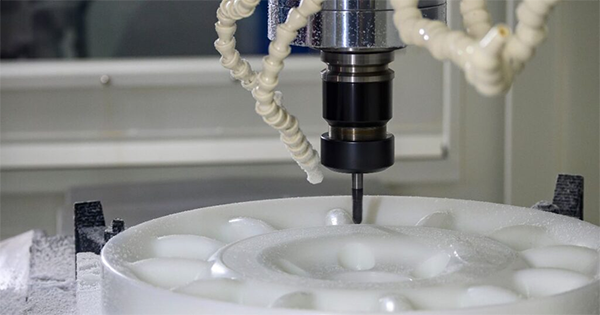
However, plastics behave differently from metals. Materials like nylon or polyethylene may expand due to temperature or moisture absorption. Therefore, experienced machinists adjust cutting parameters and fixture methods to maintain accuracy.
For example, Delrin parts can maintain tolerances of ±0.01 mm, while softer plastics may require slightly wider tolerance ranges.
CNC Processes Used for Plastic Prototype Manufacturing
Several machining operations are used to produce plastic prototypes.
Common CNC processes include:
CNC Milling
Milling machines create complex shapes, pockets, and contours. Multi-axis milling allows machining of complex surfaces and angled features.
CNC Turning
Turning is used for cylindrical parts such as bushings, spacers, and threaded components.
Drilling and Tapping
Hole making is essential for assemblies. CNC tapping ensures thread precision for screws and fasteners.
5-Axis Machining
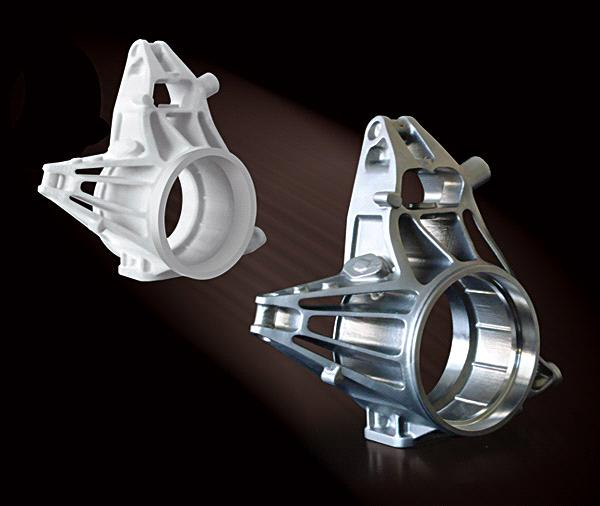
Complex prototypes with curved surfaces or multi-directional features often require 5-axis machining to minimize setups and improve dimensional accuracy.
Surface Finishing Options for Plastic CNC Prototypes
Surface finish quality is often critical for prototypes used in testing or demonstration.
| Surface Finish | Roughness | Application |
|---|---|---|
| As-machined | Ra 3.2 μm | Mechanical testing |
| Polished | Ra 0.8 μm | Optical components |
| Sandblasted | Matte texture | Cosmetic prototypes |
| Vapor polishing | High clarity | Transparent parts |
For transparent plastics such as polycarbonate or acrylic, vapor polishing can improve optical clarity, making it useful for lens prototypes or display covers.
Design Guidelines for Plastic CNC Prototypes
Proper design significantly improves machinability and reduces cost.
Important design principles include:
Avoid extremely thin walls
Plastic walls thinner than 0.8 mm may deform during machining.
Use generous corner radii
Sharp internal corners require very small tools, increasing machining time.
Limit deep cavities
Deep pockets increase tool deflection and cycle time.
Standardize hole sizes
Using standard drill sizes reduces machining complexity.
Following these guidelines can reduce prototype cost by 20–40% compared to designs that ignore machining constraints.
Cost Factors of CNC Plastic Machining Prototypes
Several variables influence the cost of plastic prototype machining.
| Cost Factor | Description |
|---|---|
| Material cost | Engineering plastics like PEEK are expensive |
| Machine time | Complex parts require longer machining cycles |
| Programming | CAM programming adds setup cost |
| Quantity | Higher volumes reduce per-part cost |
| Surface finishing | Polishing or coating increases cost |
Typical pricing examples:
| Prototype Type | Price Range |
|---|---|
| Simple plastic prototype | $30 – $100 |
| Medium complexity part | $100 – $300 |
| Complex precision prototype | $300 – $1000+ |
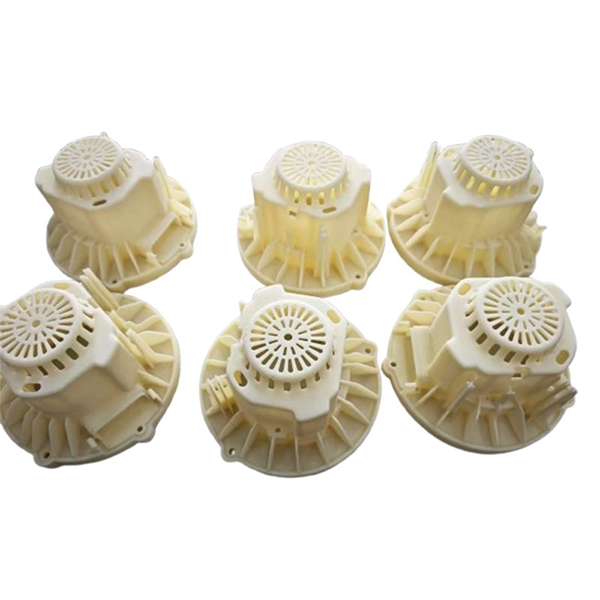
For example, a machined ABS enclosure prototype for electronics may cost around $120–$200, depending on features and finishing requirements.
Applications of CNC Plastic Machining Prototypes
CNC plastic prototypes are widely used in product development across multiple industries.
Common applications include:
Consumer electronics
Housing prototypes for smartphones, smart home devices, and wearables.
Automotive engineering
Functional prototypes for clips, connectors, and interior components.
Medical devices
Test parts for surgical tools, diagnostic devices, and implants.
Aerospace
Lightweight plastic fixtures and testing components.
Industrial equipment
Custom gears, guides, and protective covers.
These prototypes allow engineers to evaluate fit, strength, thermal resistance, and mechanical movement before mass production.
Choosing a Reliable CNC Plastic Prototype Manufacturer
Selecting the right manufacturing partner is critical for achieving reliable prototypes.
Important factors include:
- Advanced CNC equipment and multi-axis machining capability
- Experience with engineering plastics such as PEEK, POM, and nylon
- Strong quality control and inspection systems
- Fast turnaround times for prototyping
- Engineering support for design optimization
A capable manufacturer should also provide DFM (Design for Manufacturability) feedback, helping engineers improve their designs before production.
Xavier – Your Trusted Partner for CNC Plastic Machining Prototypes
When it comes to high-quality CNC plastic machining prototypes, Xavier stands out as a trusted manufacturing partner. With advanced CNC machining centers, extensive experience working with engineering plastics, and strict quality control systems, Xavier delivers reliable prototypes that meet demanding performance and dimensional requirements.
Whether you need rapid prototype parts for product development or precision plastic components for functional testing, Xavier provides fast turnaround, competitive pricing, and professional engineering support. From simple ABS housings to complex PEEK aerospace components, Xavier ensures that every prototype is produced with precision, efficiency, and consistency.
Working with Xavier means reducing development risks, accelerating product validation, and bringing innovative products to market faster.
Some of the images and text in this article are collected and compiled from the internet. If there is anything inappropriate, please contact us for processing.