
What Defines an Aluminum Machining Manufacturer
An aluminum machining manufacturer is a precision manufacturing company that specializes in transforming raw aluminum stock (bars, plates, billets) into engineered components using CNC (Computer Numerical Control) technology. These companies integrate automated turning, milling, drilling, and multi-axis machining to produce parts with exact dimensional tolerances and specified performance attributes suitable for demanding industries. The key strengths of these manufacturers include repeatability, high throughput, engineering support, and flexible production scaling — from prototype runs to mass production batches.
In practice, this means the manufacturer must not only cut shapes but also ensure repeatability across hundreds or thousands of parts while maintaining geometric integrity.
Common Aluminum Alloys and Machinability Characteristics
Different aluminum alloys have distinct mechanical and machining behaviors:
| Alloy | Key Characteristics | Typical Applications |
|---|---|---|
| 6061-T6 | Great machinability, moderate strength | Structural frames, housings |
| 7075-T6 | High strength, aerospace grade | Aerospace fittings, high-stress components |
| 2024 | High fatigue resistance | Aircraft fittings |
| 5052 | Superior corrosion resistance | Marine and outdoor hardware |
Machinability affects cycle time, tool wear, and overall part cost. For example, 7075-T6 often costs more to machine and requires optimized cutting parameters compared with 6061 due to increased alloying content and strength (which increases cutting forces and tool wear).
Precision Tolerances and Quality Standards
Tolerance control is foundational in aluminum machining, especially for fit-critical assemblies. Typical industrial tolerance tiers for aluminum machining include:
| Tolerance Level | Typical Range | Use Case |
|---|---|---|
| General | ±0.02 mm | Non-critical features |
| Precision | ±0.005–±0.01 mm | Mechanical fit components |
| Ultra-Precision | ±0.001–±0.005 mm | Aerospace, medical parts |
Holding tight tolerances requires advanced CNC systems with rigid construction, thermal compensation, and in-process probing to ensure part dimensions remain within specified limits.
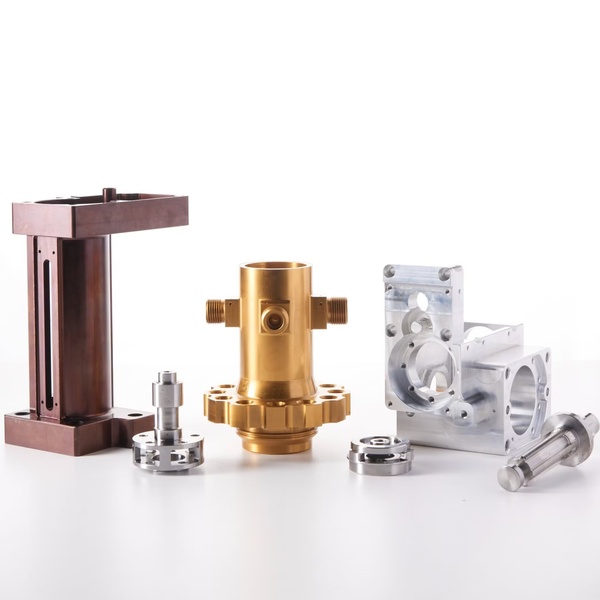
Core Machining Processes Used in Aluminum Machining
A professional manufacturer employs a combination of machining techniques:
- CNC Turning: Produces symmetrical parts (shafts, spacers, studs) with quick cycle times and excellent surface finishes.
- CNC Milling: Creates complex features such as pockets, slots, and multi-surface geometries.
- Multi-Axis Machining (4/5-Axis): Reduces setups and improves geometric accuracy for complex forms.
Choosing the right machines and toolpaths directly influences part quality and price — multi-axis machining often costs more per hour but reduces setups, increasing precision and lowering total machining time.
Surface Finishes and Secondary Treatments
Beyond cutting metal, aluminum parts often receive secondary treatments to enhance appearance, corrosion resistance, wear properties, or assembly performance:
| Finish | Typical Roughness/Effect | Common Use |
|---|---|---|
| As-Machined | Visible tool marks | Functional mechanical parts |
| Anodizing | Oxide layer formation | Corrosion resistance, decorative |
| Bead Blasting | Matte surface | Uniform visual finish |
| Polishing | Shine | Aesthetic components |
These finishes add incremental cost but are often essential — for instance, anodizing adds only ~$0.5–$2 per piece in volume orders but significantly improves durability.
Quality Control and Industry Certifications
Top aluminum machining manufacturers operate rigorous quality systems that include:
- ISO 9001 Quality Management
- AS9100 (Aerospace) and IATF 16949 (Automotive) compliance
- In-process inspection with CMM (Coordinate Measuring Machines)
- First article inspection (FAI) and SPC (Statistical Process Control)
This combination of certification and inspection ensures consistent production quality and traceability from raw material through finished part.
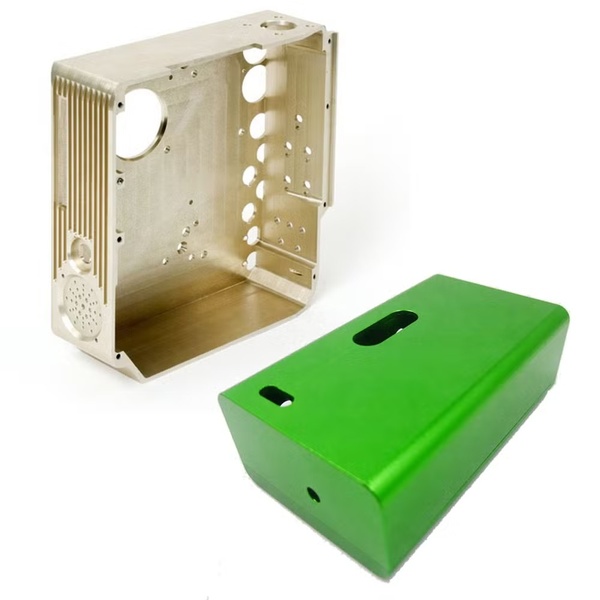
Design for Manufacturability (DFM) Optimization
A critical advantage of an experienced aluminum machining manufacturer is DFM review — evaluating part designs early to reduce excess cost and avoid delays. Effective DFM practices include:
- Minimizing unnecessary tight tolerances
- Simplifying complex geometry into machinable features
- Reducing setup count through proper feature grouping
For example, relaxing a non-critical tolerance from ±0.005 mm to ±0.01 mm can reduce machining time by 15–30% without affecting part performance.
Industry Applications of Precision Aluminum Machined Parts
Aluminum machining supports diverse industries due to aluminum’s light weight, strength, and corrosion resistance:
Aerospace: Structural frames, thermal housings
Automotive: Engine brackets, sensor housings
Medical Devices: Instrument components, ergonomic assemblies
Consumer Electronics: Heat sinks, chassis components
Industrial Automation: Robotic mounts, guide components
Each of these sectors demands specific performance criteria, from temperature stability in aerospace to surface quality in consumer devices.
Cost Structure, Price Ranges & Competitive Factors
Understanding pricing requires breaking down the cost components and market influences.
Typical Price Ranges (Per Part)
- Simple aluminum CNC part: ~$8–$20 in some markets, more in high-wage regions
- Standard aluminum parts: ~$30–$100 per piece
- Complex precision aerospace-grade parts: $200–$500+ each due to tight tolerances and long cycle times
Cost Breakdown Components
| Cost Category | Description |
|---|---|
| Material | Raw aluminum and scrap losses |
| Machine Time | CNC runtime based on complexity |
| Setup & Programming | Fixture design and CAM programming |
| Tooling | Cutting tools and tooling change cost |
| Inspection & Finishing | CMM checks & surface treatments |
Price Factors
- Quantity: Larger orders spread setup cost over more parts, lowering unit price significantly. For example, 1 piece may cost $200–$500, while 1000 pieces can be $5–$15 each.
- Location: China and other Asia regions often have 30–60% lower unit costs compared to the U.S. due to labor and supply chain efficiency.
- Complexity: Multi-axis machining or deep cavities increase cycle time and cost.
- Tight tolerances: Holding ±0.005 mm vs ±0.02 mm can add 20–40% to machining cost.
Example
A medium complexity 6061 aluminum bracket (100×40×10 mm):
- Material: ~$2–$6
- Machining (cycle time): 30–60 min
- Setup & CAM: Distributed cost across batch
- Finishing & anodizing: ~$1–$3 per piece
→ Total per 100 pcs: ~$15–$40 each in China vs ~$80–$150 each in the U.S.
This example highlights how batch quantity, complexity, finish requirements, and regional location shape final pricing.
How to Evaluate & Choose the Right Aluminum Machining Manufacturer
Consider the following when selecting a partner:
- Capabilities: Multi-axis machining, tool libraries, automation
- Quality Systems: ISO/AS certifications and inspection tools
- Engineering & DFM Support: Helps optimize designs for lower cost
- Transparent Pricing: Breakdowns of setup, runtime, and finishing
- Delivery & Logistics: On-time delivery and packaging quality
Reputable manufacturers often provide sample part pricing and online quoting tools for rapid budgeting.
Xavier: Your Trusted Aluminum Machining Partner
When precision, performance, and cost-effectiveness matter, Xavier stands out as a leading aluminum machining manufacturer offering:
- Multi-axis CNC machining expertise across 6061, 7075, 2024, and other alloys.
- Tight tolerance guarantees with robust quality control systems.
- Competitive pricing models and transparent cost breakdowns.
- Engineering support for DFM to reduce total ownership cost.
- Flexible production scaling from rapid prototypes to large volume runs.
Whether you need complex aerospace brackets or precision consumer electronics parts, Xavier delivers engineered certainty with optimized production efficiency and predictable pricing that fits your engineering and business goals.
Some of the images and text in this article are collected and compiled from the internet. If there is anything inappropriate, please contact us for processing.