CNC Milling Machining Service: An In-Depth Guide for Engineers and Buyers
What CNC Milling Really Is
CNC (Computer Numerical Control) milling machining is a subtractive manufacturing process where a computer drives precise cutting tools to remove material from a solid workpiece, following instructions generated from CAD (Computer-Aided Design) and CAM (Computer-Aided Manufacturing) systems. This automation enables cutting and shaping with minimal human intervention, delivering consistent dimensional accuracy and repeatability. The process typically involves designing a 3D model, converting it to machine-readable G-code, setting up the machine, executing the programmed cuts, and then performing finishing operations as needed.
| Step | Description |
|---|---|
| Design | CAD modeling of part |
| CAM | Conversion to G-code |
| Machine Setup | Fixture, cutter, workholding |
| Cutting | CNC mill executes toolpath |
| Post-Processing | Deburring, finishing |
Types of CNC Milling Machines and Their Capabilities
CNC milling services support a range of machine types defined by axes of movement:
- 3-Axis Mills: Move along X, Y, and Z. Ideal for many standard part geometries.
- 4-Axis Mills: Add rotational movement, enabling more complex features with reduced setups.
- 5-Axis Mills: Offer movement across five axes, allowing machining of intricate contours (e.g., turbine blades) with fewer setups and higher precision.
For example, a 5-axis machining center can dramatically reduce clamping operations compared to 3-axis setups, increasing accuracy and decreasing total production time for complex parts.
Choosing the Right Materials for CNC Milling
Material choice directly affects machinability, cost, tooling wear, and cycle times. Common CNC milling materials include:
| Material | Typical Uses | Key Considerations |
|---|---|---|
| Aluminum Alloys | Aerospace housings, frames | High machinability, fast cutting |
| Stainless Steel | Medical devices, industrial parts | Harder to machine → slower feeds |
| Titanium | Aerospace, medical implants | Heat and work hardening challenges |
| Plastics (POM, Nylon) | Prototypes, light-weight parts | Require sharp cutters, careful chip control |
Functional materials not only determine machining strategy but also influence surface finish and production efficiency.
Tolerance and Precision: What Buyers Must Know
Tolerance defines the acceptable variation from design specifications. Precision CNC milling services can achieve tolerances as tight as ±0.01 mm for many parts and ±0.005 mm or better for high-accuracy applications, depending on machine capability and material properties. For extremely tight aerospace or medical components, 5-axis machining combined with rigorous inspection yields repeatable accuracy critical for performance.
| Accuracy Grade | Tolerance | Typical Use |
|---|---|---|
| Entry | ±0.025 mm | Brackets, general parts |
| Medium | ±0.01 – 0.005 mm | Automotive, industrial |
| High | ±0.0025 mm | Aerospace, medical |
Cutting Parameters: What Drives Quality and Productivity
Three main cutting parameters define CNC milling efficiency:
- Spindle Speed (rpm): How fast the cutter rotates.
- Feed Rate (mm/min): Speed the tool advances through material.
- Material Removal Rate (MRR): Volume removed per minute (depth × width × feed).
Optimizing these variables for each material and cutter type improves surface finish, prolongs tool life, and speeds production. For example, aluminum alloys might be milled at 1200-1800 rpm with corresponding feed rates, while harder stainless steels require slower spindle speeds and cooling strategies to prevent tool wear.
Milling Tooling and Toolpath Strategy
Selecting the right accessories makes all the difference. Milling cutters come in various forms:
- End Mills: General cutting tools for holes, pockets, and profiles.
- Face Mills: Efficient for large flat surfaces.
- Ball-nose Mills: Ideal for complex 3D contours.
Toolpaths generated by CAM software translate design geometry into thousands of precise cutter locations (G-code). Proper strategy minimizes air cutting, balances cutting forces, and prevents chatter, ultimately reducing cycle time and extending cutter life.
Common Milling Operations and Their Uses
CNC milling can perform a range of operations essential for different part features:
- Plain Milling: Cuts flat surfaces parallel to cutter axis.
- Face Milling: Generates smooth upper surfaces.
- Angular Milling: Produces angled features like chamfers.
- Form Milling: Creates specific complex shapes.
These operations allow manufacturers to create intricate designs in a single machining process.
Real-World Applications of CNC Milling Services
CNC milling service finds applications across diverse industries:
| Industry | Typical Components |
|---|---|
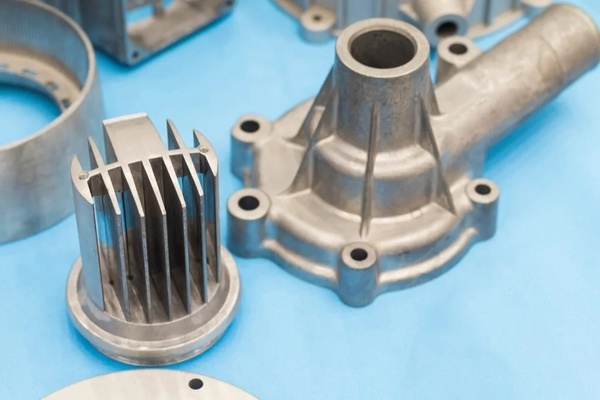
| Aerospace | Engine housings, turbine parts |
| Automotive | Engine components, brackets |
| Medical | Surgical tools, implants |
| Industrial | Gearboxes, custom machinery parts |
The ability to hold tight tolerances and machine complex 3D geometries makes CNC milling indispensable for high performance and safety-critical parts.
Advanced Milling: 5-Axis and Multi-Axis Machining
Advanced multi-axis milling (like 5-axis) significantly enhances manufacturing potential. These systems machine complex geometries in one setup, reduce fixture errors, and shorten lead times. Their tool orientation freedom improves surface quality and eliminates multiple re-clamps, which is especially crucial for aerospace or high-complexity components.
Why Choose CNC Milling Over Traditional Methods
Compared to manual machining, CNC milling offers:
- Superior Repeatability and Accuracy
- Greater Automation and Less Human Error
- High Cutting Speed and Efficiency
- Capability to Handle Complex Geometries
Engineers and buyers benefit from consistent, high-quality production runs that scale from prototype to full batch without sacrificing precision.
Why Xavier Is Your Best CNC Milling Machining Partner
When precision matters, Xavier combines state-of-the-art 5-axis machines, advanced toolpaths and CAM technology, and deep materials expertise to deliver parts that consistently meet or exceed tight tolerance requirements. From aerospace housings to critical medical components, Xavier’s CNC milling services ensure quality, reliability, and competitive lead times. With transparent capabilities listings, material charts, and project examples on request, Xavier helps engineers confidently transition from concept to production. cnc milling machining service
Some of the images and text in this article are collected and compiled from the internet. If there is anything inappropriate, please contact us for processing.