
Bolt vs Screw: Key Differences, Types, Materials, Applications, and How to Choose the Right Fastener
Bolts and screws are two of the most widely used mechanical fasteners in manufacturing, construction, automotive engineering, aerospace, and CNC machining. Although they may look similar and are both used to join components, they differ in thread design, installation methods, load distribution, fastening principles, and typical applications.
For engineers, product designers, and manufacturing buyers, understanding the difference between a bolt and a screw is important when selecting fasteners for mechanical assemblies. Choosing the wrong fastener can lead to insufficient clamping force, thread damage, loosening under vibration, or even structural failure.
From a CNC machining perspective, bolt and screw selection also affects hole design, thread machining, material compatibility, dimensional tolerances, and production costs.
This guide explains the 10 most important topics surrounding bolt vs screw, including their structural differences, thread types, materials, strength, applications, and machining considerations.
10 Key Topics to Understand About Bolt vs Screw
- Bolt vs Screw: Basic Definitions and Main Differences
- Structural Differences Between Bolts and Screws
- Thread Design and How Fasteners Work
- Common Types of Bolts and Screws
- Materials Used for Bolts and Screws
- Strength, Tensile Properties, and Load Capacity
- Bolt vs Screw: Installation and Removal Methods
- Industrial Applications and Real-World Examples
- CNC Machining Considerations for Bolts and Screws
- How to Choose the Right Bolt or Screw for Your Project
Bolt vs Screw: Basic Definitions and Main Differences
A bolt is an externally threaded mechanical fastener designed primarily to pass through clearance holes in two or more components and secure them with a matching nut. During installation, the nut is normally rotated to generate tension in the bolt, creating a clamping force that holds the assembled components together.
A screw is also an externally threaded fastener, but it is generally designed to engage directly with a threaded hole, a threaded component, or the material itself. Unlike a conventional bolted joint, a screw assembly usually does not require a separate nut.
The most important distinction is how the fastener is used rather than simply how it looks. Some fasteners have nearly identical shapes but are classified differently depending on their intended installation.
Comparison of bolts and screws
| Feature | Bolt | Screw |
|---|---|---|
| Main purpose | Connect multiple components using a nut | Fasten components directly |
| Mating component | Usually a nut | Tapped hole or material |
| Hole design | Usually clearance hole | Tapped or pilot hole |
| Tightening method | Usually rotates the nut | Usually rotates the head |
| Thread design | Often partially threaded, but can be fully threaded | Often fully threaded |
| Typical tools | Wrench or socket | Screwdriver, Allen key, or Torx driver |
| Common applications | Machinery frames, structural joints | Enclosures, brackets, housings |
| Disassembly | Usually straightforward | Depends on thread engagement and substrate |
For example, imagine joining two CNC-machined aluminum plates. If a fastener passes through clearance holes in both plates and a hex nut is tightened on the opposite side, it functions as a bolt. If the upper plate has a clearance hole while the lower plate contains an M6 tapped hole, an M6 screw can secure the assembly directly.
This distinction is especially important in mechanical engineering because the fastening method determines the hole specifications, assembly sequence, and required machining operations.
Structural Differences Between Bolts and Screws
Although bolts and screws share several structural features, their designs are optimized for different fastening conditions. Understanding these features helps engineers choose the correct fastener for a specific mechanical assembly.
1. Head Design
The head provides a surface for applying installation torque and transferring the clamping force to the connected component.
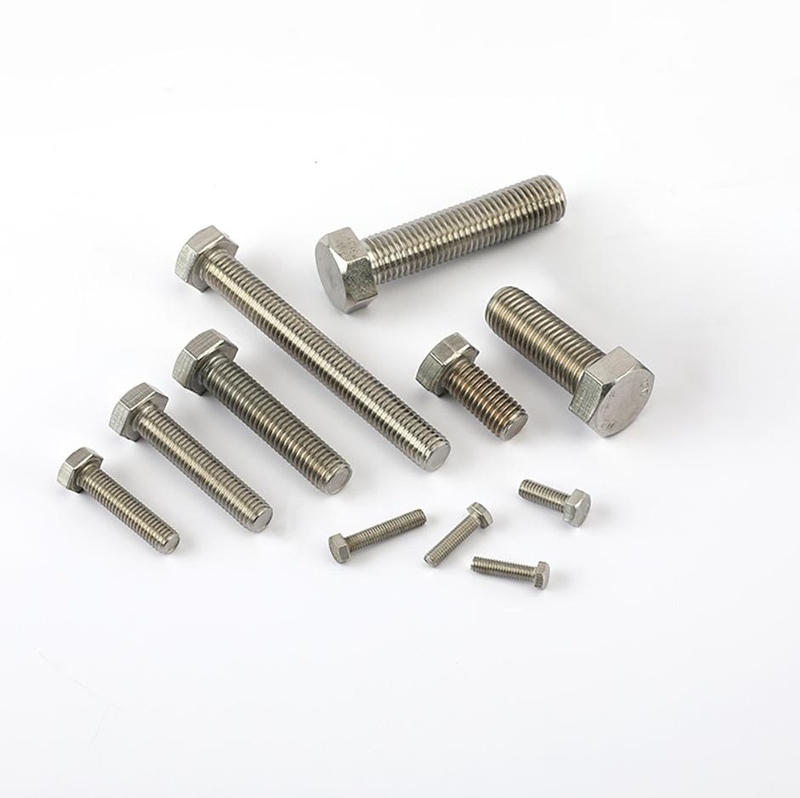
Common bolt heads include hexagonal heads, square heads, and flange heads. Hex bolts are widely used in industrial equipment because they provide sufficient wrench engagement and are relatively easy to install with standard tools.
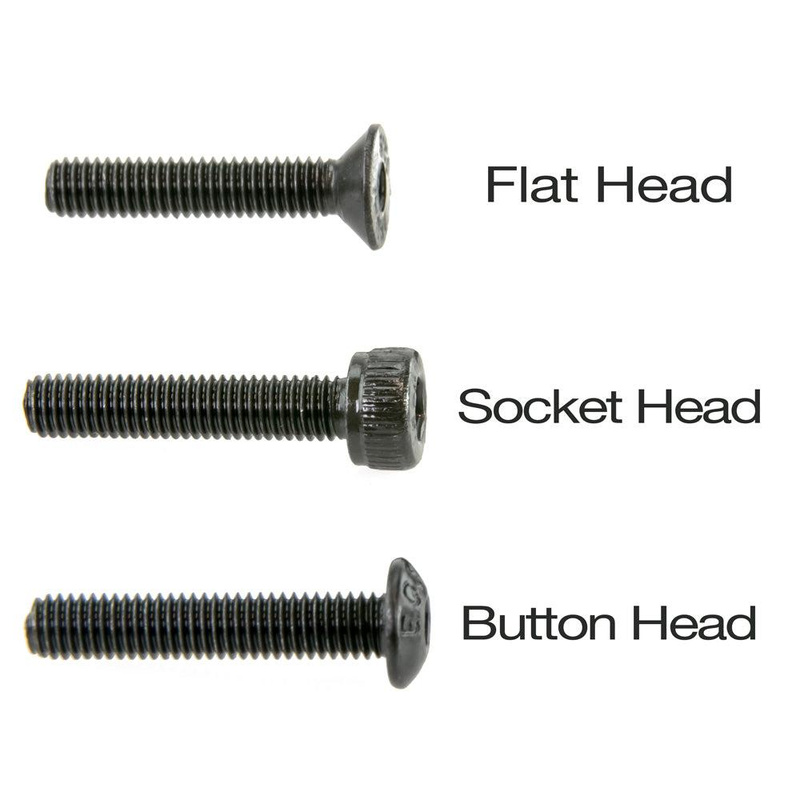
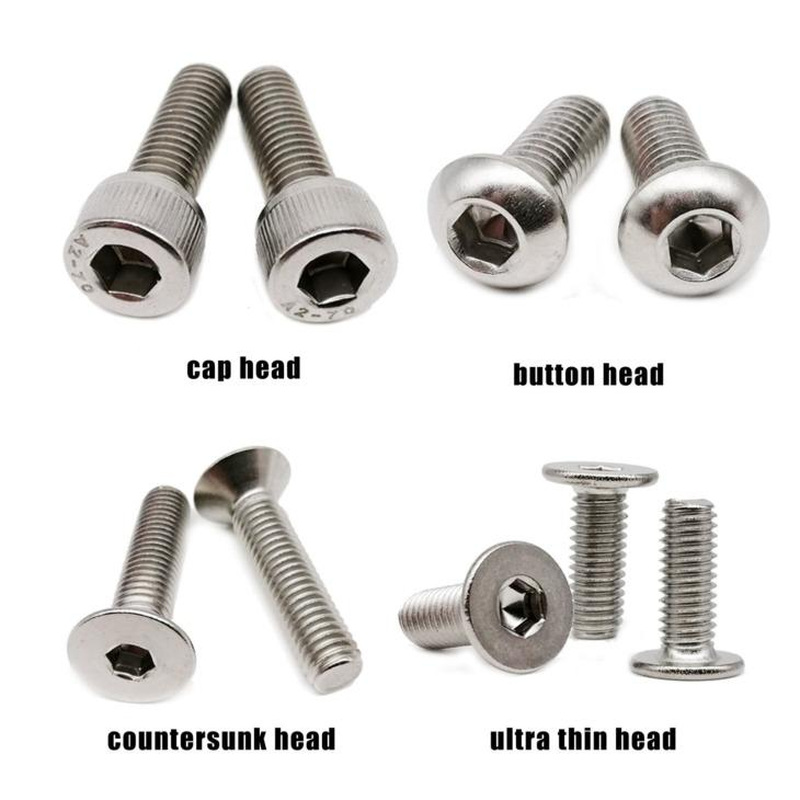
Screws have a broader selection of head configurations, including:
- Flat head: Designed for countersunk installations where the head should sit flush with the surface.
- Socket head: Uses an internal hexagonal drive and is suitable for compact mechanical assemblies.
- Button head: Provides a rounded, low-profile appearance.
- Pan head: Offers a relatively wide bearing surface.
- Set screw: Usually headless and designed to secure components such as pulleys, gears, and collars.
2. Shank and Threaded Length
The shank is the cylindrical body beneath the head. Many conventional bolts have an unthreaded shank followed by a threaded section. The smooth shank can provide a bearing surface when the joint is designed to transfer transverse loads through the fastener.
Screws are frequently threaded along most or all of their shank, although partially threaded screws are also common.
For example, consider an M10 bolt with a 10 mm nominal diameter and a 50 mm overall length. If the design requires 30 mm of smooth shank and 20 mm of thread, the unthreaded section can be positioned through the shear planes of the connected components.
However, not every bolt has a partially threaded shank, and not every screw is fully threaded. These are common design tendencies rather than universal classification rules.
3. Bearing Surface and Drive Configuration
A bolt typically uses an external wrenching head, while screws can use internal or external drives. Internal hex and Torx drives are particularly useful where the surrounding assembly provides limited clearance.
The bearing surface beneath the head also matters. A larger bearing area can distribute compressive force over a wider region, reducing the risk of localized deformation in softer materials such as aluminum.
For precision-machined components, head diameter, head height, countersink angle, and recess depth should all be considered during the design stage.
Thread Design and How Fasteners Work
Threads determine how a bolt or screw engages with its mating component. They convert rotational movement into axial movement and generate the clamping force required to hold an assembly together.
1. Metric and Imperial Thread Systems
The two major thread measurement systems are metric and imperial.
Metric threads are identified by the letter M, followed by the nominal diameter and thread pitch. For example, M8 × 1.25 indicates an 8 mm nominal diameter and a 1.25 mm distance between adjacent thread crests.
Imperial threads are commonly specified using Unified National Coarse (UNC) and Unified National Fine (UNF) thread systems.
| Thread specification | Nominal diameter | Pitch or thread count |
|---|---|---|
| M4 × 0.7 | 4 mm | 0.7 mm |
| M6 × 1.0 | 6 mm | 1.0 mm |
| M8 × 1.25 | 8 mm | 1.25 mm |
| M10 × 1.5 | 10 mm | 1.5 mm |
| 1/4-20 UNC | 6.35 mm | 20 TPI |
| 3/8-16 UNC | 9.525 mm | 16 TPI |
Metric pitch is measured in millimeters, while imperial thread pitch is generally expressed as threads per inch (TPI).
Engineers must avoid mixing incompatible thread standards. An M8 × 1.25 fastener cannot be correctly substituted with a 5/16-18 UNC fastener, even though their nominal diameters are relatively close.
2. Coarse Threads vs Fine Threads
Coarse threads have a larger pitch and fewer threads per unit length. They are generally easier to install and are less sensitive to minor contamination or damage during assembly.
Fine threads have a smaller pitch and provide more precise axial adjustment per revolution. For a given nominal diameter, they also have a larger tensile stress area than coarse threads, which can be beneficial for tensile loading.
| Characteristic | Coarse thread | Fine thread |
|---|---|---|
| Thread pitch | Larger | Smaller |
| Installation | Generally faster | Requires more rotations |
| Adjustment precision | Lower | Higher |
| Thread engagement | Generally robust | Requires careful handling |
| Typical applications | General machinery | Precision assemblies and adjustment mechanisms |
3. Thread Engagement and Internal Thread Strength
Thread engagement length is particularly important when screws are installed directly into CNC-machined components.
For example, an M6 screw installed into a 6061 aluminum housing may have different pull-out resistance from the same screw installed into a steel housing. This is because the internal thread material has different mechanical properties.
A common preliminary design guideline for steel fasteners in aluminum is to consider approximately 1.5 times the nominal diameter as an initial engagement-length estimate. For an M6 screw, this corresponds to approximately 9 mm.
This is not a guaranteed strength value. Actual requirements depend on the aluminum alloy, temper, thread condition, load direction, fastener strength, and required safety factor.
Common Types of Bolts and Screws
Different bolt and screw designs are developed to meet specific requirements involving load capacity, installation space, vibration resistance, and assembly conditions.
Common Types of Bolts
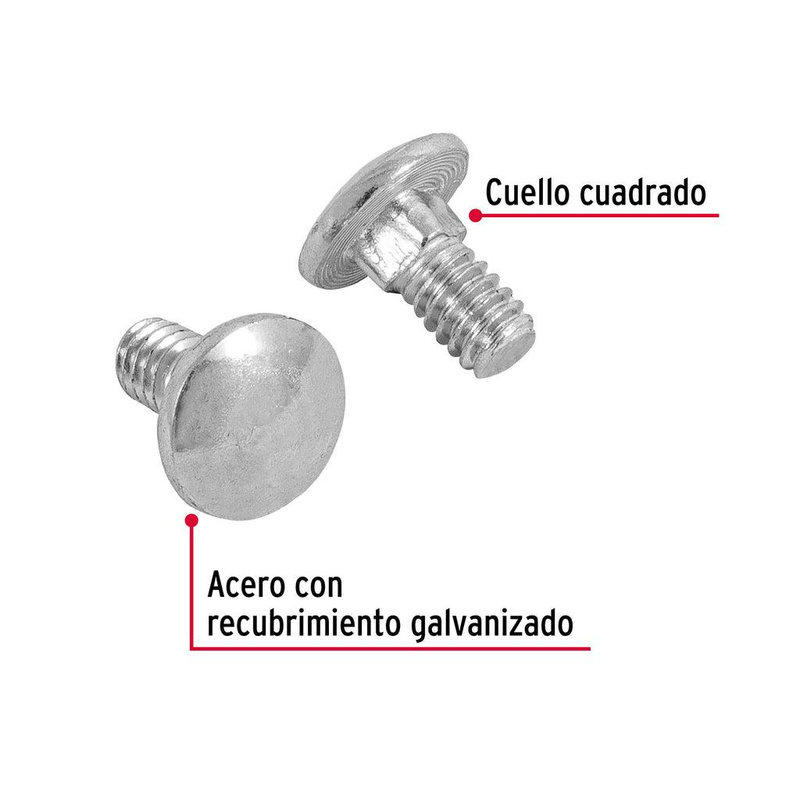
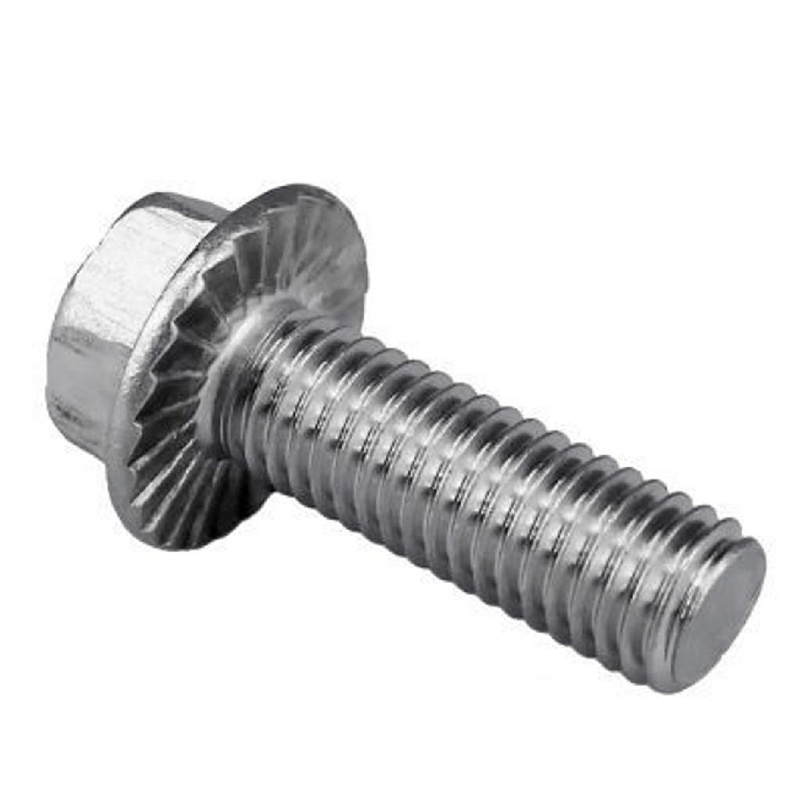
| Bolt type | Main characteristics | Typical application |
|---|---|---|
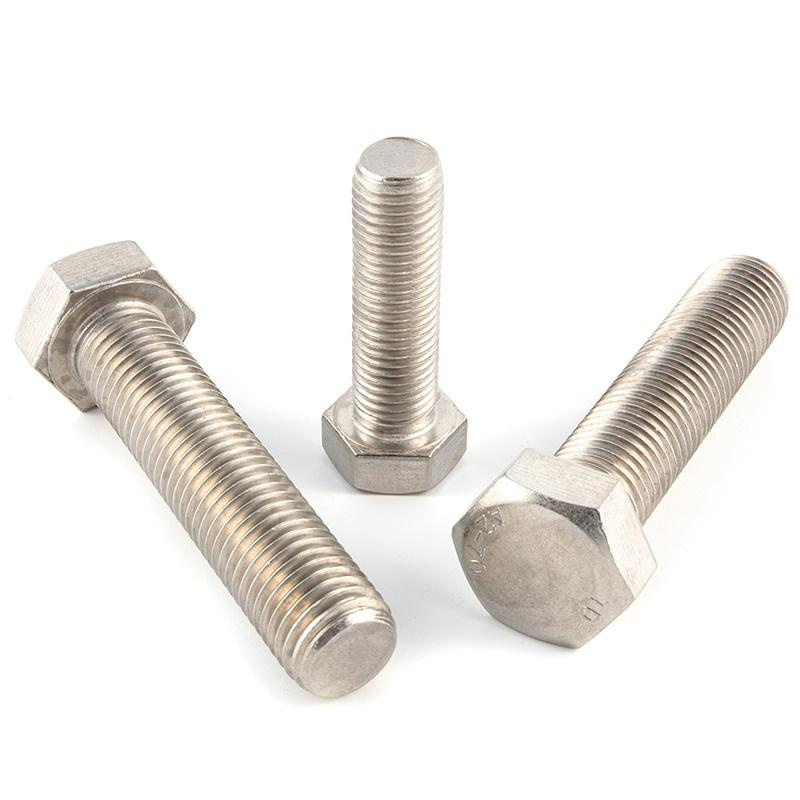
| Hex bolt | Six-sided external head | Machinery and structural joints |
| Carriage bolt | Rounded head with square neck | Fixtures and mounting structures |
| Flange bolt | Integrated bearing flange | Automotive and industrial equipment |
| Shoulder bolt | Precision unthreaded shoulder | Pivoting and locating assemblies |
| Anchor bolt | Designed to secure components to concrete | Construction and equipment foundations |
Shoulder bolts deserve particular attention in precision engineering. Their smooth cylindrical section can act as a locating or pivoting surface, while the threaded end provides fastening. For example, a CNC-machined shoulder bolt can be used in robotic linkages where consistent shoulder diameter and concentricity are important.
Common Types of Screws
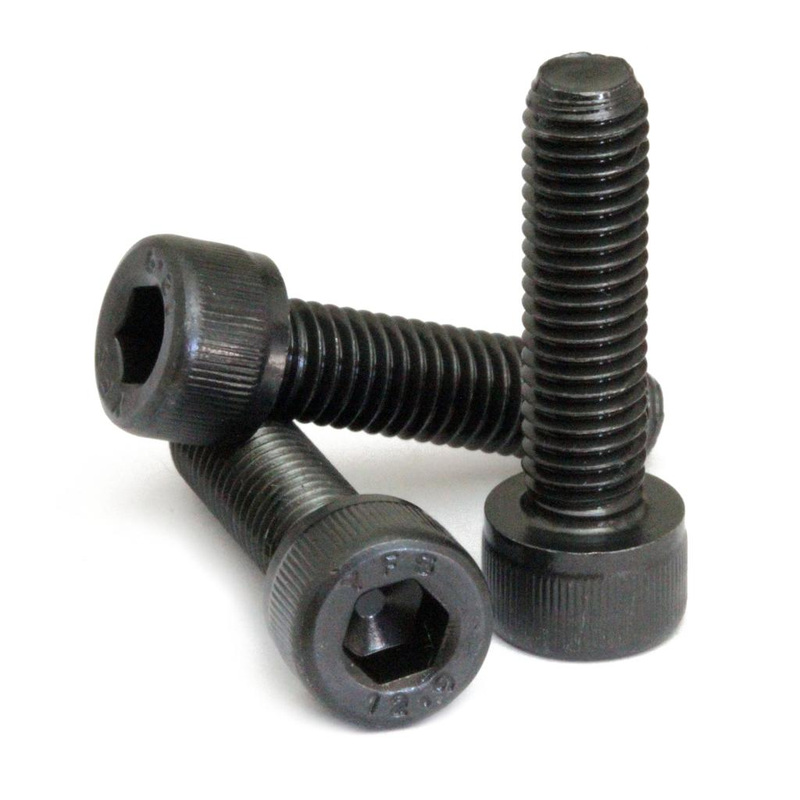
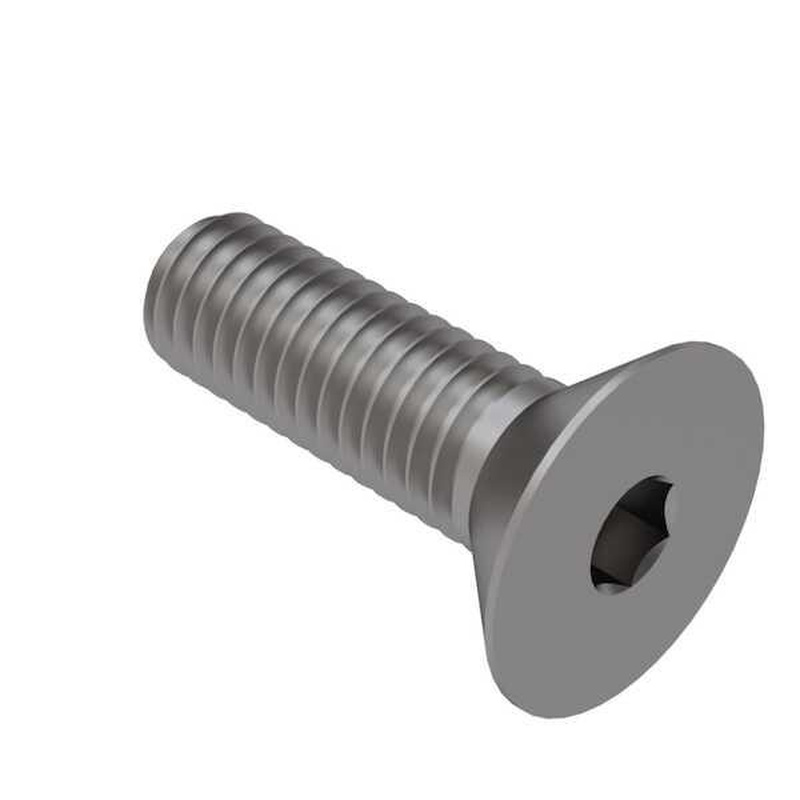
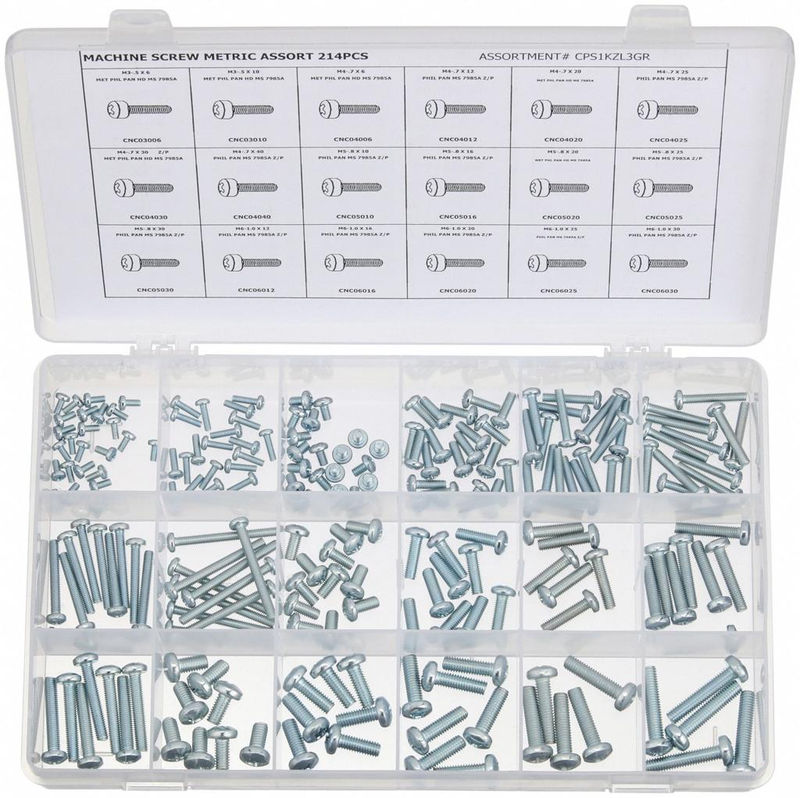
| Screw type | Main characteristics | Typical application |
|---|---|---|
| Machine screw | Uniform machine threads | Metal enclosures and equipment |
| Socket head cap screw | Internal hexagonal drive | Precision machinery |
| Flat head screw | Countersunk head | Flush mounting |
| Set screw | Often headless with a recessed drive | Shaft and gear positioning |
| Self-tapping screw | Creates or forms mating threads | Sheet metal and plastic |
| Self-drilling screw | Drills and fastens in one operation | Metal sheet assemblies |
Machine screws are especially common in CNC-machined housings because they can engage directly with tapped holes. Socket head cap screws are often selected when designers need relatively high clamping force without using a large external hexagonal head.
Materials Used for Bolts and Screws
Material selection directly affects fastener strength, corrosion resistance, wear behavior, temperature performance, and manufacturing cost.
Different applications require different material properties. A fastener used in an outdoor marine environment has very different requirements from one installed inside a precision industrial gearbox.
1. Carbon Steel and Alloy Steel
Carbon steel is one of the most common fastener materials because it offers a good balance between strength, availability, and cost.
Alloy steel fasteners can undergo heat treatment to achieve higher mechanical strength. Common property classes include 8.8, 10.9, and 12.9.
For example, an ISO property class 8.8 fastener has a nominal tensile strength of 800 MPa and a nominal yield-strength ratio of 0.8. Its nominal yield strength is therefore 640 MPa.
A class 12.9 fastener has a nominal tensile strength of 1,200 MPa and a nominal yield-strength ratio of 0.9. Its nominal yield strength is 1,080 MPa.
These are nominal property-class values, not substitutes for checking the applicable standard and product specification.
2. Stainless Steel
Stainless steel fasteners are widely used where corrosion resistance is important.
- 304 stainless steel: Common in general industrial and indoor applications.
- 316 stainless steel: Provides improved resistance to chloride-related corrosion and is often used in marine environments.
One important consideration is galling. Stainless steel threads can experience adhesive wear during tightening, particularly when similar stainless steel materials are used together. Proper lubrication, suitable surface treatments, and controlled installation torque can help reduce this risk.
3. Aluminum, Titanium, and Brass
| Material | Main advantage | Common applications |
|---|---|---|
| Aluminum | Low weight and corrosion resistance | Lightweight assemblies |
| Titanium | High strength-to-weight ratio and corrosion resistance | Aerospace and specialized equipment |
| Brass | Corrosion resistance and electrical conductivity | Electrical components |
| Stainless steel | Corrosion resistance | Marine and industrial equipment |
| Alloy steel | High mechanical strength | Heavy machinery |
For aerospace components, titanium fasteners may be selected when weight reduction and strength are critical. Brass screws are frequently found in electrical assemblies because of their conductivity and corrosion resistance.
However, material compatibility must always be evaluated. For example, dissimilar metals exposed to an electrolyte can create galvanic corrosion.
Strength, Tensile Properties, and Load Capacity
The strength of a bolt or screw is not determined by its diameter alone. Material grade, tensile stress area, thread engagement, joint geometry, and installation preload all influence the load capacity of a fastening assembly.
1. Tensile Strength and Proof Load
Tensile strength describes the maximum tensile stress a material can withstand before fracture. Proof load represents the specified load a fastener must withstand without unacceptable permanent deformation.
For a threaded fastener, the tensile stress area is smaller than the nominal cross-sectional area because the thread roots reduce the effective load-bearing section.
The approximate tensile load can be calculated using:
[ F=A_s\times \sigma ]
Where:
- (F) = tensile load (N)
- (A_s) = tensile stress area (mm²)
- (\sigma) = tensile stress (MPa)
For example, an M8 × 1.25 fastener has a standard tensile stress area of approximately 36.6 mm².
For a property class 8.8 fastener, using the nominal 800 MPa tensile strength:
[ F=36.6\times800=29,280N ]
This gives an approximate nominal tensile breaking load of 29.3 kN. It is not a recommended working load. Actual design limits must account for proof strength, fatigue, preload, joint conditions, and appropriate safety factors.
2. Shear Loads and Clamping Force
Bolted joints can experience tensile, shear, or combined loading.
A properly preloaded joint can transfer transverse loads through friction between the mating surfaces. If the applied shear exceeds the available frictional resistance, the joint may slip and transfer load to the fastener shank and hole bearing surfaces.
This is why bolt diameter, grip length, clearance-hole size, and surface condition must be considered together.
3. Fatigue and Vibration Resistance
Fasteners subjected to repeated loading may fail through fatigue even when the applied load is below their static tensile strength.
For machinery, automotive assemblies, and robotic equipment, engineers should evaluate:
- Load cycles and vibration frequency.
- Required bolt preload.
- Joint stiffness and component flexibility.
- Thread engagement and stress concentration.
- Locking methods and maintenance requirements.
A stronger fastener does not automatically guarantee a more reliable joint. The entire connection must be designed correctly.
Bolt vs Screw: Installation and Removal Methods
Installation procedures influence fastening accuracy, assembly efficiency, and long-term reliability.
Bolt Installation
A typical bolted assembly involves inserting the bolt through aligned clearance holes, positioning a washer if required, and tightening a nut on the opposite side.
A calibrated torque wrench may be used to achieve the specified installation torque. However, torque is only an indirect estimate of preload because friction under the head and within the threads affects the relationship between torque and bolt tension.
For critical applications, engineers may specify direct tension measurement or controlled tightening procedures.
Screw Installation
Screws are normally installed by rotating their heads into a tapped hole or suitable material.
For CNC-machined metal parts, the process generally involves drilling a pilot hole, machining the internal thread using a tap or thread mill, and cleaning the hole before assembly.
For example, an M5 × 0.8 machine screw installed in a CNC-machined aluminum bracket requires a correctly sized tapped hole and sufficient thread engagement. An incorrect drill diameter may result in weak threads or excessive tapping torque.
| Installation factor | Bolt | Screw |
|---|---|---|
| Main components | Bolt, nut, optional washer | Screw and mating material |
| Access | Usually both sides | Often one side |
| Hole preparation | Clearance holes | Tapped or pilot hole |
| Main tightening tool | Wrench or socket | Driver or hex key |
| Common risk | Joint slip or preload loss | Thread stripping or drive damage |
For repeated assembly, thread wear must also be considered. If a soft aluminum housing is opened frequently, a threaded insert may improve durability by providing a more wear-resistant internal thread.
Industrial Applications and Real-World Examples
Bolts and screws are used throughout modern manufacturing, but their applications depend on the mechanical requirements of each assembly.

Automotive Industry
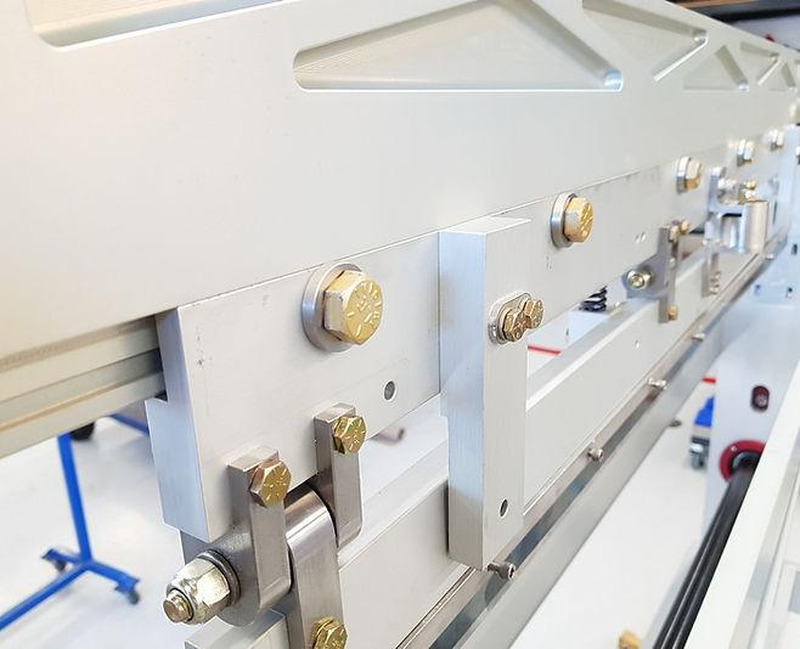
Bolts are extensively used in engine assemblies, suspension systems, chassis structures, and transmission housings. These connections often experience vibration, temperature changes, and repeated mechanical loads.
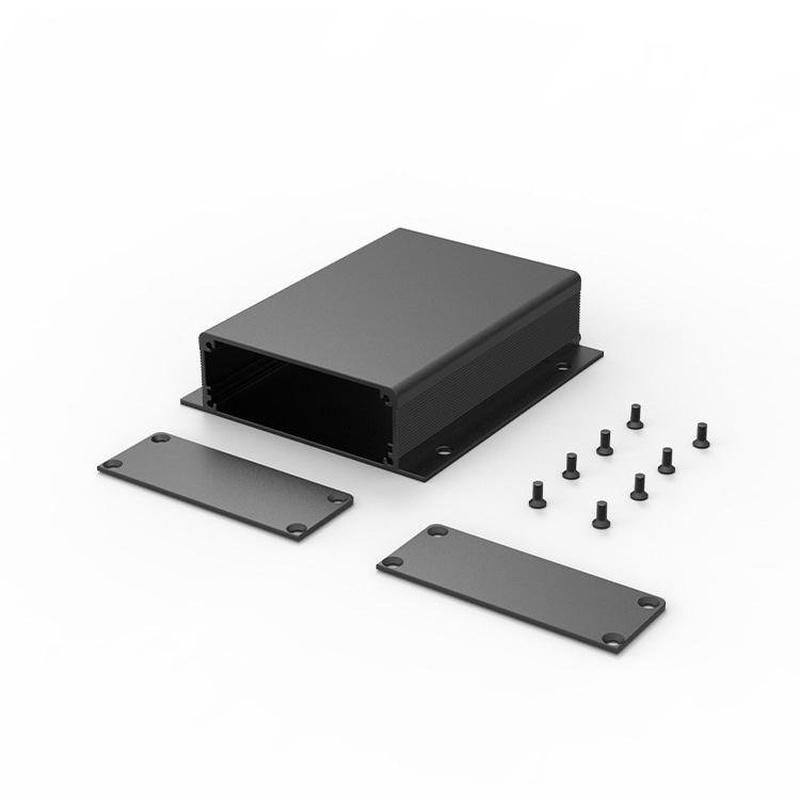
Screws are commonly used for interior components, electronic enclosures, brackets, and protective covers.
For example, an engine mounting bracket may use high-strength bolts to withstand significant mechanical loading, while a small electrical control enclosure may use stainless steel machine screws for convenient maintenance.
Aerospace Industry
Aerospace assemblies require careful consideration of weight, fatigue resistance, corrosion behavior, and traceability.
Titanium fasteners and high-strength alloy steel fasteners may be used depending on the structural requirements. Fastener selection must comply with the applicable aerospace specifications and approved material requirements.
CNC Machinery and Robotics
Precision machinery often uses socket head screws to secure mounting plates, linear guide rails, motor brackets, and machined housings.
Bolts are useful for larger structural connections where a nut can be installed and inspected.
For a robotic arm, for example, shoulder bolts may serve as pivot fasteners, while socket head screws secure motor housings and machined aluminum brackets.
Electronics and Medical Equipment
Small machine screws are frequently used in electronic enclosures, sensor housings, and medical equipment assemblies. Their compact dimensions allow designers to secure covers and internal components without taking up excessive space.
For medical equipment, material compatibility, cleaning requirements, surface finish, and applicable regulatory requirements must also be evaluated.
CNC Machining Considerations for Bolts and Screws
CNC machining plays an important role in producing precision fasteners and manufacturing the mating components that receive them.
Although standard bolts and screws are commonly produced through processes such as cold heading, thread rolling, and specialized turning, CNC machining is particularly useful for custom fasteners, precision shoulders, special geometries, and low-volume production.
1. Thread Milling vs Tapping
Two common CNC operations for producing internal threads are tapping and thread milling.
| Factor | CNC Tapping | CNC Thread Milling |
|---|---|---|
| Cutting method | Tap forms the complete thread profile | Milling tool generates the thread |
| Production speed | Generally faster for repetitive holes | Often slower for small batches |
| Tool flexibility | Usually requires specific tap sizes | One tool can produce compatible thread sizes within its range |
| Blind holes | Requires attention to tap clearance | Can provide better control over thread depth |
| Tool failure | Broken taps can be difficult to remove | Generally easier to manage |
| Applications | Standard production threads | Custom and precision threads |
For example, producing M6 tapped holes in a batch of 500 aluminum brackets may be efficiently handled through CNC tapping. For a small batch of complex titanium components, thread milling may provide better process flexibility and tool control.
2. Hole Diameter and Thread Depth
Correct hole preparation is essential for reliable thread quality.
For a standard metric coarse thread, a common preliminary tapping-drill estimate is:
[ D{\text{drill}}\approx D{\text{nominal}}-P ]
For an M8 × 1.25 thread:
[ 8-1.25=6.75\text{ mm} ]
A 6.8 mm drill is commonly selected as a practical standard tapping-drill size.
However, the final drill size should be confirmed against the required thread percentage, material, tap design, and applicable machining recommendations.
Blind holes also require additional depth for the drill point, tap chamfer, and chip clearance. The usable full-thread depth is not equal to the total drilled depth.
3. Machining Tolerances and Surface Quality
For precision assemblies, hole position, perpendicularity, thread quality, and mating-surface flatness are all important.
Consider an aluminum mounting plate with four M6 screw holes. If the hole positions are inaccurate, the screws may not align with the mating component even if the threads themselves are correctly manufactured.
A practical CNC drawing should specify:
- Thread designation and tolerance class.
- Thread depth and minimum full-thread engagement.
- Hole position and positional tolerance.
- Countersink or counterbore dimensions, where required.
- Surface finish of critical mating faces.
- Material and surface treatment requirements.
These details help manufacturers avoid ambiguity and reduce assembly problems.
4. Surface Finishing and Corrosion Protection
Fasteners and threaded components may require anodizing, zinc plating, electroless nickel plating, passivation, or other protective finishes.
However, surface treatment can affect thread dimensions. For example, anodizing aluminum creates an oxide layer that changes the dimensions of the treated surface. Plating also adds material thickness to external and internal threads.
Therefore, thread allowances and final dimensions must be considered before finishing. For precision assemblies, critical threads may require masking, post-treatment inspection, or additional finishing operations.
How to Choose the Right Bolt or Screw for Your Project
Selecting the right fastener requires more than comparing dimensions. Engineers should evaluate the complete assembly, including load conditions, mating materials, installation accessibility, maintenance requirements, and operating environment.
1. Evaluate the Mechanical Load
For heavy structural connections requiring substantial clamping force, bolts with appropriate strength grades are often a suitable option.
For smaller components and housings, screws may provide sufficient fastening performance while simplifying the assembly.
2. Consider the Base Material
When fastening aluminum components, internal thread strength may become the limiting factor.
For example, an M8 high-strength steel screw installed into a thin aluminum wall may strip the aluminum threads before the fastener reaches its full load capacity.
In this situation, a longer engagement, threaded insert, or alternative joint design may be necessary.
3. Check Installation Space
If both sides of the assembly are accessible, a bolt-and-nut connection may be practical.
If the design provides access from only one side, a screw engaging a tapped hole is usually more convenient.
4. Evaluate Operating Conditions
Outdoor, marine, chemical-processing, and high-temperature applications require careful material and coating selection.
Engineers should consider corrosion, thermal expansion, vibration, lubrication, and possible galvanic interaction between dissimilar materials.
5. Compare Total Manufacturing and Assembly Costs
A bolt may have a relatively low unit cost, but the assembly also requires a nut, possibly a washer, and access for installation tools.
A screw eliminates some additional hardware but requires a properly machined or formed mating thread.
The best option is therefore the one that minimizes total manufacturing, assembly, inspection, and maintenance costs rather than simply the purchase price of the fastener.
Why Choose Xavier for Custom CNC Machined Fastening Components?
Selecting the correct bolt or screw is only one part of producing a reliable mechanical assembly. The accuracy of the mating components, thread quality, material properties, and surface finishing also play important roles in overall product performance.
At Xavier, we specialize in custom CNC machining services and precision manufacturing for international B2B customers. As an integrated manufacturing and trading factory, we provide CNC machining solutions for customers who require custom metal parts, precision components, and made-to-order mechanical assemblies.
Our manufacturing capabilities support a wide range of materials, including aluminum, stainless steel, alloy steel, brass, copper, titanium, and engineering plastics.
Whether you need CNC-machined threaded holes, precision mounting brackets, custom fasteners, aluminum housings, or complex mechanical components, our team can help you select suitable materials and manufacturing processes.
We focus on dimensional accuracy, consistent machining quality, and practical manufacturing solutions to help customers move from prototypes to small-batch and larger-volume production.
Looking for a reliable CNC machining manufacturer in China?
Contact Xavier today. Send us your 2D drawings, 3D CAD files, material requirements, and expected quantities. Our engineering team can evaluate your project and provide a suitable manufacturing solution and quotation.
Visit Xavier CNC Machining Services to discuss your custom machining requirements.
As an integrated CNC machining manufacturer and trading company, Xavier specializes in custom CNC machining and contract manufacturing of a wide range of metal components and precision parts. We provide professional machining solutions for various materials and industries, including CNC machining PEEK, CNC machining aluminum, and CNC machining stainless steel, as well as alloy steel, brass, bronze, copper, Inconel, Invar 36, mild steel, titanium, tool steel, ABS, FR4, G-10, nylon, PEI, PET, PMMA (acrylic), polycarbonate, polyethylene, polypropylene, POM (acetal), PPSU, PTFE, and PVC. Our manufacturing capabilities serve a broad range of applications, including robotics, aerospace components, marine parts, automotive components, medical equipment, and other precision-engineered products.
Whether you need a reliable CNC machining PEEK manufacturer, cost-effective bulk CNC machining aluminum services, or competitive CNC machining stainless steel pricing, Xavier is ready to support your manufacturing requirements. For more information about our capabilities, including bolt vs screw machining solutions, please feel free to contact us for professional assistance and a customized quotation.
Some of the images and text in this article are collected and compiled from the internet. If there is anything inappropriate, please contact us for processing.