
10 Key Topics Related to CNC Milling Services Near Me
10 Core Knowledge Points
- What Are CNC Milling Services and How Do They Work?
- How to Find Reliable CNC Milling Services Near Me
- CNC Milling Capabilities and Available Machining Processes
- Materials Available for CNC Milling
- CNC Milling Accuracy, Tolerances, and Surface Finishes
- Custom CNC Milling for Prototypes and Production Parts
- CNC Milling Cost Factors and How to Reduce Expenses
- CNC Milling Lead Times and Production Efficiency
- Quality Control and Inspection for CNC Milled Components
- How to Choose the Right CNC Milling Service Provider
CNC Milling Services Near Me: A Complete Guide to Finding the Right CNC Milling Manufacturer
What Are CNC Milling Services and How Do They Work?
CNC milling services are precision manufacturing solutions that use computer-controlled machines to remove material from a solid workpiece. A rotating cutting tool moves along programmed paths to produce specific shapes, dimensions, holes, slots, pockets, and complex surface geometries. Unlike manual milling, CNC milling follows digital instructions generated from CAD (Computer-Aided Design) models and CAM (Computer-Aided Manufacturing) software, allowing manufacturers to produce repeatable components with consistent dimensional accuracy.
For customers searching for CNC milling services near me, understanding the machining process is important because different components require different machining strategies.
The Main Steps in CNC Milling
A typical CNC milling project involves five stages:
- CAD design: Engineers create a 2D drawing or 3D model containing dimensions, tolerances, hole positions, and geometric requirements.
- CAM programming: The machinist converts the design into toolpaths and selects cutting tools, spindle speeds, feed rates, and machining sequences.
- Material preparation: Metal or plastic stock is selected, cut to size, and secured using a vise, fixture, or other workholding device.
- CNC machining: The machine performs rough milling, drilling, slotting, pocketing, and finishing operations.
- Inspection and delivery: Finished components are measured, deburred, cleaned, and prepared for shipment.
For example, manufacturing an aluminum mounting bracket may require face milling, contour milling, pocket machining, and drilling. These operations can be combined in one CNC machining program to reduce manual intervention and improve consistency.
How to Find Reliable CNC Milling Services Near Me
Searching for CNC milling services near me usually means that a buyer wants a convenient manufacturer that can provide accurate parts, competitive prices, and dependable delivery. However, geographical proximity should not be the only factor when choosing a CNC machining supplier.
A nearby machine shop may offer faster communication and easier factory visits, but it may not have the equipment, material experience, or production capacity required for your project.
Important Factors to Compare Before Choosing a Supplier
| Evaluation factor | What you should check | Why it matters |
|---|---|---|
| Machine capabilities | 3-axis, 4-axis, and 5-axis machines | Determines machining complexity |
| Material experience | Aluminum, stainless steel, titanium, plastics | Affects cutting quality and cost |
| Dimensional accuracy | Standard and precision tolerances | Ensures assembly compatibility |
| Quality inspection | CMM, calipers, micrometers | Verifies finished dimensions |
| Production capacity | Prototype and batch manufacturing | Supports future order growth |
| Delivery arrangements | Production schedule and shipping | Helps control project timelines |
| Engineering support | DFM and drawing review | Prevents manufacturing problems |
Local CNC Shops vs. Overseas CNC Manufacturers
Local suppliers can be suitable when customers require face-to-face technical communication, immediate collection, or local support.
However, overseas CNC manufacturers can also be competitive options, particularly for businesses purchasing customized metal components in batches. They may offer broader material sourcing, integrated machining and finishing services, and lower manufacturing costs.
For example, a US engineering company developing 200 customized aluminum equipment housings could compare a local machine shop with an overseas CNC manufacturer. Instead of comparing only the machining quotation, the buyer should evaluate the complete landed cost, including shipping, customs, inspection, and potential rework.
The best supplier is the one that meets your technical requirements and total project budget, not necessarily the one located closest to your business.
CNC Milling Capabilities and Available Machining Processes
A professional CNC milling service provider should have different machining capabilities to accommodate different component geometries. The number of machine axes, spindle configuration, tooling, and workholding method all influence what can be manufactured efficiently.
Comparison of 3-Axis, 4-Axis, and 5-Axis CNC Milling
Typical applications and relative cost considerations; actual capabilities depend on machine configuration and supplier expertise.
| Machining type | Main capabilities | Typical applications |
|---|---|---|
| 3-axis milling | X, Y, and Z movement | Plates, brackets, flat housings |
| 4-axis milling | Three linear axes plus rotary movement | Cylindrical housings, multi-sided components |
| 5-axis milling | Three linear and two rotational axes | Impellers, aerospace parts, complex surfaces |
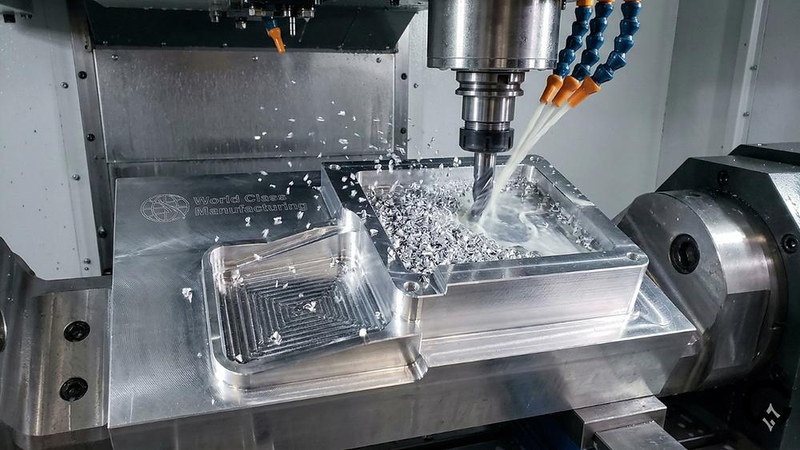
3-axis CNC milling is generally suitable for parts with features concentrated on one or two primary surfaces. It is widely used for aluminum plates, mounting brackets, equipment panels, and mechanical fixtures.
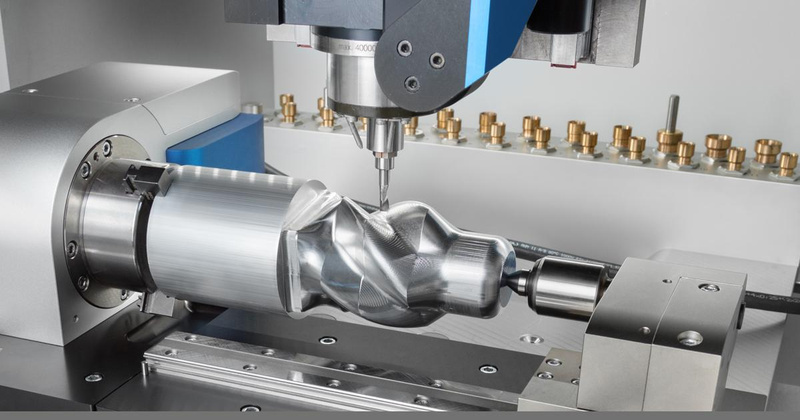
4-axis CNC milling introduces rotary movement, allowing the workpiece to be repositioned or rotated for machining multiple sides. This can reduce repeated clamping and improve the positional relationship between features.
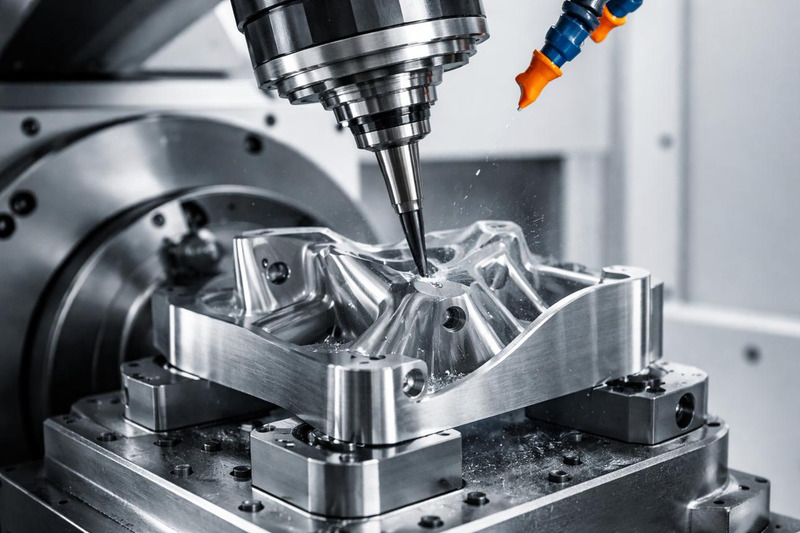
5-axis CNC milling is designed for complex geometries involving angled surfaces, curved contours, and multiple machining directions. It is particularly useful for aerospace components, medical equipment parts, and precision mechanical housings.
Choosing the most advanced machine does not automatically produce the best economic result. A simple aluminum plate does not need five-axis machining if a three-axis machine can achieve the required geometry and tolerances.
Common CNC Milling Operations
Other important operations include:
- Face milling: Produces flat surfaces and establishes reference planes.
- End milling: Creates slots, pockets, contours, and complex profiles.
- Drilling: Produces holes for fasteners, shafts, and fluid passages.
- Boring: Enlarges existing holes while improving diameter accuracy.
- Thread milling: Creates internal or external threads.
- Chamfer milling: Removes sharp edges and creates angled transitions.
Combining these operations allows one manufacturer to produce complete functional components rather than supplying unfinished blanks.
Materials Available for CNC Milling
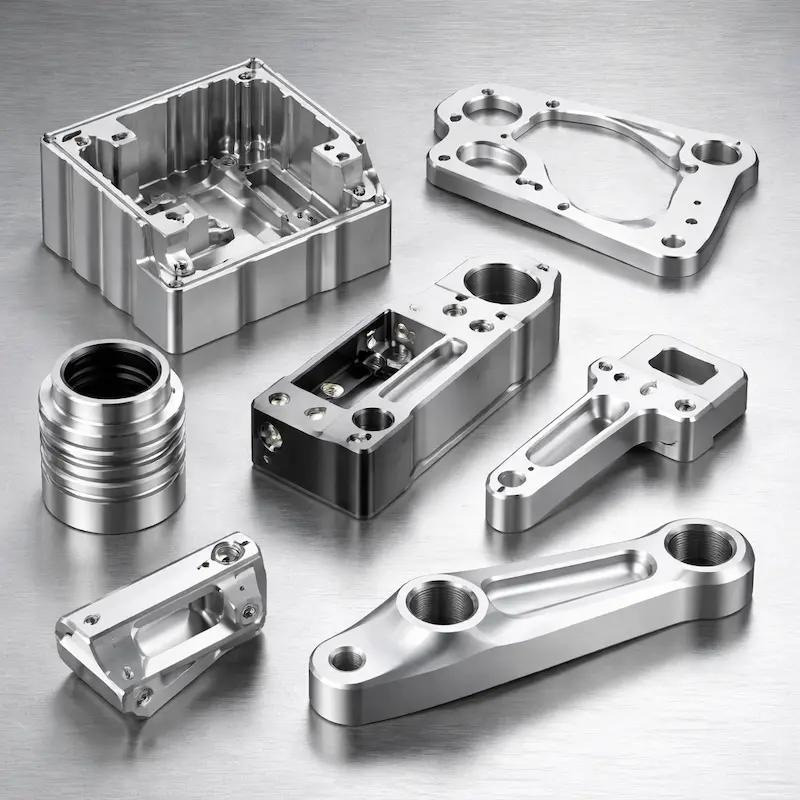
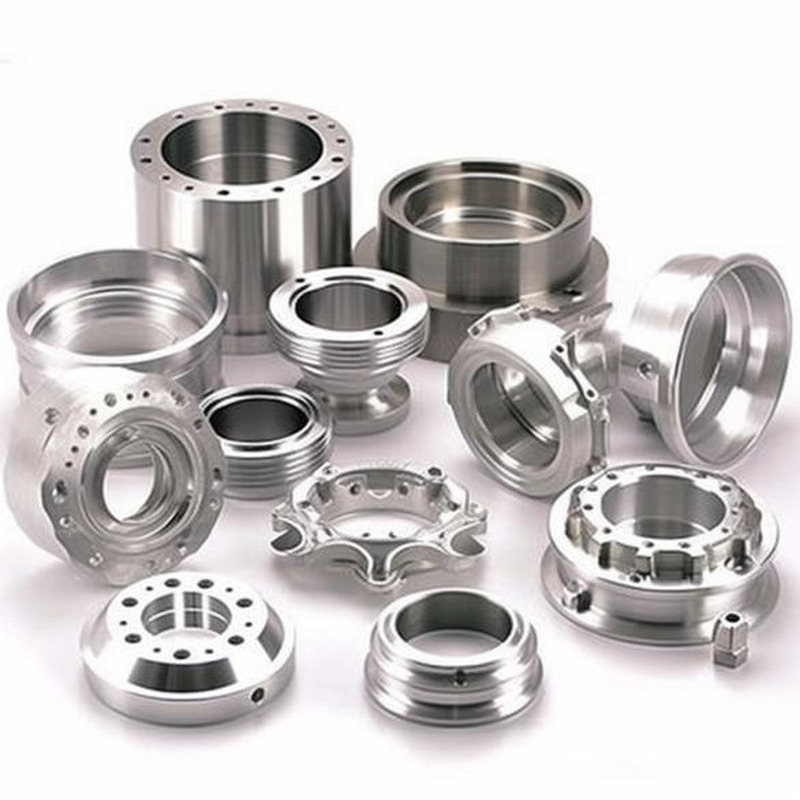
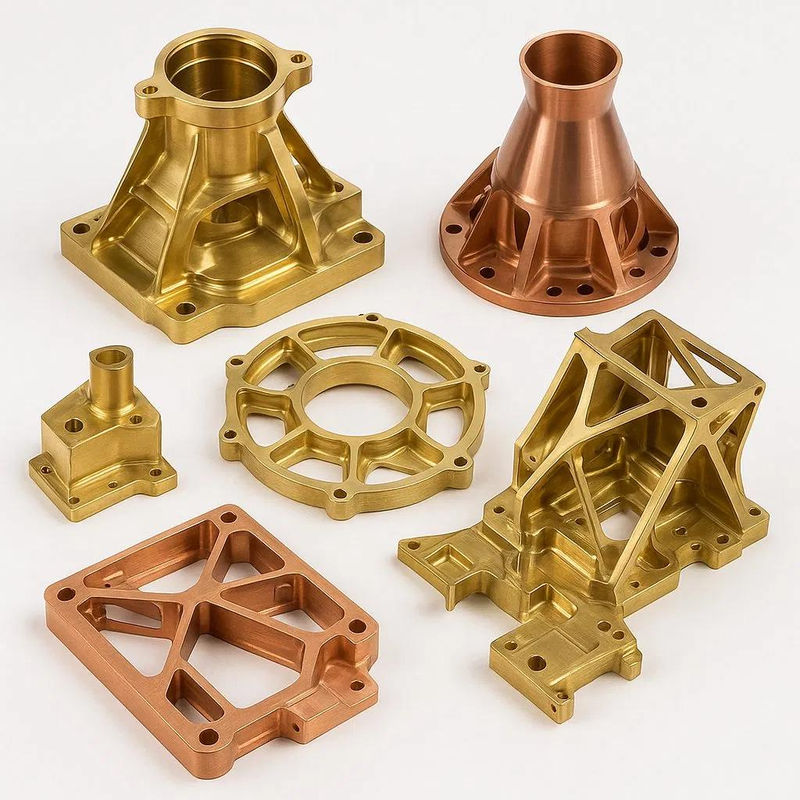
Material selection directly affects machining speed, cutting tool life, dimensional stability, component weight, corrosion resistance, and manufacturing cost. When looking for CNC milling services near me, customers should confirm that the supplier has experience machining the specific material grade required by their application.
Common CNC Milling Materials and Their Applications
| Material | Main characteristics | Typical applications |
|---|---|---|
| Aluminum 6061-T6 | Lightweight, machinable, corrosion resistant | Brackets, housings, frames |
| Aluminum 7075-T6 | High strength-to-weight ratio | Aerospace and high-load components |
| Stainless Steel 304 | Good corrosion resistance | Equipment parts and fittings |
| Stainless Steel 316 | Improved resistance to many corrosive environments | Marine and chemical equipment |
| Brass C360 | Excellent machinability | Connectors, valves, fittings |
| Copper | High electrical and thermal conductivity | Electrical and heat-transfer components |
| Titanium Ti-6Al-4V | High strength, low density, corrosion resistance | Aerospace and medical components |
| POM (Delrin) | Low friction, good dimensional stability | Gears, bushings, precision plastic parts |
| PEEK | High-performance engineering plastic | Medical and industrial components |
How Material Selection Affects Machining
Aluminum 6061-T6 is a popular choice because it offers a good balance of strength, weight, machinability, and cost. It is suitable for brackets, enclosures, structural supports, and many general-purpose mechanical components.
Aluminum 7075-T6 provides higher strength but generally costs more and requires careful machining because of its mechanical properties and application requirements.
Stainless steel is often selected when corrosion resistance and mechanical durability are important. However, 304 and 316 stainless steels can generate more heat during machining and may require optimized cutting parameters.
Titanium and Inconel require more demanding machining strategies, including appropriate tool materials, cutting speeds, coolant delivery, and chip evacuation. Their machining costs can be significantly higher than those of aluminum.
The material should therefore be selected according to the actual working environment, mechanical load, temperature, and required service life rather than simply choosing the strongest available option.
CNC Milling Accuracy, Tolerances, and Surface Finishes
Dimensional accuracy is one of the most important considerations when purchasing custom CNC milled parts. A component may look perfect but still fail during assembly if its hole positions, thickness, flatness, or mating surfaces are outside the specified tolerances.
Understanding CNC Milling Tolerances
Tolerance defines the acceptable variation between the actual manufactured dimension and the nominal dimension shown on an engineering drawing.
For example, if a mounting plate has a nominal thickness of 10 mm with a tolerance of ±0.05 mm, its acceptable thickness range is:
[ 9.95\text{ mm} \leq D \leq 10.05\text{ mm} ]
The following table provides illustrative tolerance levels. Actual achievable values depend on material, geometry, machine condition, workholding, and inspection method.
| Tolerance level | Example tolerance | Typical application |
|---|---|---|
| General machining | ±0.10 mm | Non-critical dimensions |
| Standard precision | ±0.05 mm | General mechanical components |
| Higher precision | ±0.02 mm | Assembly interfaces |
| Tight tolerance | ±0.01 mm | Precision locating features |
Not every dimension needs a tight tolerance. Applying ±0.01 mm to every feature can increase machining time, inspection requirements, and production costs unnecessarily.
Surface Roughness and Finishing Requirements
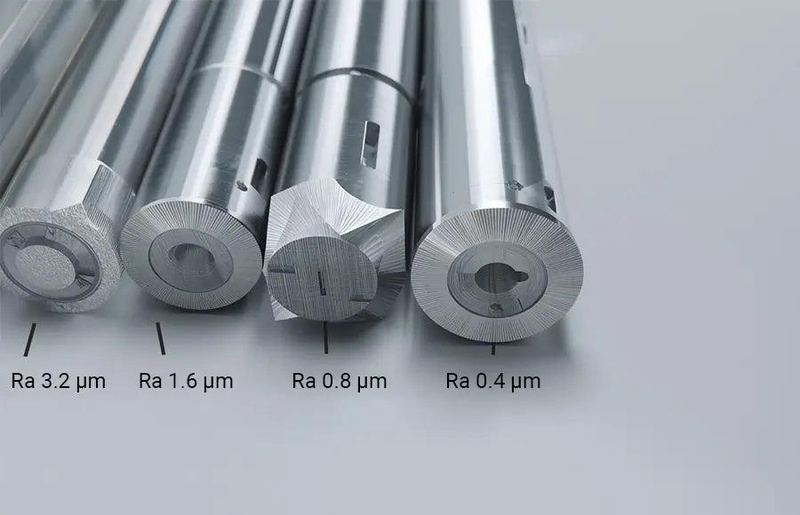
Surface roughness is commonly expressed using Ra, measured in micrometers (μm). It describes the average deviation of a surface profile from its mean line.
| Surface finish | Typical Ra | Characteristics |
|---|---|---|
| General machined | 3.2 μm | Visible machining marks |
| Fine machined | 1.6 μm | Smoother machined surface |
| Precision finished | 0.8 μm | Improved surface quality |
| Fine grinding or polishing | 0.2–0.4 μm | Very smooth surface |
These are indicative values rather than guaranteed results for every material and machining setup.
For aluminum components requiring additional protection or appearance improvements, manufacturers may offer anodizing, sandblasting, polishing, and other surface treatments. Stainless steel parts may require passivation or electropolishing, depending on their intended application.
Custom CNC Milling for Prototypes and Production Parts
Custom CNC milling is suitable for projects where standard off-the-shelf components cannot satisfy specific dimensional, structural, or functional requirements.
A professional CNC machining supplier should be capable of supporting both prototype development and repeat production.
CNC Milling for Rapid Prototyping
During product development, engineers often need a small number of functional parts to evaluate assembly fit, mechanical strength, installation space, and overall design performance.
For example, a robotics company may need five aluminum 6061-T6 motor mounting brackets with different hole positions. CNC milling allows these variations to be manufactured directly from updated CAD drawings without creating expensive dedicated molds.
Prototype machining is especially useful for:
- Testing mechanical assemblies.
- Verifying mounting and alignment dimensions.
- Evaluating material performance.
- Checking interference between moving components.
- Improving designs before mass production.
From Prototype to Batch Manufacturing
Once the prototype is approved, the supplier can optimize the machining program, tooling, and fixtures for repeat production.
| Production stage | Typical quantity | Main objective |
|---|---|---|
| Initial prototype | 1–5 pieces | Verify design and functionality |
| Engineering validation | 5–20 pieces | Test assembly and performance |
| Small batch | 20–100 pieces | Support initial production |
| Medium batch | 100–1,000 pieces | Improve manufacturing efficiency |
| Larger production | 1,000+ pieces | Establish repeatable production |
These quantities are illustrative and vary by industry and component complexity.
A good supplier should also review the design for manufacturability (DFM). For instance, unnecessarily deep pockets, extremely thin walls, and sharp internal corners can increase machining difficulty. Adjusting these features before production may reduce machining time without affecting the component’s intended function.
CNC Milling Cost Factors and How to Reduce Expenses
CNC milling prices are not determined by material weight alone. The total quotation usually includes material procurement, programming, machine setup, cutting time, finishing, inspection, packaging, and shipping.
Understanding these factors helps buyers compare CNC milling services more accurately.
What Determines CNC Milling Costs?
| Cost factor | How it affects the quotation |
|---|---|
| Material type | Titanium and stainless steel generally cost more to machine than aluminum |
| Part geometry | Deep pockets and thin walls increase machining difficulty |
| Machining time | Longer cutting cycles increase machine costs |
| Number of setups | Additional clamping increases labor and setup costs |
| Tolerance requirements | Tight tolerances require additional control and inspection |
| Surface finishing | Anodizing, plating, and polishing add secondary costs |
| Order quantity | Higher quantities distribute setup costs across more parts |
For example, consider two aluminum brackets made from the same 6061-T6 material. The first has simple drilled holes and external contours. The second contains deep pockets, thin walls, angled holes, and several precision locating surfaces.
Although both brackets may have similar overall dimensions, the second component will generally require more programming, machining time, and inspection.
Practical Ways to Reduce Machining Costs
- Use standard material sizes whenever possible to reduce material waste.
- Avoid unnecessarily tight tolerances on non-critical dimensions.
- Design internal corners with tool-friendly radii.
- Reduce the number of machining setups where practical.
- Standardize hole sizes and thread specifications.
- Combine compatible components when assembly and design requirements permit.
- Request quotations for several quantities to understand the impact of setup costs.
The goal should not simply be to find the cheapest quotation. It should be to achieve the required component performance at the lowest reasonable total manufacturing cost.
CNC Milling Lead Times and Production Efficiency
Delivery time is another major consideration when choosing CNC milling services near me. A short geographical distance does not necessarily guarantee fast production. Material availability, programming complexity, machine scheduling, inspection requirements, and secondary finishing can all affect the delivery date.
Typical CNC Milling Production Stages
| Production stage | Main activities |
|---|---|
| Quotation | Drawing review and cost estimation |
| Engineering | DFM analysis and CAM programming |
| Preparation | Material procurement and fixture setup |
| Machining | Roughing, finishing, drilling, and milling |
| Inspection | Dimensional verification |
| Post-processing | Deburring, anodizing, polishing, etc. |
| Delivery | Packaging and transportation |
For straightforward aluminum prototypes, machining may be completed relatively quickly once materials and machine capacity are available. Complex five-axis components or parts requiring heat treatment and specialized finishing may take considerably longer.
A buyer should ask suppliers to distinguish between machining time, total production lead time, and shipping time.
How to Avoid Production Delays
Providing complete technical information at the beginning of a project is one of the most effective ways to reduce unnecessary delays.
A quotation request should ideally include:
- 3D CAD files in STEP, IGES, or another accepted format.
- 2D engineering drawings in PDF or DWG format.
- Material grade and condition.
- Required quantity.
- Dimensional tolerances and GD&T requirements.
- Surface finish specifications.
- Inspection and certification requirements.
- Expected delivery date.
Incomplete drawings or unclear finishing requirements often result in repeated communication and quotation revisions.
Quality Control and Inspection for CNC Milled Components
A reliable CNC milling manufacturer should have a systematic inspection process rather than relying exclusively on visual checks.
Even small dimensional variations can cause serious problems in mechanical assemblies, especially when components contain precision holes, bearing seats, mating surfaces, and multiple alignment features.
Common CNC Inspection Equipment
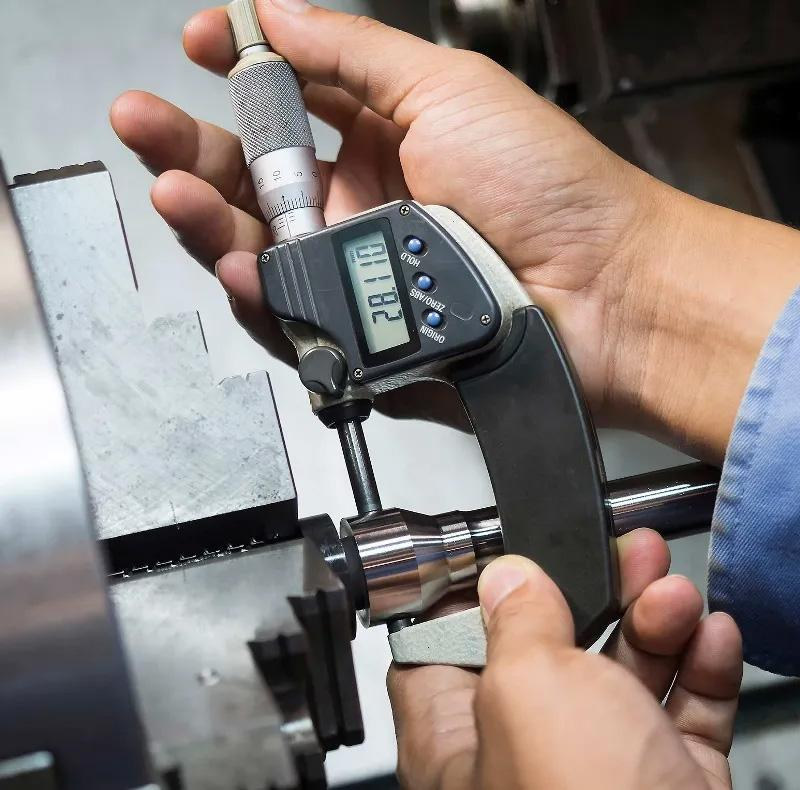
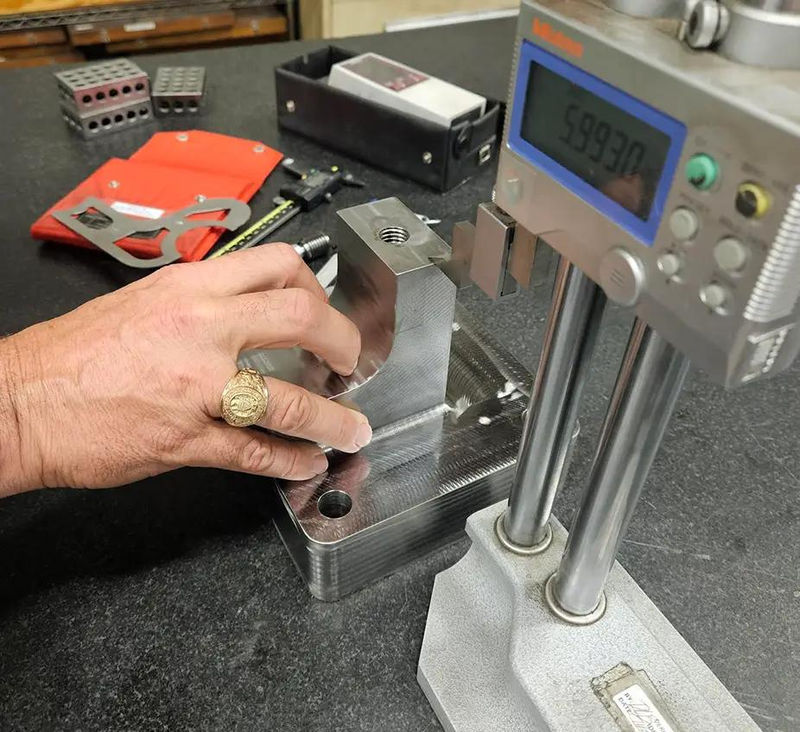
| Inspection instrument | Main measurement |
|---|---|
| Digital caliper | External dimensions and general measurements |
| Micrometer | Precise thickness and diameter |
| Height gauge | Heights and positional measurements |
| Bore gauge | Internal hole diameters |
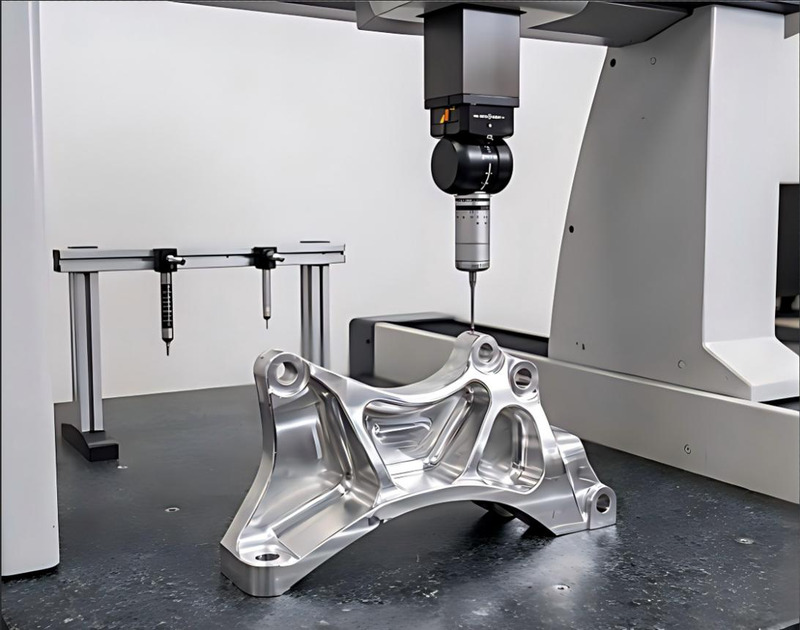
| CMM | Complex dimensions and geometric tolerances |
| Surface roughness tester | Ra surface roughness |
A coordinate measuring machine (CMM) is particularly useful for components with multiple precision features. It can measure hole positions, distances between reference points, and geometric relationships based on a defined datum system.
First Article and Batch Inspection
For new projects, first article inspection helps verify that the initial manufactured component meets the engineering drawing before the remaining batch proceeds.
For repeat production, suppliers can perform in-process inspections and final sampling or 100% inspection according to the agreed quality plan.
Customers in aerospace, automotive, and medical manufacturing may also require additional documentation, material traceability, or industry-specific quality systems.
A professional supplier should clarify what inspection records can be provided before the order is placed.
How to Choose the Right CNC Milling Service Provider
Choosing a CNC milling supplier is a manufacturing decision that affects product quality, assembly performance, delivery schedules, and long-term purchasing costs.
Instead of comparing quotations based only on price, buyers should evaluate whether a supplier can consistently manufacture the required components.
Questions to Ask Before Placing an Order
| Question | What a reliable supplier should explain |
|---|---|
| Can you machine my material? | Available material grades and machining experience |
| Which CNC machines do you operate? | Relevant 3-axis, 4-axis, and 5-axis capabilities |
| What tolerances can you achieve? | Realistic capability for specific features |
| Can you manufacture prototypes? | Support for small quantities and design changes |
| What inspection equipment do you have? | Measurement methods and inspection records |
| Can you provide surface finishing? | Available finishing processes and suppliers |
| How do you handle defective parts? | Inspection, corrective action, and rework procedures |
Why Engineering Support Matters
A supplier that only follows drawings without reviewing manufacturability may overlook problems that increase costs or cause production failures.
For example, an aluminum enclosure with a 1 mm wall thickness and a deep internal pocket may experience vibration or deformation during machining. An experienced CNC engineer can recommend adjustments to wall thickness, machining sequence, workholding, or material selection.
This engineering input can improve machining stability while maintaining the component’s functional requirements.
Customers should also consider communication quality. Clear quotations, timely technical feedback, realistic delivery commitments, and documented inspection requirements are important indicators of a dependable manufacturing partner.
Why Choose Xavier for Custom CNC Milling Services?
Finding CNC milling services near me is often the first step toward sourcing reliable precision components. However, the right manufacturing partner should offer more than geographical convenience. It should provide the machining expertise, material knowledge, engineering support, and quality control needed to turn technical drawings into dependable finished parts.
Xavier is a China-based CNC machining manufacturer integrating manufacturing and international trade, specializing in custom CNC machining and outsourced production of precision metal components.
Our manufacturing services support customers looking for customized aluminum, stainless steel, brass, copper, titanium, and other metal components. Whether you need a small number of prototypes, customized mechanical brackets, precision housings, or batch-machined industrial parts, Xavier focuses on matching the manufacturing process to your actual project requirements.
Our approach includes:
- Custom CNC milling for different component geometries.
- Material selection based on mechanical and application requirements.
- CNC machining solutions for prototypes and batch production.
- Engineering communication and manufacturability evaluation.
- Secondary finishing options for different functional and appearance requirements.
- Dimensional inspection to verify components against approved drawings.
If you are comparing local CNC milling shops with overseas manufacturing suppliers, Xavier offers another option for evaluating machining quality, production costs, and overall supply-chain efficiency.
Looking for a dependable CNC milling manufacturer? Contact Xavier today. Send us your 3D drawings, material specifications, required quantities, and technical requirements. Our team can review your project, evaluate its manufacturing feasibility, and provide a customized CNC milling quotation.
From initial prototypes to repeat production, Xavier is ready to support your custom CNC machining projects with practical manufacturing solutions.
As an integrated CNC machining manufacturer and trading company, Xavier specializes in CNC machining outsourcing and the production of various custom metal components. We also provide professional CNC anodizing surface finishing, CNC electroless nickel surface finishing, and CNC electrogalvanizing surface finishing to meet different component requirements.
As a professional CNC anodizing surface finishing manufacturer, we offer bulk electroless nickel surface finishing services and competitive CNC electrogalvanizing surface finishing prices. Contact us today to discuss your project requirements and get a quotation.
Some of the images and text in this article are collected and compiled from the internet. If there is anything inappropriate, please contact us for processing.