
Surface Finish Comparison: Sand Casting vs. Die Casting
Choosing between sand casting and die casting involves more than comparing manufacturing costs and production volumes. One of the most important differences is the surface finish of the finished metal component. Surface roughness affects product appearance, dimensional accuracy, coating quality, corrosion protection, friction, and the amount of secondary machining required.
For engineers, product designers, and industrial buyers, understanding the surface finish comparison between sand casting and die casting helps determine which process is more suitable for a specific application. Although both processes can produce complex metal components, their mold materials, metal-filling methods, cooling conditions, and surface replication capabilities result in significantly different surface textures.
In general, die casting produces a smoother as-cast surface than conventional sand casting because molten metal fills a precision-machined permanent steel mold under pressure. Sand casting uses an expendable sand mold, whose grain structure is transferred to the casting surface.
However, the actual result depends on the casting alloy, mold quality, production parameters, and subsequent surface treatment. This guide examines the differences using practical roughness values, manufacturing examples, and engineering considerations.
10 Key Topics to Understand Before Comparing Sand Casting and Die Casting
- What Surface Finish Means in Metal Casting
- Typical Surface Roughness (Ra) of Sand Casting vs. Die Casting
- Why Sand Casting Produces a Rougher Surface
- Why Die Casting Achieves a Smoother Surface
- Surface Appearance and Texture Differences
- Material and Alloy Effects on Casting Surface Finish
- Surface Finish Measurement and Inspection Methods
- Post-Processing and Surface Finishing Requirements
- Surface Finish Impact on Cost, Dimensional Accuracy, and Production Efficiency
- How to Choose Between Sand Casting and Die Casting for Different Applications
1. What Surface Finish Means in Metal Casting
Surface finish refers to the texture and quality of a component’s external or internal surfaces after manufacturing. In metal casting, this texture is primarily influenced by the mold surface, molten metal behavior, solidification conditions, and casting defects.
Unlike CNC machining, where cutting tools create relatively controlled surface patterns, casting reproduces the characteristics of the mold cavity. This means that the quality of the mold directly influences the surface quality of the final component.
Surface finish is commonly evaluated using several parameters:
- Ra (Arithmetic Average Roughness): The average absolute deviation of the measured surface profile from its mean line. It is one of the most widely used roughness parameters.
- Rz (Maximum Height of Profile): Represents the difference between the highest peaks and deepest valleys over specified sampling lengths.
- RMS (Root Mean Square): A statistical measurement of surface profile deviation that gives greater weight to larger irregularities.
For most industrial casting comparisons, Ra is a practical starting point because it allows engineers to compare the typical roughness of different manufacturing processes.
For example, an aluminum component with Ra 3.2 μm generally has a smoother measured profile than one with Ra 12.5 μm. However, the same Ra value does not necessarily mean that two surfaces have identical textures or functional characteristics.
A sand-cast surface may have irregular sand impressions, while a die-cast surface may exhibit more uniform mold-replicated textures.
2. Typical Surface Roughness (Ra) of Sand Casting vs. Die Casting
The most direct way to compare sand casting and die casting is to examine their typical as-cast surface roughness.
The following ranges are indicative engineering values rather than guaranteed acceptance limits. Actual results depend on the mold system, alloy, casting parameters, and foundry capabilities.
Typical As-Cast Surface Roughness Comparison
| Casting process | Typical Ra (μm) | Approx. Ra (μin) | Surface characteristics |
|---|---|---|---|
| Green sand casting | 12.5–25 | 500–1,000 | Coarse, granular texture |
| Resin-bonded sand casting | 6.3–12.5 | 250–500 | More uniform, moderately rough |
| Shell molding | 3.2–6.3 | 125–250 | Finer and more consistent |
| Aluminum die casting | 1.6–3.2 | 63–125 | Relatively smooth |
| Zinc die casting | 0.8–1.6 | 32–63 | Fine surface texture |
| High-quality die casting | 0.8–1.6 | 32–63 | Improved mold replication |
Values are representative process ranges, not universal specifications. Alloy, tooling condition, and measurement methods can change achievable results. Sources: ScienceDirect casting reference, NADCA Product Specification Standards, and published casting process comparisons.
The comparison shows that conventional green sand casting generally produces a substantially rougher surface than pressure die casting.
For example, consider two aluminum housings manufactured using different processes. The sand-cast housing may have an Ra value of approximately 12.5 μm, while the die-cast housing may achieve approximately 2.5 μm.
This represents a fivefold difference in Ra. The die-cast component will generally require less surface preparation before painting or decorative finishing.
However, this does not mean die casting always delivers a defect-free cosmetic surface. Gas porosity, cold shuts, flow marks, die wear, and release-agent residues can still affect the final appearance.
3. Why Sand Casting Produces a Rougher Surface
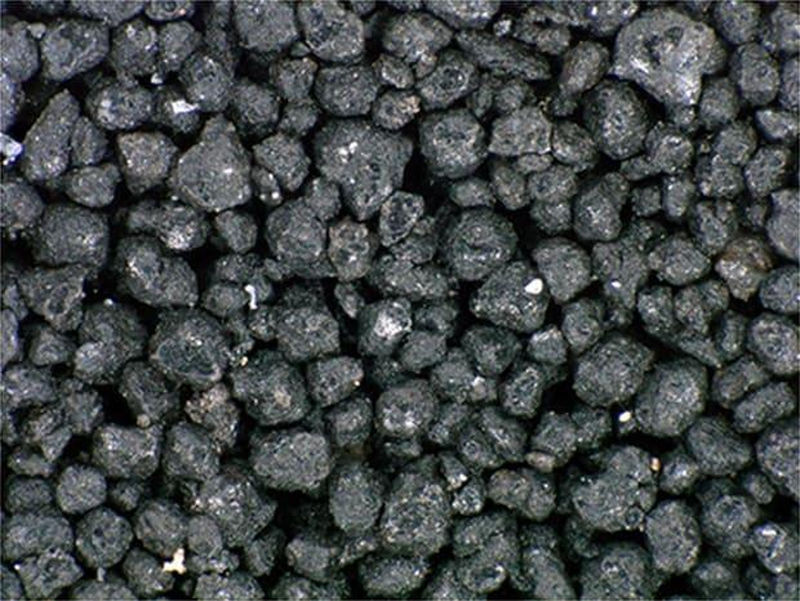
The main reason sand casting produces a relatively rough surface is the physical structure of the sand mold.
In conventional green sand casting, the mold is made from silica sand mixed with clay, water, and other additives. The sand particles create a granular cavity surface rather than the smooth, precisely machined surface of a steel die.
When molten metal enters the mold, it contacts the sand grains and solidifies against their irregular surface.
Several factors influence the resulting roughness.
Sand Grain Size: Coarse sand particles create more noticeable surface impressions. Fine sand can produce a smoother casting, but excessively fine sand may reduce permeability and increase the risk of gas-related defects.
Mold Compaction: Uneven or insufficient compaction can create inconsistent cavity surfaces. Loose areas may produce rough patches, while variations in mold density can affect the consistency of different castings.
Metal Temperature and Pouring Conditions: If the metal temperature is too low, incomplete filling and surface irregularities may occur. Excessively high temperatures can increase the risk of metal penetration into the sand and certain mold-related defects.
Mold Coatings: Refractory coatings can improve the mold cavity surface and reduce direct contact between molten metal and sand particles. This is particularly useful when better surface quality is required.
For example, a large cast-iron machine base may be produced using green sand casting because the process is economical for heavy components. Its external surfaces may retain visible granular textures, making grinding or machining necessary on mounting and contact areas.
4. Why Die Casting Achieves a Smoother Surface
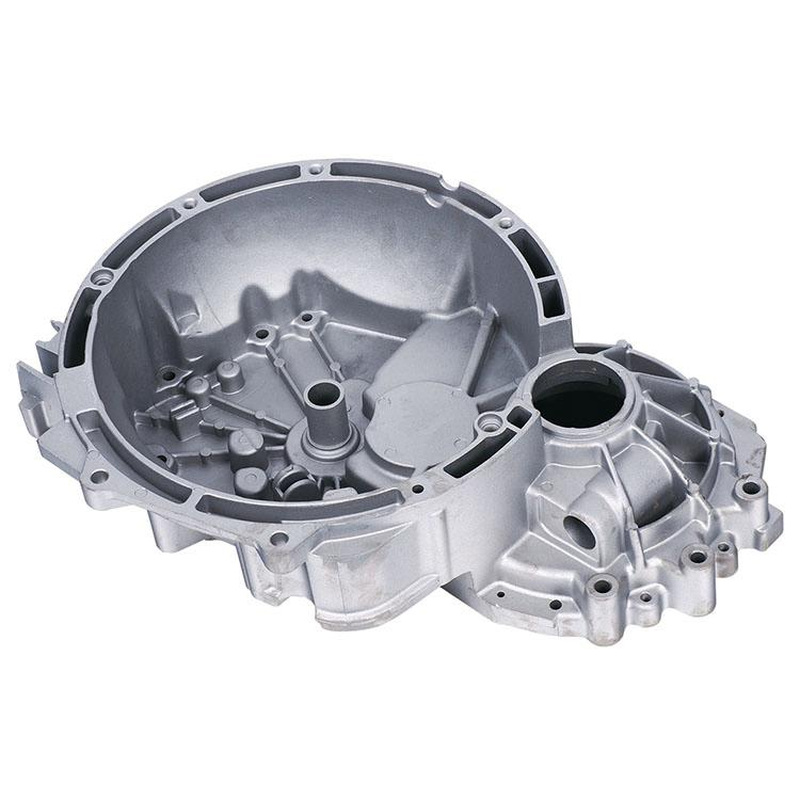
Die casting typically provides better surface finish because it uses a reusable metal mold, commonly manufactured from tool steel.
Unlike sand molds, which are destroyed after each casting cycle, die-casting dies are precision-machined and can be polished or textured to achieve specific surface characteristics.
In high-pressure die casting, molten metal is injected into the closed mold cavity at high speed and pressure. This allows the metal to reproduce fine details of the die surface.
The following factors are particularly important:
- Die Surface Quality: A polished die generally produces a smoother corresponding casting surface. A textured die creates a deliberately patterned appearance.
- Injection Pressure: Appropriate injection pressure helps fill complex cavity features and reduce incomplete filling.
- Mold Temperature: Stable die temperatures help maintain consistent filling and solidification conditions.
- Die Maintenance: Erosion, scratches, deposits, and heat checking can gradually affect surface quality.
- Release Agent Management: Excessive or uneven die lubricant can create surface deposits, staining, or coating-related problems.
According to NADCA’s published product standards, aluminum die castings can achieve approximately 63 microinches Ra or better with a new die under suitable conditions. Surface roughness may increase over the life of the die.
This makes die casting particularly suitable for components requiring consistent external appearance, such as electronic enclosures, automotive housings, lighting components, and industrial equipment covers.
5. Surface Appearance and Texture Differences
Although Ra values provide a numerical comparison, the visual appearance of sand-cast and die-cast components can be quite different, even when their measured roughness values are relatively close.
Sand-cast surfaces usually have an irregular, granular appearance. Small pits, sand impressions, uneven textures, and local variations are common. These characteristics are especially noticeable on large castings or components produced using conventional green sand molds.
Die-cast surfaces are generally more uniform because the molten metal replicates a permanent metal mold. Depending on the die design, the final component can have a smooth, semi-gloss, matte, or deliberately textured appearance.
| Appearance factor | Sand casting | Die casting |
|---|---|---|
| Surface texture | Granular and irregular | Relatively uniform |
| Surface consistency | Varies across casting areas | Generally more consistent |
| Visible sand impressions | Common | Not applicable |
| Surface porosity | May occur | May occur |
| Decorative appearance | Usually requires finishing | Often suitable for further decorative treatment |
| Mold detail reproduction | Limited by sand structure | Better reproduction of fine mold details |
One important consideration is that a smooth die-cast surface does not automatically mean the component has better internal quality. Gas porosity and shrinkage defects can exist beneath an apparently smooth exterior.
For products requiring decorative painting, powder coating, or electroplating, buyers should evaluate both the external appearance and the underlying casting quality.
6. Material and Alloy Effects on Casting Surface Finish
The casting process is not the only factor affecting surface roughness. Different metals have different melting temperatures, fluidity, solidification characteristics, and reactions with mold materials.
These properties influence how completely molten metal fills the mold and how the final surface develops.
Aluminum Alloys
Aluminum alloys are widely used in both sand casting and die casting. Aluminum die casting commonly achieves Ra values around 1.6–3.2 μm under suitable production conditions.
Aluminum sand castings typically have rougher surfaces, particularly when conventional green sand molds are used. Alloy selection, melt cleanliness, pouring temperature, and mold coatings all influence the final result.
For example, an aluminum automotive transmission housing may use die casting for high-volume production and relatively smooth external surfaces. A larger, lower-volume aluminum equipment housing may be better suited to sand casting.
Zinc Alloys
Zinc alloys are particularly suitable for pressure die casting because of their relatively low melting temperatures and good fluidity.
Zinc die-cast components can achieve fine surface details and relatively smooth finishes. This makes them useful for precision hardware, decorative fittings, small mechanical housings, and electronic accessories.
Cast Iron and Steel
Sand casting is commonly used for cast iron and certain steel components, especially when large dimensions, complex internal structures, or heavier component weights are involved.
Conventional high-pressure die casting is not generally suitable for these ferrous alloys because of the extreme temperatures and thermal demands placed on the steel dies.
| Material | Common casting process | Surface finish considerations |
|---|---|---|
| Aluminum alloy | Sand casting / die casting | Die casting generally produces a smoother surface |
| Zinc alloy | Pressure die casting | Excellent detail reproduction |
| Magnesium alloy | Die casting | Good surface quality with suitable die conditions |
| Gray cast iron | Sand casting | Usually requires additional machining for functional surfaces |
| Ductile iron | Sand casting | Surface depends on sand system and mold preparation |
| Cast steel | Sand casting | Rougher surface; machining often required |
Material and process selection should therefore be considered together. A smoother surface is not always worth choosing if the required alloy, component size, or mechanical properties are incompatible with the casting process.
7. Surface Finish Measurement and Inspection Methods
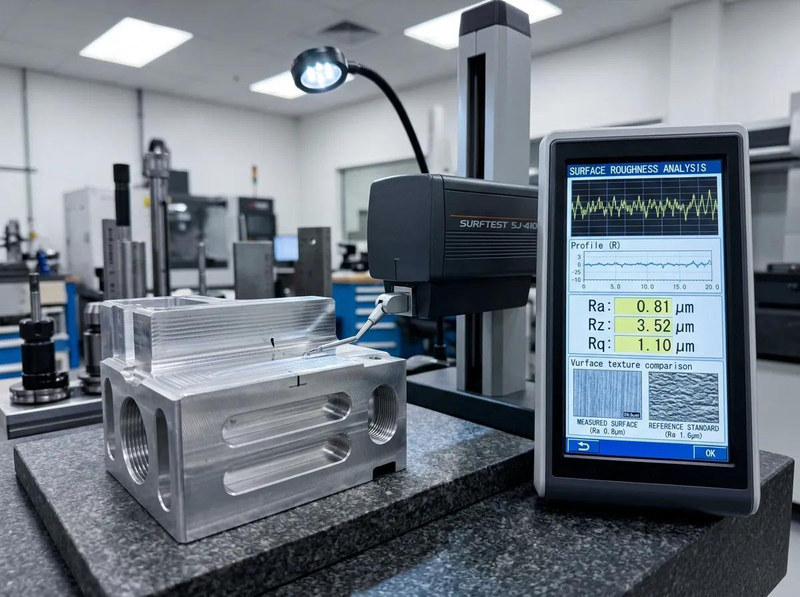
Visual inspection is useful for identifying obvious casting defects, but it cannot accurately determine surface roughness. For engineering applications, surface finish should be measured using appropriate inspection equipment.
Contact Surface Roughness Tester
A contact profilometer uses a small stylus that moves across the component surface. The instrument records the surface profile and calculates parameters such as Ra and Rz.
This method is particularly useful for measuring relatively accessible flat and curved casting surfaces.
For example, if an aluminum die-cast housing requires Ra 3.2 μm on an external face, a profilometer can verify whether the measured surface meets the specified requirement.
Non-Contact Optical Measurement
Optical measurement systems use light, lasers, or other optical technologies to evaluate surface topography without touching the component.
They are useful when the surface is delicate, difficult to access, or requires detailed three-dimensional analysis.
Visual Inspection
Visual inspection helps identify:
- Sand inclusions and sand adhesion.
- Surface cracks and cold shuts.
- Gas holes and visible porosity.
- Flow marks and discoloration.
- Flash and parting-line irregularities.
However, visual inspection should not replace numerical roughness measurements when a drawing specifies an Ra requirement.
Recommended Inspection Considerations
When comparing two casting processes, buyers should specify the measurement location, sampling direction, cutoff, evaluation length, and applicable measurement standard.
ISO 21920 provides a modern framework for specifying and evaluating profile surface texture. The inspection method should also distinguish between as-cast surfaces and machined surfaces.
8. Post-Processing and Surface Finishing Requirements
Both sand casting and die casting can require additional surface treatments. The difference is generally the amount of preparation needed before achieving the desired finish.
Sand castings frequently require more extensive cleaning and surface correction because of their rougher initial texture.
Die castings usually need less initial surface correction, although cosmetic and functional applications may still require secondary processing.
| Surface finishing process | Sand casting application | Die casting application |
|---|---|---|
| Shot blasting | Removes sand and surface scale | Cleans and creates uniform texture |
| Grinding | Removes irregularities and excess material | Corrects local defects and flash |
| CNC machining | Produces precise functional surfaces | Produces accurate holes, faces, and mounting features |
| Polishing | Improves cosmetic appearance | Creates smoother decorative surfaces |
| Sandblasting | Produces a uniform matte texture | Creates consistent matte appearance |
| Powder coating | Protects and improves appearance | Provides decorative and protective coating |
| Electroplating | Requires suitable surface preparation | Common for zinc and selected aluminum applications |
| Anodizing | Applicable to suitable aluminum alloys | Common for suitable aluminum die-cast alloys, subject to alloy and process limitations |
Why CNC Machining Is Important
CNC machining is often necessary when cast components require accurate mounting surfaces, bearing seats, threaded holes, sealing faces, or other precision features.
For example, a sand-cast industrial pump housing may have its mounting face milled and its bearing bore machined to achieve the required flatness, dimensional tolerance, and surface roughness.
An aluminum die-cast electronics enclosure may only need CNC machining around screw holes and mounting interfaces because its external surfaces already have an acceptable appearance.
It is important to remember that machining changes the surface texture only in the areas being cut. A machined mounting face does not automatically improve the finish of the entire casting.
9. Surface Finish Impact on Cost, Dimensional Accuracy, and Production Efficiency
Surface finish directly affects manufacturing cost because rougher surfaces often require additional cleaning, grinding, machining, or coating preparation.
However, choosing die casting solely because it provides a smoother surface can be an expensive decision for low-volume production.
The initial investment in a permanent die is considerably higher than the tooling investment generally required for sand casting.
| Comparison factor | Sand casting | Die casting |
|---|---|---|
| Initial tooling investment | Generally lower | Generally higher |
| As-cast surface quality | Rougher | Smoother |
| Production speed | Usually lower | Usually higher |
| High-volume suitability | Moderate | Excellent |
| Secondary finishing | Often more extensive | Often less extensive |
| Complex thin-wall components | More limited | Generally more suitable |
| Large components | Often suitable | Limited by machine and die capacity |
Consider an aluminum industrial enclosure with a required annual quantity of 300 pieces.
Sand casting may provide a more economical solution because the tooling investment is relatively low. Some additional machining and surface preparation may be acceptable.
Now consider an electronic enclosure requiring 50,000 pieces annually. Die casting may become more economical because the higher tooling investment can be distributed across a much larger production quantity. Its repeatability and smoother as-cast surfaces can also reduce secondary finishing operations.
The actual break-even point depends on component geometry, alloy, tooling complexity, cycle time, scrap rate, machining requirements, and finishing specifications.
Dimensional accuracy should also be considered separately from surface roughness. A component can have a smooth surface but still fail its dimensional tolerances. Critical dimensions should therefore be identified and inspected independently.
10. How to Choose Between Sand Casting and Die Casting for Different Applications
The best manufacturing process depends on the component’s functional requirements, production quantity, material, dimensions, and expected surface appearance. sand casting vs die casting
Choose Sand Casting When:
- The component is relatively large or heavy.
- Production quantities are low or moderate.
- Tooling investment needs to remain relatively low.
- The design requires complex internal cavities.
- Cast iron, steel, or suitable aluminum alloys are required.
- Additional machining and surface finishing are acceptable.
Typical applications include industrial pump housings, machine bases, large valve bodies, engine blocks, and heavy equipment components.
Choose Die Casting When:
- The component requires a relatively smooth as-cast surface.
- Production quantities are high.
- Thin walls and detailed geometries are important.
- Dimensional repeatability is a priority.
- Aluminum, zinc, or magnesium alloys are suitable.
- The project can justify the initial tooling investment.
Typical applications include automotive electronic housings, aluminum brackets, lighting enclosures, consumer electronics housings, and precision zinc hardware.
A Practical Example: Aluminum Mechanical Housing
Suppose an engineering company needs 10,000 aluminum housings annually.
The component has thin walls, several mounting bosses, and a visible external surface. The customer also requires threaded mounting holes and accurately positioned interfaces.
In this situation, high-pressure die casting may be the better starting point because it can efficiently produce repeated complex shapes with a relatively smooth exterior.
However, the threaded holes and critical mounting faces may still require CNC machining.
If the same housing is needed only in a batch of 100 prototypes, sand casting or CNC machining from solid aluminum stock may be more economical, depending on geometry and delivery requirements.
The important lesson is that surface finish should never be evaluated independently of production volume and functional requirements.
Final Recommendation: Which Casting Process Provides Better Surface Finish?
When comparing sand casting vs. die casting surface finish, die casting generally offers a clear advantage in terms of surface smoothness, consistency, and detail reproduction.
However, the better manufacturing process depends on the complete engineering requirements rather than surface roughness alone.
- Sand casting is suitable for large components, lower-volume production, and applications where tooling cost and material flexibility are important.
- Die casting is preferable for high-volume production, thinner walls, detailed geometries, and components requiring relatively smooth as-cast surfaces.
- CNC machining is recommended when critical dimensions, accurate mounting features, tight tolerances, or specific surface roughness requirements cannot be achieved directly through casting.
- Surface finishing should be selected according to the final application, including corrosion resistance, appearance, wear resistance, and coating adhesion.
For manufacturers purchasing custom metal components, specifying the required Ra value, machining areas, and surface treatment in advance can prevent unnecessary manufacturing costs and quality disputes.
At Xavier, we specialize in precision CNC machining and custom metal component manufacturing for international industrial customers. Our machining capabilities support aluminum, stainless steel, alloy steel, brass, titanium, and other engineering materials.
Whether your project involves machining cast aluminum housings, precision mounting brackets, industrial equipment components, or custom metal parts, Xavier can help evaluate machining requirements, dimensional tolerances, and surface finishing options.
Looking for a reliable CNC machining manufacturing partner? Send your 2D drawings or 3D CAD files to Xavier for a professional manufacturing assessment and a competitive quotation.
As an integrated CNC machining manufacturer combining production and international trade, Xavier specializes in custom CNC machining and contract manufacturing of precision metal components. We offer a wide range of material processing capabilities, including CNC machining PEEK, CNC machining aluminum, and CNC machining stainless steel. Our manufacturing solutions serve diverse industries and applications, including robotics, aerospace components, marine parts, automotive components, medical devices, and other precision-engineered parts.
We are an experienced CNC machining PEEK manufacturer, providing bulk CNC machining aluminum services and competitive CNC machining stainless steel prices. Contact us to discuss your custom manufacturing requirements.
Some of the images and text in this article are collected and compiled from the internet. If there is anything inappropriate, please contact us for processing.