
Low Pressure Aluminum Casting vs. High Pressure Die Casting
Low pressure aluminum casting (LPDC) is a permanent mold casting process designed to produce aluminum components with relatively low porosity, controlled filling, good dimensional consistency, and useful mechanical properties. Unlike conventional gravity casting, molten aluminum is pushed upward from a sealed furnace into a metal mold by controlled gas pressure. Unlike high pressure die casting, the metal is not injected into the cavity at extremely high speed.
This difference in filling method has a direct effect on the quality of the finished part. The slower, bottom-up filling pattern can reduce turbulence, oxide-film entrainment, and gas entrapment, while pressure can continue feeding liquid metal into areas that are solidifying. This makes low pressure aluminum casting particularly useful for structural and pressure-sensitive components such as automotive wheels, cylinder heads, housings, suspension components, manifolds, and other engineered aluminum parts.
Low Pressure Aluminum Casting Process and Working Principle
How the LPDC Process Works
The basic principle of low pressure aluminum casting is relatively simple: molten aluminum is stored in a sealed holding furnace below the mold, and controlled air or inert gas pressure is applied to the surface of the molten metal.
The pressure forces the aluminum upward through a ceramic or refractory riser tube and into the mold cavity. The cavity is generally filled from the bottom upward rather than being filled by pouring molten aluminum from above.
A typical LPDC cycle can be divided into three major stages:
| Stage | Main Operation | Purpose |
|---|---|---|
| 1. Riser filling | Molten aluminum rises through the stalk | Establish a stable metal path |
| 2. Mold filling | Aluminum gradually fills the cavity | Minimize turbulence and air entrapment |
| 3. Pressure holding | Pressure remains during solidification | Feed shrinkage and improve casting soundness |
Research on LPDC commonly reports working pressure in the approximate range of 0.3–1.5 bar, although the actual pressure curve depends on alloy, component geometry, mold design, filling height, and equipment. One published study gives approximately 0.58–0.60 bar as a commonly used pressure range for an aluminum alloy application.
The pressure should not simply be increased to make the metal fill faster. Excessive filling velocity can increase turbulence and oxide-film entrainment, potentially creating internal defects. The objective is a controlled pressure curve that provides stable filling and sufficient feeding during solidification.
Why Bottom-Up Filling Matters
Aluminum reacts readily with oxygen and forms an oxide film on its surface. If molten metal is poured or injected violently, this oxide film can become folded into the casting and form an internal discontinuity.
LPDC approaches this problem differently. The molten metal enters the cavity progressively from below, which can produce a much calmer filling pattern than high-speed injection. This is one reason LPDC is associated with lower levels of gas porosity and oxide-related defects when the process is properly controlled.
For example, consider an aluminum housing with a 6 mm wall and several internal ribs. If the metal reaches the thin rib area too quickly while air cannot escape effectively, a local cold shut or trapped-gas defect may develop. A controlled filling curve allows the metal front to advance more evenly while the venting system removes displaced air.
Pressure During Solidification
One of the important differences between LPDC and simple gravity casting is that pressure can remain active while the metal solidifies.
Aluminum contracts during solidification. If a thick section solidifies without enough liquid metal feeding it, shrinkage porosity or a shrinkage cavity can develop. Maintaining pressure can help push additional liquid aluminum toward areas that are still freezing.
This is particularly useful for components containing thick bosses, wheel hubs, mounting areas, or structural junctions. However, pressure alone cannot compensate for poor mold temperature control or an unsuitable casting layout. The solidification sequence still needs to be considered during mold and gating design.
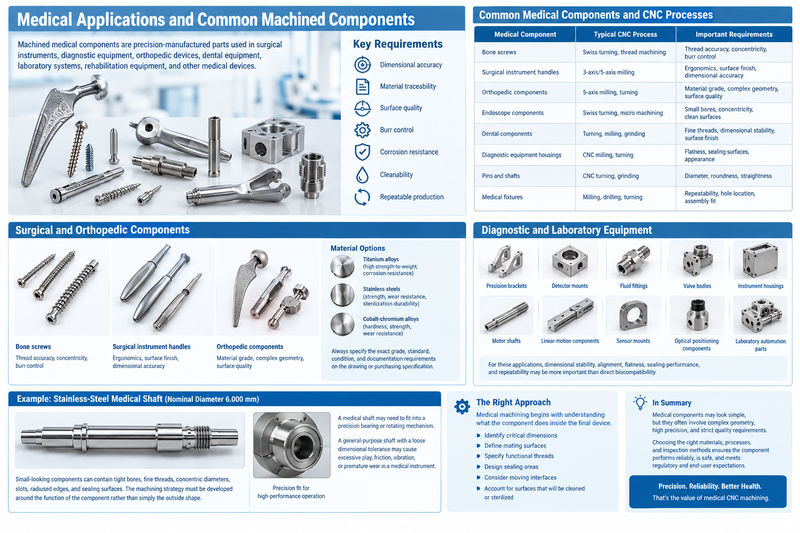
Aluminum Alloys, Mechanical Properties, and Heat Treatment
Common Aluminum Alloys for LPDC
Low pressure casting is widely associated with aluminum-silicon alloys because they offer a useful combination of castability, fluidity, strength, corrosion resistance, and heat-treatment potential.
A common example is the Al-Si-Mg family, including alloys similar to A356 and AlSi7Mg. These alloys are widely used for wheels and structural automotive components because they can provide a useful balance between castability and mechanical performance.
| Alloy Family | Typical Characteristics | Example Applications |
|---|---|---|
| Al-Si-Mg | Good castability and heat-treatment potential | Wheels, structural parts, housings |
| A356-type alloys | Good strength-to-weight ratio | Automotive and industrial components |
| Al-Si alloys | Good fluidity and casting performance | General engineered castings |
| Heat-treatable Al alloys | Strength can be increased after casting | Structural and load-bearing components |
The exact alloy should be selected according to the final application rather than simply choosing the alloy with the highest tensile strength.
For example, an aluminum wheel needs a different combination of fatigue resistance, impact resistance, corrosion resistance, appearance, and weight than a simple decorative housing. Similarly, a pump body may prioritize pressure tightness and corrosion resistance over maximum tensile strength.
Why Heat Treatment Can Be Important
One major advantage of LPDC is that properly produced castings can often be heat treated.
For example, an Al-Si-Mg casting may undergo a T6-type treatment involving solution treatment, quenching, and artificial aging. The purpose is to modify the microstructure and increase strength and hardness.
The actual heat-treatment cycle must be established for the specific alloy and component because excessive temperature or an unsuitable heating rate can cause distortion or other problems.
This is especially important for components that will later undergo CNC machining. A casting may have acceptable dimensions immediately after casting but move slightly after heat treatment because of stress relief or thermal distortion.
For a precision machined component, the manufacturing sequence should therefore be considered as a complete chain:
Casting → Heat Treatment → CNC Machining → Surface Finishing → Inspection
Rather than treating CNC machining as an isolated operation.
Mold Design and Part Design Considerations
Permanent Mold Structure
LPDC normally uses a permanent metal mold. Depending on the component, the mold may include multiple sections, cores, cooling channels, vents, gating features, and mechanisms for removing the finished casting.
The mold must control not only the shape of the part but also how quickly different sections solidify.
A simple example is a housing with a thick mounting boss connected to a relatively thin wall. The boss contains significantly more thermal mass, so it may remain liquid after the surrounding wall has begun to solidify. Without proper feeding and cooling control, this area can become a shrinkage hot spot.
For this reason, mold design is closely connected with solidification analysis.
Wall Thickness and Transitions
LPDC is capable of producing moderately thin sections, but it is generally not selected simply because a component needs extremely thin walls. High pressure die casting is usually more suitable when extremely thin walls and very fast cycles dominate the design requirements.
In practical design, abrupt changes in wall thickness should be avoided where possible.
For example:
| Design Condition | Potential Problem | Better Approach |
|---|---|---|
| 3 mm wall directly connected to 12 mm boss | Local hot spot | Add transition/radius |
| Sharp internal corner | Stress concentration and poor metal flow | Use fillet |
| Very long thin rib | Filling difficulty | Review rib thickness and flow path |
| Large isolated thick section | Shrinkage risk | Improve feeding/cooling |
| Deep enclosed cavity | Air evacuation difficulty | Add suitable vent/core design |
Smooth transitions are generally easier to cast and machine than abrupt geometry changes.
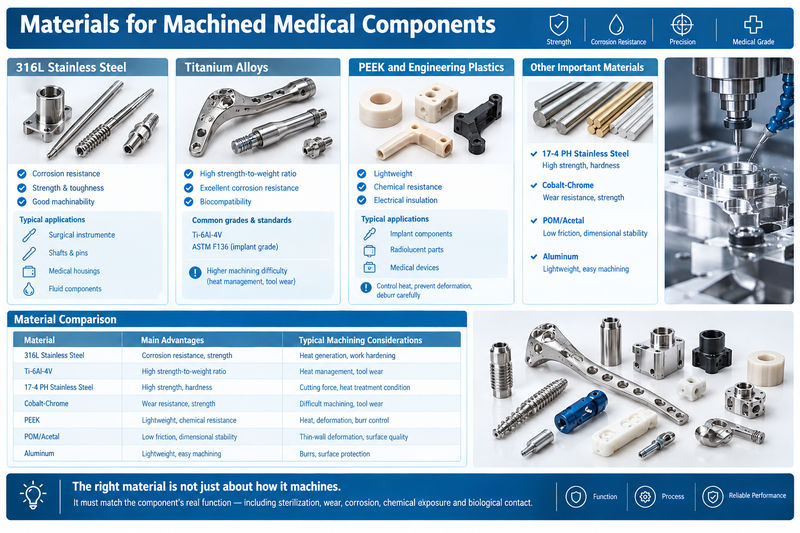
Draft, Fillets, and Machining Allowance
Cast components require appropriate draft angles to release the part from the mold. The exact value depends on the mold construction, surface condition, depth, alloy, and whether cores are used.
Fillets are also important. A sharp 90-degree internal corner is rarely ideal for a cast aluminum component because it can concentrate stress and interfere with smooth metal flow.
For parts that will later receive CNC machining, machining allowance should be specified during casting design.
For example, if a final machined mounting face must meet a tight flatness requirement, the casting should provide enough material for machining to remove the as-cast variation. However, excessive machining allowance increases material removal, cycle time, and cost.
This is where casting and CNC machining need to be designed together rather than independently.
Common Casting Defects and Quality Control
Porosity
Porosity is one of the most important quality concerns in aluminum casting.
Gas porosity can result from hydrogen in the molten aluminum or air becoming trapped during filling. Shrinkage porosity has a different mechanism and occurs when solidification contraction is not adequately fed.
The distinction matters because the corrective action is different.
| Defect | Typical Cause | Possible Effect | Typical Control |
|---|---|---|---|
| Gas porosity | Hydrogen or trapped gas | Reduced strength, leakage risk | Degassing, venting, stable filling |
| Shrinkage porosity | Insufficient feeding | Internal voids | Solidification and feeding control |
| Oxide inclusion | Turbulent filling | Internal discontinuity | Cleaner melt and controlled flow |
| Cold shut | Poor fusion of metal fronts | Visible seam or weak area | Mold/melt temperature and filling control |
| Misrun | Incomplete filling | Missing geometry | Improve flow and thermal conditions |
| Cracking | Thermal/stress effects | Structural failure | Review alloy and solidification conditions |
Internal defects may not be visible from the outside. A casting can appear acceptable during visual inspection but reveal pores after CNC machining exposes an internal area.
For pressure-containing components, this can be particularly serious because a hidden pore may become a leakage path.
Melt Quality Control
Molten aluminum quality is a critical part of LPDC production.
Aluminum has a significant difference in hydrogen solubility between liquid and solid states. As the metal solidifies, dissolved hydrogen can become supersaturated and form pores. Research has therefore emphasized melt-quality evaluation and control methods such as reduced-pressure testing and other metallurgical inspection techniques.
In practical production, important controls include:
- Properly prepared and dried charge materials
- Controlled melting temperature
- Degassing where required
- Removal of dross and oxide contamination
- Stable furnace conditions
- Controlled filling pressure
- Proper mold temperature
- Effective venting
- Appropriate solidification control
The objective is not simply to produce a visually attractive casting. The internal structure must also be suitable for the component’s intended mechanical and machining requirements.
Inspection After Casting
Quality inspection should be selected according to the risk of the component.
A basic non-structural component may require dimensional inspection and visual inspection. A structural or pressure-containing part may require significantly more.
Possible inspection methods include:
| Inspection Method | What It Helps Evaluate |
|---|---|
| Visual inspection | Surface defects, cracks, incomplete filling |
| Dimensional inspection | Casting geometry and machining allowance |
| CMM inspection | Critical dimensional and geometric accuracy |
| X-ray/CT inspection | Internal porosity and inclusions |
| Pressure testing | Leakage and pressure tightness |
| Hardness testing | Heat-treatment consistency |
| Metallographic analysis | Microstructure and defect investigation |
For a CNC-machined casting, X-ray or CT inspection can be particularly useful when internal porosity is a critical concern. Internal defects can otherwise remain hidden until machining exposes them.
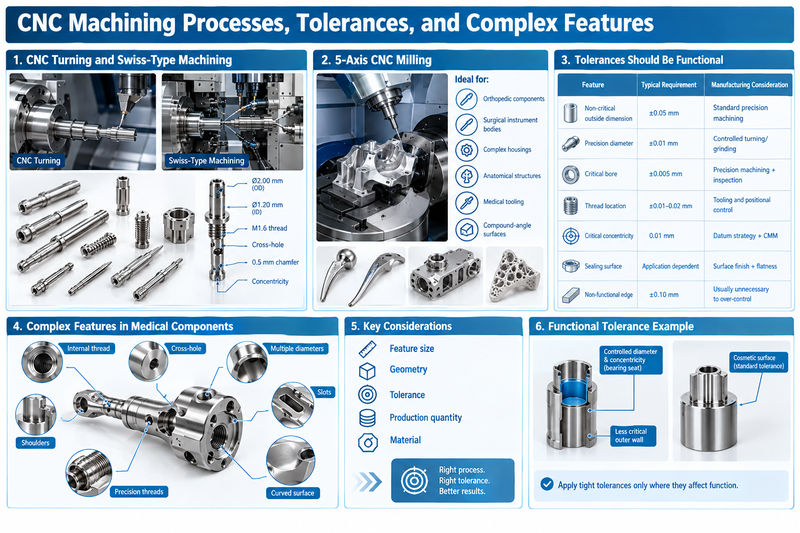
Low Pressure Casting vs. High Pressure Die Casting
Low pressure casting and high pressure die casting are sometimes treated as interchangeable aluminum casting processes, but their operating principles and ideal applications are different.
LPDC fills the mold relatively slowly from below using controlled pressure. HPDC uses a plunger to inject molten metal into a die at very high speed and pressure.
| Factor | Low Pressure Aluminum Casting | High Pressure Die Casting |
|---|---|---|
| Filling direction | Generally bottom-up | High-speed injection |
| Filling pressure | Low | Very high |
| Filling speed | Relatively slow | Very fast |
| Porosity tendency | Generally lower when well controlled | Greater risk from gas entrapment |
| Thin-wall capability | Moderate | Excellent |
| Heat treatment | Often suitable | Historically more restricted, although vacuum HPDC has expanded options |
| Production cycle | Slower | Faster |
| Typical components | Wheels, structural parts, cylinder heads | Thin housings, brackets, complex shells |
| Part size | Often suited to larger/heavier components | Broad, especially high-volume smaller parts |
| Typical priority | Soundness and structural performance | Productivity and thin-wall capability |
Published technical sources consistently identify cycle time as one of the major differences between LPDC and HPDC. HPDC generally provides much higher production speed, while LPDC can offer advantages in casting soundness and heat-treatment capability.
When LPDC Makes More Sense
Suppose a customer needs 30,000 aluminum structural components per year. Each component weighs 4.5 kg and contains several machined mounting surfaces. The part must withstand vibration and mechanical loading, and some areas require CNC machining.
A high-speed thin-wall HPDC process may appear attractive because of its production rate. However, if internal porosity becomes a problem around the machined mounting surfaces, the apparent production advantage can be reduced by machining scrap, leakage, additional inspection, and rejected parts.
LPDC can be more appropriate when the project places greater emphasis on:
- Structural integrity
- Controlled internal porosity
- Pressure tightness
- Heat treatment
- Larger or heavier aluminum components
- Machined critical surfaces
- Consistent mechanical performance
This does not mean LPDC is universally superior. Process selection should be based on part geometry, annual volume, alloy, mechanical requirements, wall thickness, tooling budget, and downstream machining requirements.
Typical Applications of Low Pressure Aluminum Casting
Aluminum wheels are one of the best-known high-volume LPDC applications. The process is also used for cylinder heads, engine-related components, manifolds, housings, suspension components, and other heavier aluminum parts where internal quality and mechanical performance are important.
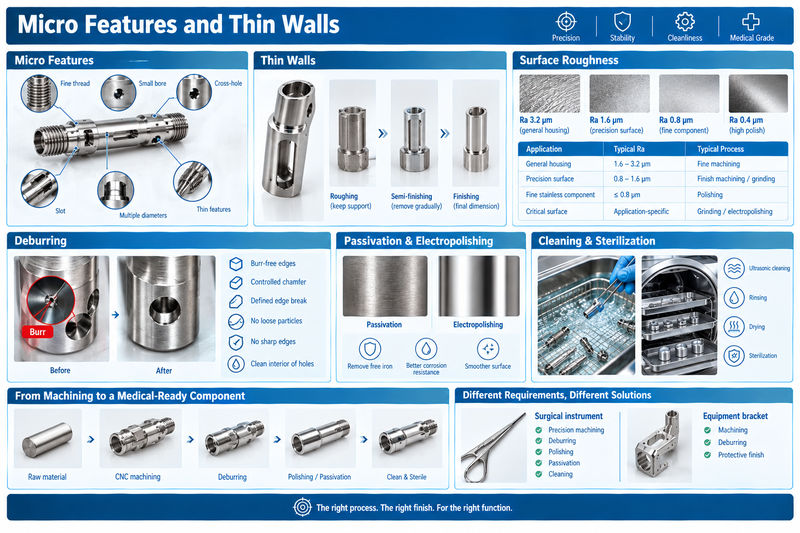
Automotive Components
Automotive components are a natural application because lightweight aluminum can replace heavier materials while maintaining useful structural performance.
Common examples include:
- Aluminum alloy wheels
- Steering knuckles
- Cylinder heads
- Engine housings
- Suspension components
- Brake-related components
- Structural brackets
- Manifolds
The combination of relatively low density and good mechanical properties makes aluminum particularly useful when weight reduction is important.
Industrial and Mechanical Components
LPDC can also be considered for industrial components such as:
- Pump housings
- Valve bodies
- Motor housings
- Gearbox housings
- Machinery brackets
- Flanges
- Heat-management components
- Custom structural castings
For these parts, the casting process often produces the near-net-shape geometry, while CNC machining establishes the critical dimensions.
For example, a cast aluminum pump housing may include the overall body, ribs, mounting ears, and bosses directly in the casting. CNC machining can then produce the sealing face, bearing bore, mounting holes, and other precision features.
This approach can substantially reduce the amount of material that would need to be removed if the entire component were machined from a solid aluminum block.
Combining Low Pressure Casting With CNC Machining
Low pressure aluminum casting is often most valuable when it is integrated with secondary machining.
The casting creates the basic geometry economically, while CNC machining provides the dimensional accuracy required for assembly.
A typical production route can be:
Aluminum Melting → LPDC → Heat Treatment → Shot Blasting or Surface Cleaning → CNC Milling/Turning → Deburring → Surface Finishing → Dimensional Inspection
The critical point is to identify which surfaces actually require machining.
For example, a cast housing might require:
- ±0.05 mm tolerance on a bearing bore
- Flatness control on a sealing surface
- Precisely positioned mounting holes
- Threaded holes
- Controlled surface roughness on mating areas
Trying to achieve every one of these requirements directly through casting would increase tooling complexity and cost. A more practical strategy is often to cast the main shape and leave controlled machining allowance on the functional surfaces.
For OEM buyers, this integrated approach can simplify supplier management because the casting, machining, finishing, and inspection can be coordinated as one manufacturing project.
Choosing a Low Pressure Aluminum Casting Supplier
When comparing suppliers, unit price should not be the only consideration.
A technically suitable supplier should be able to explain how the casting process, alloy, tooling, heat treatment, CNC machining, and inspection fit together.
Before placing an order, it is useful to confirm:
| Supplier Capability | Why It Matters |
|---|---|
| LPDC equipment | Determines available casting size and production capability |
| Aluminum alloy control | Influences mechanical and casting performance |
| Mold design capability | Affects filling and solidification |
| Melt-quality control | Reduces internal defect risk |
| Heat-treatment capability | Important for strength requirements |
| CNC machining | Controls final critical dimensions |
| CMM inspection | Verifies dimensional accuracy |
| X-ray/CT capability | Useful for internal defect inspection |
| Surface finishing | Provides final appearance and protection |
| Production traceability | Helps maintain batch consistency |
A good manufacturing plan should start with the customer’s drawing, 3D model, alloy specification, annual quantity, critical dimensions, performance requirements, and inspection standard rather than starting with a casting method in isolation.
Xavier Low Pressure Aluminum Casting and CNC Machining
At Xavier, we support customers who need aluminum components manufactured from initial casting design through precision CNC machining and final inspection. For projects involving low pressure aluminum casting, our approach is to consider the casting geometry and machining requirements together instead of treating them as two separate manufacturing steps.
This is particularly useful for components such as aluminum housings, structural parts, automotive components, mechanical brackets, flanges, and other cast parts that require subsequent CNC milling, turning, drilling, boring, tapping, or precision finishing.
For a new project, customers can provide a 2D drawing, 3D CAD model, material specification, expected quantity, and critical tolerance requirements. Xavier can then evaluate the casting structure, machining allowance, critical surfaces, finishing requirements, and inspection needs to develop a practical production route.
The key advantage of combining casting with CNC machining is that each process performs the job it is best suited for: low pressure aluminum casting creates the near-net-shape body efficiently, while CNC machining establishes the precision features that affect assembly and function. For projects where internal soundness, mechanical performance, weight reduction, and machining accuracy are all important, this integrated manufacturing approach can provide a more practical solution than relying on a single process.
At Xavier, we provide professional CNC machining services for customers worldwide, specializing in custom metal components, prototypes, and production parts. For projects involving low pressure aluminum casting, we can also support the transition from cast blanks to accurately machined components, helping customers achieve the dimensional accuracy and functional features required by their designs. Low pressure casting is often selected for aluminum components that require good structural integrity and relatively complex shapes, while CNC machining can be used afterward to produce precise holes, threads, mounting surfaces, bores, and other critical features.
Our CNC machined parts capabilities cover milling, turning, drilling, tapping, boring, grinding, and other precision operations. Depending on the application, we work with aluminum alloys as well as stainless steel, alloy steel, brass, copper, titanium, Inconel, and engineering plastics. For customers comparing custom CNC parts with cast components, we can help evaluate factors such as material selection, part geometry, production volume, machining requirements, tolerance, and surface finishing. Combining casting with CNC machining can be particularly useful when a component needs near-net-shape production together with accurately finished functional surfaces.
From prototype development to repeat production, our precision CNC machining team focuses on practical manufacturability, stable quality, and consistent dimensions. We can also provide aluminum CNC machining for housings, brackets, automotive components, industrial equipment parts, mechanical assemblies, and other custom applications. If you have a 2D drawing, 3D CAD model, or casting design, Xavier can review the requirements and recommend a suitable manufacturing approach for your CNC metal parts, from initial prototype to finished production components.
Some of the images and text in this article are collected and compiled from the internet. If there is anything inappropriate, please contact us for processing.