Zinc Plated vs Galvanized: How to Select the Right Zinc Coating for Your Project?
Choosing between zinc plated and galvanized coatings is a common challenge in metal manufacturing and surface finishing. Although both methods use zinc to protect steel and iron components from corrosion, they are not identical. Each zinc coating process has different advantages, limitations, costs, and application areas.
Understanding the difference between zinc plating and galvanization is essential when selecting the best surface treatment for your project. The right choice depends on factors such as corrosion resistance requirements, environmental exposure, budget, appearance, and expected service life.
In this guide, Xavier will explain the key differences between zinc plated vs galvanized materials, including their features, benefits, drawbacks, and how to choose the most suitable finish for your application.
What Is Zinc Plating?
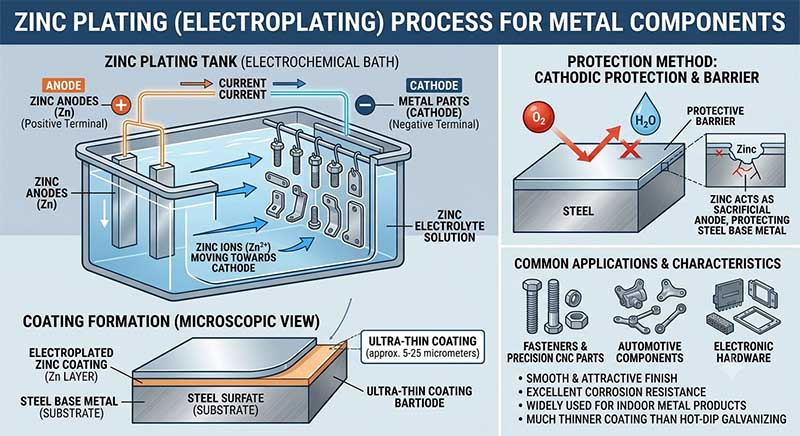
Zinc plating is an electrochemical surface treatment process that applies a thin layer of zinc onto the surface of metal parts, usually steel components. During this process, zinc ions are deposited onto the metal surface through an electrical current, creating a protective coating. galvanized vs zinc plated
The primary purpose of zinc plating is to prevent rust and corrosion by forming a barrier between the base metal and external elements such as moisture, oxygen, and chemicals.
Compared with hot-dip galvanizing, electroplated zinc coatings are much thinner but provide a smooth and attractive finish. This makes them widely used for precision parts, fasteners, automotive components, electronic hardware, and indoor metal products.
Applications of Zinc-Plated Materials
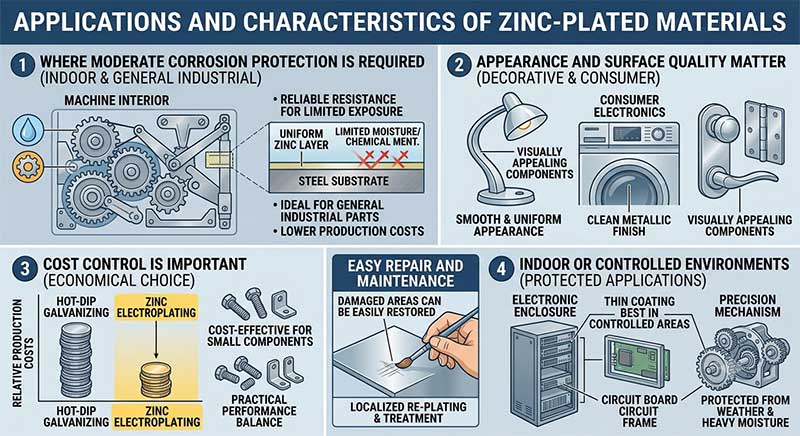
Zinc plated materials are commonly selected for applications where moderate protection, appearance, and cost efficiency are important.
Moderate Corrosion Protection Is Required
Zinc plating provides reliable corrosion resistance for environments with limited exposure to moisture and chemicals. Although it protects steel from rust, it is not designed for extremely harsh outdoor conditions or continuous exposure to aggressive corrosive elements.
For indoor equipment, mechanical components, and general industrial parts, zinc plated finishes can provide sufficient protection while keeping production costs lower.
Appearance and Surface Quality Matter
One major advantage of zinc plating is its smooth and uniform appearance. The coating creates a clean metallic finish that is visually appealing and consistent.
Because of this, zinc-plated parts are often used in decorative hardware, consumer products, appliances, and components where both function and appearance are important.
Cost Control Is Important
Compared with galvanization, the zinc plating process usually requires less material and lower processing costs. This makes it an economical choice for manufacturers who need corrosion protection without significantly increasing production expenses.
For small components or projects with strict budget limitations, zinc plating can offer a practical balance between performance and affordability.
Indoor or Controlled Environments
Since the zinc layer in electroplating is relatively thin, it performs best in controlled environments. Applications that are protected from heavy rain, extreme temperatures, and long-term outdoor exposure can benefit from this type of finish.
Examples include indoor machinery parts, electronic components, and precision hardware.
Easy Repair and Maintenance
Another benefit of zinc plated coatings is that damaged areas can be repaired more easily compared with thicker coatings. Localized re-plating or additional protective treatments can restore the surface protection when necessary.
Main Features of Zinc-Plated Materials
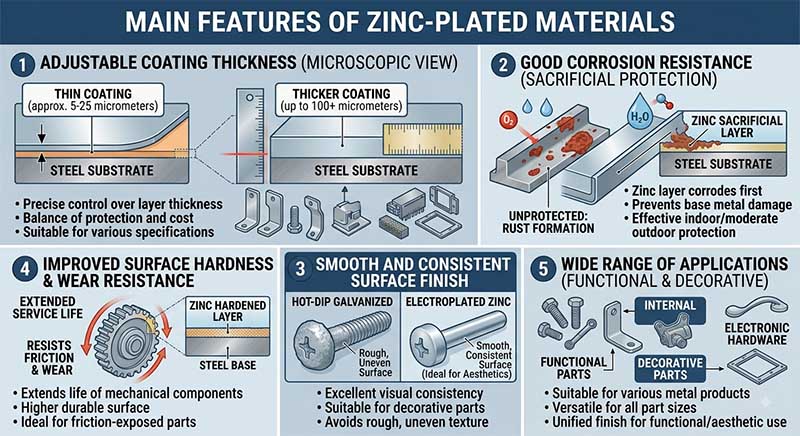
Adjustable Coating Thickness
One important characteristic of zinc plating is the ability to control coating thickness accurately. Depending on the application requirements, the zinc layer can range from several microns to hundreds of microns.
This flexibility allows manufacturers to balance corrosion protection, dimensional accuracy, and production cost.
Good Corrosion Resistance
Although thinner than galvanized coatings, zinc plating still provides effective corrosion protection. The zinc layer works as a sacrificial barrier, meaning zinc corrodes before the steel substrate, helping prevent rust formation.
This property makes zinc coating finishes suitable for many industrial and commercial applications.
Smooth and Consistent Surface Finish
A key advantage of electroplated zinc is its excellent appearance. The surface is generally smooth, even, and visually consistent, making it suitable for components where aesthetics are important.
Unlike hot-dip galvanizing, zinc plating usually does not create a rough or uneven surface.
Improved Surface Hardness
The addition of a zinc layer can improve the wear resistance and durability of the underlying metal. This helps extend the service life of components exposed to friction or mechanical stress.
Wide Range of Applications
Zinc plated parts can be applied to various metal products, from small screws and fasteners to industrial components. The process is suitable for both functional and decorative applications.
Advantages of Zinc-Plated Materials
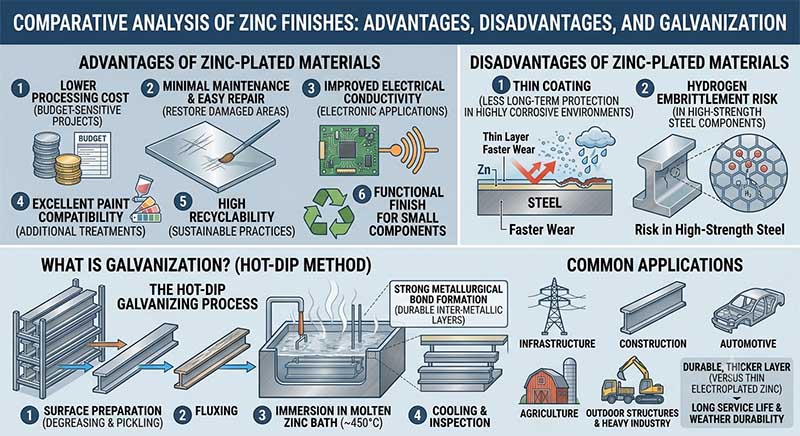
There are several reasons why manufacturers choose zinc plated coatings:
- Lower processing cost compared with galvanized finishes, making them suitable for budget-sensitive projects.
- Minimal maintenance requirements because damaged areas can be repaired relatively easily.
- Improved electrical conductivity, which benefits some electronic and electrical applications.
- Excellent compatibility with paints and additional surface treatments.
- High recyclability, supporting more sustainable manufacturing practices.
Disadvantages of Zinc-Plated Materials
Despite its advantages, zinc plating also has some limitations.
The main disadvantage is that the coating is thinner than galvanized protection. In highly corrosive environments, zinc-plated surfaces may wear out faster and provide less long-term protection.
Additionally, the electroplating process may introduce the risk of hydrogen embrittlement in certain high-strength steel components. This can potentially affect mechanical performance if proper treatment procedures are not followed.
What Is Galvanization?
Galvanization is a metal finishing process that protects steel and iron by applying a thick layer of zinc through a hot-dip method. During the hot dip galvanizing process, metal parts are immersed into a bath of molten zinc, allowing the zinc to chemically react and bond with the surface of the base metal.
Unlike zinc plating, which uses an electrochemical deposition method, galvanization creates a stronger metallurgical bond between zinc and steel. This produces a thicker and more durable protective layer that can withstand severe environmental conditions.
Because of its excellent corrosion resistance, long service life, and weather durability, galvanized materials are widely used in construction, infrastructure, automotive manufacturing, agriculture, outdoor structures, and heavy industrial applications.
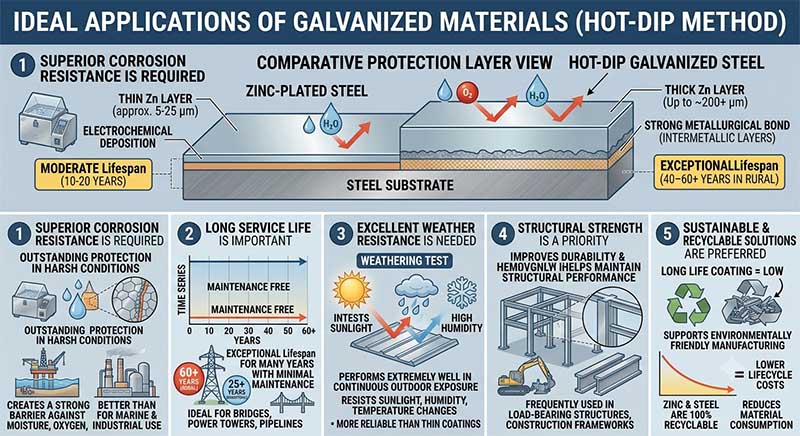
Ideal Applications of Galvanized Materials
Galvanized materials are mainly chosen for projects that require maximum durability and long-term protection.
Superior Corrosion Resistance Is Required
The biggest advantage of galvanized coatings is their ability to provide outstanding protection against corrosion. The thicker zinc layer creates a strong barrier that prevents moisture, oxygen, and chemicals from reaching the steel surface.
For outdoor structures, marine environments, and industrial equipment exposed to harsh conditions, hot dip galvanized coatings are usually a better choice than zinc-plated finishes.
Long Service Life Is Important
One of the main reasons industries choose galvanized steel is its exceptional lifespan. Due to the thick zinc layer and strong chemical bonding, galvanized coatings can protect metal components for many years with minimal maintenance.
This makes them ideal for bridges, power towers, pipelines, fences, roofing systems, and other structures where replacement costs are high.
Excellent Weather Resistance Is Needed
Galvanized coatings perform extremely well under outdoor conditions. They can resist rain, sunlight, temperature changes, humidity, and other environmental factors.
For applications exposed to continuous weather conditions, galvanized materials provide more reliable protection compared with thinner zinc-plated coatings.
Structural Strength Is a Priority
The hot dip galvanizing process can improve the durability of steel components by adding a protective zinc layer that helps maintain structural performance.
Because of this, galvanized steel is frequently used in load-bearing structures, construction frameworks, heavy machinery, and industrial equipment.
Sustainable and Recyclable Solutions Are Preferred
Galvanized materials support environmentally friendly manufacturing because zinc and steel can be recycled after their service life.
The long lifespan of galvanized steel coatings also reduces the need for frequent replacement, helping decrease material consumption and maintenance costs.
Main Features of Galvanized Materials
Excellent Corrosion Protection
The most important feature of galvanized coatings is their superior corrosion resistance. The zinc layer acts as a protective shield and prevents the underlying steel from rusting.
Even when the surface is scratched, zinc continues to provide protection because it works as a sacrificial metal.
Thick and Durable Zinc Layer
Compared with zinc plated coatings, galvanized finishes have a much thicker zinc layer. The typical thickness of galvanized coatings is usually around 50–150 microns, depending on the material and application requirements.
This additional thickness provides stronger protection against abrasion, impact, and environmental exposure.
Sacrificial Anode Protection
Both zinc plating and galvanization use the sacrificial protection principle. Zinc is more reactive than steel, meaning it corrodes first and protects the base metal underneath.
This self-sacrificing property is one of the key reasons galvanized steel offers long-term corrosion resistance.
Self-Healing Capability
A unique advantage of galvanized coatings is their ability to provide limited self-healing protection.
When the zinc surface is damaged, exposed areas can react with oxygen and moisture to form new protective zinc compounds. This helps maintain corrosion resistance and extends the service life of the coating.
Outstanding Weatherability
Galvanized materials are designed for demanding outdoor environments. They can withstand UV exposure, heavy rainfall, temperature fluctuations, and other weather-related challenges.
For outdoor applications requiring reliable performance, galvanized finishes are often the preferred solution.
Advantages of Galvanized Materials
There are many benefits to choosing galvanized coatings for metal components:
- Long-lasting corrosion protection that can extend the service life of steel products for decades.
- Reduced maintenance requirements because galvanized surfaces require fewer repairs and inspections.
- Improved durability for construction and structural applications.
- Excellent recyclability, supporting sustainable manufacturing.
- Wide application possibilities across industries such as construction, automotive, agriculture, transportation, and infrastructure.
Disadvantages of Galvanized Materials
Although galvanization provides excellent protection, it also has some limitations.
The biggest disadvantage is the higher processing cost compared with zinc plating. The hot-dip process requires specialized equipment, molten zinc baths, and additional handling procedures.
In some cases, the galvanized surface may have a rougher or less uniform appearance due to the nature of the dipping process. For applications requiring extremely smooth finishes or precise appearance control, zinc plating may be more suitable.
Zinc Plated vs Galvanized: Key Differences Comparison
When comparing zinc plated vs galvanized materials, several important factors should be considered, including coating thickness, bonding method, corrosion resistance, appearance, cost, and application environment.
Coating Thickness Difference
The thickness of the zinc layer is one of the most obvious differences between these two finishing methods.
Zinc plating usually produces a thinner coating, commonly ranging from approximately 5 to 100 microns. This provides adequate protection for indoor and moderate environments.
In comparison, galvanized coatings are much thicker, generally ranging from 50 to 150 microns. The increased thickness allows galvanized materials to provide stronger and longer-lasting corrosion protection.
Coating Bonding Method
The bonding structure of the zinc layer is another major difference.
In the zinc plating process, zinc is attached to the metal surface through electrochemical deposition. This creates a strong coating but mainly relies on mechanical adhesion.
During the hot dip galvanizing process, zinc chemically reacts with steel to form a metallurgical bond. This connection is stronger and more durable, allowing galvanized coatings to withstand more demanding conditions.
Corrosion Resistance Comparison
When comparing zinc plated vs galvanized corrosion resistance, galvanized materials generally provide better long-term performance.
The thicker zinc layer and stronger bonding structure allow galvanized coatings to resist rust, moisture, and environmental damage more effectively.
For harsh outdoor environments, marine applications, and industrial facilities, galvanized steel is usually the recommended option.
Self-Healing Capability Comparison
The ability to repair surface damage is another important difference between zinc plated and galvanized coatings.
Galvanized materials have better self-healing properties because the zinc layer continues to protect exposed areas after minor scratches or surface damage. When zinc reacts with oxygen and moisture, it creates protective compounds that help slow down corrosion.
In contrast, zinc plated coatings have limited self-repair capability. Once the thinner zinc layer is damaged, the exposed steel underneath becomes more vulnerable to rust and corrosion.
For applications where long-term reliability is critical, galvanized coatings usually provide a stronger advantage.
Weather Resistance Comparison
When exposed to outdoor conditions, galvanized steel coatings generally perform better than zinc-plated finishes.
Galvanized surfaces can withstand harsh weather conditions, including UV exposure, heavy rain, humidity, temperature changes, and outdoor pollutants. This makes them suitable for construction structures, outdoor equipment, and infrastructure projects.
Although zinc plated materials offer reasonable protection, they are more suitable for indoor environments or areas with controlled exposure.
Cost Comparison
Cost is another major factor when choosing between zinc plating and galvanization.
The zinc plating process is usually more affordable because it requires less zinc material and simpler processing equipment. This makes it an attractive option for manufacturers looking for economical corrosion protection.
On the other hand, the hot dip galvanizing process involves larger equipment, higher temperatures, and more zinc consumption, resulting in higher initial costs.
However, galvanized materials often provide better long-term value because their longer service life reduces maintenance and replacement expenses.
Appearance Comparison
The appearance of the final coating can also influence the decision.
Zinc plated surfaces typically have a smooth, bright, and consistent appearance. Because of their attractive finish, they are commonly used for visible hardware, consumer products, and decorative metal components.
Galvanized surfaces, however, may have a rougher or slightly uneven texture due to the hot-dip process. While this appearance is acceptable for industrial and structural applications, it may not be ideal where aesthetics are the primary concern.
Zinc Plated vs Galvanized: Comparison Table
To better understand the differences between these two zinc coating methods, the following comparison provides a quick overview:
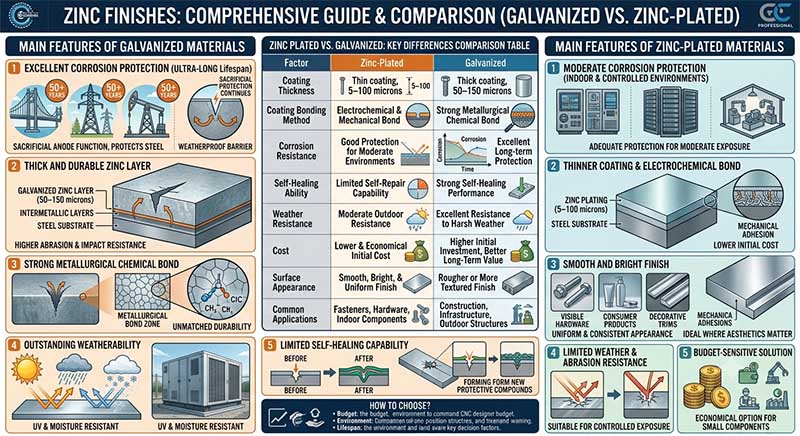
| Factor | Zinc Plated | Galvanized |
|---|---|---|
| Coating Thickness | Thin coating, usually 5–100 microns | Thick coating, usually 50–150 microns |
| Coating Bonding | Electrochemical mechanical bond | Strong metallurgical chemical bond |
| Corrosion Resistance | Good protection for moderate environments | Excellent long-term corrosion protection |
| Self-Healing Ability | Limited | Strong self-healing performance |
| Weather Resistance | Moderate outdoor resistance | Excellent resistance to harsh weather |
| Cost | Lower and more economical | Higher initial investment |
| Surface Appearance | Smooth and uniform finish | Rougher or more textured finish |
| Common Applications | Fasteners, hardware, indoor components | Construction, infrastructure, outdoor structures |
Zinc Plated vs Galvanized: How to Choose the Right Option?
Selecting between zinc plated and galvanized materials depends on the specific requirements of your project. Before choosing a surface finish, you should consider durability, budget, environment, and appearance requirements.
Consider Required Durability
If your project requires maximum protection and a long service life, galvanized coatings are usually the better choice.
Applications such as outdoor structures, heavy machinery, bridges, pipelines, and industrial equipment benefit from the thicker zinc layer and stronger bonding provided by galvanization.
For projects where corrosion exposure is limited, zinc plated finishes can still provide reliable protection at a lower cost.
Consider Your Budget
Budget limitations often influence the final decision between zinc plating and galvanizing.
If you need a cost-effective surface treatment for smaller components or indoor applications, zinc plating may be the ideal solution.
However, if long-term durability is more important than initial cost, investing in galvanized protection can reduce future maintenance and replacement expenses.
Consider the Operating Environment
The environment where the metal component will be used is one of the most important factors.
For outdoor applications exposed to rain, humidity, chemicals, saltwater, or extreme temperatures, hot dip galvanized coatings provide superior protection.
For indoor applications with limited moisture exposure, zinc plated components are often sufficient.
Consider Appearance Requirements
Appearance can also determine which coating method is more suitable.
If your project requires a clean, smooth, and visually consistent finish, zinc plating is generally the preferred option.
If the component will mainly serve structural or industrial purposes, the stronger protection of galvanized coatings is usually more valuable than surface appearance.
Conclusion
When comparing zinc plated vs galvanized coatings, there is no single answer that works for every project. Both surface finishing methods provide effective corrosion protection, but they are designed for different applications.
Zinc plating is an excellent choice when you need a smooth appearance, lower cost, and moderate corrosion resistance. It works well for indoor components, decorative hardware, and precision metal parts.
Galvanization, especially hot dip galvanizing, is the better option when your project requires maximum durability, long service life, and protection against harsh environments.
The best choice depends on your specific requirements, including application conditions, budget, expected lifespan, and performance goals.
If selecting the right metal surface finishing process feels complicated, Xavier can provide professional manufacturing solutions and help you choose the most suitable coating method for your custom metal parts.
We are an integrated CNC manufacturing and trading company focused on professional CNC machining services, specializing in contract machining and the production of a wide range of precision metal parts. Our capabilities also include CNC electroless nickel surface finishing, CNC passivation surface finishing, and CNC chemical conversion coating surface finishing.
We are a CNC electroless nickel surface finishing manufacturer offering CNC passivation surface finishing services for bulk orders. Contact us to inquire about CNC chemical conversion coating surface finishing pricing. Feel free to contact us for more details.
Some of the images and text in this article are collected and compiled from the internet. If there is anything inappropriate, please contact us for processing.