Cast Aluminum vs Cast Iron: Which Material Is Better for Your Metal Project?
Choosing the right metal material is a critical decision for any manufacturing or engineering project. When comparing cast aluminum vs cast iron, many designers and engineers find it challenging to determine which option can better meet their performance, cost, and application requirements.
Although both materials are widely used in industrial manufacturing, they have significant differences in terms of weight, strength, thermal properties, corrosion resistance, and overall performance. Understanding these differences can help you select the most suitable material for your specific project.
In this detailed comparison, we will explore the characteristics of cast aluminum and cast iron, analyze their advantages and disadvantages, and compare their key properties to help you make a more informed material selection.
Overview of Cast Aluminum
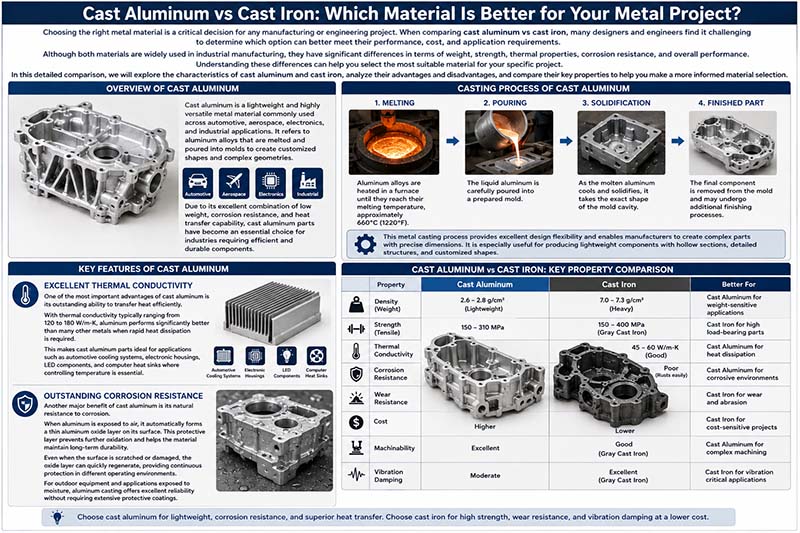
Cast aluminum is a lightweight and highly versatile metal material commonly used across automotive, aerospace, electronics, and industrial applications. It refers to aluminum alloys that are melted and poured into molds to create customized shapes and complex geometries.
The aluminum casting process allows manufacturers to produce components with intricate designs, thin walls, and internal structures that may be difficult to achieve through traditional manufacturing methods.
Due to its excellent combination of low weight, corrosion resistance, and heat transfer capability, cast aluminum parts have become an essential choice for industries requiring efficient and durable components.
Casting Process of Cast Aluminum
The production of cast aluminum components begins by heating aluminum alloys until they reach their melting temperature, which is approximately 660°C (1220°F).
After the aluminum becomes liquid, it is carefully poured into a prepared mold. As the molten aluminum cools and solidifies, it takes the exact shape of the mold cavity and forms the final component.
This metal casting process provides excellent design flexibility and enables manufacturers to create complex parts with precise dimensions. It is especially useful for producing lightweight components with hollow sections, detailed structures, and customized shapes.
Key Features of Cast Aluminum
Excellent Thermal Conductivity
One of the most important advantages of cast aluminum is its outstanding ability to transfer heat efficiently.
With thermal conductivity typically ranging from 120 to 180 W/m·K, aluminum performs significantly better than many other metals when rapid heat dissipation is required.
This makes cast aluminum parts ideal for applications such as automotive cooling systems, electronic housings, LED components, and computer heat sinks where controlling temperature is essential.
Outstanding Corrosion Resistance
Another major benefit of cast aluminum is its natural resistance to corrosion.
When aluminum is exposed to air, it automatically forms a thin aluminum oxide layer on its surface. This protective layer prevents further oxidation and helps the material maintain long-term durability.
Even when the surface is scratched or damaged, the oxide layer can quickly regenerate, providing continuous protection in different operating environments.
For outdoor equipment and applications exposed to moisture, aluminum casting offers excellent reliability without requiring extensive protective coatings.
High Strength-to-Weight Ratio
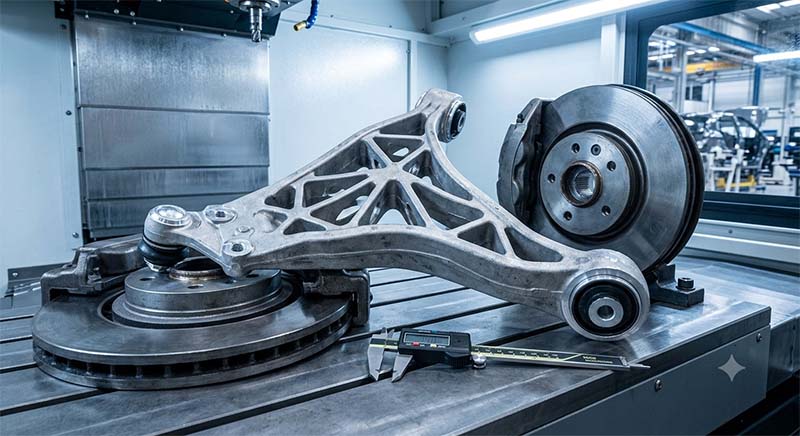
For projects that require both strength and lightweight performance, cast aluminum alloys provide an excellent solution.
With a density of approximately 2.7 g/cm³, aluminum is much lighter than iron-based materials while still maintaining good mechanical strength.
This high strength-to-weight ratio makes cast aluminum components especially valuable in transportation industries, including automotive and aerospace manufacturing, where reducing weight can improve fuel efficiency and overall performance.
Excellent Castability
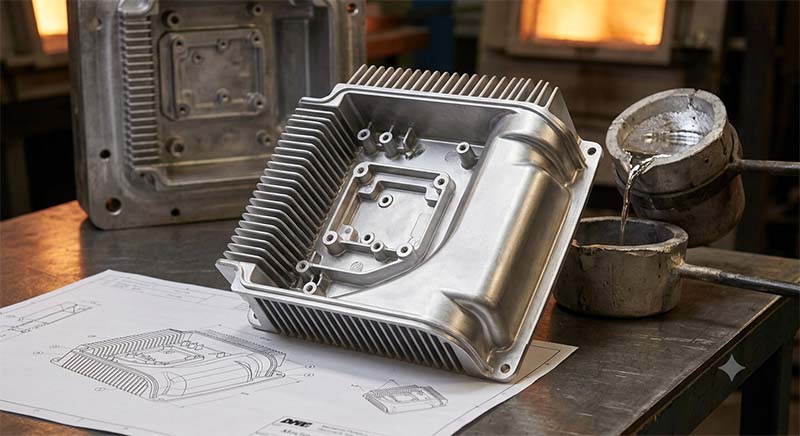
Another advantage of cast aluminum is its superior castability.
Because aluminum has a relatively low melting point and excellent fluidity when molten, it can easily fill complex mold structures and produce detailed designs.
This allows manufacturers to create components with:
- Complex geometries
- Thin-wall sections
- Smooth surface finishes
- Reduced post-processing requirements
The excellent castability of aluminum makes it suitable for producing customized parts that require both functional performance and design flexibility.
Non-Magnetic Characteristics
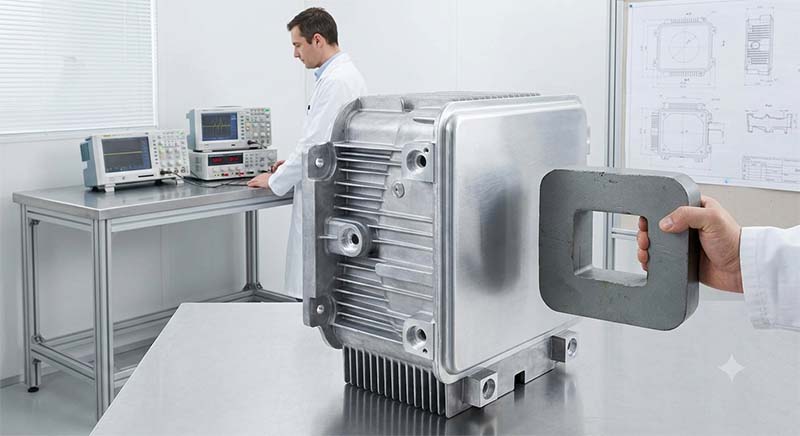
Unlike many iron-based materials, cast aluminum is completely non-magnetic.
This property makes it suitable for applications where magnetic interference needs to be avoided, including electronic equipment housings, medical devices, and precision instruments.
The non-magnetic nature of aluminum also helps reduce the risk of attracting metallic particles that could damage sensitive surfaces.
Advantages of Cast Aluminum
Cast aluminum parts provide several benefits that make them popular across multiple industries:
- Aluminum can be recycled repeatedly without losing its original properties, making it an environmentally friendly material choice.
- A wide variety of surface finishing options are available for aluminum components, including anodizing, polishing, and coating treatments.
- Cast aluminum maintains dimensional stability across different temperature ranges, making it suitable for precision applications.
- Aluminum components require relatively low maintenance throughout their service life.
- Its combination of lightweight structure and good electrical conductivity makes it suitable for electrical and electronic applications.
Disadvantages of Cast Aluminum
Although cast aluminum offers many advantages, it also has some limitations:
- It may not provide enough strength for extremely high-load applications without additional design improvements.
- The material cost is generally higher compared with cast iron, which can increase the initial manufacturing budget.
- Some aluminum alloys may require additional treatments to achieve specific hardness or wear resistance requirements.
For applications where maximum strength, impact resistance, or heavy-load capability are the priority, other materials such as cast iron may be more suitable.
Overview of Cast Iron
Cast iron is one of the most widely used metal materials in industrial manufacturing and has played an important role in engineering, construction, and machinery production for centuries.
Unlike aluminum-based materials, cast iron is an iron-carbon alloy that generally contains more than 2% carbon, along with other elements such as silicon and manganese. The higher carbon content gives cast iron its unique mechanical properties, including excellent compression strength, wear resistance, and vibration absorption capability.
Because of its durability and stability, cast iron components are commonly found in heavy machinery, automotive parts, industrial equipment, engine blocks, machine bases, and architectural structures.
Although cast iron is heavier than aluminum, its outstanding strength and resistance to wear make it an ideal choice for applications where load-bearing capacity and long service life are required.
Casting Process of Cast Iron
The cast iron casting process involves heating iron alloys to temperatures above 1200°C (2192°F) until the material becomes completely molten.
The liquid iron is then poured into molds designed according to the required component shape. During the cooling and solidification process, the molten metal forms a strong and durable cast iron structure.
This traditional iron casting process allows manufacturers to create large and complex components with excellent dimensional stability.
After casting, cast iron parts can be further machined to achieve precise dimensions and improved surface finishes. This combination of casting flexibility and machinability makes cast iron suitable for many demanding industrial applications.
Key Features of Cast Iron
Excellent Vibration Damping Performance
One of the most notable advantages of cast iron is its outstanding vibration absorption capability.
The graphite flakes contained in the microstructure of cast iron naturally absorb mechanical vibrations and reduce noise during operation.
This property makes cast iron components highly suitable for machinery bases, industrial equipment, engine components, and precision machine tools where vibration control is important.
Compared with steel materials, certain types of cast iron can provide significantly better vibration damping performance, helping improve equipment stability and extend service life.
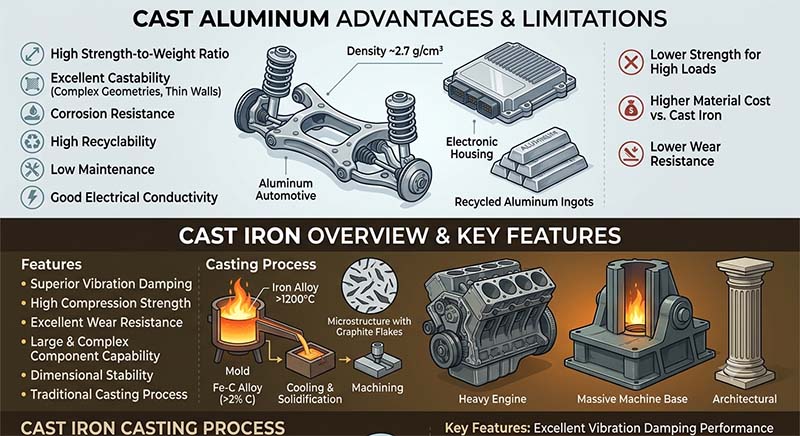
Superior Wear Resistance
Cast iron offers excellent resistance against friction, abrasion, and continuous mechanical wear.
This wear resistance mainly comes from hard structures such as carbides within the material’s microstructure. These structures help cast iron withstand repeated contact and harsh operating conditions.
For applications involving heavy friction, including brake rotors, industrial machinery components, and mechanical sliding parts, cast iron often provides longer service life compared with many alternative materials.
Some specialized cast iron grades can achieve wear resistance levels comparable to hardened steel.
High Compressive Strength
When a material needs to handle heavy compression loads, cast iron performs exceptionally well.
Certain cast iron grades can achieve compressive strengths exceeding 1000 MPa, making them suitable for applications exposed to continuous pressure and heavy mechanical stress.
This high compressive strength allows cast iron parts to be widely used in:
- Heavy machinery frames
- Construction equipment
- Engine blocks
- Industrial machine bases
- Structural components
However, while cast iron performs extremely well under compression, it has lower tensile strength and is more brittle than many other metals.
Excellent Thermal Performance
Another important characteristic of cast iron is its ability to manage heat effectively.
Grey cast iron typically has thermal conductivity around 50 W/m·K, combined with excellent thermal stability and heat retention properties.
This makes cast iron components suitable for applications involving repeated heating and cooling cycles, such as cookware, brake systems, and industrial processing equipment.
In addition, cast iron has a relatively high heat capacity, allowing it to absorb significant amounts of thermal energy before its temperature changes.
Good Machinability and Moldability
Despite being a strong material, cast iron offers excellent machinability compared with many other high-strength metals.
Its good fluidity during the casting process allows manufacturers to create complex shapes and detailed structures. After solidification, cast iron can be machined into accurate dimensions with relatively smooth surface finishes.
This combination of cast iron casting flexibility and machining capability helps reduce manufacturing difficulties and allows the production of complex industrial components.
Advantages of Cast Iron
Cast iron materials provide many benefits for industrial and engineering applications:
- The raw materials required for cast iron production are widely available and relatively affordable.
- The casting technology is mature, making large-scale production efficient and cost-effective.
- Cast iron is fully recyclable and can be melted and reused multiple times without significant property loss.
- Its excellent vibration damping capability makes it ideal for noise-sensitive applications.
- The material maintains good strength and dimensional stability across a wide temperature range.
- Graphite structures inside cast iron can provide natural lubrication, helping reduce friction and wear in moving components.
Disadvantages of Cast Iron
Although cast iron has many advantages, it also comes with several limitations:
- Its density is approximately 7.2 g/cm³, making it much heavier than lightweight materials such as aluminum.
- The brittle structure of cast iron means it has limited resistance to impact forces and tensile stress.
- It can crack more easily when exposed to sudden loads or bending forces.
- Standard cast iron has weaker corrosion resistance compared with cast aluminum, especially in humid or outdoor environments.
For projects where lightweight design, corrosion resistance, and easy transportation are important, cast aluminum alloys may provide better performance.
Cast Aluminum vs Cast Iron: Main Differences Comparison
When selecting between cast aluminum vs cast iron, understanding the performance differences between these two materials is essential.
Both materials have unique advantages, and the best choice depends on factors such as application requirements, operating environment, production cost, and mechanical performance.
In the following sections, we will compare cast aluminum and cast iron based on cost, applications, weight, strength, thermal characteristics, and corrosion resistance.
Cast Aluminum vs Cast Iron: Detailed Comparison
When choosing between cast aluminum and cast iron, there is no single material that is perfect for every application. The right choice depends on the specific requirements of your project, including weight limitations, mechanical strength, environmental conditions, and manufacturing costs.
Below is a detailed comparison of these two popular casting materials based on the most important performance factors.
Cost Comparison
Cost is usually one of the first considerations when selecting a material for manufacturing projects.
Cast Iron Cost
In most cases, cast iron is more affordable than cast aluminum, especially for large-scale production and heavy industrial components.
The raw materials required for cast iron production are widely available, and the iron casting process has been developed for many years. This mature manufacturing technology helps reduce production expenses.
For large machine parts, structural components, and high-volume applications, cast iron is often a cost-effective choice.
Cast Aluminum Cost
Compared with cast iron, cast aluminum usually has a higher material cost.
The price of aluminum alloys and the requirements of certain aluminum casting processes can increase the initial manufacturing investment, especially when producing complex components.
However, the lightweight advantages of cast aluminum parts can reduce transportation costs, improve fuel efficiency, and lower operating expenses over time.
For industries such as automotive and aerospace manufacturing, the long-term benefits of weight reduction can make aluminum a more economical solution.
Application Differences
The ideal material choice depends heavily on where the component will be used.
Cast Iron Applications
Cast iron components are commonly selected for applications requiring:
- High compressive strength
- Excellent wear resistance
- Strong vibration damping
- Long-term durability
Typical applications include:
- Heavy machinery parts
- Industrial equipment bases
- Engine blocks
- Brake rotors
- Construction components
- Machine tool structures
Because of its high strength and stability, cast iron remains a preferred material for demanding industrial environments.
Cast Aluminum Applications
Cast aluminum parts are widely used when lightweight performance, corrosion resistance, and thermal management are important.
Common applications include:
- Automotive components
- Aerospace structures
- Electronic housings
- Heat sinks
- Consumer products
- Lightweight mechanical parts
Industries that prioritize energy efficiency and weight reduction often choose aluminum casting solutions.
Weight Comparison
The weight difference between cast aluminum vs cast iron is one of the most noticeable distinctions.
Cast Iron Weight
With a density of approximately 7.2 g/cm³, cast iron is significantly heavier than aluminum.
This additional weight can be beneficial in applications where stability, vibration reduction, or counterbalance effects are needed.
For example, heavy machine bases often use cast iron because the extra mass helps improve rigidity and reduce operational vibration.
However, the high weight can become a disadvantage in transportation equipment and portable products.
Cast Aluminum Weight
Cast aluminum has a density of only about 2.7 g/cm³, making it nearly one-third the weight of cast iron.
This lightweight characteristic provides major advantages in industries where reducing overall weight is critical.
For example, replacing cast iron components with aluminum parts in vehicles can improve:
- Fuel efficiency
- Handling performance
- Energy consumption
- Transportation convenience
The excellent strength-to-weight ratio of aluminum is one of the main reasons it is widely used in modern manufacturing.
Strength and Durability Comparison
Strength requirements play an important role when selecting between cast aluminum and cast iron.
Cast Iron Strength
Cast iron is known for its exceptional compressive strength.
Some high-performance cast iron grades can achieve compressive strengths above 1000 MPa, allowing them to withstand heavy loads and continuous pressure.
It also provides excellent wear resistance, making it suitable for components exposed to friction and mechanical stress.
However, cast iron has limited tensile strength and lower ductility. Its brittle nature means it may crack under sudden impact or pulling forces.
Cast Aluminum Strength
Although cast aluminum alloys generally do not match cast iron in absolute strength, they offer excellent mechanical performance considering their low weight.
The tensile strength of cast aluminum varies depending on the alloy type but typically ranges from approximately 130 to 280 MPa.
Compared with cast iron, aluminum provides better ductility, allowing it to deform before failure rather than suddenly cracking.
This makes aluminum casting suitable for applications where lightweight structures and moderate strength are required.
Thermal Performance Comparison
Thermal behavior is another important factor when comparing cast aluminum vs cast iron.
Cast Iron Thermal Properties
Cast iron provides excellent thermal stability and heat retention.
With thermal conductivity around 50 W/m·K, cast iron transfers heat at a moderate rate while maintaining temperature for longer periods.
This makes it suitable for applications such as:
- Cooking equipment
- Brake components
- Industrial heating systems
- Thermal processing equipment
Its ability to absorb and store heat is one of the reasons cast iron remains popular in high-temperature applications.
Cast Aluminum Thermal Properties
Cast aluminum performs significantly better when rapid heat transfer is required.
With thermal conductivity ranging from 120 to 180 W/m·K, aluminum can quickly move heat away from components.
This makes cast aluminum parts ideal for:
- Automotive cooling systems
- Electronic heat sinks
- LED housings
- Heat exchange equipment
When efficient heat dissipation is a priority, aluminum casting usually provides better performance.
Corrosion Resistance Comparison
Environmental conditions can greatly influence material selection.
Cast Iron Corrosion Resistance
Traditional cast iron has limited corrosion resistance.
When exposed to moisture and oxygen, cast iron can develop rust over time. In corrosive environments, additional protective treatments may be required to improve durability.
Some advanced cast iron materials, such as ductile iron, provide improved corrosion resistance, but protection is still often necessary for outdoor applications.
Cast Aluminum Corrosion Resistance
Cast aluminum naturally provides excellent corrosion resistance.
When exposed to air, aluminum forms a protective oxide layer that prevents further oxidation and protects the underlying material.
This self-protective feature allows aluminum components to perform well in outdoor, marine, and humid environments.
For applications where corrosion protection is important, cast aluminum alloys are often a better choice than traditional cast iron.
Cast Aluminum vs Cast Iron Comparison Table
| Property | Cast Aluminum | Cast Iron |
|---|---|---|
| Density | Approximately 2.7 g/cm³ | Approximately 7.2 g/cm³ |
| Weight | Lightweight | Heavy |
| Tensile Strength | About 130-280 MPa | About 150-400 MPa |
| Compressive Strength | Moderate | Very High (>1000 MPa) |
| Thermal Conductivity | 120-180 W/m·K | Around 50 W/m·K |
| Corrosion Resistance | Excellent | Low to Moderate |
| Machinability | Good | Excellent |
| Vibration Damping | Moderate | Excellent |
| Electrical Conductivity | Good | Poor |
| Material Cost | Higher | Lower |
| Ductility | Moderate to High | Low |
| Wear Resistance | Moderate | Excellent |
Conclusion: Choosing Between Cast Aluminum and Cast Iron
As this comparison shows, both cast aluminum and cast iron offer unique advantages and limitations. The best material choice depends on your specific project requirements, including mechanical performance, weight considerations, operating environment, and budget.
If your application requires lightweight construction, excellent corrosion resistance, and efficient heat transfer, cast aluminum is usually the better option. Its high strength-to-weight ratio and excellent thermal conductivity make it widely used in automotive, aerospace, electronics, and other industries where reducing weight and improving efficiency are important.
On the other hand, if your project requires superior compressive strength, outstanding wear resistance, and excellent vibration damping, cast iron remains a reliable choice. Its durability and stability make it suitable for heavy machinery, industrial equipment, engine components, and applications exposed to continuous mechanical loads.
Before selecting a material, manufacturers should carefully evaluate factors such as production volume, machining requirements, environmental conditions, and final application performance.
At Xavier, we provide professional CNC machining services, precision manufacturing solutions, and customized metal part production for various industries. With extensive experience in machining materials including aluminum, iron, stainless steel, titanium, and other metal alloys, Xavier helps customers choose suitable materials and manufacturing processes for their projects.
Whether you need lightweight cast aluminum components or durable cast iron parts, our engineering team can support your project from material selection to final production with reliable quality and precision.
We are an integrated CNC machining manufacturer and supplier specializing in custom CNC machining services and the production of various precision metal parts. We provide professional machining solutions for a wide range of industries, including robotics, aerospace components, marine parts, automotive parts, medical components, and other high-precision applications. Our capabilities cover materials such as CNC machining aluminum, CNC machining PEEK, and CNC machining stainless steel, along with alloy steel, brass, bronze, copper, Inconel alloys, Invar 36, low carbon steel, titanium, tool steel, ABS, FR4, G-10, nylon, PEI, PET, PMMA (acrylic), polycarbonate, polyethylene, polypropylene, POM (acetal), PPSU, PTFE (Teflon), PVC, and other engineering materials.
As a professional CNC machining aluminum manufacturer, we offer high-quality CNC machining PEEK services for different applications and provide competitive CNC machining stainless steel prices. If you need customized CNC machining solutions, please feel free to contact us.
Some of the images and text in this article are collected and compiled from the internet. If there is anything inappropriate, please contact us for processing.