
Cost of Machining Aluminum: A Complete Guide to Factors, Pricing, and Cost Reduction
Aluminum has become one of the most widely machined engineering materials because it combines excellent machinability with low weight, corrosion resistance, and good mechanical properties. Industries ranging from aerospace and automotive to robotics, electronics, and medical devices rely heavily on CNC-machined aluminum components.
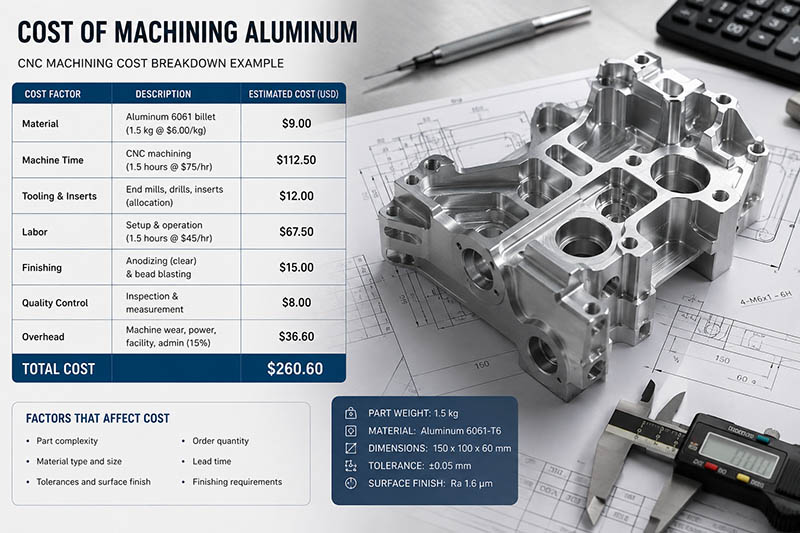
However, many buyers discover that aluminum machining prices can vary significantly between suppliers. Two parts that appear nearly identical may differ in cost by 30–100%, depending on material selection, machining complexity, tolerances, finishing requirements, and production volume.
Understanding what drives machining costs helps engineers optimize designs, improve manufacturability, and reduce unnecessary expenses without sacrificing quality.
Related Topics Commonly Covered by Industry-Leading Resources
The following five topics are consistently discussed across authoritative machining guides and CNC manufacturing resources:
- Aluminum material grades and raw material costs
- CNC machining time and machine operating costs
- Part geometry, complexity, and design for manufacturability
- Tolerances, surface finishes, and secondary operations
- Production quantity, setup costs, and cost optimization strategies
Aluminum Material Grades and Raw Material Costs
The first factor influencing machining cost is the aluminum alloy itself. Although aluminum is generally easier to machine than stainless steel or titanium, not all aluminum grades perform the same during CNC machining.
Different alloys vary in strength, hardness, corrosion resistance, machinability, availability, and market price.
Common Aluminum Grades Used in CNC Machining
| Aluminum Grade | Machinability | Strength | Typical Applications | Relative Material Cost |
|---|---|---|---|---|
| 6061-T6 | Excellent | Medium | General engineering parts | Low |
| 5052 | Good | Medium | Sheet metal, marine | Low |
| 7075-T6 | Very Good | Very High | Aerospace, drones | High |
| 2024 | Good | High | Aircraft structural parts | High |
| 6082 | Excellent | Medium-High | Industrial machinery | Medium |
| MIC-6 | Excellent | Low | Tooling plates | Medium |
Among these materials, 6061-T6 remains the industry standard because it provides an excellent balance of cost, machinability, corrosion resistance, and mechanical performance.
Material Cost Is Only Part of the Total Price
Many buyers assume choosing a cheaper aluminum alloy automatically lowers manufacturing costs. In reality, raw material often accounts for only 10–30% of the total machining price, while machining time usually contributes the largest share.
For example:
| Cost Element | Typical Percentage |
|---|---|
| Raw material | 15–25% |
| CNC machining | 40–60% |
| Setup | 10–15% |
| Inspection | 5–10% |
| Surface finishing | 5–20% |
Therefore, selecting a material that machines faster may reduce overall production costs even if its purchase price is slightly higher.
Material Availability Also Affects Price
Market availability has a direct impact on machining costs.
Common stock sizes of 6061 aluminum are readily available worldwide, resulting in lower procurement costs and shorter lead times.
Conversely, aerospace-grade alloys such as 7075 or 2024 may require special ordering, increasing:
- Material purchase cost
- Inventory holding costs
- Delivery time
- Minimum order quantity
For prototype projects, these factors can significantly influence the final quotation.
Example Comparison
Suppose two identical brackets are machined using different materials:
| Specification | Part A | Part B |
|---|---|---|
| Material | 6061-T6 | 7075-T6 |
| Raw Stock Cost | $18 | $35 |
| Machining Time | 40 min | 45 min |
| Finished Cost | $85 | $118 |
Although the machining process is similar, the higher raw material cost and slightly longer machining time make the 7075 component approximately 39% more expensive.
CNC Machining Time and Machine Operating Costs
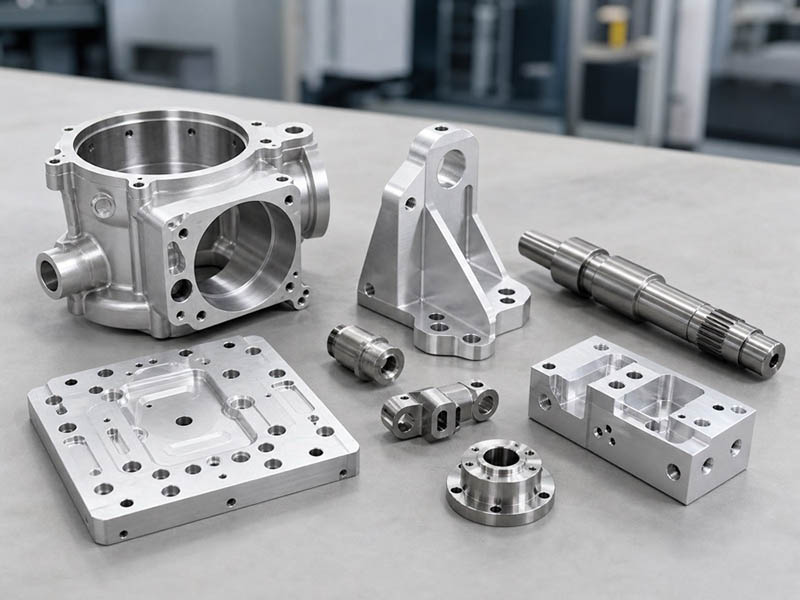
While raw material is important, machining time usually has the greatest impact on aluminum CNC machining costs.
Most CNC workshops calculate prices based on machine hourly rates, meaning every additional minute spent cutting directly increases manufacturing expenses.
Typical Machine Hourly Rates
The operating cost depends on machine type, spindle capability, automation level, and regional labor expenses.
| Machine Type | Typical Hourly Rate |
|---|---|
| 3-Axis CNC Mill | $35–70/hr |
| High-Speed CNC Mill | $60–120/hr |
| 4-Axis CNC | $80–140/hr |
| 5-Axis CNC | $120–250/hr |
These rates generally include:
- Machine depreciation
- Electricity
- Tool wear
- Operator wages
- Coolant consumption
- Factory overhead
Consequently, reducing machining time is often the most effective way to lower part costs.
Features That Increase Machining Time
Certain design features require slower feed rates, additional tool changes, or multiple setups.
Examples include:
| Design Feature | Cost Impact |
|---|---|
| Deep pockets | High |
| Thin walls | High |
| Small internal radii | Medium-High |
| Deep drilled holes | Medium |
| Multiple setups | High |
| Fine engraving | Medium |
Every added operation extends spindle time, increases tool wear, and raises inspection requirements.
Tool Changes Add Hidden Costs
Complex aluminum parts often require multiple cutting tools during a single machining cycle.
For example:
| Operation | Tool |
|---|---|
| Facing | Face mill |
| Rough pocketing | End mill |
| Finishing | Ball end mill |
| Drilling | Twist drill |
| Threading | Tap |
| Chamfering | Chamfer mill |
A simple component may require only three tools, while a complex aerospace component may use more than fifteen.
Each tool change introduces non-cutting time, contributing to higher overall production costs.
High-Speed Machining Can Reduce Costs
One of aluminum’s greatest advantages is its ability to be machined at significantly higher cutting speeds than many other metals.
Typical spindle speeds for aluminum can range from 8,000 to 24,000 RPM, depending on the tooling and machine capabilities.
Higher spindle speeds offer several benefits:
- Shorter cycle times
- Better chip evacuation
- Reduced tool pressure
- Improved surface finish
- Lower cost per part
For example:
| Production Method | Cycle Time |
|---|---|
| Conventional Milling | 40 min |
| High-Speed Machining | 26 min |
This represents a 35% reduction in machining time, which can substantially lower manufacturing costs, especially for medium- and high-volume production.
Part Geometry, Complexity, and Design for Manufacturability (DFM)
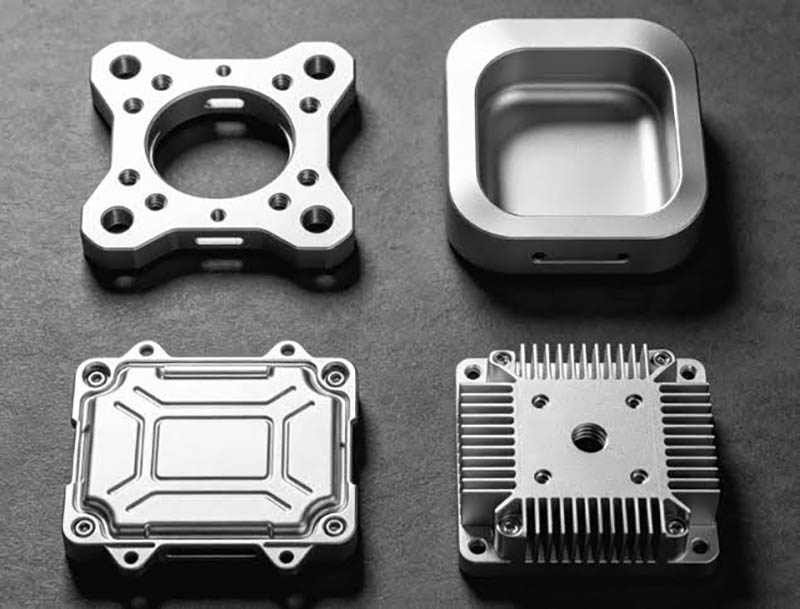
Even when two aluminum parts are made from the same alloy and on the same CNC machine, their machining costs can differ dramatically due to differences in geometry. A part with simple rectangular features may require only one setup and a handful of toolpaths, while a highly intricate component with deep cavities, thin walls, and multiple angled features can take several times longer to produce.
This is why experienced CNC manufacturers always evaluate a design from a Design for Manufacturability (DFM) perspective before providing a quotation.
Why Part Geometry Has a Major Impact on Cost
Complex geometries require:
- More CAM programming time
- Additional tool changes
- Longer machining cycles
- Multiple workholding setups
- Increased inspection requirements
- Higher risk of machining errors
The table below illustrates how design complexity affects manufacturing cost.
| Feature | Manufacturing Difficulty | Relative Cost Impact |
|---|---|---|
| Flat surface | Very Low | ★ |
| Through holes | Low | ★ |
| Simple pockets | Low | ★★ |
| Deep cavities | Medium | ★★★ |
| Thin walls | High | ★★★★ |
| Internal threads | Medium | ★★★ |
| Undercuts | High | ★★★★★ |
| Multi-angle surfaces | Very High | ★★★★★ |
| Freeform 3D contours | Very High | ★★★★★ |
As complexity increases, machining time rises almost proportionally. Features such as undercuts or compound angles may even require specialized tooling or a 5-axis machining center, significantly increasing production costs.
Deep Pockets Increase Cycle Time
Deep pockets are common in aerospace housings, robotics components, and electronic enclosures. However, they present several machining challenges:
- Reduced tool rigidity
- Increased vibration
- Slower feed rates
- More finishing passes
- Longer chip evacuation paths
For example:
| Pocket Depth | Machining Time |
|---|---|
| 10 mm | 6 min |
| 30 mm | 15 min |
| 60 mm | 31 min |
Although the material volume removed may only triple, the machining time can increase by more than five times due to reduced cutting efficiency.
Design Tip: Whenever possible, avoid unnecessarily deep cavities. Splitting a component into two mating parts may reduce machining costs while simplifying assembly and maintenance.
Thin Walls Require Slower Machining
Aluminum is relatively soft compared to steel, making thin walls susceptible to deflection during machining. Excessive cutting forces can cause vibration, dimensional inaccuracies, or even permanent deformation.
Typical recommendations include:
| Wall Thickness | Machining Recommendation |
|---|---|
| ≥3 mm | Ideal for most applications |
| 2 mm | Acceptable with proper toolpaths |
| 1 mm | Difficult to machine consistently |
| <0.8 mm | High risk of distortion |
To prevent damage, machinists often:
- Reduce spindle load
- Lower feed rates
- Perform multiple light finishing passes
- Use specialized high-speed tooling
These additional operations increase machine time and therefore the overall machining cost.
Internal Corners and Tool Radius Limitations
A common design mistake is specifying perfectly sharp internal corners. Since CNC milling cutters are round, they cannot create a true 90-degree internal corner without secondary processes such as EDM.
For example:
| Corner Radius | Machining Difficulty |
|---|---|
| R3 mm | Easy |
| R2 mm | Standard |
| R1 mm | Difficult |
| R0.5 mm | Very difficult |
| Sharp corner | Requires secondary processing |
Using larger internal radii allows manufacturers to use larger end mills, which offer:
- Higher rigidity
- Faster feed rates
- Better tool life
- Improved surface finish
A simple increase from an R1 mm to an R3 mm corner radius can reduce machining time by 15–30% in many applications.
Number of Setups Directly Affects Cost
Every time a part is removed and repositioned in a fixture, manufacturers must:
- Re-clamp the workpiece.
- Re-establish the work coordinate system.
- Verify alignment.
- Perform trial cuts if necessary.
- Conduct additional inspections.
The effect on cost is shown below.
| Number of Setups | Typical Cost Impact |
|---|---|
| 1 | Lowest |
| 2 | +10–20% |
| 3 | +20–40% |
| 4 or more | +40–80% |
Good DFM practices aim to machine as many features as possible in a single setup, reducing labor and improving dimensional consistency.
Example: Redesigning a Part to Reduce Cost
Consider an aluminum mounting bracket with the following features:
- Four deep pockets
- Eight threaded holes
- Two undercuts
- 1 mm wall thickness
- Sharp internal corners
Initial machining estimate:
| Item | Value |
|---|---|
| Machine Time | 95 min |
| Tool Changes | 18 |
| Setups | 3 |
| Estimated Cost | $185 |
After applying DFM improvements:
- Increase wall thickness to 2.5 mm
- Replace undercuts with open slots
- Use R3 mm internal corners
- Reduce pocket depth by 20%
- Combine features into two setups
Revised estimate:
| Item | Value |
|---|---|
| Machine Time | 62 min |
| Tool Changes | 11 |
| Setups | 2 |
| Estimated Cost | $128 |
This redesign reduces machining time by approximately 35% and lowers the total production cost by nearly 31%, without compromising the part’s primary function.
Tolerances, Surface Finishes, and Secondary Operations
Precision requirements play a critical role in determining the cost of machining aluminum. While modern CNC machines are capable of producing extremely accurate parts, achieving tighter tolerances demands slower machining speeds, additional finishing operations, more frequent inspections, and stricter quality control.
In many cases, specifying unnecessarily tight tolerances is one of the most common reasons for inflated manufacturing costs.
How Tolerances Influence Machining Cost
Every reduction in tolerance requires greater process control. The machine must remove less material per pass, use more precise cutting tools, and often perform additional finishing passes.
| Dimensional Tolerance | Manufacturing Difficulty | Relative Cost |
|---|---|---|
| ±0.20 mm | Easy | ★ |
| ±0.10 mm | Standard | ★★ |
| ±0.05 mm | Moderate | ★★★ |
| ±0.02 mm | Difficult | ★★★★ |
| ±0.01 mm | Precision | ★★★★★ |
For general industrial components, a tolerance of ±0.05 mm is sufficient for most applications. Tighter tolerances should only be specified where they are functionally necessary, such as bearing seats, sealing surfaces, or precision locating features.
Precision Inspection Adds Manufacturing Time
High-precision components require more than machining—they also require comprehensive inspection to verify dimensional accuracy.
Common inspection equipment includes:
| Inspection Method | Typical Use |
|---|---|
| Digital calipers | General dimensions |
| Micrometers | Shaft diameters |
| Height gauges | Step measurements |
| Bore gauges | Internal diameters |
| Coordinate Measuring Machine (CMM) | Complex geometries |
| Optical measurement systems | Small precision features |
Inspection can account for 5–15% of the total manufacturing cost, particularly for aerospace, medical, and semiconductor components where full dimensional reports are required.
Surface Finish Requirements Affect Cost
Surface finish is another major pricing factor. A standard machined finish is typically adequate for functional parts, but decorative or high-performance applications often require additional processes.
| Surface Finish | Typical Appearance | Relative Cost |
|---|---|---|
| As-machined | Visible tool marks | ★ |
| Fine machining | Smooth | ★★ |
| Bead blasting | Matte texture | ★★ |
| Anodizing | Corrosion-resistant, colored | ★★★ |
| Hard anodizing | High wear resistance | ★★★★ |
| Powder coating | Decorative, durable | ★★★ |
| Electropolishing | Bright, smooth | ★★★★ |
Each finishing process introduces additional labor, equipment, and lead time, increasing the final cost of the part.
Secondary Operations Can Significantly Increase Total Cost
After CNC machining, many aluminum components require one or more secondary operations before they are ready for assembly or shipment.
Examples include:
- Deburring
- Tapping
- Thread inserts (Heli-Coils)
- Laser engraving
- Silk-screen printing
- Heat treatment
- Assembly
- Surface coating
- Ultrasonic cleaning
- Packaging
The cumulative effect of these operations is shown below.
| Number of Secondary Processes | Typical Cost Increase |
|---|---|
| None | Baseline |
| 1–2 | +10–20% |
| 3–5 | +20–40% |
| More than 5 | +40–70% |
When evaluating quotations, buyers should ensure that all required secondary operations are clearly specified to avoid unexpected costs later in production.
Practical Example: Cost Impact of Tolerance and Finish
Consider a CNC-machined aluminum housing produced in two different configurations:
| Specification | Version A | Version B |
|---|---|---|
| Tolerance | ±0.10 mm | ±0.02 mm |
| Surface Finish | As-machined | Hard anodized |
| Inspection | Sampling | 100% CMM inspection |
| Secondary Operations | Deburring | Deburring + Anodizing + Laser Marking |
| Estimated Unit Cost | $48 | $86 |
Although both versions use the same material and similar machining operations, the tighter tolerance, enhanced surface finish, and additional post-processing increase the final cost by nearly 80%.
This example highlights an important principle: manufacturing costs are influenced not only by the machining process itself but also by the quality requirements specified for the finished part.
Production Quantity, Setup Costs, and Cost Optimization Strategies
Production volume is one of the most important factors affecting the cost of machining aluminum parts. A prototype part, a small batch production run, and a large-scale manufacturing order may use the same CNC equipment and material, but their unit prices can be completely different.
The main reason is that CNC machining includes both fixed costs and variable costs.
Fixed costs remain relatively constant regardless of production quantity, while variable costs increase with every additional part produced.
Understanding this cost structure allows engineers and purchasing teams to make better decisions when planning aluminum CNC machining projects.
Setup Costs Have a Major Impact on Low-Volume Production
Before machining begins, CNC manufacturers must prepare the production process.
Typical setup activities include:
- Reviewing CAD drawings
- Creating CAM programming
- Selecting cutting tools
- Preparing fixtures
- Installing workholding equipment
- Calibrating machine coordinates
- Performing first article inspection
These activities require skilled engineering time, even if only one part is produced.
A typical setup cost breakdown may look like this:
| Setup Activity | Estimated Cost |
|---|---|
| CAD/CAM programming | $50–200 |
| Fixture preparation | $50–300 |
| Tool preparation | $30–150 |
| First article inspection | $50–200 |
| Machine setup | $50–150 |
For a single prototype, these costs are distributed over only one part, making the unit price relatively high.
For example:
| Production Quantity | Setup Cost Allocation |
|---|---|
| 1 piece | $300/part |
| 10 pieces | $30/part |
| 100 pieces | $3/part |
| 1,000 pieces | $0.30/part |
This explains why CNC machining becomes significantly more economical as production volume increases.
Prototype Aluminum Machining Costs
Prototype machining is commonly used for:
- Product development
- Functional testing
- Engineering verification
- New equipment development
- Startup projects
Because prototypes require more engineering involvement and usually have no opportunity to spread setup costs, they have the highest unit price.
Typical prototype aluminum CNC machining prices:
| Part Type | Estimated Prototype Cost |
|---|---|
| Simple aluminum bracket | $50–150 |
| Small precision housing | $150–500 |
| Complex aerospace component | $500–2,000+ |
A prototype may also require additional engineering adjustments, such as:
- Design modifications
- Additional inspections
- Testing samples
- Multiple machining iterations
These factors increase the overall project cost.
Small Batch Production Cost Structure
Small-batch production usually refers to approximately:
- 10–100 pieces
This production range is common for:
- Custom machinery parts
- Robotics components
- Medical equipment parts
- Specialized industrial products
Small batches provide a balance between flexibility and cost efficiency.
Example:
A CNC aluminum enclosure:
| Quantity | Unit Price |
|---|---|
| 1 piece | $220 |
| 10 pieces | $95 |
| 50 pieces | $68 |
| 100 pieces | $55 |
The cost reduction comes mainly from spreading:
- Programming costs
- Fixture costs
- Tool preparation costs
- Inspection procedures
across multiple parts.
Mass Production and Automation Reduce Unit Cost
For high-volume production, manufacturers can invest in automation strategies such as:
- Dedicated fixtures
- Automated tool changers
- Robotic loading systems
- Multi-axis machining
- Optimized cutting parameters
These improvements significantly reduce labor involvement.
For example:
| Production Method | Monthly Output | Unit Cost |
|---|---|---|
| Manual CNC setup | 100 pcs | $65 |
| Optimized CNC production | 1,000 pcs | $32 |
| Automated CNC cell | 10,000 pcs | $18 |
Although automation requires initial investment, it provides substantial savings for long-term production.
How to Reduce the Cost of Machining Aluminum Parts
Reducing aluminum machining costs does not always mean choosing the cheapest supplier. The most effective approach is improving the overall manufacturing process through better design decisions, material selection, and production planning.
Optimize Part Design Before Manufacturing
The design stage has the greatest influence on machining cost.
Engineers can reduce expenses by:
- Eliminating unnecessary features
- Increasing standard corner radii
- Avoiding excessive tight tolerances
- Reducing the number of setups
- Simplifying complex geometries
A manufacturing-friendly design allows CNC machines to operate faster and reduces the possibility of production problems.
Example:
Original design:
- 12 pockets
- 6 different hole sizes
- 3 setups
- ±0.02 mm tolerance everywhere
Improved design:
- 6 optimized pockets
- Standard hole sizes
- Single setup machining
- Critical areas only at ±0.02 mm
Possible result:
| Category | Reduction |
|---|---|
| Machining time | 25–40% lower |
| Tool changes | 30% lower |
| Inspection time | 40% lower |
| Overall cost | 20–35% lower |
Select the Right Aluminum Alloy
Choosing an advanced aluminum alloy is not always the best option.
The correct material should match the application requirements.
For example:
| Application | Recommended Aluminum |
|---|---|
| General brackets | 6061-T6 |
| Heat sinks | 6063 |
| Aerospace structures | 7075-T6 |
| Marine components | 5052 |
| Precision tooling | MIC-6 |
Using 7075 aluminum for a simple mechanical bracket may unnecessarily increase material costs without providing meaningful benefits.
Avoid Over-Specifying Surface Finishes
Surface finishing is valuable when required, but unnecessary finishing increases costs.
For example:
A simple internal machine component may only require:
- Standard machining finish
- Deburring
- Cleaning
Adding decorative anodizing or polishing may increase cost without improving performance.
Comparison:
| Finish Requirement | Additional Cost |
|---|---|
| Machined finish | $0 |
| Bead blasting | +5–15% |
| Standard anodizing | +10–25% |
| Hard anodizing | +20–40% |
| Mirror polishing | +50% or more |
The best approach is to specify finishing requirements according to actual functional needs.
Work With an Experienced CNC Manufacturer
Supplier experience directly affects machining efficiency.
A skilled CNC manufacturer can reduce costs through:
- Better tooling selection
- Faster programming methods
- Improved fixture design
- Optimized cutting parameters
- Reduced machining errors
Two suppliers may quote different prices because their manufacturing approaches are different.
Example:
Supplier A:
- Basic machining strategy
- Longer cycle time
- More manual operations
Machining time:
75 minutes
Supplier B:
- High-speed machining
- Optimized toolpaths
- Better fixture design
Machining time:
45 minutes
Even if Supplier B has a higher hourly machine rate, the final part cost may be lower.
Typical Cost Examples of CNC Machined Aluminum Parts
The following examples provide realistic reference ranges for aluminum CNC machining projects.
Actual prices vary depending on design complexity, supplier location, quantity, tolerances, and finishing requirements.
| Aluminum Part Type | Material | Quantity | Estimated Unit Cost |
|---|---|---|---|
| Simple mounting bracket | 6061-T6 | 10 pcs | $50–100 |
| Electronic enclosure | 6061-T6 | 50 pcs | $80–180 |
| Robotics arm component | 7075-T6 | 20 pcs | $150–400 |
| Aerospace structural part | 7075-T6 | 10 pcs | $300–1,000 |
| Precision medical housing | 6061-T6 | 100 pcs | $60–200 |
These prices include typical CNC machining operations but may exclude special inspection, coatings, or assembly requirements.
Choosing Xavier for Cost-Effective Aluminum CNC Machining
When evaluating the cost of machining aluminum, the lowest quotation is not always the most economical choice. The real value comes from achieving the right balance between price, precision, quality, delivery time, and manufacturing reliability.
Xavier Parts provides professional aluminum CNC machining services for customers requiring precision components, prototypes, and production manufacturing.
With experience in machining aluminum alloys including 6061, 7075, 2024, and other engineering materials, Xavier focuses on optimizing every stage of production:
- Engineering design review
- DFM optimization
- Precision CNC milling and turning
- Tight tolerance machining
- Surface finishing solutions
- Quality inspection
- Flexible batch production
By improving machining strategies, selecting appropriate materials, and reducing unnecessary manufacturing steps, Xavier helps customers achieve competitive aluminum machining costs while maintaining reliable quality.
For companies looking for custom aluminum parts, working with an experienced CNC machining partner can significantly reduce unnecessary expenses and accelerate product development.
Frequently Asked Questions About Aluminum Machining Cost
How much does it cost to CNC machine aluminum?
The cost of CNC machining aluminum typically ranges from $50 to several hundred dollars per part depending on size, complexity, quantity, tolerances, and finishing requirements. Simple parts may cost less than $100, while complex precision components can exceed $1,000.
Is aluminum cheaper to machine than stainless steel?
Yes. Aluminum is generally cheaper to machine than stainless steel because it has better machinability, allows higher cutting speeds, causes less tool wear, and requires shorter machining cycles.
What aluminum alloy is the most cost-effective for CNC machining?
6061-T6 aluminum is usually the most cost-effective choice because it provides excellent machinability, good mechanical properties, corrosion resistance, and wide availability.
Does production quantity affect aluminum machining prices?
Yes. Larger quantities usually reduce the unit cost because setup expenses, programming costs, and fixture preparation costs are distributed across more parts.
How can I reduce aluminum CNC machining costs?
The most effective methods include:
- Simplifying part geometry
- Increasing production quantity
- Selecting suitable aluminum grades
- Avoiding unnecessary tight tolerances
- Reducing complex finishing requirements
- Working with an experienced manufacturer
The prices mentioned in the article are for reference only; please refer to the supplier for actual pricing.
We are an integrated CNC machining manufacturer specializing in custom CNC machining services and precision metal parts production. Our capabilities cover a wide range of materials, including CNC machining PEEK, CNC machining titanium, and CNC machining stainless steel, as well as aluminum, alloy steel, brass, bronze, copper, Inconel, Invar 36, low carbon steel, tool steel, ABS, FR4, G-10, nylon, PEI, PET, PMMA (acrylic), polycarbonate, polyethylene, polypropylene, POM (acetal), PPSU, PTFE, and PVC. We provide reliable CNC manufacturing solutions for industries such as robotics, aerospace components, marine parts, automotive parts, medical components, and high-precision mechanical parts.
As a professional CNC machining PEEK manufacturer, we offer high-quality CNC machining titanium services for various industries. Contact us today to get competitive CNC machining stainless steel prices.
Some of the images and text in this article are collected and compiled from the internet. If there is anything inappropriate, please contact us for processing.