
CNC Components Manufacturers: How to Choose the Right Precision Machining Partner for High-Performance Industries
The global manufacturing industry relies heavily on CNC components manufacturers to produce high-precision parts for aerospace, medical, robotics, automotive, semiconductor, energy, and industrial automation applications. Whether you need a prototype, low-volume production, or mass manufacturing, selecting the right CNC machining supplier directly affects product quality, delivery speed, and long-term costs.
Modern CNC component manufacturing is no longer limited to simple milling and turning. Today’s leading manufacturers integrate advanced 5-axis machining, Swiss turning, quality management systems, engineering support, and supply chain services to deliver complete manufacturing solutions. Many precision machining companies now achieve tolerances as tight as ±0.0002″ (±0.005 mm) for mission-critical applications.
This guide explores the most important factors, technologies, materials, and capabilities that define world-class CNC components manufacturers.
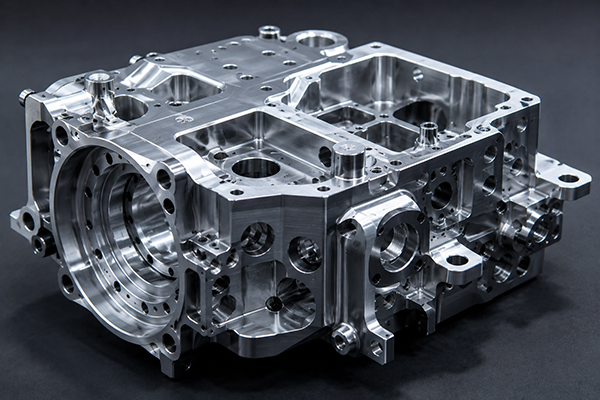
What Are CNC Components Manufacturers?
CNC components manufacturers are specialized companies that produce precision-machined parts using Computer Numerical Control (CNC) equipment. These manufacturers convert CAD designs into finished components through milling, turning, drilling, grinding, EDM, and other advanced machining processes.
Typical products include:
| Industry | Typical CNC Components |
|---|---|
| Aerospace | Brackets, housings, hinges, clamps |
| Medical | Surgical instruments, implants, scanner components |
| Robotics | Joint housings, actuator parts, gear components |
| Automotive | Engine parts, transmission components |
| Electronics | Heat sinks, enclosures, connectors |
| Semiconductor | Precision fixtures, vacuum components |
Unlike conventional machining, CNC manufacturing provides repeatability, automation, and tight dimensional control across thousands of parts.
Advanced CNC Machining Technologies Used by Leading Manufacturers
Modern CNC component manufacturers invest heavily in advanced machining systems.
3-Axis CNC Milling
Suitable for:
- Flat surfaces
- Pockets
- Slots
- Basic mechanical components
Advantages:
- Lower cost
- Fast programming
- Ideal for simple geometries
5-Axis CNC Machining
5-axis machining allows simultaneous movement across five axes, enabling manufacturers to produce complex parts with fewer setups.
Benefits include:
- Improved accuracy
- Better surface finish
- Reduced fixture requirements
- Faster production cycles
Many aerospace and medical manufacturers rely heavily on 5-axis machining due to complex geometries and strict tolerance requirements.
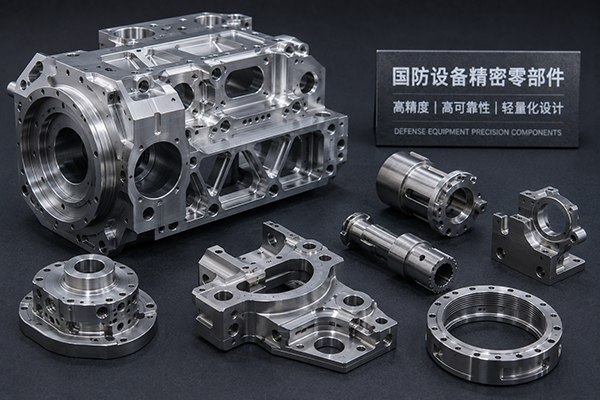
Why Tight Tolerances Matter in CNC Component Manufacturing
Tolerance capability often separates average machine shops from elite CNC manufacturers.
Consider the following examples:
| Tolerance Level | Application |
|---|---|
| ±0.1 mm | General industrial parts |
| ±0.05 mm | Automotive components |
| ±0.01 mm | Precision mechanical systems |
| ±0.005 mm | Medical and aerospace components |
Some high-end manufacturers routinely achieve tolerances between ±0.0002″ and ±0.0004″.
Poor tolerance control can cause:
- Assembly failures
- Excessive wear
- Leakage issues
- Reduced product lifespan
For mission-critical applications, precision is not optional—it is mandatory.
Quality Inspection Equipment Behind Tight Tolerances
Maintaining precision requires advanced metrology systems.
Common inspection tools include:
Coordinate Measuring Machines (CMM)
Measures complex geometries with micron-level accuracy.
Optical Measurement Systems
Ideal for small and delicate parts.
Surface Roughness Testers
Verify Ra values for critical surfaces.
Laser Scanning Systems
Useful for reverse engineering and full-surface verification.
Leading manufacturers perform in-process and final inspections to ensure consistency throughout production.
Material Expertise Is a Key Competitive Advantage
The best CNC components manufacturers can machine a wide range of materials.
Common Metals
| Material | Key Benefits |
|---|---|
| Aluminum 6061 | Lightweight, economical |
| Aluminum 7075 | High strength |
| Stainless Steel 304 | Corrosion resistant |
| Stainless Steel 316 | Medical and marine use |
| Titanium Grade 5 | Excellent strength-to-weight ratio |
| Brass | Superior machinability |
| Copper | High conductivity |
| Inconel | Extreme temperature resistance |
Engineering Plastics
- PEEK
- Delrin (POM)
- PTFE
- Nylon
- PEI
- UHMW
Manufacturers serving aerospace, medical, and defense industries often machine titanium, Inconel, and specialty alloys that require advanced cutting strategies and tooling expertise.
Industry Certifications Every Reliable CNC Manufacturer Should Have
Certifications provide evidence of process control and quality management.
Important certifications include:
| Certification | Industry |
|---|---|
| ISO 9001 | General Manufacturing |
| AS9100 | Aerospace |
| ISO 13485 | Medical Devices |
| IATF 16949 | Automotive |
| ITAR Compliance | Defense |
Manufacturers working with aerospace and medical OEMs commonly maintain multiple certifications to meet strict regulatory requirements.
Design for Manufacturability (DFM) Can Reduce Costs Significantly
Top CNC manufacturers do more than simply machine parts.
They provide DFM analysis to optimize:
- Wall thickness
- Corner radii
- Hole placement
- Material selection
- Tool accessibility
Example:
A customer designs a housing with multiple deep pockets requiring long cutting tools.
A DFM review may:
- Increase internal radii
- Reduce machining time by 30%
- Improve tool life
- Lower overall production cost
Many leading manufacturers offer engineering support before production begins.
Prototype-to-Production Scalability
A reliable supplier should support every manufacturing stage.
Prototype Stage
- Design validation
- Rapid iteration
- Functional testing
Pilot Production
- Process verification
- Fixture development
- Inspection planning
Mass Production
- Process control
- Tool management
- Statistical quality control
The transition from prototype to production often introduces challenges such as tool wear, process variation, and fixture consistency. Experienced manufacturers develop production-ready processes early in the project lifecycle.
Surface Finishing Capabilities Add Significant Value
Machining is often only one part of the manufacturing process.
Common finishing services include:
| Surface Finish | Purpose |
|---|---|
| Anodizing | Aluminum protection |
| Passivation | Stainless steel corrosion resistance |
| Electropolishing | Improved surface quality |
| Zinc Plating | Corrosion protection |
| Electroless Nickel | Wear resistance |
| Powder Coating | Appearance and durability |
| Bead Blasting | Uniform texture |
In-house finishing can reduce lead times and improve quality consistency compared to outsourcing.
Industries That Depend on CNC Components Manufacturers
Aerospace
Aerospace parts require:
- Tight tolerances
- Lightweight materials
- Complete traceability
Typical aerospace components include:
- Structural brackets
- Sensor housings
- Fuel system components
- Landing gear assemblies
Titanium and aerospace-grade aluminum are commonly used.
Medical Devices
Medical applications require:
- Biocompatible materials
- Cleanroom-compatible processes
- Strict documentation
Examples include:
- Orthopedic implants
- Surgical instruments
- Diagnostic equipment components
- Robotic surgery systems
Many medical manufacturers require ISO 13485 certification.
Robotics and Automation
Robotics companies need:
- Lightweight structures
- Precision gears
- Motion control components
Robotics manufacturing continues to be one of the fastest-growing sectors for precision CNC machining.
Lead Time and Supply Chain Reliability
A low-cost quote is meaningless if parts arrive late.
When evaluating suppliers, consider:
- On-time delivery performance
- Raw material sourcing
- Inventory management
- Capacity planning
- Emergency production capability
Many OEMs now prioritize supply chain stability as highly as machining capability.
Questions to Ask Before Selecting a CNC Components Manufacturer
Before placing an order, ask:
- What tolerance levels can you consistently maintain?
- Which certifications do you hold?
- Do you provide DFM support?
- What materials do you specialize in?
- Can you support both prototyping and production?
- What inspection reports are available?
- Do you provide material traceability?
- What is your average lead time?
- Do you offer surface finishing?
- What industries do you currently serve?
These questions help identify suppliers capable of long-term partnership rather than simple job-shop production.
Future Trends in CNC Component Manufacturing
Several trends are shaping the industry:
Smart Manufacturing
Real-time machine monitoring improves productivity.
Automation
Robotic loading systems reduce labor costs.
AI-Assisted Process Optimization
Machine learning helps optimize cutting parameters.
Digital Quality Systems
Automated inspection data improves traceability.
Hybrid Manufacturing
Combining additive manufacturing with CNC machining creates new opportunities for complex parts.
Manufacturers adopting these technologies will continue gaining competitive advantages in precision, speed, and cost efficiency.
Why Xavier Is a Reliable CNC Components Manufacturing Partner
When searching for CNC components manufacturers, companies need more than machining capacity—they need a manufacturing partner capable of delivering precision, consistency, and engineering support throughout the product lifecycle.
Xavier specializes in custom CNC machining services for metal and plastic components, supporting industries such as aerospace, robotics, industrial automation, electronics, medical equipment, and energy systems. From rapid prototyping to high-volume production, Xavier combines advanced CNC milling, CNC turning, multi-axis machining, rigorous quality control, and comprehensive surface finishing services to ensure every part meets customer specifications.
Whether your project requires aluminum, stainless steel, titanium, brass, copper, engineering plastics, or complex precision assemblies, Xavier provides the technical expertise and manufacturing flexibility needed to accelerate product development while maintaining competitive costs and reliable delivery schedules.
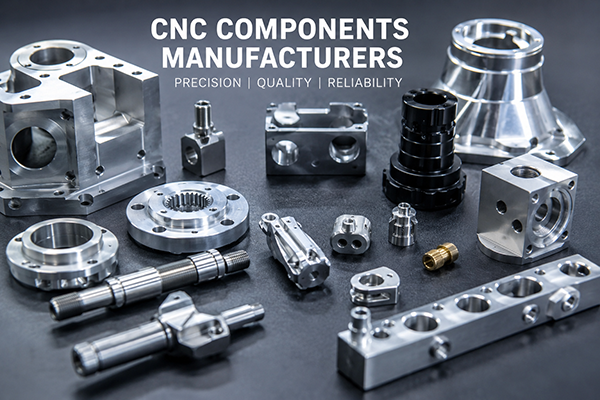
For businesses seeking a dependable CNC components manufacturing partner, Xavier offers the precision, quality, and responsiveness required in today’s demanding global market.As an integrated manufacturer specializing in CNC machining solutions, we focus on custom CNC machining and the production of various metal components. We also support
CNC PEEK machining,
CNC titanium machining, and
CNC brass machining.
Our capabilities cover alloy steel, aluminum, brass, bronze, copper, Inconel alloys, Invar 36, low-carbon steel, stainless steel, titanium, tool steel, ABS, FR4, G-10, nylon, PEEK, PEI, PET, PMMA (acrylic), polycarbonate, polyethylene, polypropylene, POM, PPSU, PTFE, PVC, as well as components for robotics, aerospace, marine, automotive, medical, and other precision applications.
As a CNC PEEK machining manufacturer, we provide high-volume CNC titanium machining services. For competitive CNC brass machining prices, please feel free to contact us.