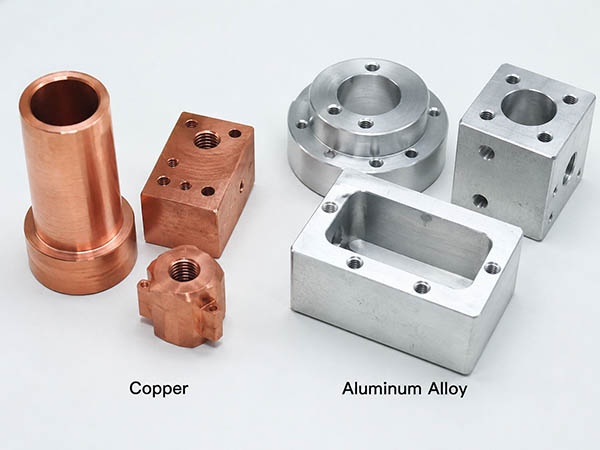
Summary of the 15 Key Points in This Article: About Copper and Aluminum Alloy (Aluminum Bronze)
- What Is Copper and Aluminum Alloy?
- Chemical Composition and Common Grades
- Mechanical Properties and Strength Data
- Corrosion Resistance in Marine and Chemical Environments
- Wear Resistance and Anti-Galling Performance
- Thermal and Electrical Conductivity
- CNC Machining Characteristics
- Casting, Forging, and Heat Treatment
- Comparison with Brass, Stainless Steel, and Carbon Steel
- Typical Industrial Applications
- Surface Finish and Appearance
- Welding and Joining Considerations
- Cost and Material Availability
- Design Guidelines for Engineers
- Why Choose Copper-Aluminum Alloy for Precision CNC Parts
Comprehensive Guide to Copper and Aluminum Alloy for CNC Machining
Copper and aluminum alloy, commonly known as aluminum bronze, is one of the most durable and corrosion-resistant copper-based materials used in modern engineering. This alloy combines the conductivity and toughness of copper with the strengthening and passivation effects of aluminum. Typical aluminum bronze contains 4–15% aluminum, with additional iron, nickel, or manganese to enhance strength and wear resistance. These alloys are widely used for marine shafts, pump components, valve seats, bearings, and high-load CNC machined parts.
What Is Copper and Aluminum Alloy?
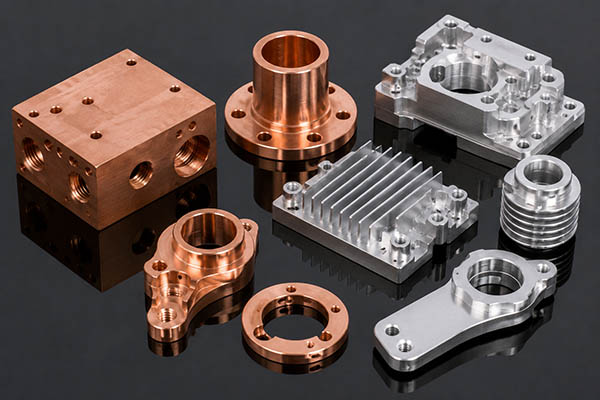
Copper and aluminum alloy refers to copper-based materials in which aluminum is the principal alloying element. In industry, these alloys are generally called aluminum bronze.
Unlike standard bronze, which uses tin, aluminum bronze replaces tin with aluminum to significantly improve:
- Strength
- Corrosion resistance
- Wear resistance
- Oxidation resistance
- Fatigue life
The material develops a thin, tightly adherent aluminum oxide (Al₂O₃) film that protects the surface against seawater, acids, and atmospheric corrosion.
Typical Composition Range
| Element | Typical Content |
|---|---|
| Copper (Cu) | 78–95% |
| Aluminum (Al) | 4–14% |
| Iron (Fe) | 0–5% |
| Nickel (Ni) | 0–5% |
| Manganese (Mn) | 0–2% |
Chemical Composition and Common Grades
Different grades are selected depending on the application.
Common Wrought Grades
| UNS Grade | Common Name | Typical Applications |
|---|---|---|
| C95400 | Aluminum Bronze | Bushings, gears, wear plates |
| C95500 | Nickel Aluminum Bronze | Marine propellers, valve bodies |
| C63000 | Nickel Aluminum Bronze | Aerospace fasteners |
| C63200 | High-Strength Bronze | Heavy machinery |
Example: C95400 Composition
| Element | Percentage |
|---|---|
| Cu | 83–86% |
| Al | 10–11.5% |
| Fe | 3–5% |
Mechanical Properties and Strength Data
One major advantage of aluminum bronze is its steel-like strength while maintaining copper’s corrosion resistance.
Mechanical Property Comparison
| Property | C95400 | 304 Stainless Steel | Brass C360 |
|---|---|---|---|
| Tensile Strength | 620–760 MPa | 515 MPa | 345 MPa |
| Yield Strength | 260–380 MPa | 205 MPa | 125 MPa |
| Hardness | 170–220 HB | 150–200 HB | 80–100 HB |
| Density | 7.5 g/cm³ | 8.0 g/cm³ | 8.4 g/cm³ |
These values show why the material is ideal for highly loaded components.
Corrosion Resistance in Marine and Chemical Environments
Aluminum bronze is renowned for its exceptional resistance to:
- Seawater
- Salt spray
- Sulfuric acid (dilute)
- Hydrochloric acid (dilute)
- Industrial wastewater
Why It Resists Corrosion
The alloy forms a stable alumina layer that self-heals if scratched.
Real-World Example
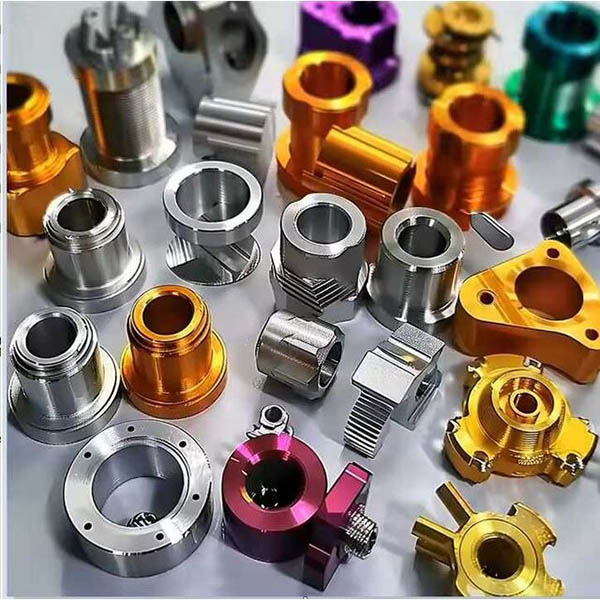
Ship propellers made from C95500 can operate continuously in seawater for 10–20 years with minimal corrosion.
This performance surpasses brass and many stainless steels in chloride-rich environments.
Wear Resistance and Anti-Galling Performance
This material performs exceptionally well in sliding contact.
Benefits
- Low friction
- Excellent seizure resistance
- High surface hardness
- Minimal galling against steel
Typical Components
- Worm gears
- Bushings
- Bearing sleeves
- Valve seats
- Thrust washers
For example, a steel shaft rotating inside an aluminum bronze bushing experiences much lower wear than in a brass bearing.
Thermal and Electrical Conductivity
Although less conductive than pure copper, aluminum bronze still offers useful thermal conductivity.
| Property | Aluminum Bronze |
|---|---|
| Thermal Conductivity | 35–75 W/m·K |
| Electrical Conductivity | 7–15% IACS |
| Melting Range | 1,030–1,150°C |
This makes it suitable for electrical connectors requiring both conductivity and mechanical strength.
CNC Machining Characteristics
Aluminum bronze is harder than brass but machines well with the right tooling.
Machining Challenges
- High cutting forces
- Tool wear
- Work hardening
- Heat generation
Recommended Cutting Tools
- Carbide inserts
- TiAlN coating
- Positive rake geometry
Example Machining Parameters
| Operation | Surface Speed |
|---|---|
| Turning | 80–180 m/min |
| Milling | 60–150 m/min |
| Drilling | 30–80 m/min |
Coolant Recommendation
Use abundant flood coolant to control heat and improve chip evacuation.
Casting, Forging, and Heat Treatment
Copper-aluminum alloys can be manufactured by:
- Sand casting
- Centrifugal casting
- Hot forging
- Extrusion
Heat Treatment
Nickel aluminum bronze grades can be:
- Solution treated
- Quenched
- Tempered
This increases tensile strength and fatigue resistance.
Comparison with Brass, Stainless Steel, and Carbon Steel
| Feature | Aluminum Bronze | Brass | Stainless Steel | Carbon Steel |
|---|---|---|---|---|
| Corrosion Resistance | Excellent | Good | Very Good | Poor |
| Wear Resistance | Excellent | Moderate | Good | Moderate |
| Strength | Very High | Moderate | High | High |
| Galling Resistance | Excellent | Good | Poor | Moderate |
| Marine Performance | Outstanding | Fair | Good | Poor |
Typical Industrial Applications
Marine Industry
- Propellers
- Rudder shafts
- Seawater valves
Oil and Gas
- Pump impellers
- Compressor bushings
Aerospace
- Landing gear bushings
- High-strength fasteners
Manufacturing Equipment
- Wear plates
- Machine guides
- Worm gears
Surface Finish and Appearance
Aluminum bronze has a distinctive gold color that resembles precious metals.
Available Finishes
- Machined finish
- Polished mirror finish
- Brushed satin
- Passivated surface
The attractive appearance also makes it popular in architecture and decorative hardware.
Welding and Joining Considerations
The alloy can be welded using:
- GTAW (TIG)
- GMAW (MIG)
- SMAW
Best Practices
- Use matching filler rod
- Preheat large castings
- Clean oxide thoroughly
Brazing is also possible for smaller components.
Cost and Material Availability
Copper and aluminum alloy is more expensive than carbon steel and brass, but often cheaper than high-performance nickel alloys.
Relative Material Cost Index
| Material | Cost Index |
|---|---|
| Carbon Steel | 1.0 |
| Brass | 2.0 |
| Aluminum Bronze | 3.0–4.5 |
| Stainless Steel | 2.5–4.0 |
| Titanium | 8.0–15.0 |
Its long service life frequently offsets the higher initial material cost.
Design Guidelines for Engineers
When designing CNC parts from aluminum bronze:
- Allow generous tool radii
- Avoid thin unsupported walls
- Use bronze bushings against hardened steel
- Consider thermal expansion
- Specify correct UNS grade
Example Drawing Note
Material: UNS C95400 Aluminum Bronze, CNC machined, ±0.01 mm critical tolerance.
Why Choose Copper-Aluminum Alloy for Precision CNC Parts?
For demanding applications involving:
- Corrosive environments
- Heavy loads
- Sliding wear
- Long service life
aluminum bronze is one of the best engineering materials available.
Compared with brass, it is stronger.
Compared with steel, it resists seawater.
Compared with stainless steel, it offers superior anti-galling performance.
Xavier Precision CNC Machining for Copper and Aluminum Alloy Parts
At Xavier, we specialize in precision CNC machining of copper and aluminum alloy materials such as C95400, C95500, and C63000 aluminum bronze.
Our capabilities include:
- CNC turning and milling
- Tight tolerances to ±0.005 mm
- Custom bushings, gears, valves, and marine parts
- Small prototype to mass production
- Surface finishing and full inspection
Whether you need corrosion-resistant marine hardware, high-load bushings, or complex aerospace components, Xavier delivers durable, high-precision parts with fast turnaround and competitive pricing.
We are an integrated manufacturer and trading company specializing in CNC machining services, primarily focused on custom CNC machining and the production of various metal and plastic components. We support CNC Machining Aluminum, CNC Machining Nylon, and CNC Machining PEEK for robotics, aerospace parts, marine components, automotive parts, medical components, and precision parts. We are a professional CNC Machining Aluminum manufacturer, providing high-volume CNC Machining Nylon services. Contact us today for competitive CNC Machining PEEK pricing.
Some of the images and text in this article are collected and compiled from the internet. If there is anything inappropriate, please contact us for processing.