CNC Acrylic Service: A Complete Engineering Guide for Precision PMMA Machining
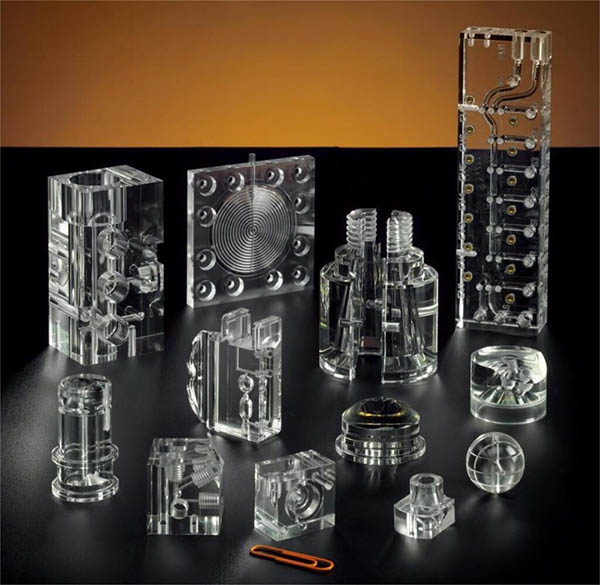
Acrylic, also known as PMMA (Polymethyl Methacrylate), is one of the most widely used transparent engineering plastics in modern manufacturing. Known for its exceptional optical clarity, weather resistance, and lightweight characteristics, acrylic is commonly used in industries ranging from electronics to medical devices.
CNC machining has become one of the most precise and reliable methods for producing custom acrylic parts. Compared with traditional fabrication methods, CNC machining provides tighter tolerances, smoother surfaces, and repeatable production quality.
The following sections explore the most important technical aspects of CNC acrylic service, including machining methods, design strategies, and industrial applications.
What is CNC Acrylic Machining
CNC acrylic machining refers to the use of computer numerical control machines to precisely cut, mill, drill, and shape acrylic material into complex parts.
Unlike manual plastic fabrication, CNC machining allows engineers to convert CAD models directly into physical components with high dimensional accuracy.
Typical CNC operations for acrylic include:
| Process | Purpose | Typical Use |
|---|---|---|
| CNC Milling | 3D shaping and contouring | Optical housings |
| CNC Turning | Cylindrical parts | Light tubes |
| CNC Drilling | Precision holes | Mounting features |
| CNC Engraving | Logos or markings | Branding panels |
Because acrylic is softer than metals but more brittle than many plastics, machining requires optimized tooling and parameters to prevent cracking or melting.
Properties of Acrylic (PMMA) Relevant to CNC Machining
Understanding the material properties of acrylic is essential for successful machining.
| Property | Typical Value |
|---|---|
| Density | 1.18 g/cm³ |
| Tensile Strength | 65–75 MPa |
| Hardness | Rockwell M90–M100 |
| Light Transmission | ~92% |
| Glass Transition Temperature | ~105°C |
Key machining implications:
• High transparency makes acrylic ideal for optical applications
• Moderate hardness allows high-speed cutting
• Low thermal resistance means heat buildup must be controlled
If heat accumulates during cutting, acrylic can melt and adhere to cutting tools.
Cast Acrylic vs Extruded Acrylic in CNC Machining
Not all acrylic materials behave the same during machining.
| Feature | Cast Acrylic | Extruded Acrylic |
|---|---|---|
| Manufacturing Process | Polymerization casting | Continuous extrusion |
| Machining Quality | Excellent | Good |
| Internal Stress | Low | Higher |
| Surface Finish | Superior | Slightly softer |
| Cost | Higher | Lower |
Cast acrylic is generally preferred for CNC machining because it produces cleaner edges and is less prone to stress cracking.
Extruded acrylic is more economical but may require careful machining parameters.
Advantages of CNC Machining Acrylic
CNC machining offers several advantages when producing acrylic components:
High Precision
Modern CNC machines can achieve tolerances of ±0.05 mm or better.
Complex Geometries
3-axis, 4-axis, and even 5-axis CNC machining can produce intricate shapes impossible with manual fabrication.
Superior Optical Surfaces
When properly machined and polished, acrylic can achieve near-optical clarity.
Low Volume Production
Unlike injection molding, CNC machining requires no expensive molds, making it ideal for prototyping and low-volume manufacturing.
Common CNC Processes for Acrylic
Several machining techniques are commonly used for acrylic.
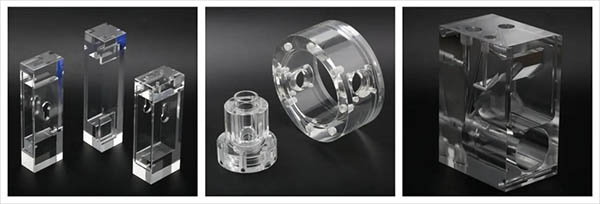
CNC Milling
Used for cutting pockets, slots, and complex 3D surfaces.
Typical tool: single-flute or O-flute end mills
CNC Turning
Suitable for cylindrical acrylic parts such as lenses or tubes.
CNC Laser Cutting
Although not traditional CNC machining, laser cutting is widely used for thin acrylic sheets.
However, laser cutting can produce heat-affected edges, so milling may be preferred for precision components.
Recommended Cutting Tools for Acrylic
The choice of tooling significantly affects machining quality.
| Tool Type | Advantage |
|---|---|
| Single-Flute End Mill | Excellent chip evacuation |
| O-Flute Cutter | Prevents melting |
| Polished Carbide Tools | Reduced friction |
| Diamond Tools | Optical-grade finishes |
Single-flute cutters are widely recommended because they minimize heat buildup and prevent chip welding.
Optimal CNC Parameters for Acrylic
Machining acrylic requires balancing cutting speed and heat management.
Example parameters:
| Tool Diameter | Spindle Speed | Feed Rate |
|---|---|---|
| 3 mm | 18,000 RPM | 1,200 mm/min |
| 6 mm | 16,000 RPM | 2,000 mm/min |
| 10 mm | 14,000 RPM | 3,000 mm/min |
Cooling methods include:
• Air blast
• Minimal coolant
• Chip evacuation systems
Flood coolant is rarely used because it can affect surface clarity.
Preventing Cracking and Melting During Machining
Acrylic can crack if internal stresses are present.
Best practices include:
• Using sharp cutting tools
• Avoiding excessive clamping pressure
• Maintaining consistent feed rates
• Annealing acrylic before machining if necessary
For example, acrylic sheets may be annealed at 80–90°C for several hours to relieve stress.
Surface Finishing Methods for Acrylic Parts
Surface finishing determines whether an acrylic component appears opaque or transparent.
Common finishing processes:
| Method | Result |
|---|---|
| Sanding | Smooth matte surface |
| Flame Polishing | Glossy transparent finish |
| Vapor Polishing | Optical clarity |
| Buffing | High gloss |
Flame polishing is widely used for display panels and lighting components.
Tolerances Achievable in CNC Acrylic Parts
Typical machining tolerances:
| Feature | Tolerance |
|---|---|
| Linear Dimensions | ±0.05 mm |
| Hole Diameter | ±0.02–0.05 mm |
| Flatness | ±0.03 mm |
However, acrylic expands more than metals under temperature changes, so tolerance design should consider thermal expansion.
CNC Acrylic vs Injection Molded Acrylic
Manufacturers often compare CNC machining with injection molding.
| Feature | CNC Machining | Injection Molding |
|---|---|---|
| Tooling Cost | Low | Very High |
| Production Volume | Low–Medium | High |
| Lead Time | Short | Longer |
| Design Flexibility | High | Limited |
For prototypes and custom parts, CNC machining is usually the best solution.
Typical Applications of CNC Acrylic Parts
Acrylic machining is widely used across industries.
Examples include:
Medical Devices
Transparent housings for diagnostic equipment.
Electronics
LED light diffusers and display panels.
Automotive
Dashboard covers and instrument lenses.
Retail Displays
Custom signage and illuminated branding panels.
Design Guidelines for CNC Acrylic Components
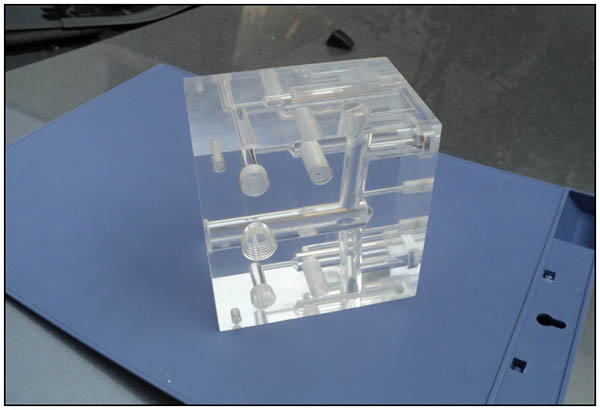
Engineers designing acrylic parts should consider several machining constraints.
Key recommendations:
• Avoid extremely thin walls (<1 mm)
• Add fillets instead of sharp internal corners
• Ensure proper tool clearance
• Design holes slightly oversized to prevent cracking
These guidelines improve both manufacturability and durability.
Cost Factors in CNC Acrylic Machining
Several variables affect machining cost:
| Cost Factor | Impact |
|---|---|
| Material Grade | Cast acrylic costs more |
| Part Complexity | Multi-axis machining increases cost |
| Surface Finish | Polishing adds labor |
| Quantity | Larger batches reduce unit cost |
A typical CNC acrylic prototype may cost $30–$300 depending on complexity.
Quality Inspection and Post-Processing
After machining, acrylic parts undergo inspection and finishing.
Common quality checks include:
• Dimensional inspection using CMM machines
• Optical clarity evaluation
• Edge smoothness testing
Post-processing steps may include polishing, cleaning, and protective film application.
Why Choose Xavier for CNC Acrylic Service
At Xavier, we specialize in precision CNC machining for plastics including acrylic, polycarbonate, and engineering polymers.
Our capabilities include:
• High-speed 3/4/5 Axis CNC machining
• Optical-grade acrylic polishing
• Tight tolerance manufacturing
• Rapid prototyping and small-batch production
Whether you need custom transparent components, display panels, or precision optical parts, Xavier delivers high-quality CNC acrylic machining with fast turnaround and reliable performance.
Some of the images and text in this article are collected and compiled from the internet. If there is anything inappropriate, please contact us for processing.