The following are the key points introduced in this article.
- What Polypropylene Is and How It Is Produced
- Molecular Structure and Polymer Chemistry of PP
- Physical Properties of Polypropylene
- Mechanical Strength and Fatigue Resistance
- Chemical Resistance and Corrosion Performance
- Thermal Behavior and Melting Temperature
- Polypropylene Grades: Homopolymer vs Copolymer
- CNC Machining Characteristics of Polypropylene
- Injection Molding and Manufacturing Processes
- Polypropylene in Packaging and Consumer Products
- Automotive Applications of Polypropylene
- Polypropylene in Medical and Laboratory Equipment
- Environmental Impact and Recycling of PP Plastic
- Comparison: Polypropylene vs Other Plastics
- Future Trends of Polypropylene in Engineering and Manufacturing
Polypropylene (PP) Material Guide: Properties, Applications, and CNC Manufacturing Insights
What Polypropylene Is and How It Is Produced
Polypropylene (PP) is a thermoplastic polymer produced from propylene monomers through polymerization. It belongs to the polyolefin family, alongside polyethylene, and is one of the most widely produced plastics in the world.
The manufacturing process generally involves catalytic polymerization, commonly using Ziegler–Natta catalysts, which enable controlled molecular structures and high material performance.
Key industrial characteristics of polypropylene include:
- low density
- chemical resistance
- relatively low cost
- ease of molding and machining
Global production of polypropylene exceeds tens of millions of tons annually, making it one of the most important engineering plastics in modern manufacturing.
Molecular Structure and Polymer Chemistry of PP
Polypropylene consists of repeating C3H6 units arranged in long polymer chains. The polymer backbone is made of carbon atoms with methyl groups attached along the chain, giving PP its semi-crystalline structure.
Polypropylene exists in different tacticity forms:
| Structure Type | Description | Industrial Use |
|---|---|---|
| Isotactic PP | Methyl groups on same side | Most commercial PP |
| Syndiotactic PP | Alternating orientation | Limited specialty use |
| Atactic PP | Random arrangement | Soft and rubbery |
Among these, isotactic polypropylene dominates industrial production because it provides higher strength and crystallinity.
This molecular arrangement explains why PP has a balance of rigidity, flexibility, and fatigue resistance.
Physical Properties of Polypropylene
Polypropylene is known for its lightweight structure combined with practical durability.
Typical physical properties:
| Property | Typical Value |
|---|---|
| Density | 0.90–0.91 g/cm³ |
| Melting point | 160–170°C |
| Glass transition temperature | −10°C |
| Water absorption | ~0.01–0.03% |
Because PP has one of the lowest densities among commercial plastics, it is widely used when weight reduction is important.
For example, in automotive interior panels, replacing heavier polymers with polypropylene can reduce component weight significantly.
Mechanical Strength and Fatigue Resistance
Although polypropylene is lightweight, it still provides respectable mechanical strength.
Typical mechanical values:
| Property | Typical Range |
|---|---|
| Tensile strength | 30–40 MPa |
| Tensile modulus | 1300–1800 MPa |
| Elongation at break | 100–600% |
One unique property is fatigue resistance, meaning the material can be repeatedly bent without breaking.
This property enables living hinges, which are thin plastic hinges molded directly into products.
Examples include:
- flip-top bottle caps
- food storage container lids
- medical packaging
These hinges can withstand thousands of flex cycles without failure.
Chemical Resistance and Corrosion Performance
Polypropylene exhibits excellent resistance to a wide range of chemicals.
It is particularly resistant to:
- acids
- bases
- organic solvents
- moisture
Because of this, polypropylene is widely used in chemical processing equipment and fluid handling systems.
Example applications:
| Industry | PP Component |
|---|---|
| Chemical plants | storage tanks |
| laboratories | reagent bottles |
| water treatment | piping and valves |
Unlike metals, polypropylene does not rust or corrode, making it ideal for aggressive environments.
Thermal Behavior and Melting Temperature
Polypropylene softens at temperatures above 100°C and melts around 160–170°C depending on the grade.
Temperature comparison with other plastics:
| Material | Melting Point |
|---|---|
| Polyethylene (HDPE) | ~130°C |
| Polypropylene | ~165°C |
| Nylon (PA6) | ~220°C |
PP offers moderate heat resistance but is not suitable for extremely high-temperature environments compared with engineering plastics like PEEK.
However, it performs very well in:
- hot water systems
- dishwasher-safe containers
- automotive interior components.
Polypropylene Grades: Homopolymer vs Copolymer
Polypropylene is produced in several grades depending on mechanical requirements.
| Grade | Characteristics | Typical Applications |
|---|---|---|
| Homopolymer PP | higher stiffness | containers, housings |
| Random copolymer PP | better clarity | packaging |
| Impact copolymer PP | higher toughness | automotive parts |
Copolymer grades incorporate ethylene segments to improve impact resistance.
Engineers choose the grade based on performance needs such as impact strength, transparency, or stiffness.
CNC Machining Characteristics of Polypropylene
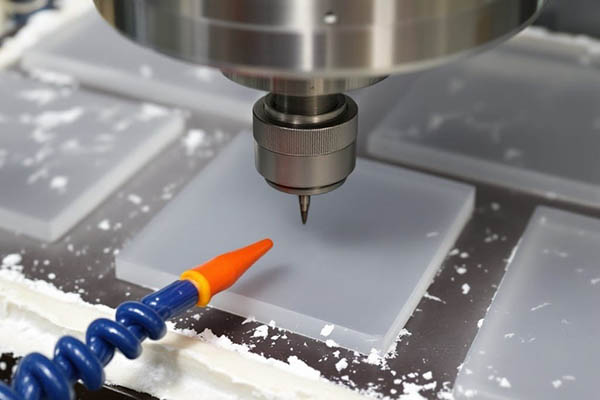
Although injection molding dominates PP manufacturing, CNC machining polypropylene is common for prototypes and low-volume production.
Advantages in machining:
- low friction
- easy cutting
- good chemical resistance
Typical machining tolerances:
| Parameter | Value |
|---|---|
| Accuracy | ±0.2% |
| Minimum feature | ~0.3 mm |
| Surface finish | smooth, low friction |
However, machinists must consider:
- thermal expansion
- burr formation
- low rigidity compared with metals.
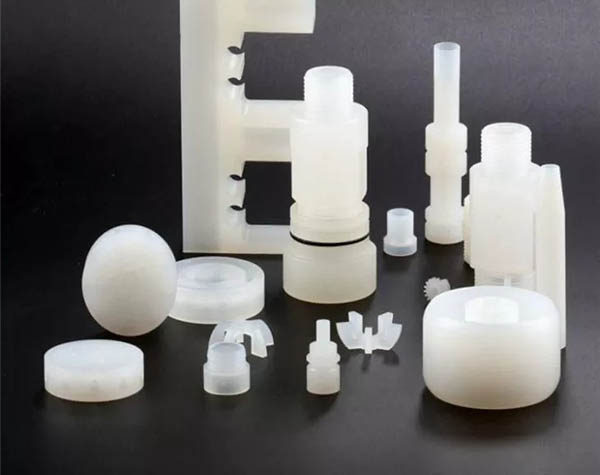
PP parts produced through CNC machining include gears, fluid handling parts, and medical components.
Injection Molding and Manufacturing Processes
Polypropylene is widely used in injection molding because it flows easily in molds and solidifies quickly.
Common manufacturing methods:
| Process | Application |
|---|---|
| Injection molding | containers, housings |
| Blow molding | bottles |
| Extrusion | pipes, sheets |
| Fiber spinning | textiles |
PP can also be molded into thin flexible structures, enabling complex product designs.
Polypropylene in Packaging and Consumer Products
Packaging is the largest application sector for polypropylene.
Typical packaging products:
- yogurt containers
- food storage boxes
- bottle caps
- disposable medical packaging
These products benefit from PP’s:
- food safety
- moisture resistance
- low cost.
Its recyclability and light weight also reduce transportation costs.
Automotive Applications of Polypropylene
Automotive manufacturers heavily rely on polypropylene to reduce vehicle weight.
Common automotive PP components include:
| Component | Reason for Using PP |
|---|---|
| dashboards | lightweight |
| battery cases | chemical resistance |
| interior trim | cost efficiency |
Lightweight plastics can significantly improve fuel efficiency and electric vehicle range.
Polypropylene in Medical and Laboratory Equipment
Polypropylene is widely used in healthcare environments because it can be sterilized and resists many chemicals.
Medical applications include:
- syringes
- specimen containers
- laboratory pipettes
- centrifuge tubes
Because PP absorbs very little moisture, it maintains dimensional stability during sterilization.
Environmental Impact and Recycling of PP Plastic
Polypropylene is identified by recycling code #5 and is recyclable in many waste systems.
Environmental advantages include:
- lightweight transport
- lower energy use compared to some plastics
- recyclability into industrial materials
Recycled PP is commonly used in:
- automotive battery housings
- plastic pallets
- storage containers.
Comparison: Polypropylene vs Other Plastics
Engineers frequently compare polypropylene with other common plastics.
| Material | Density | Cost | Chemical Resistance |
|---|---|---|---|
| Polypropylene | 0.90 g/cm³ | Low | Excellent |
| ABS | 1.05 g/cm³ | Medium | Moderate |
| PVC | 1.38 g/cm³ | Low | Good |
| Nylon | 1.15 g/cm³ | High | Moderate |
Polypropylene is often selected when lightweight, chemical resistance, and cost efficiency are priorities.
Future Trends of Polypropylene in Engineering
Polypropylene demand continues to grow due to advancements in:
- fiber-reinforced PP composites
- recyclable packaging
- lightweight automotive components
- medical devices.
Emerging technologies such as glass-fiber-reinforced PP are significantly improving mechanical strength, expanding PP into structural applications.
Conclusion: Why Xavier Recommends Polypropylene for Precision Manufacturing
For companies requiring lightweight, chemically resistant, and cost-efficient plastic components, polypropylene remains one of the most practical materials available.
At Xavier, we manufacture precision polypropylene parts using advanced CNC machining and polymer processing technologies. Our engineering team helps customers select the optimal PP grade and manufacturing method for applications ranging from fluid handling components to industrial housings.
If your project requires durable, lightweight, and economical plastic components, Xavier polypropylene solutions provide a reliable and scalable manufacturing option.
Some of the images and text in this article are collected and compiled from the internet. If there is anything inappropriate, please contact us for processing.