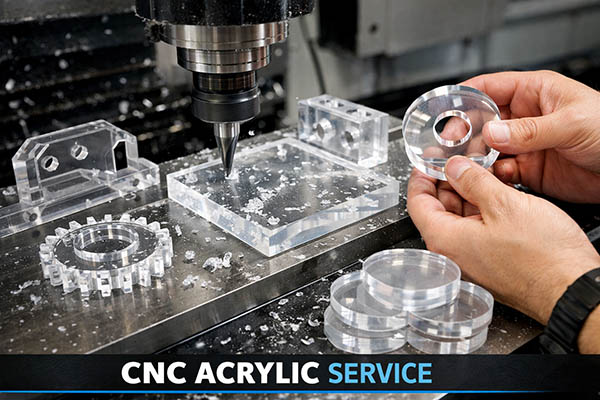
CNC Acrylic Service: Precision Machining Solutions for PMMA Parts
Acrylic, also known as PMMA (Polymethyl Methacrylate), is one of the most widely used plastics in CNC machining because of its transparency, dimensional stability, and machinability. Acrylic transmits up to 92% of visible light, making it a common substitute for glass in industrial components, signage, lenses, and display parts.
CNC acrylic service refers to the use of computer-controlled machining tools—such as CNC milling machines, routers, and lathes—to precisely cut, drill, engrave, or polish acrylic materials according to digital CAD models. The process enables the production of high-precision, optically clear, and repeatable plastic parts used across industries including aerospace, medical devices, electronics, and consumer products.
Below are the 10 most important knowledge areas engineers and buyers search for when evaluating CNC acrylic machining services.
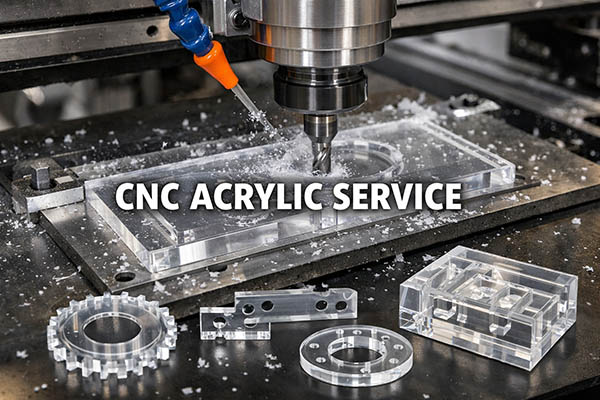
Understanding Acrylic (PMMA) as a CNC Machining Material
Acrylic is a transparent thermoplastic polymer known for its glass-like appearance and high optical clarity. Unlike glass, acrylic is significantly lighter and more impact resistant, which makes it a preferred material for many engineered components.
Key material characteristics include:
| Property | Typical Value | Engineering Benefit |
|---|---|---|
| Light transmission | Up to 92% | Excellent transparency |
| Density | ~1.18 g/cm³ | Lightweight structure |
| Tensile strength | ~8000 PSI | Moderate structural strength |
| UV resistance | Excellent | Outdoor durability |
| Working temperature | ~80–100°C | Stable in typical environments |
Because of these properties, CNC-machined acrylic is commonly used in:
- optical housings
- lighting fixtures
- medical device panels
- automotive light covers
- display and signage systems
Compared with glass, acrylic parts are easier to fabricate and safer to handle while still maintaining high visual clarity.
Advantages of CNC Acrylic Machining Services
CNC machining provides several advantages over laser cutting or manual fabrication when producing acrylic components.
Key Advantages
| Advantage | Explanation |
|---|---|
| High precision | CNC machines can achieve tolerances as tight as ±0.01 mm |
| Smooth surface finish | Proper tooling produces near-polished surfaces |
| Complex geometry | CNC milling enables pockets, threads, and 3D shapes |
| Repeatability | Perfect for batch production |
| Material flexibility | Works with cast and extruded acrylic |
Modern machining centers can produce acrylic parts with consistent dimensions and minimal internal stress, which is critical for optical or mechanical applications.
Another important benefit is design scalability: the same digital model can produce prototypes, small batches, or large production runs without changing tooling.
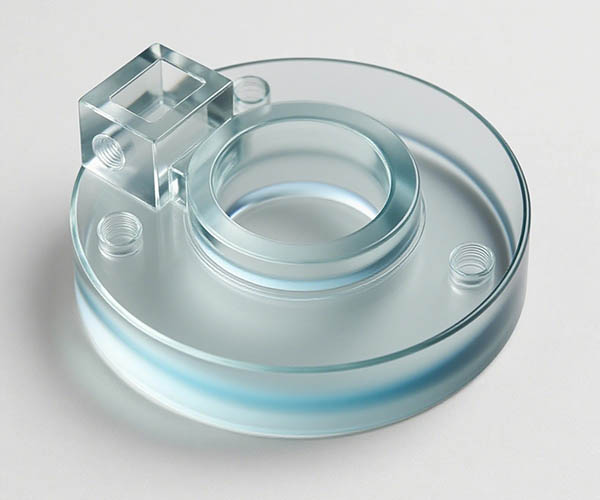
CNC Machining Processes Used for Acrylic
Professional acrylic machining services typically include several CNC processes.
Common CNC Operations
| CNC Process | Application |
|---|---|
| CNC milling | pockets, grooves, complex shapes |
| CNC turning | cylindrical parts |
| CNC routing | cutting acrylic sheets |
| drilling | mounting holes |
| engraving | logos, markings |
The process starts with a CAD design, which is converted into a CAM toolpath program that controls machine movement with high accuracy.
Once the machining is complete, parts are inspected to ensure dimensional accuracy and surface quality.
Design Guidelines for CNC Acrylic Parts
Design plays a crucial role in preventing cracking, stress marks, or warping during machining.
Recommended Design Parameters
| Design Feature | Recommended Value |
|---|---|
| Minimum wall thickness | ≥1.0 mm |
| Internal corner radius | ≥0.5 mm |
| Threaded hole depth | ≤3× diameter |
| Hole-to-edge distance | ≥1.5× hole diameter |
Engineers should also avoid sharp internal corners, as they concentrate stress and may cause cracks during machining.
Adding small radii improves durability and tool life.
Cutting Tools and Tooling Strategies for Acrylic
Choosing the correct cutting tools is essential for clean acrylic machining.
Recommended Tool Types
| Tool Type | Application |
|---|---|
| O-flute end mills | plastic cutting |
| single flute end mills | chip evacuation |
| diamond-coated tools | optical finishing |
| HSS tools | general machining |
High-shear geometry tools are commonly recommended for PMMA because they reduce heat buildup and improve chip evacuation.
Incorrect tooling can cause:
- melting edges
- chip welding
- surface haze
- micro cracks
Professional CNC services carefully select tooling based on material type (cast vs extruded acrylic).
Optimizing Feeds and Speeds for Acrylic CNC Machining
One of the most common problems in acrylic machining is heat buildup, which can melt the plastic and damage the surface.
Typical Machining Parameters
| Parameter | Recommended Range |
|---|---|
| Spindle speed | 12,000 – 24,000 RPM |
| Feed rate | 1000 – 3000 mm/min |
| Depth of cut | 0.5 – 2 mm |
| Chip load | 0.05 – 0.15 mm/tooth |
Acrylic has a low melting temperature, so cutting parameters must balance speed and feed rate to prevent thermal deformation.
Coolant or compressed air is often used to maintain temperature control.
Surface Finishing Options for CNC Acrylic Parts
After machining, acrylic components can undergo additional finishing processes to enhance appearance and optical performance.
Common Finishing Methods
| Finish | Result |
|---|---|
| flame polishing | crystal-clear edges |
| vapor polishing | optical transparency |
| sandblasting | matte frosted surface |
| tumbling | smooth satin finish |
| painting | colored surfaces |
Sandblasting, for example, creates a light-diffusing frosted effect, which is widely used in lighting fixtures and display panels.
These finishing options allow manufacturers to tailor the part’s aesthetics and functionality.
Typical Applications of CNC Machined Acrylic
CNC acrylic parts are used in a wide range of industries due to their transparency and machinability.
Industry Applications
| Industry | Typical Acrylic Parts |
|---|---|
| Aerospace | cockpit panels, instrument covers |
| Medical | device housings, transparent shields |
| Automotive | light covers, display panels |
| Electronics | LED light guides |
| Retail | product displays and signage |
For example, LED light pipes require precise optical surfaces, which CNC machining can produce with tight dimensional accuracy.
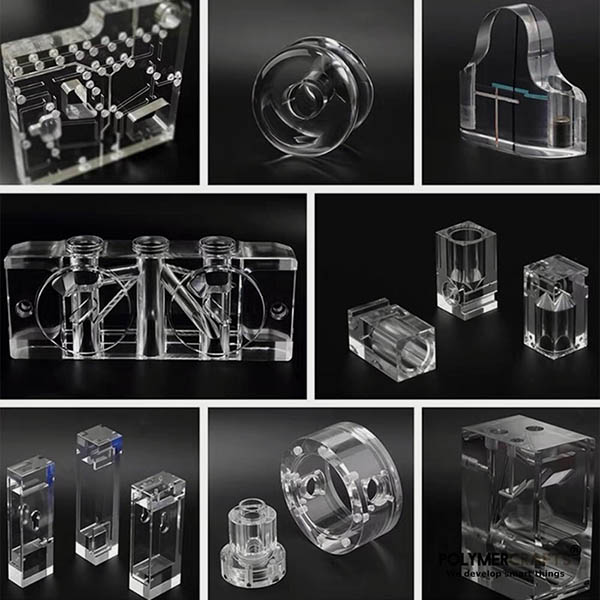
Cost Factors in CNC Acrylic Service
Several factors influence the cost of machining acrylic components.
Major Cost Drivers
- Material type – cast acrylic costs more but machines better
- Part complexity – intricate geometry increases machining time
- Surface finishing – polishing or coating adds extra cost
- Tolerance requirements – tighter tolerances require more precise machining
- Order quantity – larger batches reduce unit cost
Typical CNC machining tolerances range from ±0.1 mm standard to ±0.01 mm precision, depending on the equipment used.
Manufacturers often provide rapid prototyping services to validate designs before mass production.
Quality Control in Professional Acrylic CNC Machining
High-end CNC acrylic services follow strict quality control procedures.
Quality Inspection Methods
| Method | Purpose |
|---|---|
| CMM measurement | dimensional verification |
| optical inspection | surface clarity check |
| stress testing | crack detection |
| fit testing | assembly verification |
Maintaining internal material integrity is critical because improper machining can introduce micro-stresses that later cause cracking.
Choosing the Right CNC Acrylic Service Provider
When selecting a CNC machining supplier, engineers typically evaluate several capabilities.
Key Evaluation Criteria
- machining precision
- material sourcing
- surface finishing options
- prototyping speed
- engineering support
A professional CNC supplier should also provide design-for-manufacturing (DFM) feedback to improve part performance and reduce production cost.
Why Xavier CNC Acrylic Service Is a Reliable Choice
If you are looking for a professional CNC acrylic service partner, Xavier offers a complete solution for custom PMMA parts.
Xavier specializes in:
- high-precision CNC acrylic machining
- optical-grade acrylic polishing
- rapid prototyping and batch production
- tight tolerance manufacturing
- customized engineering support
From transparent optical components to complex industrial housings, Xavier’s advanced CNC machining centers ensure excellent surface quality, dimensional accuracy, and fast production turnaround.
Whether you need a single prototype or large-volume production, Xavier can help bring your acrylic design to life with professional manufacturing expertise.
Some of the images and text in this article are collected and compiled from the internet. If there is anything inappropriate, please contact us for processing.